
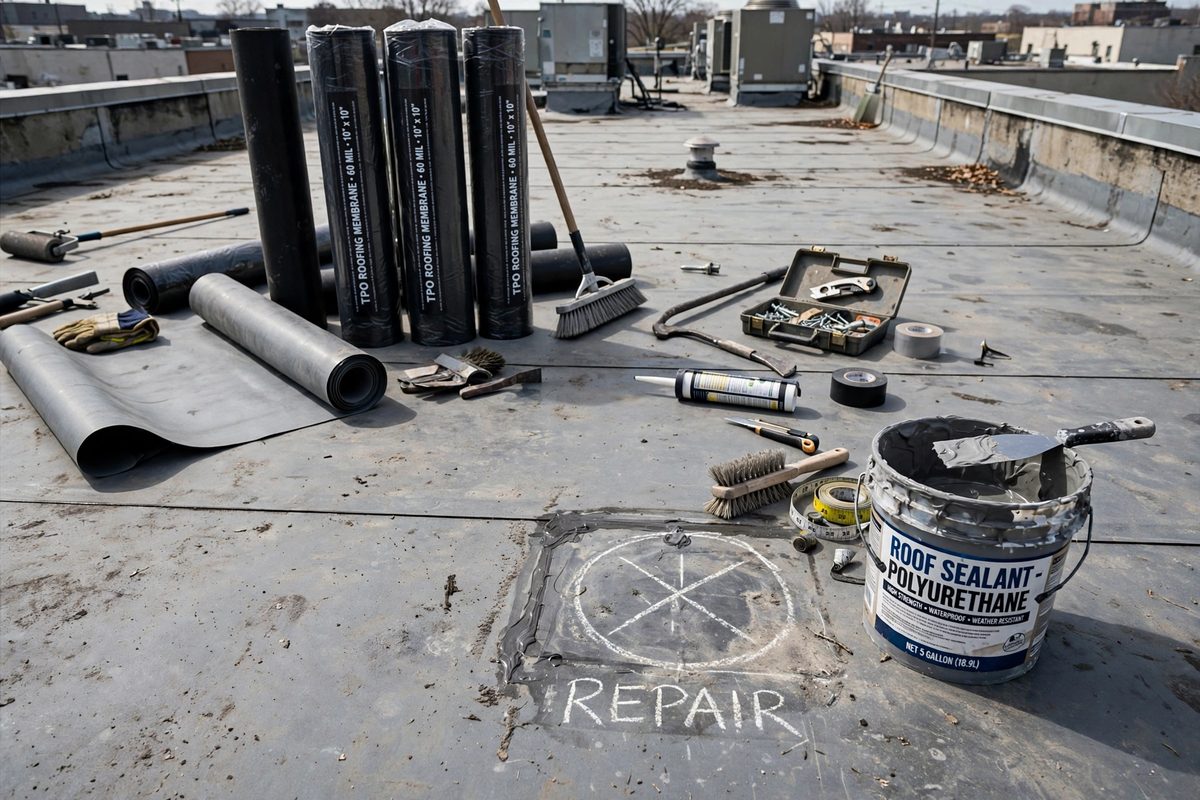
A leaking roof puts your business on the clock. Every day you wait, water spreads. But rushing in blind costs money too. Before you repair commercial roof sections, take nine smart steps. They help you describe the problem, get fair quotes, and avoid bad contractors. This guide walks you through each one.
Step 1: Find the Leaks Inside Before You repair commercial roof Areas
Start indoors. Walk every floor after rain. Look for stains on ceiling tiles. Check walls near the roof line. Sniff for musty smells. Mark each spot on a simple floor sketch. Note which leaks are active and which look old.
This map is gold. It shows the crew where to look. It also proves the damage if insurance gets involved. Take photos of every stain. Photos beat memory every time. Do this before you repair commercial roof surfaces so the crew starts with facts, not guesses.
Step 2: Check the Roof Safely
If you can walk the roof safely, do a visual pass. Bring binoculars for steep or tall roofs. Never go up alone. Never walk a wet roof. Look for the usual faults. Blistered membrane. Loose flashing. Clogged drains. Standing water. Missing gravel.
Do not pull at loose material. Do not poke blisters. Just look and note. Your job is to observe, not to fix. Pros need clear eyes on the problem. Your notes speed their work when they arrive to repair commercial roof sections.
Step 3: Clear Drains and Debris
Clogged drains cause half of all commercial leaks. Leaves, trash, and gravel block the flow. Water ponds. Seams soak. Leaks follow. Before you call anyone, clear what you can reach safely from the ground or a secure ladder.
This step alone sometimes stops a leak. If water drains freely after clearing, the roof may just need upkeep, not repair. Either way, clean drains help the crew. They can see the real faults instead of wading through ponds.
Step 4: Document Everything
Paper wins arguments. Write down when each leak started. Note the weather at the time. High wind? Heavy rain? Hail? Save your photos in one folder. Keep copies of past roof work and warranties.
This file does three jobs. It helps the crew diagnose fast. It supports insurance claims. It proves upkeep if a warranty question comes up. Owners who document get better service. Crews respect prepared clients.
Step 5: Decide If You Need to repair commercial roof Sections or Replace
Not every bad roof needs replacement. And not every leak deserves just a patch. Here is how to think it through.
Patch when damage is local. One bad seam. A few loose flashings. A small puncture. These are repair jobs. Replace sections when damage is wide. Soaked insulation across a field. Failed seams in many spots. A membrane past its life. Your contractor should show you proof either way.
Ask for core samples. A small cut shows the layers. Dry layers mean repair works. Wet layers through the field mean bigger work. A straight crew explains this plainly before you agree to repair commercial roof areas.
Step 6: Get Three Written Quotes
Never hire the first caller. Get three quotes from licensed firms. Each quote should name the problem, the fix, materials, labor, timeline, and warranty. Compare scope, not just price. A cheap quote that skips half the work is no bargain.
Watch how each firm inspects. The careful one climbs, probes, and photos. The sloppy one glances from the parking lot. Hire the careful one. To repair commercial roof problems right, diagnosis matters most.
Step 7: Check Licenses, Insurance, and References
This step guards your wallet. Ask for the state license number. Verify it online. Ask for insurance certificates. Call the insurer to confirm they are current. Then call two references. Ask simple questions. Did they show up on time? Did the leak stay fixed? Would you hire them again?
Skip this step and you gamble. Unlicensed crews vanish when leaks return. Insured pros stand behind their work. Ten minutes of checks saves months of regret.
Step 8: Plan Around Your Tenants
Roof work makes noise. It can close areas. It sometimes brings smells from adhesives. Warn tenants early. Tell them the dates and hours. Move sensitive work away from the repair zone. Plan for parking and lift placement.
Good contractors help with this. They phase the work. They keep one entrance clear. They clean up daily. Ask about the plan before they start. A crew that respects tenants earns its keep.
Step 9: Schedule Follow-Up Inspections
The job is done. Do not walk away. Inspect the work with the crew chief. Check each repair point. Get the warranty papers. Put the next inspection on the calendar. Twice a season is the standard.
Keep paying attention. New stains get fast calls. Small issues stay small when caught early. The nine steps you took to repair commercial roof damage now become a simple habit. Your roof will last longer for it.
Common Faults You Will Find When You repair commercial roof Areas
Know the enemy. These faults cause most commercial leaks.
Open seams. Heat-welded or glued seams part with age and motion. The fix is re-welding or re-gluing, then sealing. Failed flashing. Metal flashing around vents, pipes, and curbs cracks or pulls loose. Crews cut out the bad parts and install new flashing with fresh sealant. Punctures. Foot traffic, dropped tools, and storm debris poke holes. Small holes get patches. Big ones need section work. Blistered membrane. Trapped moisture bubbles the surface. Crews cut, dry, and patch each blister. Clogged drains. The silent killer. Water ponds and soaks seams for days. Clearing and re-pitching drains solves it. Worn pitch pans. These seal around odd penetrations. Old filler cracks. New pourable sealer renews them.
Each fault has a known fix. When you repair commercial roof sections, match the fix to the fault. Guesswork wastes money.
When a Quick Patch Beats a Full repair commercial roof Job
Sometimes less is more. A fresh puncture with dry layers below needs only a patch. A single loose flashing needs re-sealing, not a rebuild. A clogged drain needs clearing, not new membrane.
The rule is simple. If the layers below are dry and the fault is local, patch it. If water has soaked the field or faults spread wide, do bigger work. Core samples tell the truth. Ask the crew to show you. An honest firm will point at dry layers and say patch. That is the crew you want when you repair commercial roof damage.
What It Costs to repair commercial roof Sections
Prices vary, but here are real ranges. Small patch jobs run 500 to 2,000 dollars. Section repairs run 2,000 to 10,000 dollars based on size. Full section rebuilds can top 20,000 dollars on large roofs.
Labor drives the bill. Access is the next factor. Easy one-story roofs cost less than tall ones needing lifts. Materials matter too. Single-ply patches are quick. Built-up repairs take more hours. Always ask what moves your number. Honest firms explain gladly.
Hiring Checklist
Use this when you pick a firm:
- State license verified and current.
- Insurance certificates confirmed by phone.
- Three written quotes compared by scope.
- References called, not just collected.
- Warranty terms in writing.
- Start date and timeline agreed.
- Payment schedule fair, never full up front.
The National Roofing Contractors Association offers free hiring guides for building owners. For safety rules crews must follow, see OSHA.
Related Reading
To choose the right firm, read commercial roof repair company. For an overview of fix types, see commercial roof repair. For smaller patch jobs, see commercial roof repairs.
FAQ
How long does it take to repair commercial roof sections?
Small patches take a day. Section repairs take three to seven days. Weather and material lead times can stretch the schedule. Get dates in writing before work starts.
Can I stay open during the work?
Usually yes. Crews phase the job and keep entrances clear. Noisy work can be set for off hours. Discuss the plan with the foreman on day one.
Will insurance cover the repair?
Storm damage often qualifies. Wear and age usually do not. Your photos and notes help the claim. Call your agent before you sign repair contracts.
How do I know the leak is truly fixed?
Ask for a water test. The crew floods the repair area and watches inside. No drips means success. Get the test noted on the final invoice.
Should I coat the roof after repairs?
Often a smart move. Coatings seal aging surfaces and add years. They suit sound roofs, not rotted ones. Ask your crew if your roof is a good candidate.
Next Steps
Start step one today. Walk your building and map the leaks. Take photos. Clear the drains. Then call three firms for quotes. Nine careful steps now mean a dry building for years. Do not wait for the next storm to test your roof.