
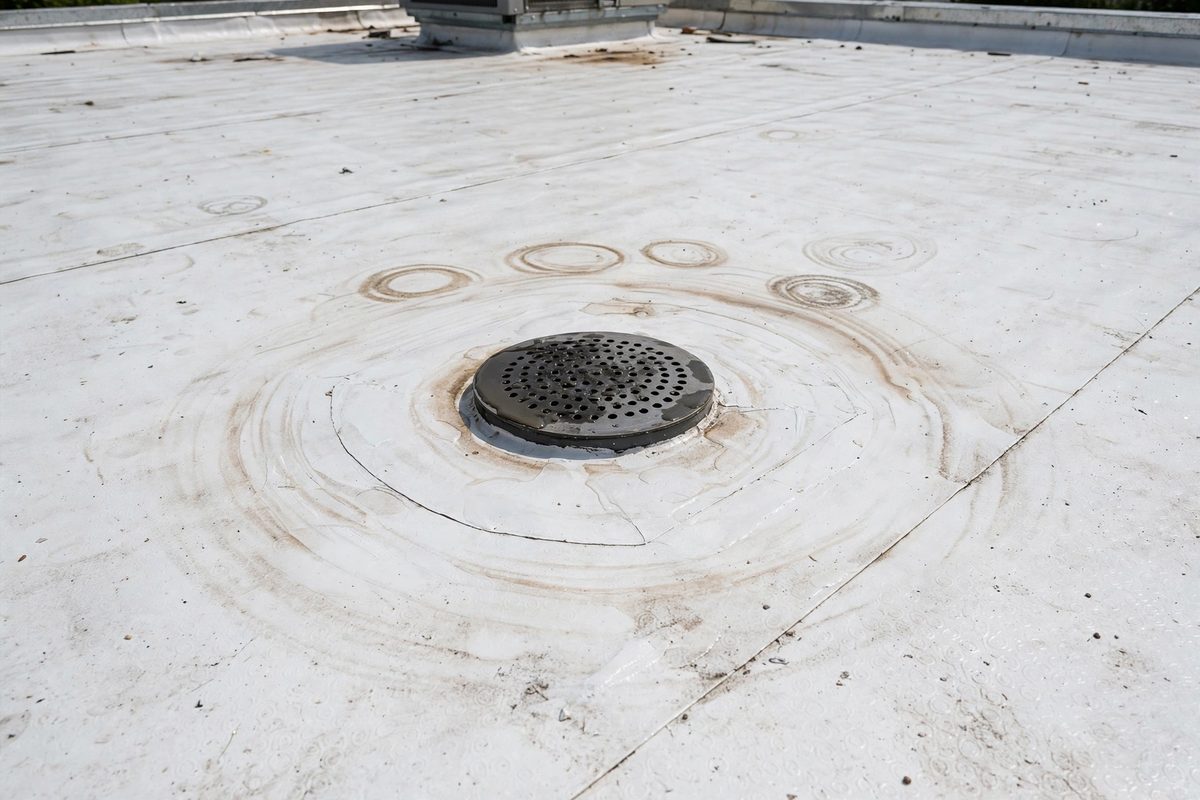
Flat roofs are honest. They show every problem in plain sight if you know where to look. This guide to commercial flat roof repair walks through the eight steps that work, from finding the leak to hiring the crew. Follow them in order and you will spend less and worry less.
Step 1: Start Every Commercial Flat Roof Repair With Inspection
No inspection, no quote. That is the rule. A contractor who prices the job from the ground is guessing.
Walk the whole roof. Note every blister, crack, and soft spot. Check the drains and scuppers. Look at the flashing where the roof meets walls and curbs. Photograph everything. Photos keep everyone honest later.
Probe soft areas gently with your boot. A spongy feel means wet insulation below. Mark these spots with spray paint. The crew needs to see them.
Check inside too. Stains on the top floor ceiling map the leak zone. Remember that water travels. The entry point is often uphill from the stain.
Step 2: Find the Real Leak
Most leaks are not where the drip appears. Water runs along the deck before it finds a way down. Finding the source takes method.
Start at the stain and work uphill. Look for the nearest penetration, seam, or flashing detail. Nine times out of ten, the leak is at a detail, not in the open field of the membrane.
Common culprits include cracked pitch pans, pulled flashing, open seams, and punctures from foot traffic or dropped tools. On older roofs, the membrane itself may be brittle and split.
When the source hides, a contractor can flood test small areas or use electronic leak detection. Both beat tearing up good membrane on a hunch.
Step 3: Plan the Commercial Flat Roof Repair Scope
Write down what gets fixed before anyone starts. A clear scope prevents the two classic problems: work that was never quoted and quotes that cover work you did not need.
A good scope lists each repair area, the method for each, and the materials to be used. It states who handles related work like resetting rooftop units or repainting. It sets the schedule and the cleanup standard.
If test cuts show wet insulation, the scope must include replacing it. Patching over soaked insulation traps moisture and voids most warranties. Cut it out, dry the deck, and build back with new material.
Step 4: Fix Drainage First
Many flat roof failures are drainage failures. Water that cannot leave will find a way in. Before any membrane work, make sure the drains work.
Clear every drain, scupper, and gutter. Remove leaves, trash, and the tennis balls that somehow end up on every roof. Check that strainers sit properly over drain bowls.
Look for ponding after rain. Water that stands more than two days after a storm needs attention. The fix may be as simple as clearing a clog. It may need tapered insulation to build slope. Either way, handle drainage as part of the commercial flat roof repair, not as an afterthought.
Step 5: Execute the Membrane Fixes
With drainage sorted, the crew fixes the membrane. Small punctures get cleaned, primed, and patched with matching material. The patch should extend well past the damage on all sides.
Open seams get re welded or re adhered depending on the system. TPO and PVC seams heat weld. EPDM seams glue. Modified bitumen torches or cold applies. Each system has its own method. Make sure the crew knows yours.
Flashing gets reset or replaced. This is detail work and it matters more than the open field patches. Most leaks start at flashing. A crew that rushes flashing will be back.
Blisters get cut, dried, and patched. Do not just coat over them. Trapped moisture keeps working under the coating.
Step 6: Handle the Details That Cause Callbacks
Pitch pans get topped with fresh sealant. Pipe boots get checked for cracks. Counter flashing gets refastened where it has pulled loose.
Walk pads get installed on traffic paths. Most punctures come from feet, not weather. Pads on the path to each rooftop unit pay for themselves.
Sealant joints get raked out and replaced where cracked. Old caulk is not a repair. Fresh sealant in a clean joint is.
The crew should photograph every completed fix. You get a record. They get proof of workmanship. Everyone wins.
Step 7: Choose the Right Commercial Flat Roof Repair Contractor
Use this checklist.
- Confirm flat roof experience with your membrane type. Ask for addresses of past jobs.
- Verify license and insurance. Call the insurer.
- Get a written scope with materials named, not “roof repair” as a line item.
- Ask about crew size and daily supervision.
- Get the warranty in writing, covering labor as well as materials.
- Ask how they protect your tenants and property during the work.
- Confirm the cleanup plan. No debris left on the roof or the lot.
The National Roofing Contractors Association publishes repair standards worth knowing. OSHA covers the fall protection rules every rooftop crew must follow.
Related guides here: commercial roofing repair for the full picture, commercial metal roof repair if you have metal sections, and repair commercial roof for storm damage basics.
Step 8: Maintain After the Commercial Flat Roof Repair
The repair is done. Now protect it. Schedule roof walks twice a year. Keep a simple log of what you find.
Keep drains clear every visit. Recoat sealant joints when they crack. Watch the patches from this job. A patch that lifts at the edge needs attention before water gets under it.
Budget a small annual amount for upkeep. Roofs reward steady care and punish neglect. The buildings with the lowest lifetime roofing costs are the ones whose owners never skip the walk.
Commercial Flat Roof Repair Warranties Explained
Warranties confuse owners. Here is the plain version.
Two warranties matter. The material warranty comes from the membrane maker. It covers defects in the product itself. The workmanship warranty comes from the contractor. It covers mistakes in the install or the commercial flat roof repair.
Material warranties run long on paper. Read the fine print. Many require documented maintenance and approved repair methods. Skip the maintenance and the warranty may not pay.
Workmanship warranties are shorter, often a few years. This is the one that matters most for repairs. If the patch fails, the contractor comes back. Get it in writing with clear terms. Verbal promises evaporate.
Ask these questions. What exactly is covered? For how long? What voids it? Who do I call to claim? How fast do you respond to warranty calls? Write the answers into the contract.
Keep up your end. Most warranties demand regular inspections and prompt fixes. Your twice yearly roof walks and the maintenance log are not just good practice. They keep the warranty alive.
When comparing bids, compare warranties too. A slightly higher price with a strong labor warranty often beats the cheapest bid with none. The warranty is part of what you buy.
Frequently Asked Questions
How much does commercial flat roof repair cost?
Small patch jobs run in the hundreds. Larger section work runs into the thousands. Full drainage corrections cost more. On roof inspection and written scope are the only way to get a real number.
How long does commercial flat roof repair last?
A proper patch on a sound roof lasts for years. Patches on brittle, worn out membranes buy less time. Your contractor should tell you honestly which situation you are in.
Can I coat the roof instead of repairing it?
Coatings help sound roofs last longer. They do not fix leaks, wet insulation, or failed flashing. Do the commercial flat roof repair first, then consider coating as protection.
What causes most flat roof leaks?
Flashing failures, open seams, punctures, and clogged drains cause the vast majority. The open field of the membrane rarely fails first. That is why details get the most attention in a good repair.
How do I know the repair worked?
Watch the next few rains. No new stains inside, no ponding outside, and patches that stay flat and sealed. Ask the contractor for a follow up check after the first big storm.
Next Steps
Book the inspection this week. Walk the roof with the contractor and hear the findings firsthand. Compare written scopes, not just prices. Then approve the work and keep the photos and the log. Eight steps, done in order, turn commercial flat roof repair from a gamble into a plan.
Remember this above all. Water always wins against neglect, but it almost always loses against attention. The owners with the driest buildings are not the ones with the most expensive roofs. They are the ones who walk, who look, who log, and who fix small things fast. Be that owner and your roof will take care of you.
Walk it, log it, fix it. That is the whole secret.
Dry buildings start with owners who pay attention.