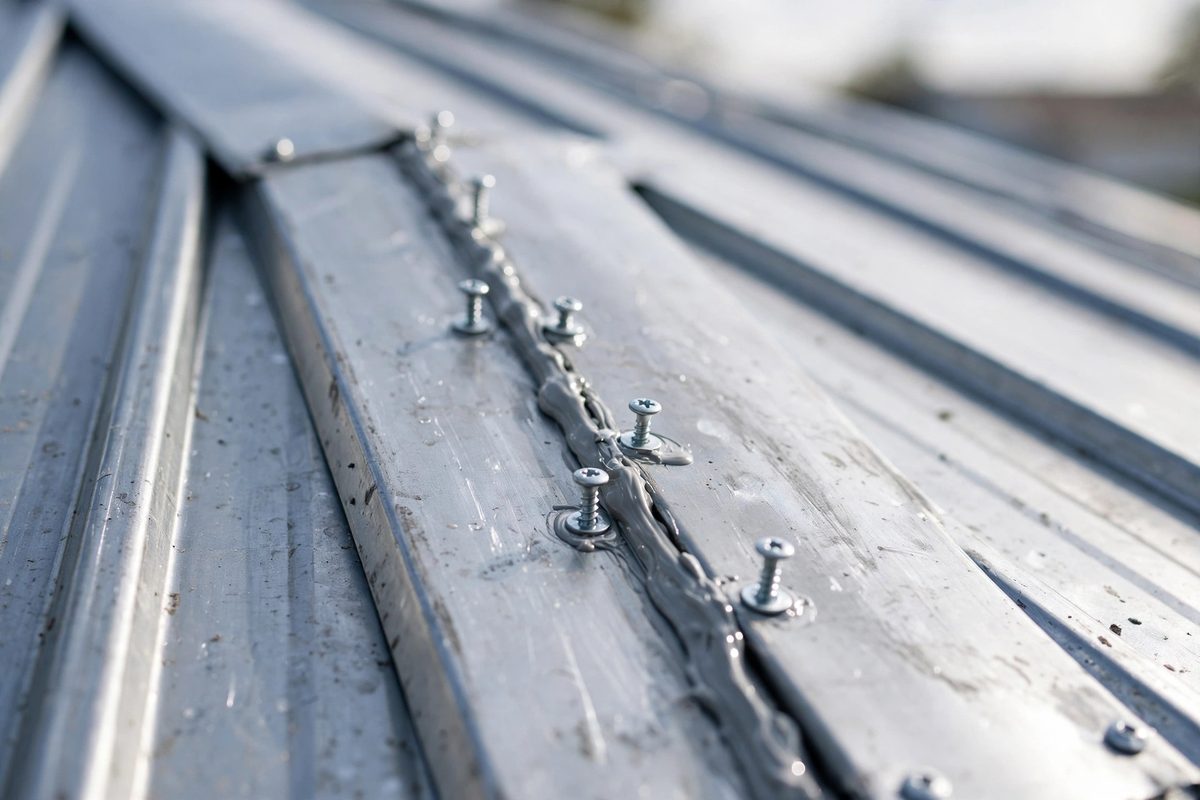
Metal roofs earn their keep. They shed water fast. They stand up to wind. They can last half a century with care. But screws loosen. Panels shift. Sealant dries out. When that happens, you need commercial metal roof repair. This guide covers the six fixes that work, what they cost, and how to pick a crew that knows metal.
Why Metal Roofs Need commercial metal roof repair
Metal moves. Heat makes panels grow. Cold makes them shrink. Day after day, season after season, this motion works fasteners loose. That is the main reason buildings need commercial metal roof repair. The roof itself rarely fails. The connections do.
Screws back out a turn at a time. Washers dry and crack. Sealant at flashing points shrinks. Small gaps open. Rain finds them. Left alone, a loose screw becomes a leak, and a leak becomes rust. Catch it early and the fix is small. Wait too long and panels need replacement.
6 Fixes a commercial metal roof repair Crew Uses
These are the six repairs pros rely on. Each solves a real problem.
- Fastener replacement. Old screws come out. New screws with fresh rubber washers go in. The crew checks every fastener in the repair zone, not just the leakers.
- Seam re-sealing. Standing seams open with thermal motion. Butyl tape or sealant goes back in. Then the seam is crimped tight.
- Panel replacement. Badly rusted or bent panels come off. New panels match the profile and color. Proper overlap keeps water out.
- Flashing repair. Pipes, vents, and curbs pierce the roof. Old flashing gets cut out. New flashing goes in with fresh sealant.
- Rust treatment. Surface rust gets wire-brushed to bare metal. Then primer and topcoat seal it. Deep rust needs panel replacement.
- Coating application. Elastomeric coatings seal the whole surface. They bridge small gaps and reflect sun. One coat can add years.
A skilled commercial metal roof repair crew picks the right fix for the fault. They do not sell coatings when a screw swap will do.
Signs Your Metal Roof Needs commercial metal roof repair
Walk the building after storms. Look up from the ground with binoculars. Stains on walls under the eaves hint at leaks. Drips inside near fastener lines are a sure sign. Listen during rain. New drips or pings can mean loose panels.
On the roof, look for these faults. Screws sitting high or tilted. Washers cracked or missing. Sealant pulling away from flashing. Rust streaks below fasteners. Panels that oil-can or flex underfoot. Daylight showing through seams from inside. Any of these means it is time to call for commercial metal roof repair.
Safety first. Metal gets slick when wet. Never walk a metal roof alone. Leave steep slopes to pros with fall gear.
What commercial metal roof repair Costs
Costs run wide. Here is what to expect across the country.
Fastener replacement runs 3 to 7 dollars per screw all in, with most jobs totaling 500 to 2,000 dollars. Seam re-sealing costs 4 to 8 dollars per linear foot. Panel replacement runs 500 to 1,500 dollars per panel installed, based on size and profile. Flashing repair costs 300 to 900 dollars per penetration. Rust treatment runs 2 to 5 dollars per square foot. Full elastomeric coating costs 3 to 7 dollars per square foot for the whole roof.
What moves the price? Roof height and slope. Steep or tall roofs need lifts and safety lines. Panel profile. Odd profiles cost more to match. Damage extent. One bad panel is cheap. A rusted field is not. Coating choice. Cheap paint fails fast. Quality elastomeric lasts.
Get line-item quotes. Each fix should list separately. Ask how long each repair should hold. A frank commercial metal roof repair firm gives straight numbers.
How to Hire for commercial metal roof repair
Metal is not shingles. Hire a crew that lives on metal roofs. Ask how many metal jobs they did last season. Ask which panel profiles they know. Standing seam, R-panel, and corrugated each need different handling.
Checklist for hiring:
- Licensed and insured in your state, with proof in hand.
- Metal-specific experience, not just general roofing.
- References from metal roof owners you can call.
- Written scope naming each repair and material.
- Warranty on labor, at least two years.
- Safety plan for your roof height and slope.
Watch out for red flags. Door-knockers after storms. Demands for full payment up front. No local address. Bids far below the rest. A solid commercial metal roof repair outfit is busy, local, and patient with questions. The National Roofing Contractors Association lists what to check before hiring any roofer.
Metal Roof Coatings Explained
Coatings confuse many owners. Here is the plain story. Elastomeric coatings are thick, stretchy liquids. Crews roll or spray them over the roof. They cure into a seamless skin. The skin bridges hairline cracks. It seals around fasteners. It reflects sun.
Coatings suit aging roofs that are still sound. They do not suit rusted-through panels or sagging decks. Prep matters more than the product. The crew must clean, treat rust, and seal seams first. Skip prep and the coating peels. Good prep plus good coating buys ten years or more.
Ask what product they use. Acrylic suits most climates. Silicone suits ponding areas. Urethane suits foot traffic zones. Get the dry film thickness in writing. Thin coats fail early.
Storm Damage: What to Do First
Hail and wind hit metal hard. After a storm, act fast but stay safe.
First, check inside. Look for new drips and stains. Photo everything for insurance. Next, look from the ground. Dented panels, bent flashing, and missing trim show up well. Do not climb up in bad weather. Wet metal is treacherous.
Call your insurer if damage looks wide. Then call a repair crew for an inspection. Ask for a written damage map. It lists each hurt spot. This paper helps claims and guides repairs. Temporary tarps stop water while you wait. A pro crew sets them so wind will not strip them.
Keep a storm file. Photos, reports, and receipts in one folder. It pays off at claim time and at resale.
Upkeep That Prevents Big Repairs
A little care goes far on metal. Tighten this routine.
Inspect twice a season. Look at fasteners, seams, and flashing. Clear debris from valleys and gutters. Leaves trap water against metal. Trim branches that rub the roof. Touch up scratches fast. Bare metal rusts. Keep sealant fresh at penetrations. Old sealant cracks. Watch for dissimilar metals touching. They corrode each other.
Coatings help in hot climates. Light colors reflect sun and cut thermal motion. The Department of Energy notes that reflective roof surfaces can lower cooling loads too. Less heat means less movement and longer fastener life.
Related Reading
For general fix guidance, see commercial roof repair. When you need a firm to do the work, read commercial roof repair company. For patch-level fixes, see commercial roof repairs.
Fastener Lines: The Weak Link
Every screw is a hole in your roof. That sounds bad. It is fine when screws sit tight with good washers. Trouble starts when they back out. Thermal motion works them loose a fraction of a turn at a time. After enough seasons, gaps open.
A smart owner watches fastener lines. Look for screws sitting proud of the surface. Look for rust rings around washers. These are early warnings. Replacing a screw costs little. Replacing a rotted deck costs plenty. Ask your crew to torque-check fasteners on each visit.
FAQ
How long does commercial metal roof repair take?
Most jobs finish in one to three days. Fastener work on a small roof takes a day. Panel replacement or coating takes longer. Weather can pause the work. Get a schedule in writing.
Can commercial metal roof repair stop all leaks?
It stops leaks from failed fasteners, seams, and flashing. It cannot fix a roof with wide rust-through or failed structure. An honest crew tells you when repair is enough and when it is not.
Will repairs match my roof color?
Close, rarely perfect. Sun fades old panels. New panels look brighter at first. They blend over time. Ask the crew to show color samples before they order.
How often should a metal roof be inspected?
Twice a season is the rule. Add a check after hail or high wind. Fastener lines deserve a close look each time. Catching loose screws early is the cheapest repair there is.
Is coating better than panel replacement?
It depends on the fault. Coatings seal aging but sound roofs. They cannot save rusted-through panels. A good commercial metal roof repair crew tests first, then recommends.
Next Steps
Look at your metal roof this week. Check fasteners and flashing from the ground. If you spot trouble, call a commercial metal roof repair crew for an inspection. Get each fix listed in writing. Handle small faults now. Your metal roof will serve for decades.