
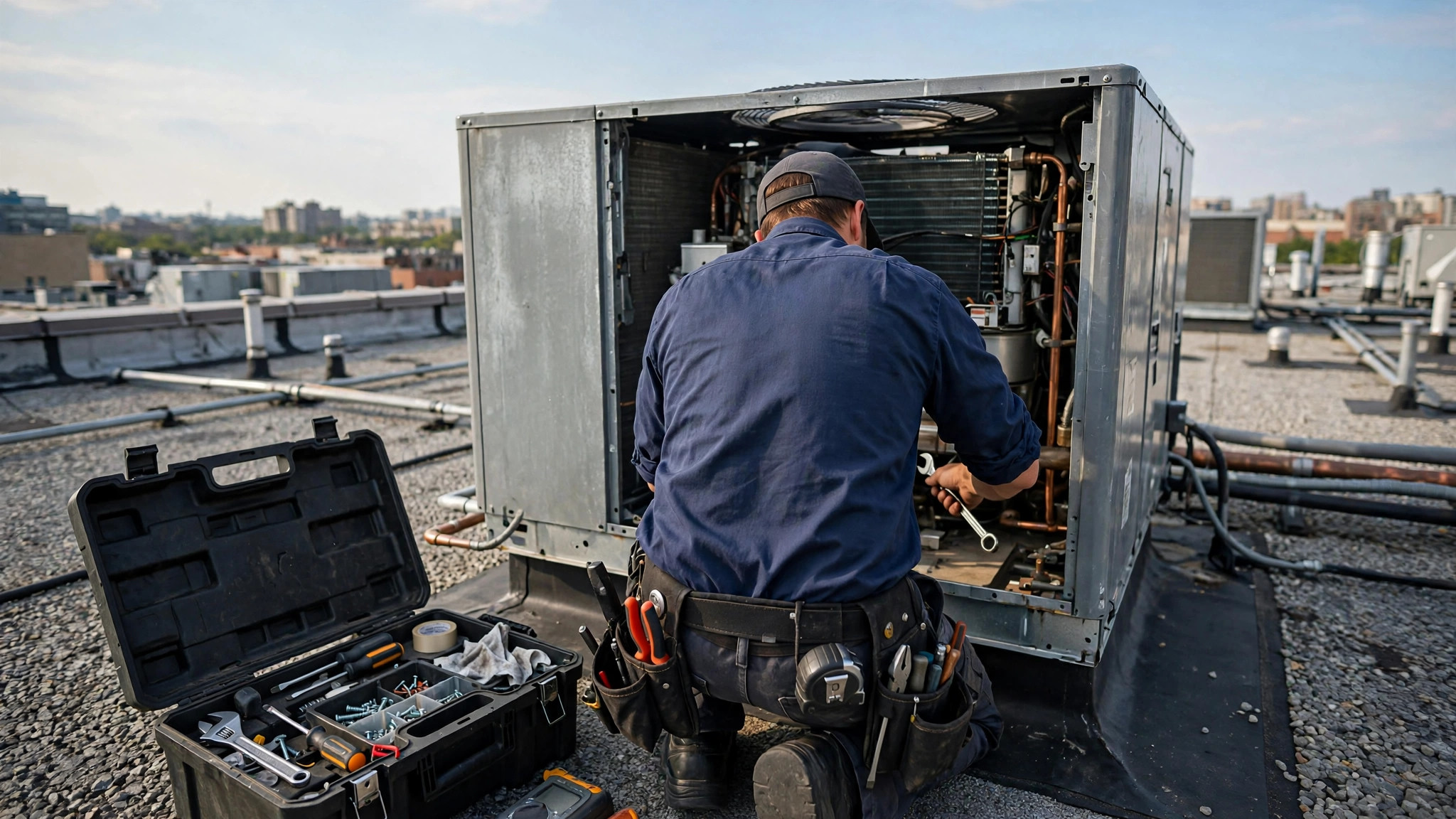
When the cooling quits in a commercial building, everything stops. Workers slow down. Customers leave. Product spoils. Servers overheat. Calling for a/c repair fast is not a luxury, it is damage control. But many breakdowns give warning first. Weak airflow, odd noises, and rising bills all point to trouble ahead. Learn the signs and you can schedule a/c repair before the system dies on the hottest day of the season. This guide covers the seven warning signs, what a service visit includes, what it costs, and how to choose the right technician.
7 Signs You Need a/c Repair
1. Weak or warm airflow. Vents blow, but the air feels weak or warm. This is the most common early sign. Causes range from a clogged filter to low refrigerant to a failing compressor. Do not ignore it. Weak airflow forces the system to run longer and wear faster.
2. Strange noises. Banging, grinding, squealing, or rattling from the unit means something is loose, worn, or broken. A squealing belt is a cheap fix today and a snapped belt tomorrow. Shut the unit down if the noise is loud and call for a/c repair before the damage spreads.
3. Short cycling. The unit turns on and off every few minutes. Short cycling wastes energy and wears out the compressor. Causes include an oversized unit, a bad thermostat, or low refrigerant. A tech can diagnose it fast.
4. Water leaks. Puddles under the unit or stains on the ceiling below point to a clogged drain line or a frozen coil. Water damage spreads quickly in commercial buildings. It ruins ceilings, walls, and inventory. Treat any leak as urgent.
5. Bad smells. Musty smells mean mold in the drain pan or ducts. Burning smells mean electrical trouble. Both need prompt a/c repair. Mold affects indoor air quality and worker health. Electrical smells are a fire risk. Shut the unit off if you smell burning.
6. Rising energy bills. A sudden jump in cooling costs with no change in weather or hours means the system is working harder than it should. Dirty coils, low refrigerant, and failing parts all cut efficiency. The U.S. Department of Energy notes that neglected maintenance is a top cause of wasted cooling energy.
7. Uneven temperatures. One zone freezes while another sweats. Dampers may be stuck, ducts may leak, or the controls may be off. In a commercial building, comfort complaints from tenants or staff are an early warning system. Listen to them.
What an a/c Repair Visit Includes
A standard a/c repair visit starts with diagnosis. The tech listens to your description, checks the thermostat, and inspects the unit. He or she measures refrigerant pressure, tests electrical parts, and checks airflow. Good techs explain what they find before doing the work. Ask for the diagnosis in plain words and the price before you approve.
Common fixes include replacing capacitors, contactors, and fan motors. These are wear parts that fail with age. Refrigerant leaks get found with detectors or dye, then sealed and recharged. Coils get cleaned. Drain lines get flushed. Thermostats get recalibrated or replaced. Most a/c repair visits wrap up in one trip if the truck carries common parts.
After the fix, the tech should test the system through a full cycle. Supply air temperature, amp draw, and refrigerant readings should all land in normal range. Ask for a short written summary of what was done. Keep it with your maintenance records. It helps the next tech and proves upkeep for warranty purposes.
For related guidance on costs and timing, see ac repair cost dallas and how long does ac repair take.
A/c Repair Cost Factors
Small fixes like a capacitor or a drain cleaning often cost a few hundred dollars. Mid-size repairs like a fan motor or a control board run higher. Compressor replacement is one of the priciest repairs and can approach the cost of a new unit on older systems. Refrigerant type matters too. Older refrigerants cost more per pound and keep rising.
Labor rates vary by market and by timing. After-hours and weekend calls carry premium rates. A maintenance agreement often cuts the emergency rate and moves you to the front of the line. Age of the system is another factor. Parts for old units get harder to find and cost more. At some point, replacement beats another round of a/c repair. A good tech will tell you when you cross that line instead of selling you one more fix.
Get the price in writing before work starts. Ask if the quote is flat-rate or time-and-materials. Flat-rate quotes protect you from a slow job. Ask about the warranty on parts and labor. Thirty to ninety days on labor is common. If the same part fails inside the warranty, the rework should be free.
Repair or Replace: Making the Call
Every owner faces this question with an aging system. Use the 50 percent rule as a starting point. If the a/c repair costs more than half the price of a new unit, and the system is past its prime, replacement usually wins. Also consider efficiency. A new unit can cut cooling bills enough to pay back part of its cost.
Frequency matters too. One repair per year is normal aging. Three repairs in one season is a pattern. Add up what you spent in the last two years. If the total nears replacement cost, stop feeding the old unit. Downtime has a cost as well. If breakdowns disrupt your business, a reliable new system is worth the investment.
Ask your tech for an honest opinion. A trustworthy tech explains both options with numbers. Be wary of anyone who pushes replacement without showing the math, or who keeps patching a unit that clearly needs to retire. For a deeper comparison, read ac repair vs replace commercial.
Choosing the Right a/c Repair Technician
Pick a company that works on commercial systems, not just homes. Commercial units are bigger, the controls are more complex, and the stakes are higher. Ask how many commercial clients the company serves. Ask if techs are certified. Factory training and industry certification are good signs. The U.S. Department of Energy publishes guidance on keeping commercial cooling systems tuned and efficient.
Check response time. When cooling fails, hours matter. Ask about average emergency response and whether a maintenance agreement gets priority. Read reviews from other business owners. Look for patterns: on-time arrival, clear pricing, and fixed-right-the-first-time are what you want.
Safety and compliance matter on commercial sites. Techs work on roofs and around electrical panels. The company should follow OSHA rules and carry proper insurance. Ask for proof. A cheap uninsured tech is a liability risk your business does not need.
Preventing the Next Breakdown
Most emergency a/c repair calls are preventable. Change filters on schedule. Dirty filters choke airflow and strain the whole system. Keep coils clean and the area around outdoor units clear of trash and plants. Two feet of clearance is a good rule. Calibrate the thermostat once a year so the system does not overwork.
The biggest step is a maintenance agreement with a commercial company. Twice-yearly visits catch worn parts, low refrigerant, and dirty coils before they cause a breakdown. Agreement customers also get priority scheduling and lower emergency rates. Prevention costs less than repair, every time.
FAQ
How fast can I get emergency a/c repair?
Many commercial companies offer same-day or 24-hour emergency service. Response depends on the season and your service agreement. Customers with maintenance contracts usually get priority. If cooling is critical to your operation, a contract is worth the cost.
Why does my a/c keep freezing up?
Low refrigerant, dirty coils, and weak airflow are the usual causes. A frozen coil cannot cool, so the building gets warmer while the unit runs harder. Turn the system off to let it thaw, then call for a/c repair. Running a frozen unit can kill the compressor.
How often should a commercial a/c be serviced?
At least twice per year: once before cooling season and once after. Heavy-use buildings and dusty environments need more. Regular service catches small problems before they become emergency a/c repair calls.
Can I do any a/c repair myself?
You can change filters and keep the area around the unit clear. Leave the rest to a licensed tech. Refrigerant handling requires certification. Electrical work is dangerous. DIY mistakes often cost more than the service call would have.
What should I ask before approving a repair?
Ask what failed, why it failed, and what the fix costs. Ask if related parts should be replaced at the same time. Ask about the warranty on the work. Get it all in writing. A good tech answers without hedging.
Next Steps
Do not wait for a breakdown. Walk your building this week and check for the seven signs above. If you spot one, call a qualified commercial tech for a/c repair now, while it is still a small fix. Get on a maintenance plan so the system gets checked twice a year. Fast action on small problems is what keeps a commercial cooling system alive and your business running cool.



