
Choosing a flat roof membrane is one of the biggest decisions a commercial building owner makes. The membrane is the waterproof skin that stands between your building and the weather. Pick well and you get decades of dry, low cost protection. Pick poorly and you get leaks, high bills, and early replacement.
This guide compares five flat roof membrane types side by side. You will learn how each works, what it costs, how long it lasts, and which buildings each suits best.
What a flat roof membrane Does
A flat roof membrane is a continuous waterproof layer covering a low slope roof. Unlike steep roofs that shed water fast, flat roofs drain slowly, so the membrane must hold up under standing water, sun, and temperature swings. It works as part of a system with insulation below and flashing at every edge and penetration.
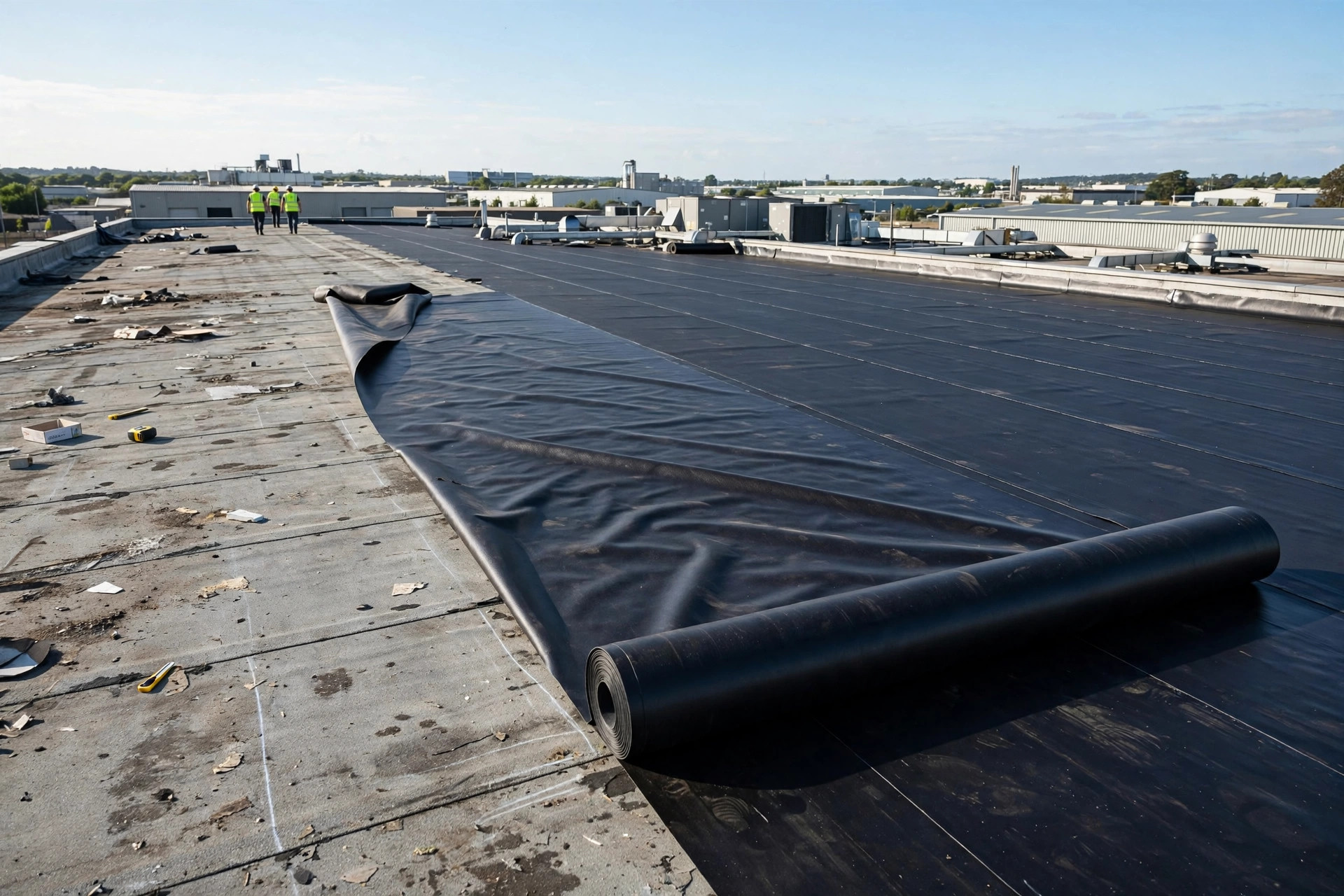
Modern membranes come in wide sheets or as liquid applied coatings. Sheet membranes dominate commercial work. They arrive in rolls, get laid across the roof, and join at seams into one watertight surface. The quality of those seams, plus the flashing details, decides how well any flat roof membrane performs.
No membrane works alone. Insulation adds energy value and a smooth base. Proper slope to drains prevents ponding. Good flashing seals the edges. When owners compare roofing membranes, they should always evaluate the full system the contractor proposes, since the membrane is only one part of lasting protection.
5 Flat roof membrane Types Compared
Five main types serve the commercial market.
TPO is a white thermoplastic sheet with heat welded seams. It reflects sunlight, cutting cooling costs in warm climates. It sits in the mid price range and offers 20 to 30 years of service with good care. Installation quality is critical since the membrane lives or dies by its welds. For a deeper look, see our guide to TPO roof repair.
EPDM is a black synthetic rubber sheet with glued or taped seams. It has the longest track record of the single plies and handles cold weather best. It usually costs less than TPO. Its dark color absorbs heat, which helps in cold climates and hurts where cooling dominates. Grease and oils damage it.
PVC is a thermoplastic like TPO but with better chemical resistance. It heat welds like TPO and resists grease, making it the pick for restaurants. It costs more than TPO or EPDM but brings a long proven history.
Modified bitumen is an asphalt based sheet applied in rolls, often torched or self adhered. It is tough, handles foot traffic well, and costs sit in the lower mid range. Seams are heat welded or sealed. It has a shorter modern track record than the single plies but performs reliably.
Built up roofing, or BUR, layers asphalt and felt plies topped with gravel or a cap sheet. It is the old reliable of flat roofing with a very long history. It costs less upfront in many markets but needs more maintenance and is heavy. Fewer contractors install it today.
Each type has a natural home. Match the membrane to your climate, building use, and budget rather than chasing the lowest bid.
Cost Comparison
Installed cost varies by market, but the order usually holds. Built up roofing and EPDM often offer the lowest installed cost. Modified bitumen and TPO sit in the middle. PVC costs more. Premium options like standing seam metal over low slope structures cost the most.
But purchase price is only half the story. Divide each option’s cost by its expected lifespan for a cost per year comparison. A membrane that costs more upfront but lasts 30 years often beats a cheap one lasting 15. Add energy effects too. A reflective white flat roof membrane can trim cooling bills substantially in warm climates, which offsets higher first cost.
Use this cost checklist for any flat roof membrane bid:
- Membrane type, brand, and thickness named explicitly.
- Insulation type and R value included.
- Attachment method and wind rating.
- Full flashing scope for every penetration and edge.
- Tear off or overlay plan with moisture survey results.
- Warranty term and coverage level.
- Project timeline and payment schedule.
Get three bids with identical scope. The National Roofing Contractors Association offers owner resources for comparing systems at nrca.net.
Lifespan and Durability
With quality installation and maintenance, most modern flat roof membrane systems last 20 to 30 years. EPDM often reaches the long end. TPO and PVC sit solidly in the range. Modified bitumen and BUR depend heavily on maintenance quality.
What shortens life? Ponding water is the top killer. UV exposure degrades unprotected surfaces over time. Foot traffic punctures thin membranes. Poor seams fail early. Chemical exposure, especially grease on non resistant membranes, eats material.
What extends life? Twice yearly inspections, prompt repairs, clear drains, walkway pads, and quick attention after storms. A maintained flat roof membrane routinely outlives a neglected one by a decade. That is the cheapest lifespan extension you can buy.
Warranties reflect expected life. Longer manufacturer warranties require thicker materials, specific details, and documented maintenance. Read the terms before you buy. A 30 year warranty with strict maintenance rules only protects owners who follow them.
Choosing the Right flat roof membrane
Start with climate. Hot sunny regions favor reflective white membranes like TPO or PVC for cooling savings. Cold regions do well with EPDM’s flexibility and lower cost, since heat absorption is less of a penalty. Mixed climates need a balanced choice.
Consider building use. Restaurants need grease resistant PVC. Warehouses with heavy rooftop traffic need tough membranes plus walkway protection. Schools and offices value quiet, low maintenance systems.
Check the structure. Ballasted systems need load capacity. Tear off versus overlay depends on the old roof’s condition and code limits. Your contractor should verify all of this before recommending a flat roof membrane.
Think about the future. If you plan rooftop solar, choose a membrane compatible with the mounting system and confirm warranty terms. If you may sell soon, a transferable warranty adds value. Match the investment to your ownership plans.
For existing leak issues, our commercial flat roof repair guide helps you judge repair versus replacement. For drainage problems that threaten any membrane, see flat roof drain repair.
Installation Quality Matters Most
The best flat roof membrane installed badly will fail early. The mid grade membrane installed well can last decades. This is the most important lesson in commercial roofing.
Vet your contractor hard. Ask how many installs of your chosen membrane they complete each year. Ask who supervises the crew and how seams get tested. Request addresses of past jobs. Call references and ask about leaks, responsiveness, and warranty support.
Insist on manufacturer certification when the warranty requires it. Many premium warranties only apply when certified contractors install the system. The certification protects you, not just the manufacturer.
Be present or represented at key stages. Check that the deck is properly prepared, insulation is installed flat and tight, and flashing details get the time they need. Rushed flashing is the top cause of early failure in every membrane type. A short daily check during installation costs you little and catches shortcuts before they are buried. Safety matters throughout: OSHA fall protection rules for roofing are at osha.gov.
Frequently Asked Questions
Which flat roof membrane lasts longest?
EPDM has the longest proven track record, often 25 to 30 years or more with care. TPO and PVC also reach 20 to 30 years. Actual life depends more on installation quality and maintenance than on the material alone.
Can I put a new flat roof membrane over the old one?
Sometimes. The old roof must be dry, sound, and within code layer limits. A moisture survey finds trapped water. Your contractor should test before recommending an overlay.
Which membrane is best for a restaurant?
PVC, because it resists grease and chemicals that damage other membranes. Make sure the system is designed for the exhaust layout and that grease containment is addressed.
Does a white membrane really save energy?
In warm climates, yes. Reflective white surfaces can cut roof temperatures dramatically versus dark roofs, reducing cooling load. ENERGY STAR explains cool roof benefits at energystar.gov.
What is the cheapest flat roof membrane?
EPDM and built up roofing usually offer the lowest installed cost. Compare cost per year of expected service, not just upfront price, to find the real bargain.
Next Steps
You now know the five main flat roof membrane types, their costs, and how to choose. The next step is a professional inspection of your current roof to learn its condition and remaining life. Then get three detailed bids for the membrane type that fits your climate and building use. Compare full systems, warranties, and contractor qualifications, not just prices. A well chosen and well installed flat roof membrane will protect your building quietly for decades. File your warranty papers and inspection log where they are easy to find.



