
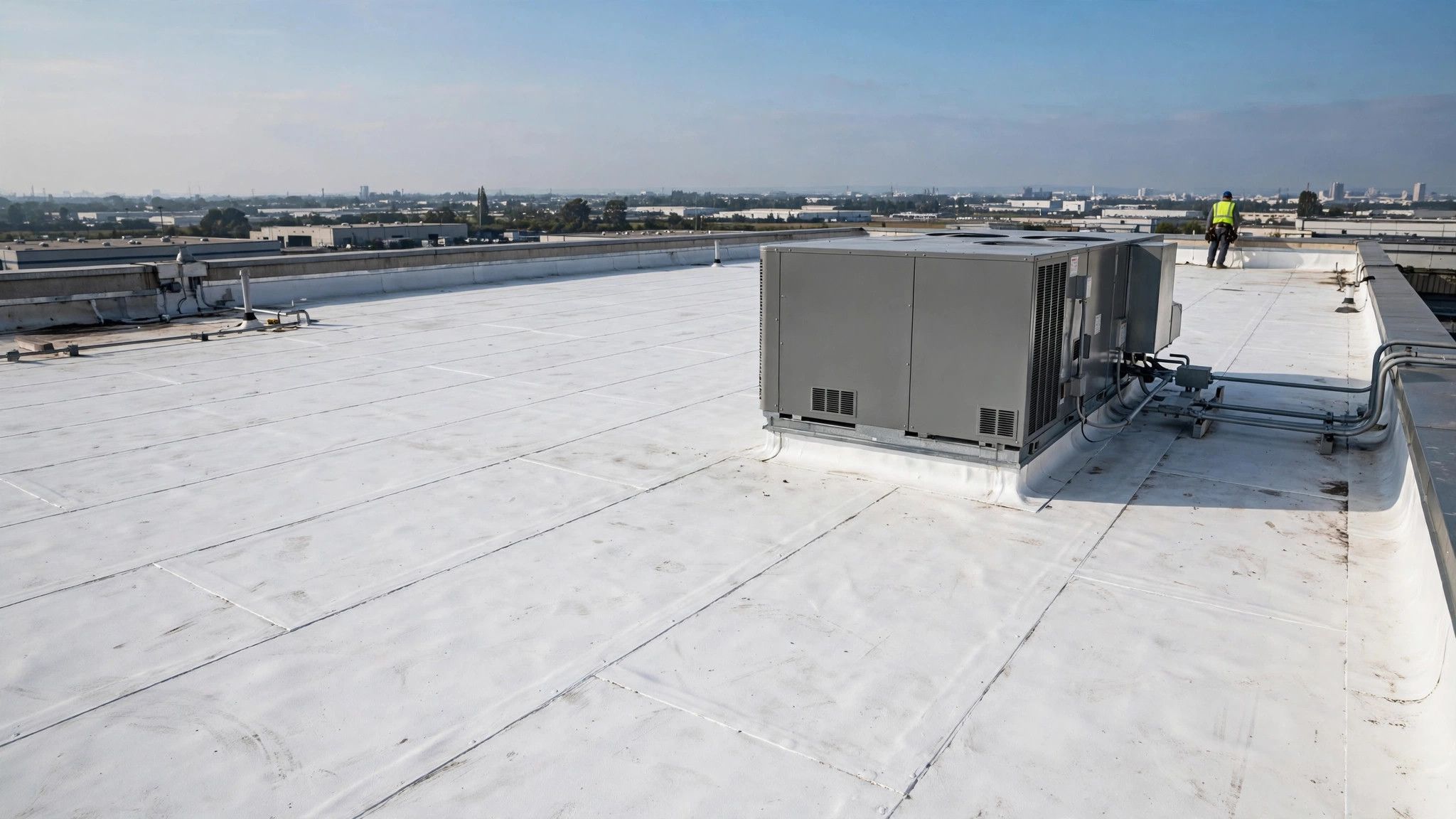
A furnace and ac system is the most common way to heat and cool a commercial building in the United States. The furnace makes heat in winter. The air conditioner makes cool air in summer. Both parts share one air handler and one set of ducts.
Most small and mid-size commercial buildings run on this type of setup. Offices, retail shops, restaurants, and small warehouses all rely on this pairing. This guide explains how a furnace and ac works, what it costs, how to keep it running, and when to replace it.
How a Furnace and AC Works in a Commercial Building
A furnace and ac system has two main parts that work as a team. The furnace burns gas or oil, or uses electric coils, to make heat. The air conditioner uses a compressor and refrigerant to pull heat out of indoor air.
In winter, the furnace warms the air. A blower fan pushes the warm air through ducts to every room. The thermostat watches the indoor temperature and tells the furnace when to fire up and when to rest.
In summer, the roles switch. The outdoor part of the unit, called the condenser, pumps refrigerant through coils. The refrigerant absorbs heat from indoor air and releases it outside. Cool air moves through the same ducts the furnace used in winter.
The shared parts matter. A furnace and ac uses one blower motor, one set of ducts, and one control system. That keeps installation simpler than two separate systems. It also means one weak part can affect both heating and cooling, so regular checks are smart.
Many commercial units are rooftop package systems. Both parts sit in one big box on the roof. Ducts drop straight down into the building. This saves indoor space and makes service access easy for technicians.
Furnace and AC Maintenance Checklist for Building Owners
Regular care keeps a furnace and ac running strong. Small problems caught early stay cheap. Ignored problems turn into emergency calls. Use this checklist to stay ahead.
- Change or clean air filters every month or two. Dirty filters choke airflow and force the system to work harder.
- Keep the area around the outdoor condenser clear. Cut back weeds, trash, and stacked pallets at least two feet away.
- Clean condenser coils once a year. Dirt on coils blocks heat transfer and raises energy bills.
- Check the thermostat. Make sure it reads the true room temperature and that its program matches your business hours.
- Look at the condensate drain. A clogged drain can shut the system down or cause water damage.
- Listen for new noises. Banging, squealing, or grinding from the unit often means a belt, bearing, or motor is failing.
- Schedule professional service twice a year. A spring cooling check and a fall heating check catch wear before it breaks.
- Review energy bills. A steady climb with no change in use often means the furnace and ac is losing efficiency.
A written commercial hvac maintenance checklist helps staff follow the same steps every time. It also gives you a service record, which helps with warranty claims.
Furnace and AC Replacement Cost Factors
Replacing a furnace and ac for a commercial building costs more than a home system. Size, fuel type, and ductwork all shape the final number. Here are the main cost factors to weigh.
First is capacity. Commercial units are measured in tons of cooling. A bigger building needs more tons, and larger units cost more to buy and install. A proper load calculation, called a Manual J by the trade, decides the right size.
Second is the fuel type. Gas furnaces usually cost less to run in cold regions. Electric furnaces cost less to install but more to run. Your local utility rates decide which wins.
Third is efficiency rating. Furnaces carry an AFUE rating and air conditioners carry a SEER2 rating. Higher ratings cost more up front but cut monthly bills. In a building that runs all day, the savings add up fast.
Fourth is ductwork. If the old ducts are in good shape, they can stay. If they leak or are undersized, new ductwork adds real money to the job.
Fifth is labor and permits. Crane lifts for rooftop units, electrical upgrades, and local permits all add cost. A clear written quote from a licensed contractor avoids surprises.
Plan for this expense before the old furnace and ac dies. Emergency replacement always costs more than a planned job. Learn more about commercial hvac repair cost to see typical ranges.
Signs Your Furnace and AC Needs Replacement
A well-kept furnace and ac can last fifteen to twenty years. After that, repair money often gets wasted on a dying system. Watch for these signs.
Frequent breakdowns are the clearest signal. If the technician visits twice a year or more, the system is wearing out. Repair costs stack up while reliability keeps falling.
Rising energy bills point to lost efficiency. Old compressors and heat exchangers work harder for the same output. The U.S. Department of Energy notes that replacing very old equipment with efficient models can cut heating and cooling costs sharply. See their guidance at https://www.energy.gov/energysaver/central-air-conditioning.
Uneven temperatures across the building mean the furnace and ac cannot keep up. Some rooms stay hot while others stay cold. This often comes from an aging blower or failing controls.
Strange smells or poor indoor air quality are another warning. Musty odors from ducts can mean moisture problems. Burning smells from a furnace need immediate attention from a pro.
Age alone is a fair reason. If your furnace and ac is past the fifteen-year mark and needs a major repair, replacement usually pays. A new system brings a fresh warranty, lower bills, and safer operation.
If you notice these problems, read about signs your commercial hvac needs repair to tell simple fixes apart from system-wide failure.
Furnace and AC Controls That Cut Waste
Old thermostats waste money. A basic dial thermostat holds one temperature all day and night. A modern furnace and ac deserves better controls that match your business hours.
Programmable thermostats are the first upgrade. Set cooler hours for closing time and warmer hours before staff arrive. The building stays comfortable when people are there and saves energy when it is empty. The payback often comes within one year.
Smart thermostats add remote access. You can check the temperature from your phone and get alerts when the system acts up. Some models learn your schedule and adjust on their own. They also track run time, which helps you spot problems early.
Zoning is the next step. Dampers in the ducts send more air where it is needed and less where it is not. A sunny office and a cool stockroom no longer fight over one setting. Zoning works with most existing duct layouts and makes a real difference in comfort.
Building automation ties it all together. Larger buildings use a central panel to control heating, cooling, lights, and sometimes security. It sounds fancy, but even small shops benefit from scheduling and alerts. Ask your contractor what controls fit your current setup without a full replacement.
FAQ About Furnace and AC for Businesses
How long does a commercial system of this type last?
Most of these systems last fifteen to twenty years with steady maintenance. Rooftop units in hot climates may wear faster. Skipping filter changes and coil cleanings shortens the life by years.
What size system does my building need?
Size depends on square footage, ceiling height, insulation, windows, and how the space is used. A restaurant kitchen needs more cooling than a storage room of the same size. A licensed contractor should run a load calculation before quoting.
Should I repair or replace my old furnace and ac?
Use the fifty percent rule. If a repair costs more than half the price of a new system, replacement usually wins. Also replace when the unit is over fifteen years old, uses old refrigerant, or breaks down often.
How can I lower the running cost of the system?
Change filters on schedule, seal duct leaks, set back the thermostat after hours, and service the unit twice a year. The EPA’s ENERGY STAR program at https://www.energystar.gov/ offers free tips for cutting commercial building energy use.
Does this equipment work with a building automation system?
Yes. Most modern furnace and ac units connect to thermostats and building controls that schedule start times, set zones, and send alerts. Controls pay for themselves in buildings with shifting hours.
Next Steps for Your Building
Start with a simple walk-through. Check filters, look at the condenser, and note the age of the equipment from the nameplate. Then book a professional tune-up before the next heavy season. A good contractor will give you an honest read on remaining life and a clear quote when replacement time comes. Your commercial heating and cooling system protects your staff, your customers, and your inventory, so treat it like the asset it is.



