
A furnace and ac replacement cost calculator helps building owners estimate what a new heating and cooling system will cost. Online calculators ask for a few inputs and return a price range. The result is a starting point, not a final quote.
This guide explains the six inputs that matter most, what they do to the price, and how to turn an estimate into an accurate bid. Use it before you call contractors so you know what questions to ask.
What a Furnace and Ac Replacement Cost Calculator Does
A furnace and ac replacement cost calculator takes basic facts about your building and equipment, then applies average pricing data. It gives you a ballpark number in seconds.
The calculator cannot see your building. It does not know your duct condition, your electrical panel, or your roof access. That is why its number is a range, often a wide one.
Use the estimate to budget and to sanity-check bids. If three contractor quotes cluster around the calculator range, the market is speaking. If one quote sits far outside, ask why.
No calculator replaces a site visit. A contractor who measures, inspects ducts, and checks electrical will price more accurately than any online tool. Treat the furnace and ac replacement cost calculator as step one of five, not the whole job.
Input 1: Building Size and Tonnage
Size drives cost more than any other input. A furnace and ac replacement cost calculator starts here because equipment price scales with capacity.
The calculator may ask for square footage and estimate tons from it. That shortcut is rough. Real sizing needs a load calculation that accounts for insulation, windows, ceiling height, and building use.
A small office might need five tons. A restaurant the same size might need ten because of kitchen heat. The calculator cannot know your use, so its tonnage guess may miss.
When you get real quotes, insist on a Manual J load calculation. Right-sized equipment costs less to buy and less to run. Oversized equipment wastes money twice.
Input 2: System Type
The type of furnace and ac replacement cost calculator result changes with the system type you pick. Different systems cost very different amounts.
A packaged rooftop unit usually costs least to install. Everything ships in one box, and the swap is straightforward. Most small commercial buildings use this type.
A split system costs more. The condenser goes outside and the air handler goes inside, which means more labor and more parts. Buildings with indoor equipment rooms often need splits.
VRF systems cost the most. They deliver zoned comfort and strong efficiency, but the equipment and the skilled labor both price high. Large or complex buildings justify the spend.
Your calculator should let you pick the type. If it assumes one type for all buildings, its number may mislead. Match the input to what your building actually uses.
Input 3: Fuel Type and Efficiency
Fuel choice moves both the install price and the monthly bills. A furnace and ac replacement cost calculator should ask about it.
Gas furnaces cost more to install than electric heat. They need gas lines, venting, and combustion safety work. But gas often heats cheaper in cold regions, so the payback can be quick.
Electric heat installs simpler. The equipment costs less, but the wiring may need upsizing. In mild climates or where gas is costly, electric wins on total cost.
Efficiency ratings matter too. Higher AFUE for furnaces and higher SEER2 for cooling cost more upfront. The U.S. Department of Energy explains current efficiency standards at https://www.energy.gov/energysaver/.
In buildings that run long hours, efficient equipment pays back fast. In buildings used lightly, basic efficiency may pencil out better. Your usage pattern decides.
Input 4: Ductwork Condition
Ducts can make or break the budget. A furnace and ac replacement cost calculator often assumes ducts are fine. Real buildings often prove otherwise.
Good ducts need only minor sealing and balancing. That adds a small line to the project. The new equipment connects and performs as designed.
Leaky ducts need sealing. Mastic or Aeroseal fixes most leaks for a moderate cost. Sealing also improves comfort, so the money does double duty.
Bad ducts need replacement. Crushed, moldy, or badly undersized ducts cannot serve new equipment. Full duct replacement can rival the equipment cost on some jobs.
Ask each bidding contractor to inspect the ducts and report honestly. A quote that ignores bad ducts will disappoint you later. Learn typical repair pricing at commercial hvac repair cost.
Input 5: Installation Complexity
Labor varies wildly by job site. A furnace and ac replacement cost calculator uses average labor, but your building may not be average.
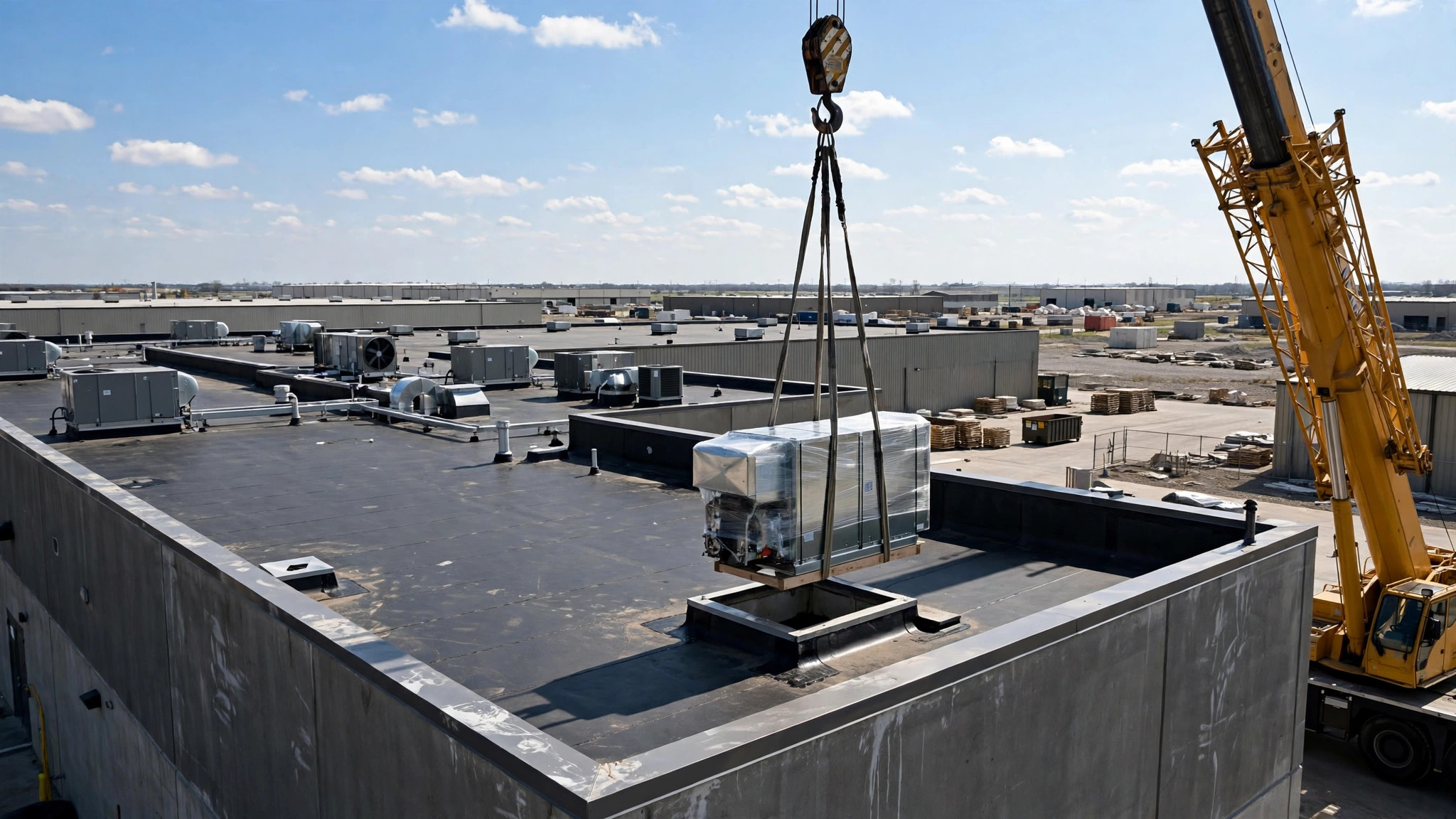
Rooftop swaps need cranes. The crane is a fixed cost per visit. If the new unit needs a different curb, adapters or a new curb add more.
Electrical upgrades add cost. Larger or more efficient units may need bigger circuits. Old panels may need replacement. A licensed electrician prices this separately.
Permits and inspections add fees and time. Costs vary by city. Some jurisdictions require plan review for commercial HVAC work.
Occupied buildings cost more to work in. After-hours rules, noise limits, and tenant coordination slow crews. Budget extra when the building cannot shut down.
Input 6: Controls and Extras
The last input covers everything beyond the box. A furnace and ac replacement cost calculator may lump these as extras, but they matter.
Thermostats range from basic to smart. Programmable models pay for themselves in most buildings. Smart models add remote access and alerts.
Building automation ties HVAC into a central system. It costs real money but cuts energy waste across the building. Larger buildings benefit most.
Indoor air quality add-ons include better filtration, UV lights, and humidifiers. Each adds cost and comfort. Decide which ones your building truly needs.
Warranties vary. Standard coverage comes with the equipment. Extended warranties cost more. Read what each covers before you pay extra.
Turning the Estimate Into Real Quotes
A furnace and ac replacement cost calculator gives you a number. Now get three site-visit quotes to replace it with reality.
Give every contractor the same information. Building size, current system type, comfort complaints, and budget range. Same inputs mean comparable quotes.
Ask for line items. Equipment, labor, ducts, electrical, permits, and controls should each show separately. Lump-sum quotes hide the details you need to compare.
Check the load calculation. Any contractor who sizes by square footage alone is guessing. Demand a real calculation and ask to see it.
Compare warranties and timelines. The cheapest quote with a weak warranty and a vague schedule is not the best deal. Value beats price on equipment that runs for twenty years.
For contractor vetting, read how to find a commercial hvac contractor. Good contractors welcome informed buyers.
Common Cost Calculator Mistakes
The top mistake is trusting one calculator. Different tools use different data and assumptions. Run two or three calculators and compare the ranges. The overlap is your realistic budget zone.
Another mistake is ignoring the fine print. Some calculators exclude ducts, electrical, and permits. Those exclusions can hide a third of the real cost. Read what the number includes before you budget around it.
Do not forget your building’s quirks. Old wiring, tight roof access, and occupied-building rules all cost extra. No online tool knows your building. The site visit catches what the calculator misses every time.
FAQ: Furnace and AC Replacement Cost Calculator
How accurate is a furnace and ac replacement cost calculator?
It gives a useful range, usually within twenty to thirty percent of real quotes. Site-specific factors like ducts, electrical, and access move the final number. Use it for budgeting, not for signing contracts.
What is the biggest cost driver the calculator might miss?
Ductwork condition. Calculators assume average ducts. Bad ducts can add thousands. Always have ducts inspected before finalizing the budget.
Should I replace the furnace and ac together?
Yes, in most cases. The parts share ducts, controls, and labor. Replacing together costs less than two separate jobs and gives you matched, warrantied equipment.
How can I lower my replacement cost?
Get three quotes, keep ducts if they are sound, pick efficiency that matches your usage, and schedule in the off-season when contractors offer better pricing. ENERGY STAR guidance at https://www.energystar.gov/ helps compare efficient models.
Does a furnace and ac replacement cost calculator include permits?
Most do not. Permit fees vary by city and add to the total. Ask each contractor to list permits as a line item so nothing hides.
Next Steps for Building Owners
Run a furnace and ac replacement cost calculator to set your budget range. Then schedule three contractors for site visits with load calculations. Compare line-item quotes, check references, and read commercial heating and cooling for system background. The estimate starts the conversation. The site visit finishes it. Plan the replacement before the old system dies, and you will buy on your terms instead of in a panic.



