
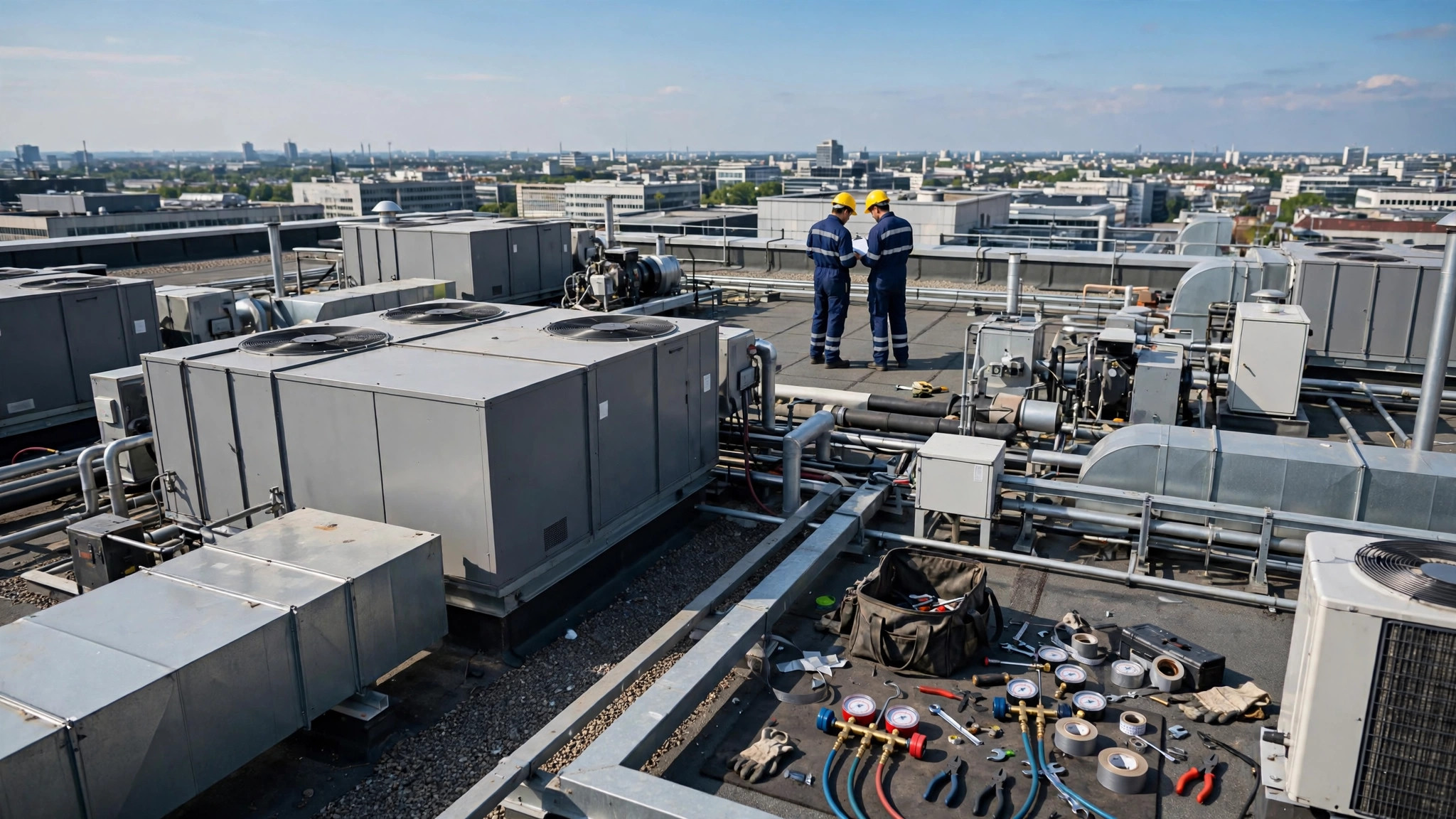
Commercial hvac contractors install, repair, and maintain the heating and cooling systems in commercial buildings. They work on rooftop units, chillers, boilers, and the ductwork and controls that connect them. For building owners across the United States, picking from the many commercial hvac contractors in the market is a decision that affects comfort, energy costs, and equipment life for years.
The stakes are high because commercial systems are expensive and complex. A bad install can waste energy for a decade. A weak maintenance contractor lets small problems grow into big ones. This guide gives you eight practical vetting tips to separate the pros from the pretenders.
1. Verify Commercial Focus Among commercial hvac contractors
Ask what share of the company’s work is commercial. You want commercial hvac contractors who live in office buildings, warehouses, and retail spaces, not residential shops that take commercial jobs on the side. Commercial systems differ in size, controls, codes, and safety requirements.
Ask about project scale. A contractor who handles single rooftop units may not be ready for a chiller plant. Match their typical project size to yours. Ask what building types they serve most: offices, restaurants, industrial, healthcare. Relevant experience matters.
2. Check Licenses and Insurance
Mechanical contracting licenses vary by state and sometimes by city. Good commercial hvac contractors hold the licenses their jurisdiction requires for commercial work. Ask for license numbers and verify them with the issuing authority.
Insurance is non-negotiable. The contractor should carry general liability and workers compensation. Commercial sites may also require umbrella coverage. Ask for certificates naming your company or property as certificate holder. Uninsured contractors expose you to serious risk if someone is hurt on your property.
3. Dig Into Technician Quality
The company is only as good as the techs it sends. Ask about hiring standards, training programs, and certifications. Techs working with refrigerants must hold EPA Section 608 certification. Factory training on major equipment brands is a plus.
Ask about turnover. High turnover means strangers learn your building every visit. Low turnover means experienced techs who know your systems. Ask whether the company can assign the same tech or team to your account.
Ask who does the work: employees or subcontractors. Neither is automatically bad, but you should know. If subs are used, ask how they are vetted and supervised. Accountability should stay with the company you hired.
4. Compare Detailed Bids and Cost Breakdowns From commercial hvac contractors
Get three bids on identical scope. For projects, each bid should name equipment makes, models, capacities, and efficiencies, plus ductwork scope, controls, permits, startup, training, and warranty terms. For service plans, each should list visit count, tasks per visit, and response promises.
Beware bids that are far apart. A very low bid usually means thinner scope, cheaper equipment, or skipped steps. A very high bid may include padding or premium equipment you did not ask for. Ask each bidder to explain major price differences.
Never accept a major project bid without a site visit. Real bids require seeing the equipment, access, and existing conditions. Phone quotes for big work are guesses. The site visit also shows you how the contractor operates.
For cost context, see commercial hvac repair cost and hvac service agreement for business. For finding local options, read how to find a commercial hvac contractor.
5. Call References and Visit Past Work
Ask for three references from buildings like yours. Call each one. Ask about schedule keeping, budget accuracy, workmanship, communication, and how the systems have performed since. Ask what went wrong and how the contractor handled it.
The answers about problems matter most. Every project has hiccups. Good commercial hvac contractors own their mistakes and fix them fast. Defensive or blame-shifting responses are warning signs.
If possible, visit a past job. A mechanical room or rooftop installed years ago shows how the work holds up. Neat piping, labeled equipment, and clean installs signal pride in craft. Sloppy past work predicts sloppy future work.
6. Read the Contract Before You Sign
Service agreements should state visit schedules, task lists, prices, term length, renewal terms, and exit rules. Vague agreements lead to disputes about what was included. Everything important goes in writing.
Project contracts should detail scope, equipment, timeline, payment schedule, change-order process, and warranties. Never pay the full amount upfront. Tie payments to milestones, with final payment after acceptance and commissioning.
Check the fine print on exclusions. What is not included? Refrigerant, major parts, after-hours labor, and crane costs are common exclusions. Knowing them upfront prevents surprise invoices.
Understand the warranty. Equipment warranties come from makers. Workmanship warranties come from the contractor. Know the length, the coverage, and what voids each. Get warranty documents, not just verbal promises.
7. Test Communication Early
How a contractor communicates during bidding predicts how they communicate during the job. Do they answer calls and emails promptly? Do they explain things clearly? Do they show up when scheduled? Sloppy courtship means sloppy service.
Ask who your day-to-day contact will be. You need a name and a direct line, not a general inbox. For larger accounts, ask about a dedicated account manager. Clear communication lines prevent small issues from growing.
Ask about reporting. Maintenance visits should produce written reports with photos. Project work should include progress updates. If the contractor cannot show you a sample report, their documentation is probably weak.
8. Start Small Before You Commit Big
If possible, test commercial hvac contractors with a small job before signing a big contract. A repair call or a single maintenance visit shows you their punctuality, tech quality, reporting, and billing honesty at low risk.
Use the trial to check the details. Did the tech arrive on time? Did they explain the problem clearly? Was the invoice itemized and fair? Did the fix hold? These small signals predict big-project behavior.
For service plans, consider a one-year term first. A year is enough to judge response times, report quality, and whether the relationship works. Avoid multi-year lock-ins until the contractor has earned your trust.
Red Flags in commercial hvac contractors
High-pressure sales tactics are a major red flag. A tech who discovers a minor issue and demands an immediate full replacement is selling, not advising. Get a second opinion on any big-ticket recommendation before approving.
Cash-only or no-contract operators should be avoided. Legitimate commercial hvac contractors use written contracts, take normal payments, and carry insurance. Anyone who will not put it in writing will not stand behind it either.
Chronic lateness and no-shows during bidding will only get worse after signing. If getting a quote scheduled is hard, imagine getting emergency service. Move on to responsive bidders.
Unwillingness to provide references, licenses, or insurance certificates is disqualifying. Honest contractors provide these routinely. Evasion means something is being hidden.
Building a Long-Term Partnership
The best outcome is a long-term partnership with commercial hvac contractors who know your buildings. Share your equipment inventory with ages and history. A contractor with this data plans replacements before failures and budgets with you.
Keep the maintenance schedule sacred. Plans only work when visits happen. Provide access, keep a building contact available, and read every report. Approve flagged repairs promptly.
Review the relationship annually. Are response times holding? Are costs trending well? Is equipment lasting? Share the scorecard with your contractor. Good partners welcome the review and adjust.
The Department of Energy offers commercial HVAC resources at https://www.energy.gov/. ASHRAE sets the industry design standards at https://www.ashrae.org/. OSHA covers worker safety on HVAC job sites at https://www.osha.gov/.
The best commercial hvac contractors earn long-term partnerships by planning ahead with you, tracking equipment ages and warning you before failures.
How many bids should I get from commercial hvac contractors?
Three is the standard. More than that wastes everyone’s time; fewer leaves you without comparison. Make sure all three bid the same scope so prices compare fairly.
Should I choose the lowest bid?
Rarely. The lowest bid often reflects thinner scope or cheaper equipment. Compare what each bid includes, check references, and weigh total value. The cheapest bid is the most expensive when it leads to callbacks.
What licenses do commercial hvac contractors need?
It varies by state and city. Most jurisdictions require a mechanical contractor license for commercial work, and techs need EPA refrigerant certification. Verify licenses with the issuing authority.
How long should a commercial HVAC workmanship warranty last?
One year is the minimum standard for installation workmanship. Many good contractors offer more. Get the warranty terms in writing, including what is covered and what voids it.
Can I switch commercial hvac contractors mid-contract?
It depends on your contract terms. Most service agreements have termination clauses with notice periods. Read your agreement before switching, and make sure the new contractor gets your equipment history.
Next Steps
Build a shortlist of three commercial hvac contractors with strong commercial focus in your area. Interview them with the questions in this guide, verify licenses and insurance, and call their references. Start with a trial job or a one-year agreement. The right partner will prove their value in the first year, and your buildings will run better for it.



