
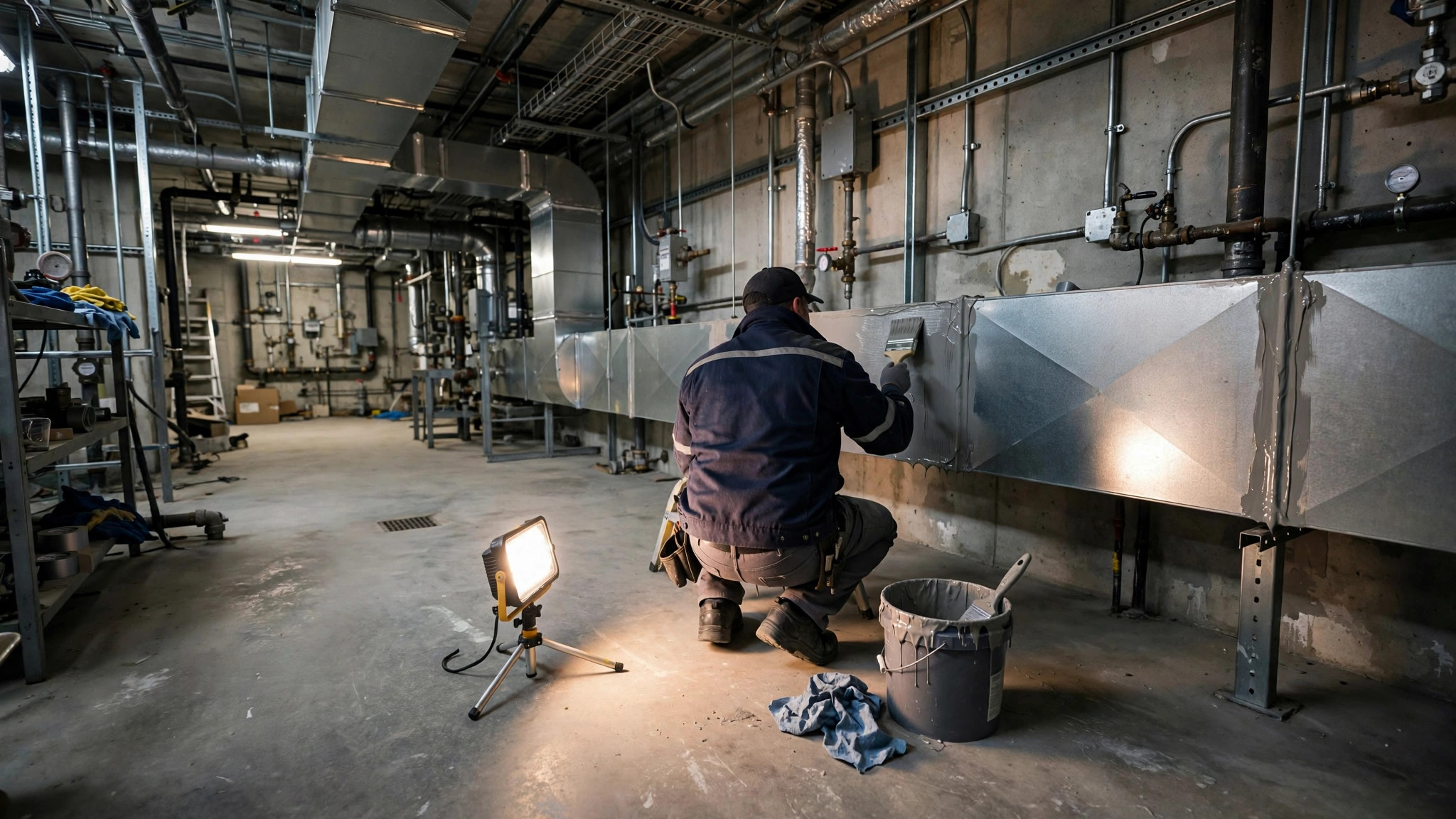
Duct sealing services find and seal leaks in a commercial building’s air ducts. Ducts carry heated and cooled air from HVAC units to every room. When ducts leak, conditioned air escapes into ceiling spaces, attics, and wall cavities before it reaches the rooms. For building owners across the United States, professional duct sealing services are one of the fastest paybacks in building efficiency: lower energy bills, better comfort, and cleaner air.
Duct leaks are invisible but costly. Joints loosen over time, sealant dries out, and sections pull apart. The system works harder to make up the loss, which wears equipment faster and raises power bills. Sealing the leaks restores the system to how it should perform.
6 Benefits of duct sealing services
One, lower energy bills. Sealed ducts deliver the air where it belongs instead of dumping it into dead spaces. The HVAC unit runs less to hold temperature. The Department of Energy lists duct sealing among the top efficiency moves for buildings with forced-air systems.
Two, better comfort. Leaky ducts starve some rooms of air while overfeeding others. Sealing balances the system so each zone gets its designed airflow. Hot and cold spots shrink or disappear.
Three, cleaner indoor air. Leaky return ducts pull dusty, dirty air from ceiling spaces and wall cavities into the system. That dirt ends up in occupied rooms. Sealed ducts keep the airstream clean, which helps people with allergies and asthma.
Four, less equipment strain. When ducts leak, units run longer cycles to meet the thermostat. Longer run times wear compressors, motors, and burners faster. Sealed ducts cut run time and extend equipment life.
Five, better humidity control. Leaky ducts in humid spaces pull moist air into the system, which can overwhelm dehumidification. Sealing keeps moisture out of the airstream and helps the system control humidity as designed.
Six, quieter operation. Leaks whistle and rattle. Sealing quiets the system, which matters in offices, classrooms, and any space where noise hurts focus.
How duct sealing services Work
The job starts with testing. A technician seals the registers, pressurizes the duct system with a calibrated fan, and measures how much air escapes. This duct leakage test gives a number: the percentage of system airflow lost to leaks. It also shows whether the leaks are large or small.
Next comes inspection. The tech walks accessible duct runs looking for disconnected joints, crushed sections, missing insulation, and failed sealant. In commercial buildings, rooftop ductwork and runs above drop ceilings get close attention.
Then the sealing. There are two main methods. Manual sealing uses mastic sealant or metal tape applied by hand to each joint and seam. Mastic is a thick paste that hardens into an airtight seal. It is the traditional method and works well where ducts are accessible.
Aerosol sealing is the newer method. The technician blocks the registers, then blows a fine mist of sealant particles through the ducts. The particles collect at leak points and build up until the leaks close. Aerosol reaches leaks inside walls and other spots no hand can reach. It is excellent for existing buildings where tearing into ceilings is not practical.
After sealing, the tech retests. The leakage number should drop sharply. Good duct sealing services show you the before and after numbers. You should also get a report of what was sealed and where.
Duct sealing services: What Gets Sealed
Supply ducts get the most attention since they carry conditioned air out to rooms. Every joint, seam, and connection to a register box is a potential leak. Takeoffs where branch ducts leave the main trunk are common leak points.
Return ducts matter just as much. Leaky returns pull unconditioned air into the system, which wastes energy and drags in dirt. Return plenums above ceilings are often the leakiest part of a commercial system.
Connections at the air handler deserve care. The joint where ducts meet the unit sees the highest pressure and the most vibration. A loose connection here wastes a lot of air. The tech should check and seal these joints.
Rooftop ductwork needs sealing plus weatherproofing. Sun and weather break down sealants faster outside. Exterior ducts should be sealed with products rated for outdoor use, then insulated and jacketed to protect the seal.
Fire and smoke dampers are not sealed shut; they must move freely. The tech seals around the damper frame but never blocks the damper itself. This is code work that a qualified contractor handles correctly.
Cost Factors for duct sealing services
System size is the base driver. More duct means more joints to seal. A small retail space costs far less than a multi-story office. Most contractors price by the system or by the square foot of served area.
Leak severity matters. A system that tests at heavy leakage needs more sealant and labor than one with modest leaks. The initial test tells the contractor what to expect, and honest bids are based on it.
Access drives labor cost. Ducts above open ceilings are quick to seal by hand. Ducts above hard ceilings or inside shafts take longer. Aerosol sealing shines in hard-access buildings because it works from the inside.
Method affects price. Manual mastic sealing is labor-heavy. Aerosol sealing uses specialized equipment but less labor. For buildings with widespread hidden leaks, aerosol is often the better value even if the equipment cost is higher.
Repairs found during the job add cost. Sealing cannot fix crushed ducts, disconnected runs, or ducts full of mold. The tech should flag these and quote the repair separately. Fix the damage first, then seal.
For related efficiency work, see commercial hvac maintenance checklist. For bigger duct decisions, read our guide on duct replacement linked from commercial hvac repair cost. For contractor selection, see how to find a commercial hvac contractor.
Choosing a duct sealing services Provider
Look for a contractor that tests before and after. Any company that seals ducts without measuring leakage is guessing. The before number proves the problem, and the after number proves the fix. Ask what test equipment they use.
Check commercial experience. Homes and commercial buildings differ in duct size, pressure, and code rules. A company that mostly seals houses may not be ready for a rooftop commercial system with fire dampers. Ask for commercial references.
Ask about the sealant. Manual jobs should use mastic or UL-listed metal tape, not standard duct tape, which dries out and fails. Aerosol providers should explain their process and show the test results it achieves.
Get the scope in writing. The bid should state which systems are included, the sealing method, the target leakage reduction, and what happens if hidden damage is found. Vague bids lead to disputes.
Verify the crew will protect the building. Sealing work happens above occupied spaces. Drop cloths, dust control, and daily cleanup should be standard. Work in sensitive areas like kitchens or server rooms needs extra care.
After duct sealing services
Review the test report. The after number should show a big drop in leakage. Keep this report with your building records. It documents an efficiency upgrade that adds value at sale or lease renewal.
Rebalance the system if needed. Sealing changes airflow patterns. Some zones may now get more air than before. A quick balance check with damper adjustments evens things out. Your contractor should include this or offer it.
Watch the energy bills. Compare the same months before and after, adjusting for weather. Most buildings see a clear drop. If bills do not move, ask the contractor to recheck; a new leak or an equipment issue may be at work.
Keep up filter changes. Sealed ducts stay cleaner, but filters still load with room dust. Clean filters protect the seals and the equipment. Monthly checks during heavy-use seasons are a good habit.
Schedule a retest in a few years. Seals last a long time, but buildings shift and systems age. A periodic leakage check, paired with your HVAC maintenance visits, catches new problems early.
The EPA’s ENERGY STAR program offers guidance on duct efficiency for commercial buildings at https://www.energystar.gov/. The Department of Energy covers duct sealing basics at https://www.energy.gov/.
Not every building needs duct sealing services, so start with the leakage test and let the number decide. When duct sealing services are justified, the before-and-after test results are your proof of value, so insist on them in writing. Good duct sealing services also check the connections at the air handler, where pressure is highest and leaks waste the most air. After duct sealing services are complete, a quick rebalance of the zones evens out airflow. Schedule a retest in a few years, because buildings shift and new leaks can form; catching them early keeps the savings from your duct sealing services intact.
How much do duct sealing services cost?
Costs vary by system size, leak severity, and access. Small commercial systems may run in the low thousands. Large or complex buildings cost more. Aerosol sealing is often priced per project based on the test results.
How long does duct sealing take?
Most commercial jobs take one to three days. Aerosol sealing is often faster than manual sealing for the same system. Your contractor should give a schedule based on your building.
Will duct sealing really lower my energy bills?
In leaky systems, yes, noticeably. The worse the leaks, the bigger the saving. Buildings that test at high leakage often see the fastest payback, sometimes within a couple of years.
Is aerosol duct sealing safe?
Yes, when done by trained techs. The sealant is water-based and certified for use in occupied buildings. Registers are blocked during the process, and the system is tested and cleaned after.
How long does duct sealing last?
Properly applied mastic and aerosol seals last many years, often the life of the duct system. Extreme heat, building movement, or physical damage can create new leaks over time, so periodic retesting is smart.
Next Steps
Get a duct leakage test from a commercial HVAC contractor. The test number tells you whether duct sealing services will pay off for your building. Get two or three bids that include before-and-after testing in writing. After the work, keep the test report, rebalance the zones, and watch your energy bills drop.



