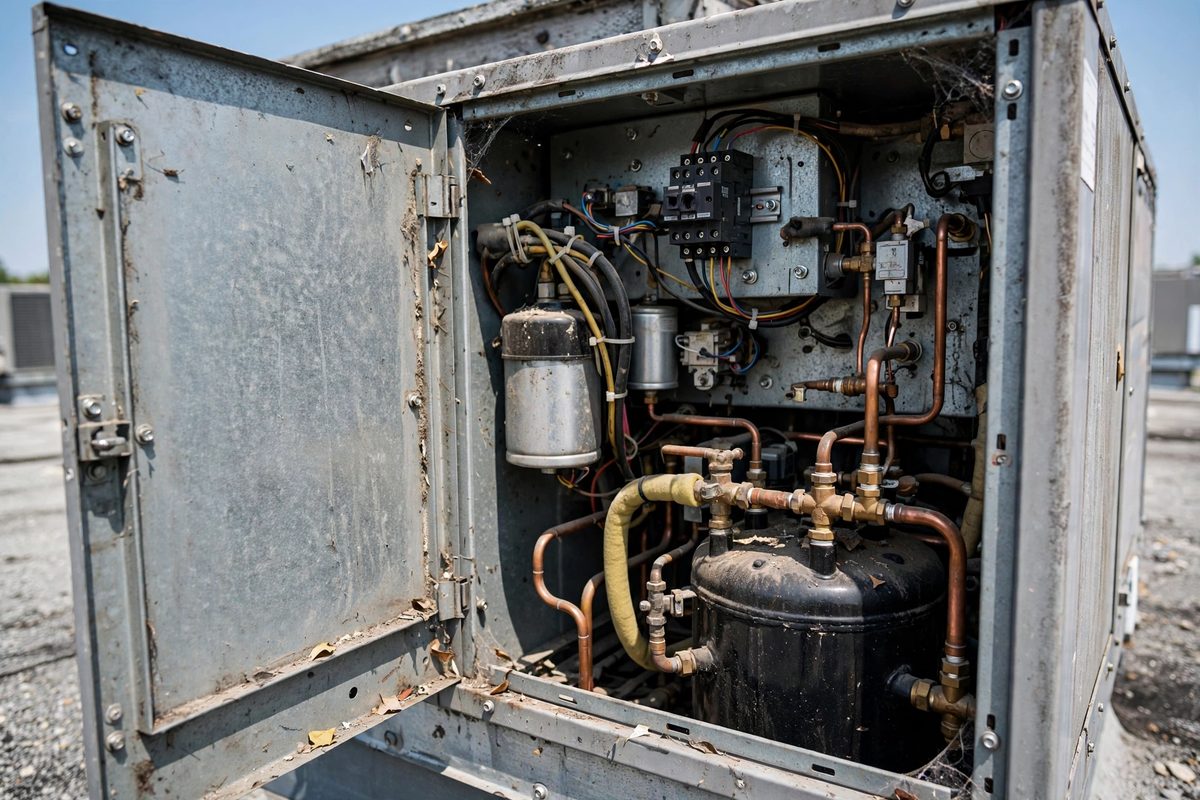
Cooling is business infrastructure. When it fails, tenants complain, staff slow down, and equipment overheats. This guide to commercial AC repair gives facility managers the warning signs, the cost picture, and a hiring checklist. Keep it bookmarked for the next hot week.
What Commercial AC Repair Involves
Commercial AC repair covers the rooftop units, split systems, and packaged units that cool business buildings. These are not home air conditioners scaled up. They are heavier machines with bigger motors, complex controls, and duct networks that serve many zones.
A service call starts with checks. The tech reads pressures, checks voltage, and inspects the coils and filters. Good techs test the thermostat and controls too. Many failures start in the low voltage wiring, not the big parts.
Common fixes include replacing capacitors, contactors, fan motors, and belts. Refrigerant leaks get found with electronic detectors or dye, then sealed and recharged. Coils get cleaned. Drains get cleared. Each fix gets tested under load before the tech leaves.
Bigger jobs replace compressors, condenser coils, or control boards. These take longer and cost more. A straight tech explains why the big part failed. Compressors rarely die alone. Low refrigerant or dirty coils usually kill them first. Fix the cause or the new part dies too.
9 Warning Signs You Need Commercial AC Repair
One, weak airflow from the vents. Two, air that is cool but not cold. Three, the unit runs all day and never reaches the set point. Four, short cycling, on and off every few minutes. Five, new noises like grinding, squealing, or banging. Six, water stains or puddles near the indoor unit. Seven, a sudden jump in the electric bill. Eight, some zones hot while others are cold. Nine, the system is past middle age and breaking down twice a season.
Any one of these earns a service call. Two or more mean you should call this week. Waiting turns a small part into a big one. Heat is hard on weak components.
Pay special attention to electrical smells. A burnt odor near the unit can mean overheating wires or a failing motor. Cut power to the unit and call for commercial AC repair right away. Electrical faults can start fires.
What Commercial AC Repair Costs
Prices depend on the part, the size of the system, and the hour of the call. Small electrical parts are the cheapest fixes. Fan motors and belts sit in the middle. Compressors and coils are the expensive end.
Labor is the other half of the bill. Commercial techs charge more than residential techs because the systems are bigger and the stakes are higher. After hours rates run higher still. Ask for the rate card before the work starts.
Here is how to keep costs down. Approve the diagnosis fee up front so there are no surprises. Ask the tech to show you each failed part. Get a written quote for big jobs. And never authorize a compressor replacement without asking what killed the old one.
Consider a service agreement. Most shops offer plans with two visits a year, priority scheduling, and a discount on parts. For a building with several units, the math usually favors the plan.
Hiring the Right Commercial AC Repair Company
Use this checklist every time you bring in a new shop.
- Verify they do commercial work. Ask how many rooftop units they service.
- Check the state license and insurance. Confirm both are current.
- Ask for two commercial references and actually call them.
- Ask about technician training. Factory training on your brand matters.
- Get response time promises in writing for emergency calls.
- Ask whether they carry common parts on the truck.
- Get every quote in writing with parts and labor split out.
- Ask how they document the work. You want a service report after each visit.
The U.S. Department of Energy offers guidance on commercial cooling efficiency. ASHRAE sets the standards most commercial systems are built to.
On this site, see commercial hvac service near me for service contracts, 24/7 ac repair for emergency help, and air conditioning repair dallas for a hot climate example.
Daily Habits That Prevent Breakdowns
Assign someone to walk the mechanical areas weekly. Look for water, listen for noise, feel for weak airflow. Five minutes catches most failures early.
Keep filters on a strict schedule. Mark the change dates on the filter housing with a marker. No guessing.
Keep rooftop units clear of storage. Boxes and pallets block airflow and hide leaks. The roof is not a warehouse.
Log every service visit. Note what was done and what the tech recommended. Patterns emerge in the log. Three capacitor failures in two years points to a power quality problem, not bad luck.
Budget for replacement. Even well kept units wear out. Start a reserve fund when a unit passes middle age. Planned replacement beats emergency replacement on price every time.
Commercial AC Repair and Indoor Air Quality
Cooling and air quality travel together. The same system that cools your building also moves its air. When commercial AC repair is overdue, air quality drops with the temperature control.
Dirty coils grow mold and bacteria. The coil stays damp during normal operation. Dust feeds the growth. Every cycle then blows spores into the occupied space. Regular coil cleaning is health maintenance, not just equipment care.
Clogged filters let dust bypass into the ducts. Ducts are hard to clean and easy to neglect. Once dust settles deep in the ductwork, it recirculates for years. Strict filter schedules protect the ducts.
Poor drainage breeds trouble too. Standing water in drain pans grows slime. That slime can clog the line again and spill into ceilings. Algae tablets in the pan and regular flushing keep it clear.
Stale air complaints often trace to ventilation, not cooling. The AC may hold temperature fine while fresh air intake stays shut. A good tech checks damper positions during commercial AC repair visits. Ask them to.
Budgeting for Commercial AC Repair
Surprise bills hurt. A simple budget removes the sting.
Start with the maintenance plan cost. That is your fixed line. Add a repair reserve based on unit age. Young systems need little. Middle aged systems need a modest reserve. Old systems need a serious one.
Track spending per unit. A spreadsheet with one row per unit works. Log every visit and every part. After a year, you will see which units eat money. Those go on the replacement shortlist.
Plan replacements on your schedule. Emergency replacements cost more and offer fewer choices. When the log shows a unit fading, get replacement quotes during the mild season. You will pay less and pick better equipment.
Present the numbers yearly. Building owners understand dollars better than decibels. Show what maintenance saved versus what breakdowns cost. The budget sells itself.
Frequently Asked Questions
How often does a commercial building need commercial AC repair?
With good maintenance, most units need only minor fixes between services. Neglected units break down far more often. Twice yearly maintenance is the standard that keeps repair calls rare.
What is the most common commercial AC repair?
Capacitors and contactors top the list. They are small electrical parts that wear out with heat and cycling. Both are quick, affordable fixes when caught early.
Can I do any commercial AC repair myself?
Filter changes and keeping units clear, yes. Anything involving refrigerant, high voltage, or rooftop work belongs to a licensed tech. The law restricts refrigerant handling, and rooftops are fall hazards.
How long does commercial AC repair take?
Most fixes take two to four hours. Compressor or coil replacements can take a full day or more. Your tech should give a time estimate with the quote.
When should I replace instead of repairing?
When repairs come every season, when the unit cannot hold temperature, or when a major part fails on an old unit. Ask for both numbers, repair and replace, and decide with facts.
Next Steps
Pull your service log today. Count the repair calls in the last twelve months. If the count keeps rising, get a full system assessment, not another patch. Good commercial AC repair starts with honest information. Give your tech the log, the symptoms, and the history. You will get a better diagnosis and a fairer price.
One more habit separates good managers from the rest. After every repair, ask the tech one question: what should I watch for next? Write the answer in the log. Techs see failure patterns across hundreds of buildings. Their warning is free advice from the field. Follow it and you will catch the next problem while it is still cheap. Ignore it and you will pay the full price later. The choice is yours every single visit.
Start today and your equipment will thank you all year long.
Good managers act early. Be one of them starting today.
Your building will run better for it.