
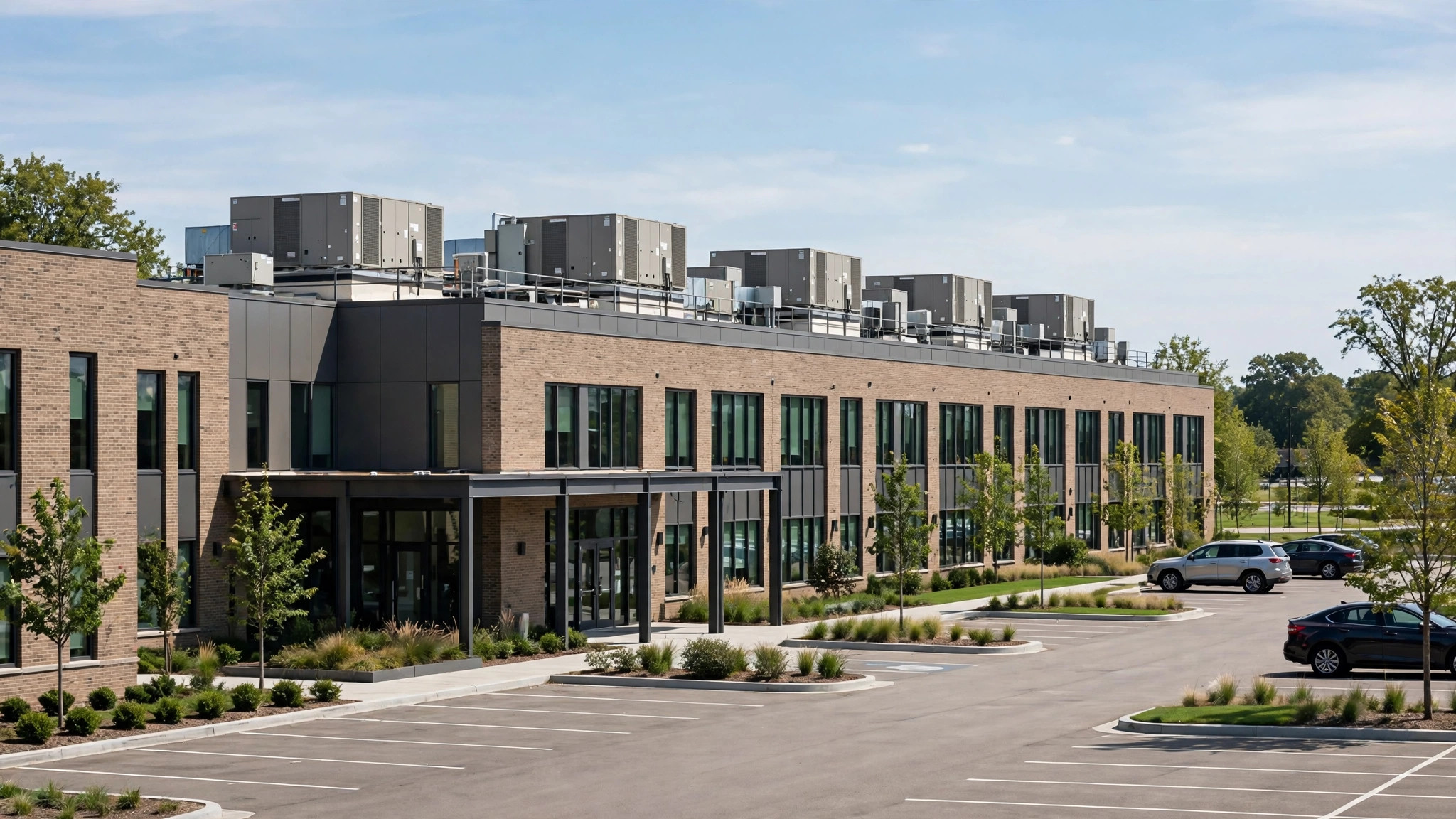
New commercial heating and cooling equipment is a major purchase. A wrong choice wastes energy for twenty years. It also brings repair bills, comfort complaints, and tenant turnover. This guide walks building owners through the seven most common buying mistakes in commercial heating and cooling. You will learn how to size a system, read efficiency ratings, and compare quotes like a pro.
What commercial heating and cooling Systems Include
The term covers every system that heats, cools, and ventilates a commercial building. Rooftop packaged units are the most common. They sit on the roof and handle both heating and cooling in one box. Split systems separate the indoor and outdoor parts. They suit buildings with limited roof capacity.
Larger buildings use chillers and boilers. Chillers make cold water that circulates to air handlers. Boilers make hot water or steam for heating. These systems cost more up front but serve big buildings efficiently. Heat pumps are growing fast too. They move heat instead of making it, which cuts energy use in mild climates.
Ventilation ties it all together. Fresh air units bring in outdoor air and exhaust stale air. Good commercial heating and cooling design balances temperature, humidity, and air quality. A system that cools well but leaves the air stale is only doing half the job.
7 Buying Mistakes in commercial heating and cooling
Avoid these seven errors. Each one costs real money.
- Buying on price alone. The cheapest unit often has the worst efficiency. You pay the difference in utility bills for decades. Compare total cost of ownership, not just the sticker price.
- Skipping the load calculation. Rules of thumb and square-foot guesses oversize or undersize systems. Demand a Manual N or equivalent commercial load calculation. It is the only honest way to size equipment.
- Ignoring the building envelope. New equipment cannot fix leaky ducts, bad insulation, or single-pane glass. Fix the shell first or alongside the equipment. Otherwise you buy a bigger system than you need.
- Forgetting about controls. Modern thermostats and building automation cut waste sharply. A great unit with dumb controls still runs like a dumb system. Budget for smart controls from day one.
- Neglecting maintenance access. Units crammed into tight spots cost more to service for their whole life. Make sure techs can reach filters, coils, and panels easily. Ask the installer to show you the service clearances.
- Overlooking ventilation needs. Codes require minimum fresh air per occupant. Some buyers focus on heating and cooling tons and forget the air. Poor ventilation brings complaints and code trouble.
- Choosing the wrong contractor. Equipment matters, but install quality matters more. A perfect unit installed badly performs badly. Vet the installer as hard as the brand.
Each mistake is avoidable with a little homework. The sections below give you that homework.
Sizing commercial heating and cooling Right
Oversized systems are the most common sizing error. They cost more to buy. They short-cycle, which wears parts fast. They also dehumidify poorly, leaving rooms cool but clammy. Customers notice clammy. Tenants complain about it.
Undersized systems fail differently. They run constantly on hot days and never catch up. Utility bills climb. Equipment dies young from the strain. Neither error is acceptable when a proper calculation exists.
A real load calculation measures your building. It counts windows, insulation, lighting, people, and equipment heat. It factors in your climate zone and building orientation. It produces the exact heating and cooling loads in BTUs. The [U.S. Department of Energy](https://www.energy.gov/) explains how proper sizing cuts both first cost and operating cost.
Insist on seeing the calculation. A contractor who sizes by “tons per square foot” is guessing. Get the numbers in writing before you approve any equipment.
Cost Factors for commercial heating and cooling
Equipment price is only part of the bill. Here is the full picture.
System type sets the base. Packaged rooftop units cost less per ton than chiller plants. Split systems sit in the middle. Heat pumps carry a premium that efficiency rebates often offset.
Capacity scales the price. More tons mean more money, but not in a straight line. Larger units cost less per ton than small ones. This is one more reason to size right instead of sizing big.
Installation complexity adds real cost. Crane lifts for rooftop units, new ductwork, electrical upgrades, and controls wiring all add up. A building with easy roof access and existing ducts installs cheap. A retrofit in a tight old building does not.
Efficiency rating moves both price and payback. Higher SEER2, EER2, and HSPF2 ratings cost more up front and less to run. Calculate the payback with your local utility rates. In high-rate areas, top efficiency pays back fast.
Rebates and tax treatment change the math. Utilities and governments offer incentives for efficient commercial heating and cooling equipment. Ask your contractor to list every available rebate in the quote. Your accountant should review the tax treatment before you sign.
Efficiency Ratings Worth Knowing
Ratings let you compare units fairly. For cooling, look at SEER2 and EER2. SEER2 measures seasonal efficiency. EER2 measures peak-day efficiency. Higher numbers mean lower bills. For heating, heat pumps use HSPF2. Gas systems use AFUE, shown as a percentage.
Do not chase the highest rating blindly. Each step up costs more. Find the sweet spot where the energy savings pay back the premium within a reasonable time. Your contractor should run this math with your utility rates.
Check the ENERGY STAR label too. ENERGY STAR certified commercial equipment meets strict efficiency standards set by the EPA. The program at [energystar.gov](https://www.energystar.gov/) lists certified models and typical savings. Certification is a fast filter for quality.
Remember that rated efficiency assumes proper install. Bad ductwork, wrong refrigerant charge, and poor airflow erase the rating advantage. The install matters as much as the label. [ASHRAE](https://www.ashrae.org/) publishes the design standards that good contractors follow.
Capturing Rebates and Incentives
Efficient equipment often qualifies for money back. Start with your electric and gas utility. Many offer prescriptive rebates per ton for high-efficiency units. Some offer custom rebates for whole-building projects. Call the utility commercial program before you buy. Most require pre-approval, and buying first can disqualify you.
Check state and local programs next. Some states add their own incentives on top of utility rebates. Local governments sometimes offer grants for small businesses upgrading old equipment. Your contractor should know the current programs, but verify independently. Program funds run out, and rules change.
Ask your accountant about tax treatment. Equipment purchases may qualify for favorable depreciation or deductions. The timing of the purchase within your fiscal year can matter. A short call with your accountant before signing can save real money. Stack rebates, tax benefits, and energy savings together, and premium efficiency often costs less than the budget option.
Related Reading
For service on existing systems, see [commercial hvac repair](/commercial-hvac-repair/). For cooling-specific work, read [commercial ac repair](/commercial-ac-repair/). For broader roof-system planning, see [commercial roofing repair](/commercial-roofing-repair/).
Planning the Installation Timeline
Timing affects price and disruption. Spring and fall are the best install seasons. Contractors have open schedules. Weather is mild. Your building suffers less downtime. Summer installs cost more and disrupt more.
Plan the phases with your contractor. A full building changeout may need staged work to keep tenants comfortable. Night and weekend work costs extra but avoids business disruption. Get the schedule in writing with milestones.
Prepare the site before the crew arrives. Clear roof access. Confirm electrical capacity with your electrician. Arrange crane permits if rooftop units are involved. Small prep steps prevent expensive idle crew time.
Commission the system after install. Commissioning means testing every function against the design. It catches install errors while the contractor is still on site. Ask for a written commissioning report. It is your proof that the system works as promised.
FAQ
How long does commercial heating and cooling equipment last?
Packaged units typically last 15 to 20 years with good care. Chillers and boilers can run 25 years or more. Neglect cuts these numbers sharply. Maintenance is the cheapest life extender.
Is it better to repair or replace an old system?
Compare repair cost to replacement value. A repair under a third of replacement cost usually wins on younger units. On units past 15 years, replacement often pays back through efficiency alone.
What is the most efficient commercial heating and cooling option?
It depends on your climate and building. Heat pumps lead in mild climates. High-efficiency gas with heat recovery suits cold climates. A proper load calculation plus local utility rates give the honest answer.
Do I need building automation controls?
For buildings over 10,000 square feet, usually yes. Scheduling, setback, and demand control cut waste with fast payback. Small buildings can do well with quality programmable thermostats.
How do I compare quotes fairly?
Make every bidder quote the same capacity, efficiency rating, and scope. Compare equipment models, install details, controls, warranty, and commissioning. The lowest price with the thinnest scope is not a deal.
Next Steps
Get a load calculation before you talk equipment. Fix envelope issues in parallel. Compare total cost of ownership across at least three bidders. Vet the installer as hard as the brand. Document every commercial heating and cooling service visit. A complete commercial heating and cooling history raises resale value and speeds future quotes. The right commercial heating and cooling choice serves your building quietly for decades. Start with the numbers, and the decision gets easy.



