
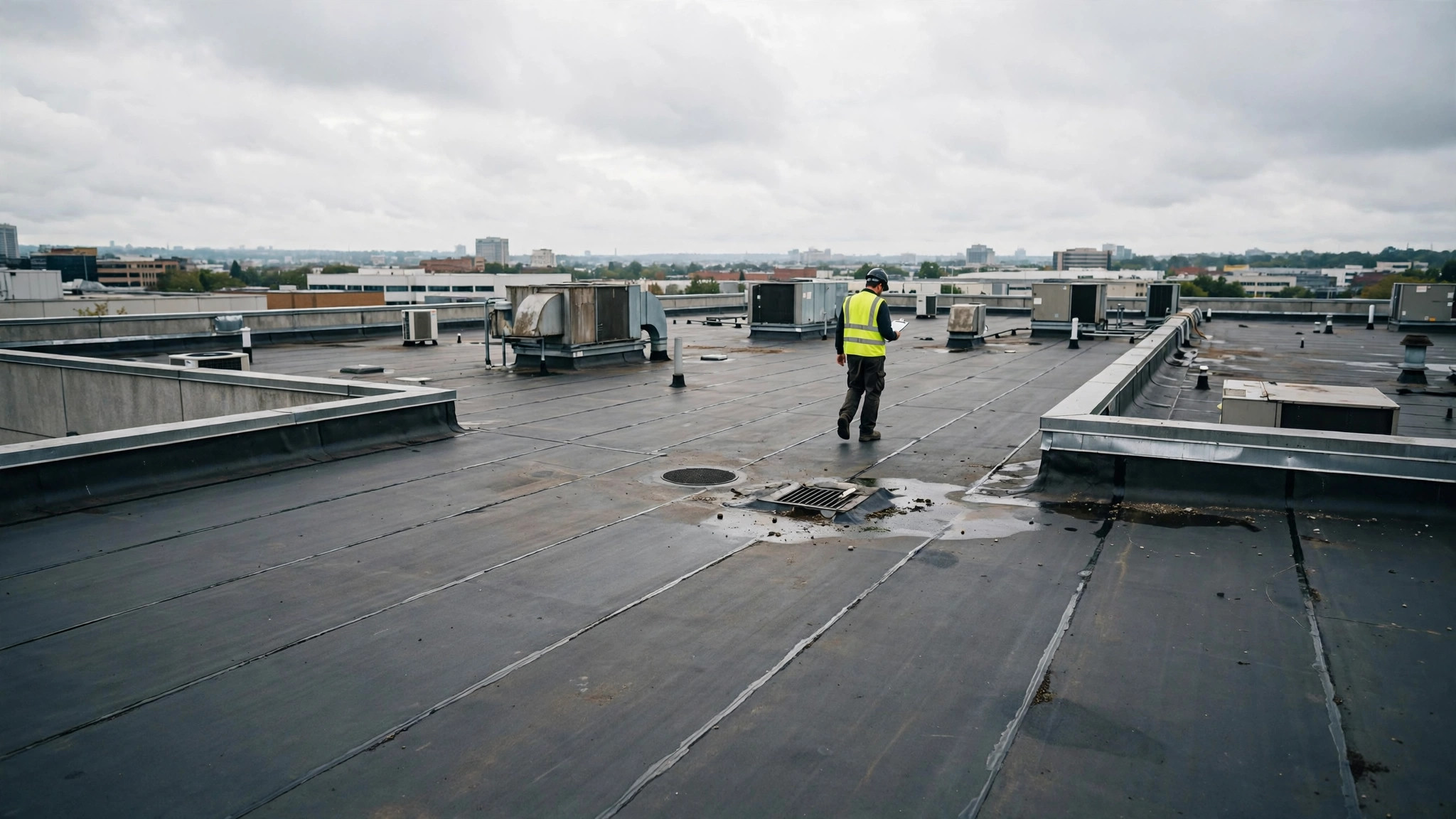
Most roof failures give warning signs. Commercial roof inspections exist to catch those signs early. A trained eye on the roof twice a year finds the cracked flashing, the clogged drain, and the lifting seam before any of them becomes a leak. This guide gives owners and managers a complete picture of commercial roof inspections: the 12-point checklist, honest costs, scheduling, and how to read the report.
Why commercial roof inspections Matter
A roof fails slowly, then all at once. Small faults grow for months with no visible symptom inside the building. By the time water stains appear on the ceiling, the damage underneath is often extensive. Inspections break this pattern. They find faults while they are cheap to fix.
Money is the plainest reason. Inspections cost a few hundred dollars. Emergency leak repair costs thousands. Full replacement costs hundreds of thousands. Every fault caught early is money kept. The [National Roofing Contractors Association](https://www.nrca.net/) recommends regular inspections as the core of responsible roof ownership.
Inspections also protect warranties and insurance. Most manufacturer warranties require documented inspections. Insurers look more kindly on claims from owners with maintenance records. At sale time, a file of inspection reports proves the roof was cared for. Buyers pay for that proof.
The 12-Point commercial roof inspections Checklist
A proper inspection covers the whole system, not just the membrane. Here are the twelve points a thorough commercial roof inspections visit should hit.
- Overall membrane condition. The inspector walks the full field, looking for punctures, cuts, blisters, and wear patterns. High-traffic paths get extra attention.
- Seams and laps. Every seam gets checked for gaps, lifting, and fishmouths. Failed seams are the most common leak source on single-ply roofs.
- Flashing at walls and curbs. Flashing handles movement and fails first. The inspector checks for cracks, pulling, and separation.
- Penetrations. Pipes, vents, and equipment curbs pierce the roof. Each seal gets examined for gaps and deterioration.
- Drains and scuppers. Clogged drainage causes ponding, the top killer of flat roofs. The inspector clears debris and tests flow.
- Gutters and downspouts. These carry water off the building. Dents, clogs, and loose hangers all get noted.
- Roof edge and coping. Wind attacks the edge first. Loose coping and edge metal signal uplift risk.
- Ponding water. The inspector marks every spot where water stands. Ponding that lasts days needs correction.
- Rooftop equipment. HVAC units, exhaust fans, and solar mounts sit on the roof. Their supports and seals get checked.
- Previous repairs. Old patches get re-examined. A repair that is failing needs a permanent fix, not another patch.
- Interior signs. The inspector checks ceilings and walls below for stains, peeling paint, and odors that point to active leaks.
- Documentation. Photos of every fault, a written report, and prioritized repair recommendations. No report means no inspection.
Ask your inspector to walk you through the findings on the roof. Seeing the fault beats reading about it.
How Often to Schedule commercial roof inspections
Twice a year is the standard: once in spring, once in fall. Spring inspections catch winter damage. Fall inspections prepare the roof for the harsh season ahead. This rhythm suits most buildings in most climates.
Add inspections after major storms. Hail, high wind, and heavy snow all damage roofs in ways you cannot see from the ground. A post-storm visit finds the punctures and lifted edges before the next rain exploits them.
Some buildings need more. Roofs with heavy foot traffic, many penetrations, or aging membranes benefit from quarterly visits. New roofs need a check at the one-year mark to catch install issues while the workmanship warranty is fresh. Buildings in hurricane or hail zones should inspect after every named storm season.
Set the schedule in advance and keep it. The buildings that leak are the ones where inspections kept getting postponed. Put the dates on your calendar now.
What commercial roof inspections Cost
Professional inspections are affordable. Expect 200 to 800 dollars for most buildings. Small simple roofs sit at the low end. Large complex roofs with many penetrations sit at the high end. Infrared moisture surveys cost more, typically 500 to 2,000 dollars, because they need special equipment and night visits.
Several factors set the price. Roof size is the biggest. Access matters too. Buildings needing lift rental cost more to inspect. Report detail matters. A one-page letter costs less than a full photo report with repair priorities. Pay for the full report. It is the whole point.
Many owners bundle inspections into a maintenance agreement. The agreement usually covers two visits a year plus priority response and discounted repairs. For buildings over 10,000 square feet, agreements usually beat per-visit pricing. Get quotes for both and compare.
Beware the free inspection from a contractor who only wants the repair job. Some are honest. Many find expensive problems whether they exist or not. An independent inspector with no repair work to sell gives the most honest assessment. Pay for independence when the stakes are high.
Related Reading
When inspections find faults, see [commercial roof repair](/commercial-roof-repair/). For the repair process, read [repair commercial roof](/repair-commercial-roof/). For flat systems, see [commercial flat roof repair](/commercial-flat-roof-repair/).
Reading Your commercial roof inspections Report
A good report reads like a map. It should include photos of every fault, each labeled with its location. It should rank repairs by priority: urgent, soon, and watch. It should give rough cost ranges for the recommended work. It should note the overall roof condition and estimated remaining life.
Question vague reports. “Roof in fair condition” with no photos tells you nothing. Ask the inspector to point at specifics. Which seams are lifting? Which drains pond? What exactly needs sealant? Specifics let you get accurate repair quotes.
Use the report to plan spending. Urgent items get fixed now. Soon items go into this year’s budget. Watch items go on the next inspection’s checklist. Share the report with your repair bidders so everyone prices the same scope. The [Occupational Safety and Health Administration](https://www.osha.gov/) sets the safety rules your inspector and repair crews must follow on the roof.
File every report with your building records. A stack of reports showing steady care is worth real money at sale or refinance. It also keeps manufacturer warranties valid, since most require documented upkeep.
Choosing an Independent Inspector
The inspector you hire shapes every decision that follows. A careful inspector saves you money. A sloppy one costs you twice: once for the missed faults, once for the repairs that follow. Choose with care.
Look for roofing-specific experience, not general home inspection background. Commercial membranes, drainage design, and flashing details are a specialty. Ask how many commercial roofs the inspector walks in a typical month. A real specialist answers with a number, not a pause.
Ask about reporting standards. You want photos of every fault, location labels, priority rankings, and cost ranges. Ask to see a sample report from another building. A thin sample predicts a thin report on your roof. The best inspectors welcome this request. The weak ones stall.
Check independence. An inspector who also sells repair work has a built-in conflict. That does not make every such firm dishonest, but it makes independent judgment harder. For high-stakes assessments, such as pre-purchase inspections or warranty disputes, hire someone with nothing to sell but the report. The fee buys honesty.
Confirm safety credentials. Inspectors work at height under the same fall-protection rules as roofers. Ask about their safety training and equipment. A professional outfit carries proper insurance and follows tie-off rules. Anyone casual about roof safety will be casual about your roof.
FAQ
Do commercial roof inspections really prevent leaks?
They prevent most of them. Inspections catch the small faults that become leaks: failed seams, clogged drains, cracked flashing. No inspection stops every leak, but regular commercial roof inspections cut emergency calls dramatically.
Can I inspect my own commercial roof?
You can note obvious issues like clogged drains and debris. Leave the real inspection to a pro. Roof falls are deadly, and untrained eyes miss the subtle faults that matter most. Hire someone who does this daily.
What is an infrared roof inspection?
An infrared survey uses a thermal camera to find trapped moisture under the membrane. Wet insulation holds heat differently than dry. It is the best way to map hidden damage, and it is worth the extra cost on older roofs.
How long does an inspection take?
One to three hours for most buildings. Large or complex roofs take longer. Infrared surveys need evening visits when temperature differences show best. Plan for the inspector to need full roof access.
Will the inspector also do the repairs?
Some firms do both. For the most honest assessment, use an independent inspector with no repair work to sell. Then bid the repairs separately using the report as your scope.
Next Steps
Book your next inspection this week. Use the 12-point checklist to judge the thoroughness of the visit. Fix urgent findings immediately and budget the rest. File the report with your building records. Share your commercial roof inspections report with your insurer. Some carriers reward documented commercial roof inspections with better terms. Regular commercial roof inspections are the cheapest insurance your building can buy. Schedule the next one before the inspector leaves.



