Water is pouring through the ceiling. The storm is still going. You need emergency commercial roof repair right now, and every decision you make in the next hours affects the final bill. This guide gives you a clear order of operations. Follow it. It keeps the building safe, the damage contained, and the cost fair.
Panic is expensive. Owners who rush often hire the first truck that answers, sign a blank authorization, and pay double. Calm owners follow a plan. Emergency commercial roof repair rewards preparation. Read this now, before the next storm, and keep a printed copy in your maintenance office.
What Counts as an Emergency
Not every leak needs a night call. Emergency commercial roof repair is for active water intrusion you cannot contain, structural risk, or damage spreading fast. Water pouring through a ceiling tile qualifies. A damp stain you noticed Tuesday does not. Neither does a small drip into a bucket.
Know the difference and you save money. Emergency rates add 50 to 100 percent to normal pricing. If you can contain the water with tarps and buckets, a scheduled repair next week costs far less. If water threatens equipment, inventory, or electrical systems, call now. Protecting people and property outranks saving on the rate.
The First Hour: Your 7 Emergency Decisions
Water is coming in. Work this list in order.
- Keep people safe. Clear the area under the leak. Watch for sagging ceilings and electrical hazards.
- Protect property. Move inventory and equipment. Cover what cannot move with tarps.
- Contain the water. Place buckets and barrels. Poke a small relief hole in a bulging ceiling tile to drain it safely.
- Document everything. Photograph damage, the storm outside, and every step you take. Note times.
- Call your roofer and your insurer. Report the damage. Ask the insurer about approved contractors.
- Mitigate further damage. Ask the roofer about emergency tarping or a temporary seal.
- Do not sign blank work authorizations. Approve a stated scope or a capped amount.
- Licensed and insured, verified or already vetted on file.
- Experience with your roof system, named on the work order.
- Clear emergency rate stated before work starts.
- Written scope, even a one-page authorization with a capped total.
- Temporary work that protects, like tarping and emergency seals.
- A plan to return for the permanent fix at standard rates.
These seven decisions shape the whole event. Fast emergency commercial roof repair still follows this order. Safety first, property second, documentation always. Skipping photos is the most common and costliest mistake.
Calling the Roofer: What to Say
Give clear facts. Describe what you see: active drip, pouring water, membrane lifted. Give the address and your roof type if you know it. Ask three questions. Can you tarp tonight? What is the emergency rate? What does the temporary work include? Straight answers signal a straight crew.
Keep a short list of two or three roofers on file before storm season. In emergency commercial roof repair, the firm that knows your building wins. They know the roof type, the access points, and the drainage layout. Vet them now, during calm weather, using the checklist below. Program their numbers into your phone. Give the maintenance team a copy too. When the call goes out at midnight, nobody should be hunting for a phone number.
After-Hours Access Prep
Emergency crews lose time at locked gates. Prepare access now. Keep a lockbox or key code on file with your vetted firms. Mark roof access points on your building plan. Note any alarms that need disarming and who can do it. Tell your security company that these firms are authorized after hours. Ten minutes of prep saves an hour of standing in the rain while someone finds the keys.
The 6-Point Emergency Contractor Checklist
Even in a hurry, check these before anyone climbs up.
Refuse blank authorizations. A firm that will not state a cap is a firm to avoid. Emergency commercial roof repair does not suspend fair dealing. If a crew demands full payment before climbing the ladder, find another crew.
What emergency commercial roof repair Costs
Expect a premium. Emergency commercial roof repair typically costs 50 to 100 percent above scheduled rates. A night tarp job might run 800 to 2,500 dollars depending on roof size and access. Emergency patches run 1,500 to 5,000 dollars. These cover the immediate stop, not the permanent repair.
The permanent fix gets scheduled later at normal rates. Ask the emergency crew to quote both the temporary work and the follow-up repair. Get the return visit in writing with a date. Some firms fold the emergency fee into the permanent job if you book it with them. Ask.
Temporary Fixes and What They Cover
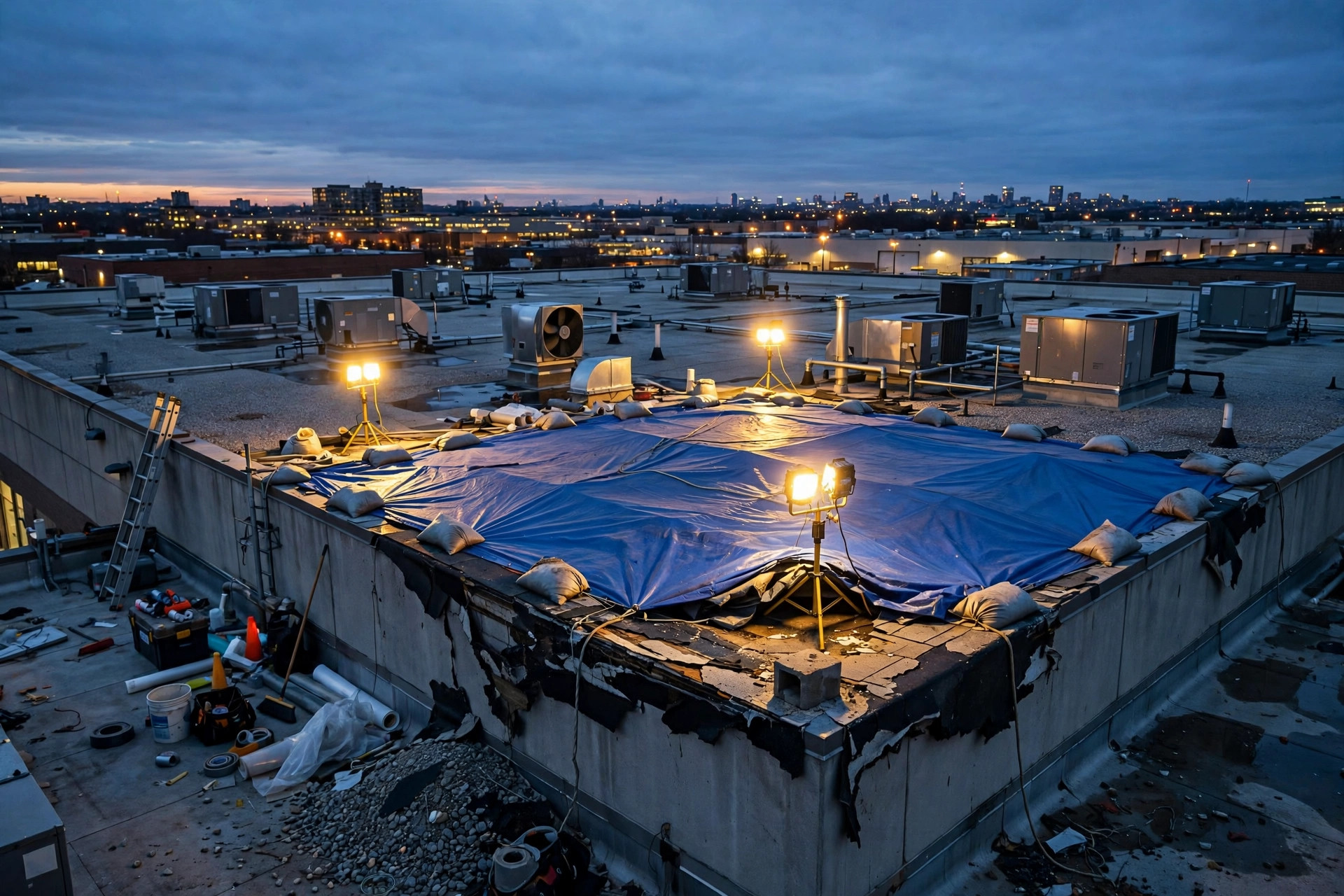
Tarping is the workhorse of emergency commercial roof repair. A properly secured tarp sheds water away from the breach. It must be weighted or fastened so wind does not peel it. Peel-and-stick patches handle small punctures. Emergency sealant buys time on cracked flashing.
None of these are permanent. Sun and heat degrade temporary materials fast. Treat the temporary fix as a bridge to the scheduled repair, never as the repair. Mark every temp patch location on your roof plan. Tell the follow-up crew exactly where they are.
Insurance: Protect Your Claim
Most policies require you to mitigate damage. That is exactly what emergency commercial roof repair is. Your photos, timestamps, and contractor invoices are your proof. Call your agent promptly. Most policies set claim deadlines.
Walk the roof with the adjuster. Point at each fault. Share your contractor quotes. Ask about coverage for the temporary work; many policies reimburse emergency mitigation. If a claim is denied, get the reason in writing. You can appeal with stronger documentation. The [Insurance Information Institute](https://www.iii.org/) publishes clear guidesides on commercial property claims.
After the Storm: Your emergency commercial roof repair Follow-Up
Once the building is dry and safe, schedule the real fix. The emergency crew should return, or a vetted firm should take over. Get a full inspection. Storm damage often hides beyond the obvious breach. Wind lifts seams across whole sections.
Ask for a written scope with locations, materials, and labor. Compare against the emergency work already done. Make sure temporary patches get removed or integrated properly. The [National Roofing Contractors Association](https://www.nrca.net/) publishes storm-recovery guidance for building owners. Log everything in your roof file. Schedule a follow-up inspection after the next heavy rain to confirm the repair holds.
Building Your Pre-Storm Roof Plan
The best emergency commercial roof repair starts before the storm. Walk the roof each spring and fall. Fix loose flashing, clear drains, and seal small cracks. Keep a file with your roof type, age, warranty papers, and a simple roof plan marked with drains and access points.
Vet your emergency firms now, during calm weather. Get their after-hours numbers and rate sheets in writing. Store tarps, buckets, and a camera in the maintenance office. Assign storm roles to staff: who calls the roofer, who documents, who moves inventory. A rehearsed plan turns chaos into routine. Review it with your team once a year, before storm season.
Related Reading
For standard pricing detail, see [commercial roof repair](/commercial-roof-repair/). For leak tracing help, read [commercial roof leak repair](/commercial-roof-leak-repair/) when it publishes. For inspection routines, see [commercial roof inspections](/commercial-roof-inspections/).
FAQ
How much does emergency commercial roof repair cost?
Expect 50 to 100 percent above normal rates. A night tarp job runs 800 to 2,500 dollars. Emergency patches run 1,500 to 5,000 dollars. The permanent repair is priced separately at standard rates.
Should I call the roofer or the insurer first?
Secure safety first, then call both. The roofer stops the water. The insurer starts the claim. Most policies require prompt reporting and mitigation, so do not delay either call.
Will my insurance pay for the emergency call?
Many policies cover emergency mitigation work, including tarping. Keep every invoice and photo. Ask your adjuster specifically about temporary work reimbursement.
Can any roofer do emergency commercial roof repair?
Only firms with commercial experience and the right safety gear. Residential roofers may lack the equipment for large flat roofs. Use a vetted commercial crew from your pre-storm list.
How long can a temporary tarp stay on?
Treat tarps as weeks, not months. Wind and sun break them down. Schedule the permanent repair within two to four weeks. Inspect the tarp after every storm until then.
Next Steps
Build your storm list this month. Vet two or three commercial roofers and save their numbers. Print the seven decisions and keep them in the maintenance office. Walk the roof each season and fix small faults before storms find them. Preparation turns emergency commercial roof repair from a crisis into a managed job. Start now, while the sky is clear. Review your insurance policy once a year so you know what storm damage it covers. Store the agent’s number with your roofer list.