
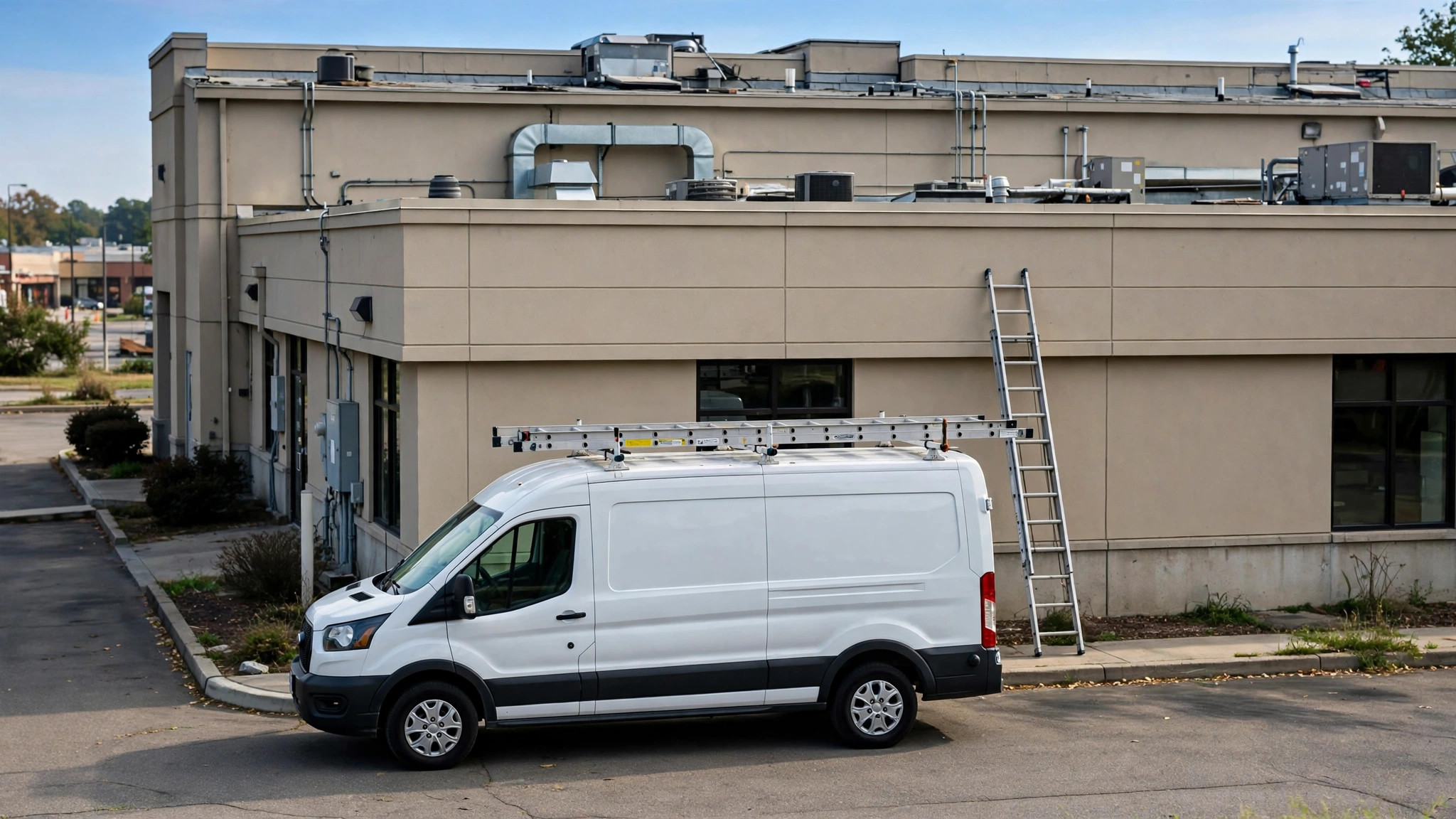
A leak over your warehouse keeps you up at night. You need a commercial roof repair contractor, not a guess. But how do you tell the pros from the pretenders? This guide gives you seven hiring tips, fair price ranges, and the red flags that save you from a bad deal.
Hiring wrong costs more than hiring late. A bad repair fails within a year. Water damage spreads. The second crew charges more to fix the first crew’s mistakes. Take one hour with this guide. You will hire with confidence.
Why a commercial roof repair contractor Beats a General Handyman
Commercial roofs are systems, not surfaces. Single-ply membranes, built-up layers, metal panels, and coatings each need specific skills. A general handyman may do fine work on a house. On your building, the wrong patch can void the manufacturer warranty. That warranty is worth real money. Protect it.
A dedicated commercial roof repair contractor carries the right insurance for rooftop work. Falls are the leading cause of deaths in construction, and OSHA holds building owners to safety standards on their sites. Their safety page at [osha.gov](https://www.osha.gov/fall-protection) explains the rules. Hiring a crew that ignores them puts you at legal risk.
Specialists also diagnose better. They find the leak source, not just the stain. Most commercial leaks show up far from where water enters. A skilled roofer traces the path. A handyman caulks the stain and leaves.
7 Hiring Tips for a commercial roof repair contractor
Use these seven tips in order. Each one filters out the wrong firms.
- Verify the license. Call your state board. Do not trust a card they show you. Active license, right trade class, no suspensions.
- Confirm insurance. Ask for the certificate directly from their insurer. You want general liability and workers compensation. Call to confirm it is current.
- Check commercial experience. Ask how many commercial roofs they repaired last year. You want a number, not a story. Ask which membrane types they handle.
- Call three references. Not the ones on their website. Ask for recent commercial clients. Ask if the crew showed up on time and finished on schedule.
- Demand a written scope. The quote should name each repair location, materials, and labor. A lump sum with no detail is a red flag.
- Ask about the warranty. Get the workmanship warranty in writing. One to five years is normal. Ask what voids it.
- Meet the foreman. The salesperson sells. The foreman works. Ask the foreman how they will find your leak. Straight answers signal a straight crew.
Firms that pass all seven are rare and worth keeping. Save their number. A good commercial roof repair contractor relationship lasts the life of your roof.
Questions That Reveal the Truth
Beyond the tips, ask these pointed questions. Watch how they answer.
How will you find the leak source? Good answer: walk the roof, probe seams, check flashing, maybe cut a core. Bad answer: we will seal where it drips.
What materials will you use? Good answer: named products matched to your membrane. Bad answer: the same stuff we always use.
What happens if rain hits mid-job? Good answer: we stage work so open areas stay small, and we carry emergency tarps. Bad answer: a shrug.
Who pulls the permits? Good answer: we handle it and the fee is on the quote. Bad answer: you probably do not need one.
A commercial roof repair contractor who answers clearly has done this a hundred times. One who dodges has not. Trust the pattern.
Fair Pricing for a commercial roof repair contractor
Know the ranges before anyone quotes. Small patch jobs run 300 to 1,500 dollars. This covers single seams, small punctures, and flashing touch-ups. Medium repairs run 1,500 to 6,000 dollars. Think section patches and drain rebuilds. Large section work runs 6,000 to 20,000 dollars. This covers wide damage and soaked insulation.
Emergency calls add 50 percent or more to normal rates. Night and weekend work always costs extra. If the leak is contained, schedule the work. You will pay the fair rate, not the panic rate.
Get three quotes. If all three cluster together, that is your market price. If one is far lower, something is missing from the scope. If one is far higher, ask what extra you get. Compare line items, never just totals.
Red Flags That Mean Walk Away
Some warning signs are loud. Learn them now.
No license or expired insurance. Non-negotiable. Walk away.
Door-to-door after a storm. Storm chasers take deposits and vanish. Local firms with local addresses stay accountable.
Full payment up front. Standard terms are a deposit with balance on completion. Anyone demanding full payment before work starts is planning to leave.
Pressure to sign today. A real pro lets you compare quotes. High-pressure tactics hide weak offers.
No written warranty. Verbal promises mean nothing when the leak returns. Get it on paper or move on.
Cash-only deals. Cash leaves no trail. A firm avoiding paper is avoiding accountability. Legitimate firms take checks and cards.
What the Contract Should Include
A solid contract protects both sides. Insist on these items in writing.
Exact scope of work. Every repair location named. Materials listed by product and amount. Labor shown as hours or a flat sum.
Start and finish dates. Not “soon.” Real dates. Include what happens if weather delays the work.
Payment schedule. Deposit amount, progress payments if any, and final payment on completion. Never tie final payment to anything but finished work.
Warranty terms. Length, coverage, and exclusions in plain words. Who to call when a leak returns.
Cleanup and disposal. Who hauls the old material. Where it goes. Dump fees listed.
Change order rules. How extras get approved and priced. Never sign a contract that allows open-ended changes.
Read every line. Ask about anything unclear. A good firm explains gladly. An evasive one hides things.
After the Repair: Holding Them Accountable
The job is done. Your part is not. Walk the roof with the foreman before final payment. Check each repair location. Ask for photos of the finished work. Compare them to the quote.
Keep the warranty papers in your roof file. Note the end date on your calendar. If a leak returns under warranty, call fast. Waiting can void the claim. Document everything in writing. Phone calls vanish. Emails last.
Consider a maintenance plan with the same commercial roof repair contractor. Regular visits catch new faults early. The cost is small next to emergency work. You already vetted this firm. Use them.
Related Reading
For cost breakdowns, see [commercial roof repair](/commercial-roof-repair/). For a vetted firm profile, read [commercial roof repair company](/commercial-roof-repair-company/). For flat roof specifics, see [commercial flat roof repair](/commercial-flat-roof-repair/).
Insurance Claims and Your Contractor
Storm damage may qualify for coverage. Age and wear do not. Know the difference before you call your agent. A good commercial roof repair contractor helps with the claim. They document damage with photos. They meet the adjuster on the roof. They provide written quotes the adjuster respects.
Do not let a contractor file the claim for you. The policy is yours. The contractor advises. You decide. If a firm pushes you to sign over claim rights, walk away. That is a classic storm-chaser move.
The [National Roofing Contractors Association](https://www.nrca.net/) publishes owner guides on hiring and claims. Read one before you sign anything. An hour of reading saves thousands.
FAQ
How do I verify a commercial roof repair contractor license?
Call your state licensing board directly. Give them the firm name and license number. Ask if it is active and in the right trade class. Online lookups help, but a phone call confirms.
Should I hire the cheapest commercial roof repair contractor?
No. The cheapest bid often skips the diagnosis, uses thin materials, or carries no warranty. Compare scope line by line. The careful middle bid usually wins.
How long should a commercial roof repair contractor warranty last?
One to five years on labor is normal for repair work. Large rebuilds can carry longer cover. Get the terms in writing, including what voids the warranty.
Can a commercial roof repair contractor help with insurance claims?
Yes, a good one documents damage, meets the adjuster, and provides written quotes. But you file the claim. Never sign over your claim rights to a contractor.
What if the repair fails within the warranty period?
Call the firm immediately and in writing. A solid firm returns to fix warranty work at no charge. Document the leak with photos and dates.
Next Steps
List three local firms today. Run each through the seven tips above. Get written quotes from the ones that pass. Compare scope, warranty, and price line by line. Call references before you sign. Hire the careful crew, not the cheapest bid. File the contract and warranty where you can find them. A good commercial roof repair contractor is a long-term asset. Choose well once.



