
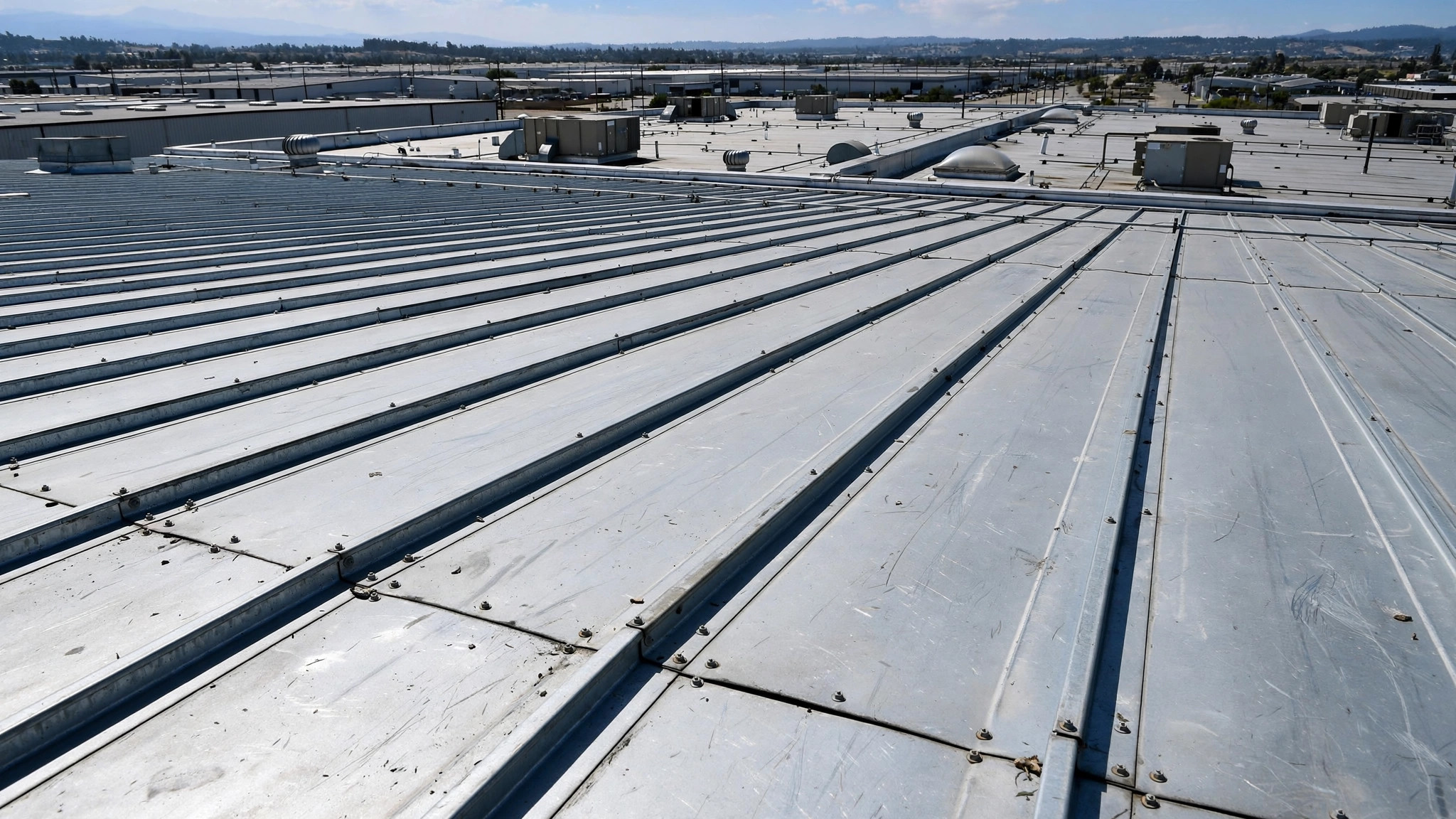
Metal roofing comes in gauges, and the gauge number confuses almost everyone. Lower numbers mean thicker metal. Twenty-six gauge sits in the middle of the commercial range: thicker than 29 gauge, thinner than 24 gauge. If a contractor quoted 26 gauge metal roofing for your building, these six facts tell you what you are buying.
Fact 1: what 26 gauge metal roofing actually measures
Gauge is a thickness scale. Twenty-six gauge steel measures about 0.018 inches thick, roughly the thickness of a sturdy business card stack. It is lighter than 24 gauge and heavier than 29 gauge.
The number matters because thickness drives strength, dent resistance, and price. Thicker metal spans farther between supports, resists hail better, and costs more. When you buy 26 gauge metal roofing, you buy the middle path: solid performance at a moderate price.
Do not confuse gauge with quality alone. Coating matters as much. A well-coated 26 gauge panel outlasts a poorly coated thicker one. Ask about both numbers: the gauge and the paint system.
Fact 2: where 26 gauge metal roofing fits best
Twenty-six gauge suits many commercial jobs: warehouses, shops, agricultural buildings, and light commercial structures. It handles normal spans, normal weather, and normal traffic without complaint.
It fits exposed fastener systems especially well. Corrugated and R-panel profiles in 26 gauge are the standard for economical commercial roofs. The panels screw down through the face, install fast, and price low. For budget-conscious projects, this combination is hard to beat.
Standing seam in 26 gauge exists too, though 24 gauge is the more common standing seam pick. On wide spans or in heavy snow country, the thicker 24 gauge earns its premium. Your contractor should explain the choice in terms of your span and your snow load, not habit.
Fact 3: strength and span limits
Every panel profile publishes span ratings: how far it can stretch between supports. Twenty-six gauge panels typically span 3 to 5 feet depending on the profile and the load. Wider purlin spacing needs thicker metal or a deeper profile.
Snow and wind loads decide. A warehouse in a heavy snow zone needs more strength than the same building in a mild climate. The structural drawings or the panel maker’s load tables give the answer. Never guess at spans. An under-spanned 26 gauge metal roofing job oil-cans, sags, and fails early.
Hail resistance is decent but not armor. Twenty-six gauge dents under large hail. Thicker 24 gauge dents less. If hail is a regular visitor, ask about impact ratings and talk to your insurer about the roof choice.
Fact 4: what 26 gauge metal roofing costs
Material runs less than 24 gauge and more than 29 gauge, usually by 10 to 20 percent per step. Installed, an exposed fastener 26 gauge metal roofing system often lands between $5 and $10 per square foot depending on the market, the profile, and the building complexity. Standing seam in 26 gauge runs higher.
The fastener system moves the price more than the gauge does. Exposed fastener panels install fast and cheap. Standing seam installs slow and costs more but hides the fasteners from weather. Pick the system for the building’s needs, then pick the gauge for the span.
Coating upgrades add cost and life. Standard polyester paint is the budget pick. Kynar 500 or Hylar 5000 fluoropolymer coatings cost more and hold color and chalk resistance far longer. On a commercial building you plan to keep, the premium paint pays.
Fact 5: lifespan and what affects it
A 26 gauge metal roofing system lasts 25 to 40 years depending on coating, climate, and care. The metal itself does not wear out. Coating failure, fastener failure, and neglect end these roofs.
Exposed fasteners are the maintenance item. Screws back out as the metal moves with temperature. Rubber washers age and crack. Plan on a fastener check every few years: tighten, replace washers, and replace missing screws. This simple routine decides whether an exposed fastener roof reaches year 30 or leaks at year 15.
Coating care matters too. Keep the panels clean, touch up scratches with matching paint, and watch for rust at cut edges. Our commercial metal roof repair guide covers the maintenance routine in full.
Fact 6: energy and code notes
Metal roofs reflect sun, especially in light colors. A white or light-colored 26 gauge metal roofing system qualifies as a cool roof under many programs. The ENERGY STAR program lists reflective metal roofing among the options that cut cooling loads.
Fire ratings are strong. Metal roofing carries Class A fire ratings, the best available. Insurers like that. In wildfire zones it can be a deciding factor.
Code checks are routine. Wind uplift ratings, snow loads, and fire classifications all appear in the panel maker’s data. Your contractor should match the panel to your local code before ordering. The National Roofing Contractors Association publishes guidance on metal roof selection that owners find useful.
26 Gauge metal roofing versus 24 gauge: how to choose
The step from 26 to 24 gauge buys thickness, strength, and dent resistance. Twenty-four gauge measures about 0.024 inches, roughly a third thicker. It spans farther, shrugs off bigger hail, and oil-cans less on wide flat panels.
The step also buys cost. Expect 10 to 20 percent more for material, and sometimes a little more labor since thicker panels are stiffer to handle. On a big roof that gap is real money.
Choose by the building, not by habit. Wide purlin spacing, heavy snow loads, and hail exposure push toward 24 gauge. Normal spans in mild climates do fine with 26 gauge. Ask the contractor to show the load table for your exact span. When the table says 26 gauge metal roofing carries the load with margin, the thinner panel is the smart buy. When the table looks tight, pay for the thicker steel.
Checklist: buying 26 gauge metal roofing
Use this list when comparing bids:
- Panel profile and maker, in writing.
- Gauge confirmed as 26, with thickness spec.
- Paint system named: polyester or fluoropolymer.
- Fastener type: exposed or standing seam, with clip details.
- Span rating matched to your purlin spacing and loads.
- Underlayment type for condensation control.
- Trim and flashing details included.
- Workmanship warranty length in writing.
If a bid skips items, ask why. Metal roofing is a system, and the bid should price the system. For leak-prone details, see our metal roof leak repair guide.
Installation notes that affect the price
Tear-off of the old roof adds cost and time. Many metal roofs go over one existing layer where code allows, which saves the tear-off bill. But the old roof must be sound and the structure must carry both layers. Your contractor should verify before recommending an overlay.
Underlayment is not optional. A synthetic underlayment or slip sheet between the old surface and the new panels controls condensation and quiets rain noise. Skipping it saves a little and costs comfort. Make sure it appears in the bid.
Trim and flashing are hand work. Rake trim, eave trim, ridge caps, and penetration flashing take skilled time. Bids that price the panels but wave at the trim will grow. A complete 26 gauge metal roofing bid prices every piece of trim by name.
Frequently asked questions
Is 26 gauge thick enough for a commercial roof?
For most light commercial buildings, yes. It is the standard pick for warehouses, shops, and farm buildings. Wide spans, heavy snow, or hail country may push you to 24 gauge. Let the load tables decide, not the price tag.
How does 26 gauge compare to 29 gauge?
Twenty-six gauge is thicker, stronger, and more dent resistant. Twenty-nine gauge suits residential and light agricultural use. For a commercial building you plan to keep, 26 gauge is the sensible minimum most contractors recommend.
Can I walk on 26 gauge metal roofing?
Yes, carefully, on the flat of the panels near the supports. Step on the ribs of corrugated panels, never in the valleys. Soft shoes, walkway planks on steep slopes, and fall protection per OSHA rules. Better yet, limit traffic and inspect from a ladder where possible.
Does the color affect performance?
Yes. Light colors reflect heat and cut cooling bills. Dark colors absorb heat and melt snow faster. Pick the color for your climate and your energy goals, not just the look. Premium coatings hold any color longer.
Does 26 gauge metal roofing need solid decking?
Not always. Many 26 gauge profiles install over open purlins, which is how most metal commercial buildings are framed. Solid decking helps with condensation control and walkability but is not required for every profile. Follow the maker’s install manual for your panel.
What maintenance does it need?
Fastener checks every few years on exposed fastener systems, plus cleaning, scratch touch-up, and sealant checks at penetrations. Our standing seam metal roof maintenance guide covers the routine for concealed fastener systems too.
Next steps for your project
Get three bids on the same spec: profile, gauge, coating, and fastener system all named. Compare the details, then the price. A 26 gauge metal roofing system from a careful crew, matched to your spans and kept up with simple maintenance, will protect your building for decades. Order early: custom panel colors and long lengths need lead time at the mill.



