
Few building expenses surprise owners like the ac replacement cost. One day the old unit limps along, the next day the compressor dies in a heat wave and you need a number fast. This guide gives you the nine numbers that decide what you will really pay for commercial AC replacement, so you can plan instead of panic.
Whether you run a restaurant, an office, a retail shop, or a warehouse, the ac replacement cost follows the same logic. Learn it once and every future replacement gets easier.
Number 1: Equipment Price by Size
The first number in any ac replacement cost is the equipment itself. Commercial cooling equipment prices scale with size, measured in tons. A five ton packaged rooftop unit runs four thousand to nine thousand dollars for the equipment. A ten ton unit runs eight thousand to sixteen thousand dollars. A twenty ton unit runs fifteen thousand to thirty thousand dollars.
Efficiency moves these numbers. Standard efficiency units cost less upfront. High efficiency units cost twenty to forty percent more and cut operating costs for their whole life. In hot climates with long cooling seasons, the premium pays back. In mild climates, standard efficiency is usually the smarter buy.
Number one takeaway: size the equipment to a real load calculation, not to the old unit’s nameplate. Buildings change over the years, and the old unit may have been wrong from day one. These equipment prices are the starting point of any ac replacement cost estimate, so get them from real bids.
Number 2: Ac Replacement Cost Per Ton Installed
The second number owners should know is the installed ac replacement cost per ton. For straightforward commercial changeouts, expect one thousand five hundred to three thousand dollars per ton installed. A five ton replacement lands between seven thousand five hundred and fifteen thousand dollars. A ten ton job lands between fifteen thousand and thirty thousand dollars.
This per ton number includes equipment, labor, crane, curb work, electrical and gas hookups, permits, and startup. It is the number to use for budgeting before you get bids. Your actual quotes should land near this range for simple swaps. If a bid comes in far above or below, ask what is different.
Number 3: The Crane and Rigging Charge
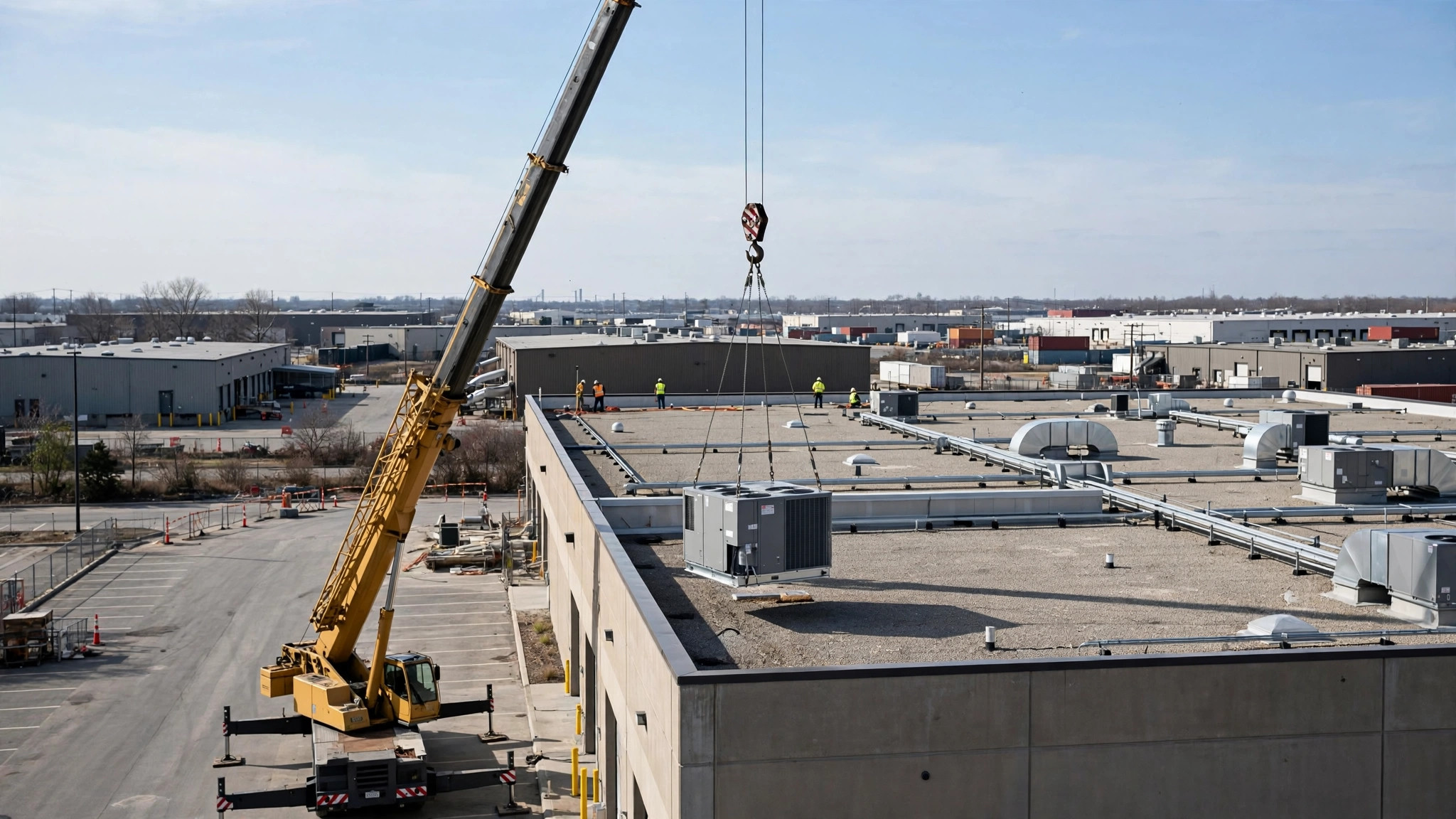
Number three is the cost owners forget: getting the unit onto the roof. The ac replacement cost for rooftop units includes crane rental, rigging crew, and sometimes street permits. Expect eight hundred to two thousand five hundred dollars for a typical lift. Difficult access, long reaches, or urban street closures push higher.
Schedule the crane early in the day and coordinate with the roofing contractor. The curb and flashing work should be ready before the unit arrives. Crane time billed by the hour punishes poor coordination.
Number 4: Electrical and Gas Work
Number four covers hookups. A new unit may need a different electrical circuit than the old one, especially when switching brands or efficiency levels. Budget five hundred to three thousand dollars for electrical work, more if the panel needs an upgrade.
Gas fired units need gas line work and venting. Budget five hundred to two thousand dollars. Permits and inspections for gas work add time, so start early.
Number four takeaway: ask the bidder to confirm the electrical and gas scope in writing. Vague hookup allowances turn into change orders.
Number 5: Ductwork and Curb Costs
Number five is what connects the new unit to your building. Roof curb adapters run five hundred to two thousand dollars when switching brands. Duct tie-in modifications run five hundred to three thousand dollars. If the ducts are in bad shape, full duct repairs add more.
The ac replacement cost stays lowest when the new unit matches the old footprint. When it does not, the curb adapter and transitions eat the savings from shopping brands. Sometimes staying with the same brand family is the cheapest move even if the equipment costs a bit more.
Number 6: Permits and Inspections
Number six is small but mandatory. Mechanical permits for commercial AC replacement run one hundred to one thousand dollars depending on the city. Some jurisdictions require plan review, which adds weeks. Start the permit process as soon as you decide, not when the equipment arrives.
Skipping permits to save money is a false economy. Unpermitted work voids warranties, fails inspections on sale, and creates liability. Budget the fee and the time.
Number 7: Operating Cost Difference
Number seven looks past installation day. The ac replacement cost includes what you will pay to run the unit for fifteen years. An old low efficiency unit can cost twice as much per year in electricity as a modern high efficiency one.
Do simple math. If the old unit costs four thousand dollars a year to run and the new one costs two thousand five hundred, you save one thousand five hundred a year. Over fifteen years, that is twenty two thousand five hundred dollars. Suddenly the efficiency premium looks cheap.
The Department of Energy explains commercial equipment efficiency at https://www.energy.gov/. ENERGY STAR lists efficient commercial air conditioning at https://www.energystar.gov/. Use these resources to compare ratings honestly.
Number 8: Maintenance Plan Cost
Number eight protects the investment. A commercial maintenance plan runs three hundred to eight hundred dollars per year per unit, with two visits covering filters, coils, electrical, and refrigerant checks. That is cheap insurance on a fifteen thousand dollar asset.
Number eight takeaway: price the maintenance plan before you buy, and start it at installation. Most manufacturers require documented maintenance to honor warranties. Skipped maintenance voids coverage and shortens equipment life. For what good maintenance includes, see https://commercialguides.com/commercial-hvac-maintenance-checklist/.
Number 9: Repair vs Replace Threshold
Number nine is the decision rule. When a repair quote exceeds fifty percent of the ac replacement cost and the unit is over ten years old, replacement usually wins. When the unit is under eight years old and the failure is a single part, repair usually wins.
Adjust for refrigerant. Units on phased out R-22 should be replaced rather than repaired, because recharge costs are brutal. Adjust for reliability history. A unit that breaks every summer is telling you something.
Our full ac replacement cost decision guide at https://commercialguides.com/ac-repair-vs-replace-commercial/ walks through this choice step by step.
Timing Your Replacement
When you replace matters almost as much as what you buy. The best time to plan an ac replacement cost project is the off season: fall or early spring. Contractors have open schedules, equipment lead times are short, and you may get better pricing than in the July rush.
The worst time is during a breakdown in peak summer. Emergency replacements cost more, choices narrow to what is in stock, and you pay premium labor. If your unit is over twelve years old, start getting quotes before it fails. A planned replacement always beats a panic purchase.
Watch for utility rebate windows too. Some rebate programs run on annual budgets that empty by summer. Buying early in the program year captures incentives that late buyers miss.
Ac Replacement Cost Factors Checklist
- Unit size in tons, from a real load calculation
- Efficiency rating and your climate’s cooling season length
- Rooftop versus ground level installation
- Crane access and rigging difficulty
- Electrical panel capacity and gas line condition
- Curb compatibility with the new unit
- Ductwork condition and needed repairs
- Permit fees and inspection timelines
- Maintenance plan pricing from day one
Frequently Asked Questions
What is the average ac replacement cost for a small business?
Seven thousand to fifteen thousand dollars installed for a five ton system. Ten ton systems run fifteen thousand to thirty thousand dollars. Complex jobs run higher.
How long does commercial AC replacement take?
One to three days for a straightforward changeout. Complex jobs with duct or electrical work run a week or more. Plan temporary cooling into your ac replacement cost budget if the building cannot go without.
Should I replace all units at once or one at a time?
If units are the same age, replacing together saves on crane and labor mobilization. If budgets are tight, replace the worst first and plan the rest. Do not mix very old and new units on shared controls without a plan.
Does a new AC lower my energy bills?
Usually yes, especially when replacing a unit over twelve years old. Savings of twenty to thirty percent on cooling costs are common with modern high efficiency equipment.
What voids the warranty on a new AC?
Skipped maintenance, unqualified installers, unpermitted work, and mismatched components. Register the warranty promptly and keep service records.
For emergency situations, see https://commercialguides.com/emergency-ac-repair-cost/ for what rush work costs.
Next Steps
Get your current unit’s age, size, and repair history on paper today. Use the per ton numbers above to set a budget range. Then get three line item bids on identical scope and compare equipment, efficiency, and warranty side by side. The ac replacement cost is a big number, but with these nine numbers in hand, it is a number you control. Plan early, bid smart, and buy once.



