
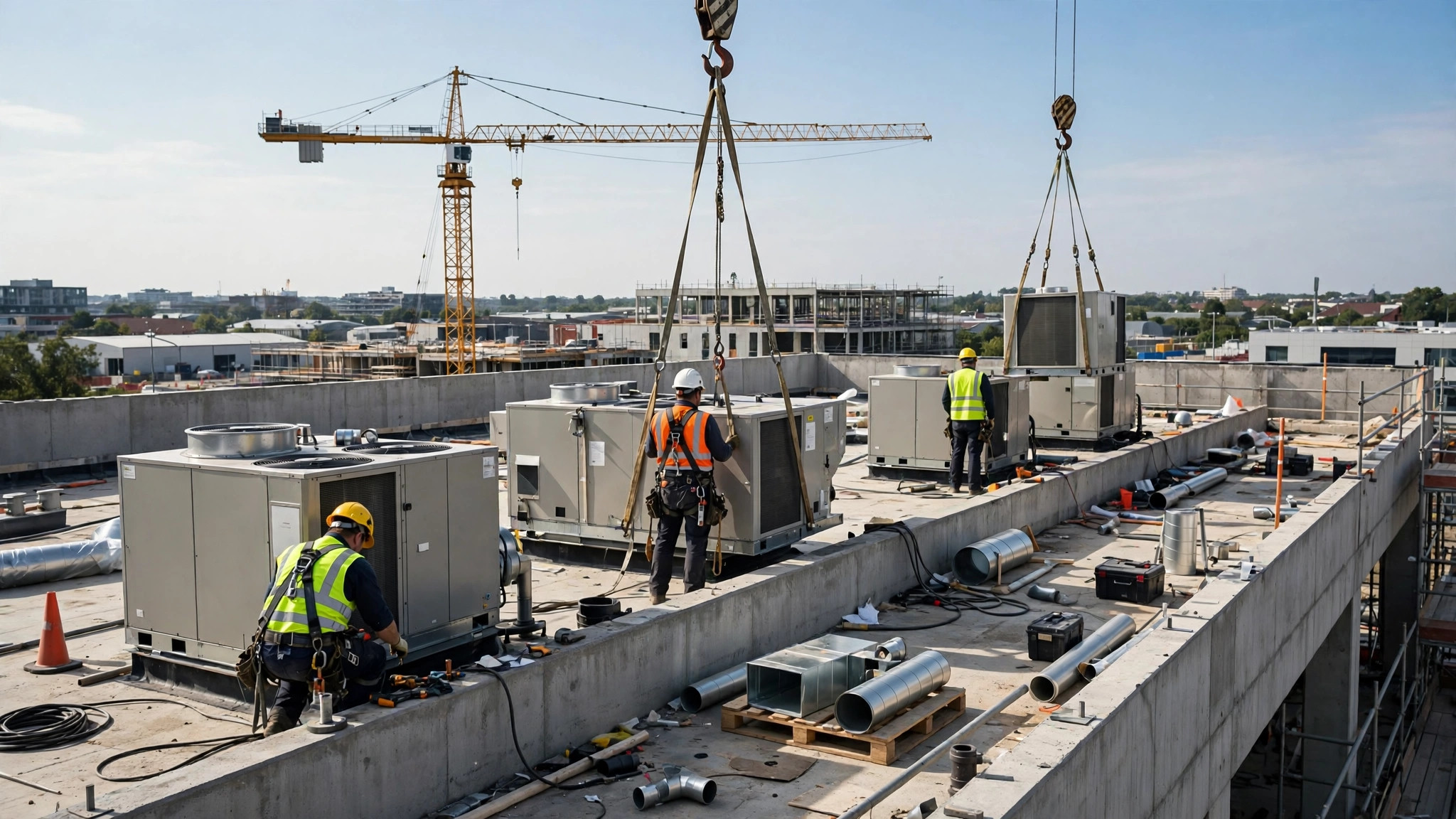
A new HVAC system is one of the biggest investments a building owner makes. The equipment costs a lot. The installation costs a lot. And the system will run every day for the next twenty years. A good commercial hvac installation delivers comfort, low bills, and few breakdowns. A bad one delivers hot and cold spots, high energy costs, and endless service calls. The difference is the process. This guide explains the seven phases of a proper commercial hvac installation so you know what should happen and when.
Phase 1: Assessment and Load Calculation
Every commercial hvac installation starts with understanding the building. The contractor surveys the space, measures rooms, checks insulation and windows, and lists heat sources like lighting, people, and equipment. Then comes the load calculation. This math sets the size of the system in tons of cooling and BTUs of heating.
The calculation should follow ASHRAE methods. Never accept a size based on square footage alone or copied from the old unit. The old unit may have been wrong. Oversized systems short-cycle and waste energy. Undersized systems never catch up. This phase is cheap and it decides everything that follows. Do not let anyone skip it.
Phase 2: System Design and Equipment Selection
With loads known, the engineer designs the system. This means picking equipment type, laying out ductwork, sizing piping, and planning controls. Rooftop units, split systems, VRF, or chillers: the choice depends on building size, use, and budget. The design should show equipment locations, duct routes, and control zones on drawings.
Review the drawings with your maintenance team. They know where forklifts travel, where access is tight, and which areas need special handling. A design that ignores daily operations will annoy you for years. Ask about noise, too. Equipment near offices or outdoor seating may need sound planning. A good commercial hvac installation is designed around the people who use the building.
Phase 3: Permits, Bids, and Contracts
The contractor pulls mechanical permits and submits drawings for plan review. This takes time. Build it into the schedule. Get bids from at least three qualified firms. Each bid should cover the same scope: equipment by model number, ductwork, piping, controls, permits, startup, and training.
Read the contract before you sign. It should state the schedule with milestones, the payment terms, and how changes are handled. It should name who supervises the job and how quality is checked. Never sign a bid with no detail. Vague contracts lead to arguments later. For help vetting firms, see how to find a commercial hvac contractor.
Phase 4: Equipment Ordering and Site Prep
Commercial equipment is often built to order. Lead times can run weeks or months. The contractor should order early and give you confirmed delivery dates. Late equipment stalls the whole job. Ask for the order confirmation in writing.
While equipment is built, crews prep the site. They set roof curbs, pour pads, run electrical conduit, and rough in ductwork and piping. This phase is disruptive. Coordinate work zones with your operations team. Keep paths clear for deliveries and emergency exits open. A clean, organized site keeps the job on schedule and meets OSHA safety rules.
Phase 5: Installation
Crews set the equipment, connect ductwork and piping, wire the controls, and charge the refrigerant. This is the most visible phase. A good foreman runs a tight site: materials staged neatly, trash hauled daily, and work areas kept safe. Visit the site during this phase. Confirm the equipment matches the model numbers in the contract. Check that ductwork follows the drawings.
Do not let the crew rush. Proper brazing, correct refrigerant charge, and tight duct seals all take time. Shortcuts here show up as high bills and breakdowns later. If something looks off, raise it with the foreman the same day. Small corrections during a commercial hvac installation are cheap. Discipline during the commercial hvac installation saves money later. Corrections after startup are not.
Phase 6: Startup, Testing, and Balancing
Startup is where the system proves itself. The contractor starts each unit, verifies refrigerant charge, tests airflow at every register, and calibrates the controls. Air balancing evens out temperatures across zones. Commissioning documents that the system meets the design.
Insist on a written startup report with test readings. Every commercial hvac installation should hit its numbers before you accept it. If a zone is off, the contractor fixes it now. Do not sign off on a system that has not been tested. Testing is the proof of a proper commercial hvac installation. Verbal promises that “it will settle in” are not a substitute for measured results.
Phase 7: Training, Documents, and Handover
The last phase is handover. Your maintenance team needs manuals, as-built drawings, control passwords, and hands-on training. Ask for a spare parts list with filter sizes and belt numbers. Walk the whole system with the contractor and your lead tech. Make sure everyone knows how to run it, what normal looks like, and who to call when it does not.
Get the warranty papers registered. Equipment warranties often need registration within a set time. File the contract, the startup report, the drawings, and the warranties together. This file is your proof of a proper commercial hvac installation and your reference for years of service. Store a copy where your maintenance lead can reach it any time.
Commercial hvac installation Cost Factors
System size drives cost first. More tons means more equipment and labor. Complexity comes next. A simple rooftop swap costs far less than a full VRF system with advanced controls. Building conditions add cost: electrical upgrades, structural work for heavy units, and asbestos abatement all appear on older buildings.
Controls are worth the money. Modern controls schedule by zone, catch faults early, and cut energy waste. The U.S. Department of Energy notes that tuned building controls are among the cheapest ways to lower energy use. Do not let a bidder strip controls to win on price. You will pay the difference in bills for years.
Get firm delivery dates and a schedule with milestones. Delays cost money when they push into your busy season or force temporary cooling. Put delay terms in the contract. A contractor with a clear plan and a track record is worth more than a low bid with no schedule.
Mistakes That Ruin a commercial hvac installation
Skipping the load calculation is the classic mistake. The system is wrong from day one and nothing fixes it except replacement. Rushing design is second. A week saved in design costs years of poor performance.
Picking the lowest bid without comparing scope is third. One bidder leaves out controls or startup. The price looks great until the extras land. Compare line by line. Fourth is ignoring maintenance access. Units get wedged into corners with no service room. Filters go unchanged. The system dies young. During design review, ask your maintenance lead if every part can be reached.
Fifth is skipping training. The crew leaves, nobody knows the controls, and the system runs on defaults. Energy waste follows. Insist on training and keep the manuals handy. These five mistakes are all avoidable. Avoid them and your commercial hvac installation will serve you well.
For ongoing care after handover, see commercial hvac service and hvac service agreement for business.
FAQ
How long does a commercial hvac installation take?
Simple replacements take days to weeks. Full system installs take weeks to months. Equipment lead time is often the longest part. Your commercial hvac installation contractor should provide a schedule with milestones. Ask for a schedule with milestones when you sign. Add buffer for permits and inspections.
Can my business stay open during installation?
Usually yes. Work can be staged by zone or scheduled off-hours. Tell the contractor your operating calendar upfront. Put work windows, noise limits, and dust control in the contract. Good contractors plan around your business.
What size system do I need?
Only a load calculation can say. The engineer must account for the building envelope, occupancy, equipment heat, and ventilation. Square-footage rules are not reliable for commercial spaces. Insist on an ASHRAE-based calculation.
Should I replace all units at once or in phases?
Phased replacement spreads cost and avoids shutdowns. Full replacement at once is simpler to coordinate and commission. The right answer depends on equipment age, budget, and downtime tolerance. Ask your contractor to price both paths.
What warranty should I expect?
Equipment warranties often run five to ten years on major parts. Labor warranties are shorter, often one to two years. Get both in writing. Ask what maintenance keeps the equipment warranty valid and register the warranty on time.
Next Steps
Start with a load calculation from a contractor with commercial experience. Review the design with your maintenance team before equipment is ordered. Lock in permits, delivery dates, and a milestone schedule in writing. Stay engaged through startup and demand the test report. Finish with training and filed paperwork. Follow the seven phases and your commercial hvac installation will deliver comfort and value for decades. The time you invest in planning now pays back every single day the system runs.



