
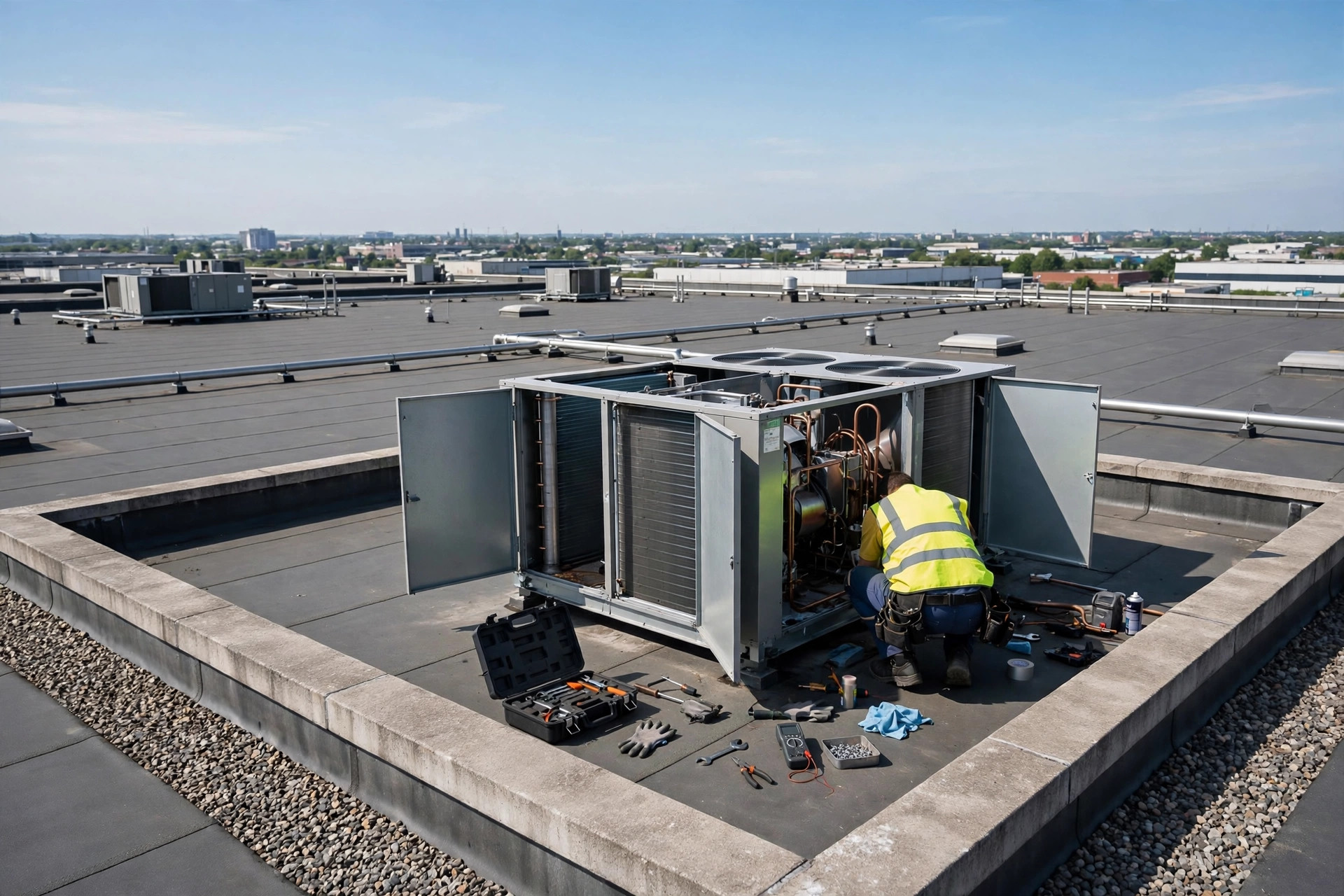
Commercial hvac preventive maintenance is the cheapest insurance a building owner can buy. A planned service program catches small problems before they become emergency calls. It cuts energy waste, extends equipment life, and keeps tenants comfortable. Buildings with strong commercial hvac preventive maintenance spend less on repairs and replace equipment later. Buildings without it pay for breakdowns at the worst times. This guide lists the ten tasks that matter most, explains how to build a program, and shows what it costs. It is written in plain language for US building owners and facility managers.
Why commercial hvac preventive maintenance pays off
The math is simple. An emergency commercial service call often costs double or triple a planned visit. A failed compressor on a hot Friday afternoon brings overtime rates, rush parts, and unhappy tenants. The same compressor issue caught during a spring tune-up costs a fraction of that. Studies of building operations consistently show that planned maintenance costs less than reactive repair over the life of the equipment.
Energy savings add up too. Dirty coils, clogged filters, and slipping belts waste energy every hour the system runs. A well-kept unit uses less electricity and fuel to deliver the same comfort. For a building with many rooftop units, the savings from commercial hvac preventive maintenance can reach thousands of dollars per year. Equipment lasts longer as well. Clean, well-adjusted equipment suffers less wear. Many owners add years to equipment life with steady service.
Comfort is the third payoff. Tenants notice hot and cold spots, humidity problems, and strange noises. They complain to you, not to the equipment. A preventive program keeps temperatures even and air fresh. That means fewer complaints and better tenant retention. In competitive rental markets, comfort is a business asset.
The 10 core tasks of commercial hvac preventive maintenance
1. Change or clean air filters. Filters are the first line of defense. Clogged filters choke airflow, freeze coils, and waste energy. Check filters monthly during heavy use. Change them when dirty, not on a fixed schedule. Buildings near construction or dusty roads need more frequent changes. This single task prevents more breakdowns than any other.
2. Clean condenser and evaporator coils. Dirty coils cannot transfer heat well. Rooftop condensers collect dirt, leaves, cottonwood, and grease. Indoor evaporator coils grow biofilm in damp conditions. Clean coils restore capacity and cut energy use. Coil cleaning belongs in every commercial hvac preventive maintenance visit, at least once a year.
3. Check refrigerant charge. Low refrigerant means weak cooling and a possible leak. The technician measures pressures and temperatures to verify the charge. If it is low, they find and fix the leak before recharging. Federal rules require certified technicians for this work and proper leak repair. Never let anyone just “top off” refrigerant without finding the leak.
4. Inspect and tighten electrical connections. Heat and vibration loosen connections over time. Loose connections cause voltage drops, overheated wires, and failed components. The technician checks contactors, capacitors, relays, and wiring. They measure motor amperage against nameplate ratings. Catching a weak capacitor during commercial hvac preventive maintenance prevents a dead unit later.
5. Lubricate moving parts. Bearings and motors with oil ports need regular lubrication. Dry bearings fail fast and can take a motor with them. Belt-drive fans need belt inspection and tension adjustment. Worn belts slip, waste energy, and eventually snap. Replacing a belt during a planned visit costs little. Replacing one on an emergency call costs much more.
6. Clear condensate drains. Cooling removes moisture from the air. That water drains away through condensate lines. Algae and sludge clog these lines, especially in warm climates. A clogged drain floods the drain pan and can damage ceilings. The technician clears the line, treats it against algae, and checks the pan. This quick task prevents expensive water damage.
7. Calibrate thermostats and controls. Controls drift. A thermostat reading three degrees off causes constant complaints. The technician compares each thermostat to a calibrated thermometer and adjusts as needed. They check control sequences, economizer operation, and building automation points. Proper commercial hvac preventive maintenance keeps the controls telling the truth.
8. Inspect ductwork and airflow. The technician checks accessible ducts for leaks, damage, and disconnected joints. They measure airflow at key points. Leaky ducts waste a large share of heating and cooling energy. Sealing the worst leaks is often the fastest payback in the whole program. Dampers get checked for proper operation too.
9. Test safety controls. Safety devices protect people and equipment. High-limit switches, flame sensors, pressure switches, and carbon monoxide controls all need testing. On gas equipment, the technician checks the heat exchanger for cracks. A cracked heat exchanger can leak carbon monoxide. Testing safety controls is not optional. It is the most important part of commercial hvac preventive maintenance.
10. Document everything. Every visit should produce a written report. The report lists what was checked, what was found, measurements taken, and recommended repairs. Good documentation tracks equipment health over time. It shows which units are declining and helps you plan replacements before failures. Keep reports in a file per unit. The Department of Energy supports planned maintenance practices in its commercial building guidance at https://www.energy.gov/.
Building your maintenance schedule
Most commercial buildings need two professional visits per year per unit. A spring visit prepares cooling equipment for summer. A fall visit prepares heating equipment for winter. Heavy-use buildings need more. Restaurants with grease-laden air, hospitals, data rooms, and 24-hour facilities often need four visits per year. Match the schedule to the load.
Between professional visits, assign simple tasks to building staff. Monthly filter checks take minutes. Monthly walkthroughs spot water stains, strange noises, and blocked vents. Staff should log thermostat complaints by zone and date. That log helps the technician find patterns. Train staff on what is normal and what needs a call. A short training session pays for itself.
Put the schedule in writing. List every unit by location and model. Note the visit months and the task list for each visit. Share the schedule with your contractor and your staff. Review it yearly. Equipment ages, building use changes, and the program should change with them. Our commercial hvac maintenance checklist gives a printable-style task list, and commercial ac maintenance plan covers agreement structures.
What commercial hvac preventive maintenance costs
Costs vary by market and equipment count. As a rough guide, a basic two-visit-per-year plan often runs a few hundred dollars per rooftop unit per year. Larger or more complex equipment costs more. Four-visit plans for heavy-use buildings run higher. Multi-unit and multi-site discounts are common.
Compare that to the alternative. A single emergency compressor call can exceed a year of maintenance for several units. Energy waste from neglected equipment adds up month after month. Early equipment replacement is the biggest hidden cost of no maintenance. A unit that dies at twelve years instead of eighteen forces a capital expense years early.
Get quotes from at least three contractors. Each quote should list the visits per year, the task list per visit, and the total annual price. Watch for exclusions. Some plans exclude filters, belts, and refrigerant. An all-in price is easier to compare. For help choosing a contractor, see how to find a commercial hvac contractor and hvac service agreement for business.
Common mistakes that weaken a program
The most common mistake is buying the plan and skipping the visits. Some owners sign commercial hvac preventive maintenance agreements and then postpone visits when busy. Missed visits defeat the purpose. Hold the contractor to the schedule. Ask for the written report after every visit.
Another mistake is choosing on price alone. The cheapest bidder often rushes visits and skips tasks. A thirty-minute “tune-up” cannot cover the ten tasks above. Ask how long a typical visit takes. Two to three hours per unit is realistic for thorough work. Also avoid vague task lists. “Check system” means nothing. Insist on the specific checklist.
Ignoring the reports is another classic error. The technician flags a weak capacitor or a small refrigerant leak. The owner files the report and forgets it. Months later the unit fails. Act on flagged items promptly. Small fixes during planned visits cost far less than emergency repairs. Energy Star offers building maintenance resources at https://www.energystar.gov/ that help owners track program results.
FAQ about commercial hvac preventive maintenance
How often should commercial HVAC equipment be serviced?
Twice a year is the standard for most buildings, spring and fall. Heavy-use facilities like restaurants, hospitals, and data centers often need quarterly service. Filter checks by building staff should happen monthly during peak seasons.
Does preventive maintenance really extend equipment life?
Yes. Clean coils, proper refrigerant charge, tight electrical connections, and good airflow all reduce wear. Well-maintained commercial units often last several years longer than neglected ones. The longer life delays expensive capital replacements.
Can building staff do preventive maintenance instead of a contractor?
Staff can handle filters, visual checks, and complaint logs. Technical tasks like refrigerant checks, electrical testing, and combustion analysis need a licensed contractor. Federal refrigerant rules also require certified technicians. A mix of staff checks and professional visits works best.
What should a maintenance report include?
The report should list each unit serviced, the tasks performed, measurements like refrigerant pressures and motor amperage, any deficiencies found, and recommended repairs with priority. Keep reports filed by unit so you can track trends over time.
Will maintenance void or protect my warranty?
Most manufacturer warranties require regular professional maintenance. Skipping service can void warranty coverage. Keep your maintenance records. If a warranty claim arises, the manufacturer will ask for proof of service.
Next steps
Inventory your equipment this week. List every unit by location, make, model, and age. Then get three quotes for commercial hvac preventive maintenance from licensed contractors who walk the building in person. Compare visit frequency, task lists, and total annual cost. Sign a one-year agreement with clear performance terms. Assign monthly filter checks to building staff. File every visit report by unit. Review the program each year and adjust as equipment ages. Steady commercial hvac preventive maintenance turns HVAC from a source of surprises into a managed cost you control.



