
Commercial HVAC replacement is the planned swap of old heating, cooling, or ventilation equipment for new units in a non-residential building. Every system reaches a point where repairs stop making sense. Parts get scarce, efficiency falls far behind modern equipment, and breakdowns strike at the worst times. Knowing when to replace instead of repair saves money, avoids emergency premiums, and keeps the building comfortable.
The decision is not always clear. A single repair may look cheaper than a new unit, but three repairs in one season tell a different story. This guide explains the seven signs that commercial HVAC replacement is due, the cost factors, how to plan the project with minimal disruption, and answers to the questions owners ask most.
Sign 1: Equipment Age Points to Commercial HVAC Replacement
Age is the simplest signal. Most commercial rooftop units and furnaces last 15 to 20 years with good care. Chillers and boilers can last longer, often 20 to 25 years. Past these ranges, failure risk climbs and efficiency lags far behind current models.
Check the nameplate or the install records for the true age. If the unit is past its expected life and repairs are mounting, commercial HVAC replacement is usually the smarter money. An aging unit also uses older refrigerant or controls that may be costly to service.
Sign 2: Repair Bills Keep Climbing
Track repair spending per unit. One repair is normal. Two in a year is a warning. Three or more, or a single repair costing a large share of a new unit’s price, means the money is better spent on replacement.
Frequent breakdowns also cost more than the repair bills. They disrupt tenants, risk stock, and pull staff away from real work. Add the hidden costs of downtime to the math, and commercial HVAC replacement often wins sooner than owners expect.
Sign 3: Energy Bills Rise Without Explanation
Old equipment loses efficiency as coils wear, compressors weaken, and controls drift. If utility bills climb while rates and occupancy stay flat, the HVAC system is a prime suspect.
New commercial units carry much higher efficiency ratings than models from fifteen years ago. The fuel and power savings after a commercial HVAC replacement can be large enough to pay back a good share of the project over time. The US Department of Energy offers efficiency guidance for commercial buildings at energy.gov. ENERGY STAR rates efficient commercial equipment at energystar.gov.
Sign 4: Comfort Problems That Repairs Do Not Fix
Hot and cold spots, weak airflow, and humidity trouble often point to equipment that can no longer meet the load. If technicians have checked the ducts and controls and the problems persist, the unit itself is likely done.
Note that some comfort issues come from bad controls or leaky ducts, not dying equipment. Rule those out first with a proper diagnosis. But when the equipment is the root cause, no amount of tuning will bring it back. For help finding the right firm for the assessment, see how to find a commercial HVAC contractor.
Sign 5: The System Uses Outdated Refrigerant or Parts
Older units may run on refrigerants that are phased down or expensive to buy. When a leak repair needs a costly recharge, replacement starts to look attractive. Parts scarcity is another push. When boards, motors, or coils are hard to find, each future repair becomes a gamble.
A commercial HVAC replacement moves the building to current refrigerants, standard parts, and modern controls. Service gets easier and cheaper for the next decade and beyond.
Sign 6: The Building’s Needs Have Changed
A system sized for yesterday’s use may not fit today. Added staff, new equipment, changed layouts, or longer hours all shift the load. If the building changed but the HVAC did not, replacement with correctly sized equipment fixes comfort and efficiency at once.
This is also the moment to consider upgrades like better zoning, smarter controls, or heat recovery. A commercial HVAC replacement planned around current needs serves the building far better than a like-for-like swap of an old design.
Sign 7: Safety or Code Issues Force Commercial HVAC Replacement
Cracked heat exchangers, failing safety controls, and gas issues are non-negotiable. If a technician red-tags equipment, replacement or major repair must happen before the system runs again.
Code changes can also force the issue. New efficiency standards or refrigerant rules may make repairing the old unit impractical. In these cases, commercial HVAC replacement is not a choice but a requirement, and delaying it only adds risk.
Planning a Smooth Commercial HVAC Replacement
Once the decision is made, planning decides how painful the project is. Start with a proper load calculation. Buildings change, and the old unit’s size may have been wrong from day one. Size the new equipment to the real load.
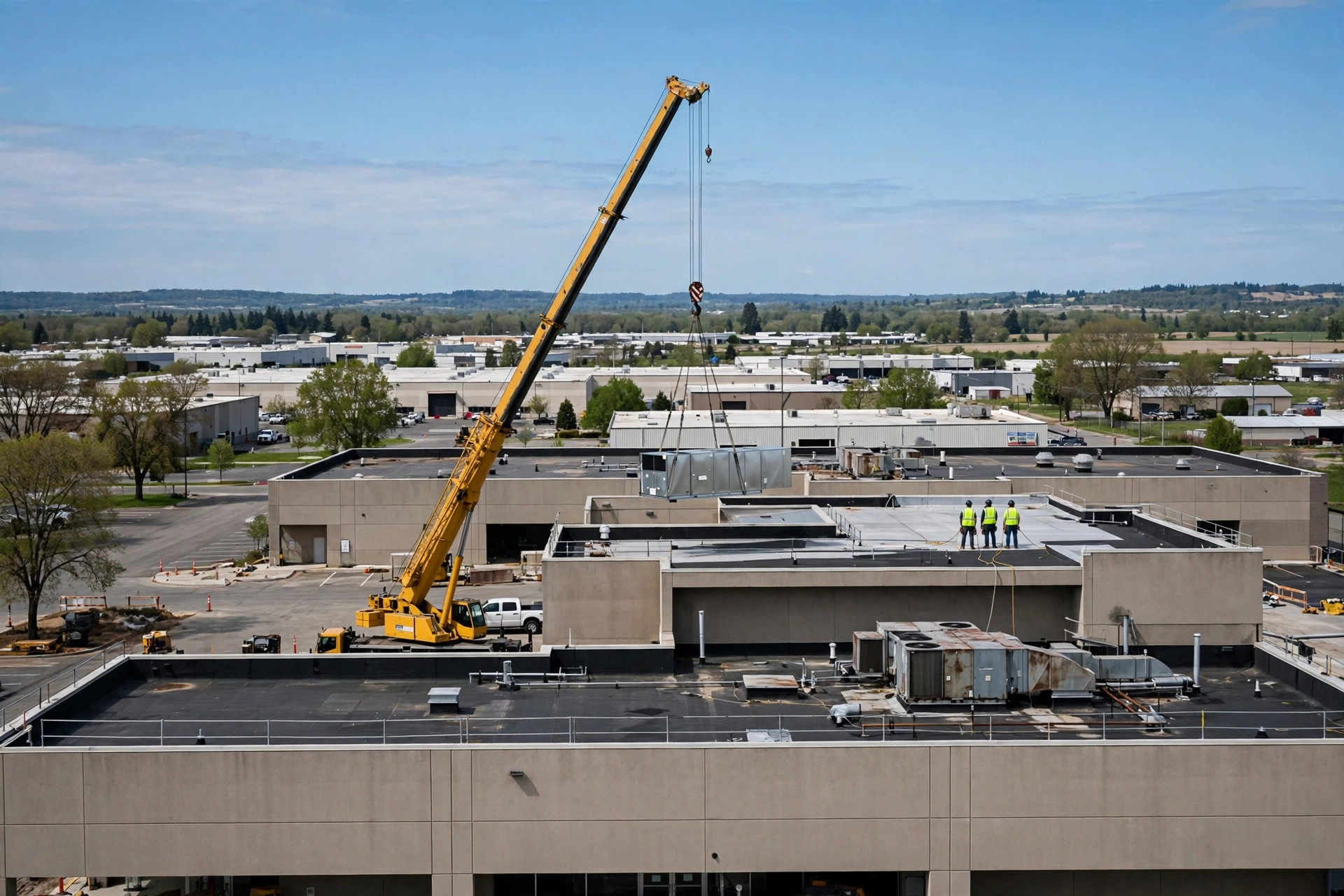
Get at least three detailed bids. Each should name the equipment by brand and model, list the efficiency ratings, describe the ductwork and control work, and give a clear schedule. Ask about crane needs for rooftop units, since crane day drives much of the schedule and cost.
Schedule the work in the mild season when possible. Replacing cooling equipment in spring or heating equipment in fall avoids peak demand and premium pricing. Plan for some noise and limited access on install day, and warn tenants in advance. For cost context, see commercial HVAC repair cost.
Commercial HVAC Replacement Cost Factors
Use this checklist to understand pricing.
- System type and size. Larger tonnage and complex systems like chillers cost more than simple packaged units.
- Number of units. Replacing several rooftop units at once often earns better per-unit pricing.
- Ductwork condition. New or heavily modified ductwork adds significant cost.
- Controls upgrades. New thermostats or building automation add upfront cost and long-term savings.
- Crane and rigging. Rooftop units need crane time, which varies by location and unit weight.
- Electrical and gas work. Panel upgrades or new gas lines add to the project.
- Permits and inspections. Required in most cities and should be in the bid.
- Disposal of old equipment. Refrigerant recovery and hauling must follow the rules.
Financing or phased replacement can spread the cost. Some owners replace the worst units first and schedule the rest over the next year or two.
Getting Bids for Commercial HVAC Replacement
Good bids make the decision easy. Ask each bidder to include the equipment brand, model numbers, efficiency ratings, and warranty terms. The bid should describe all ductwork, control, electrical, and crane work, plus the project schedule and payment milestones. Vague bids hide costs that appear later.
Compare the total cost of ownership, not just the install price. A cheaper unit with lower efficiency can cost more over ten years than a pricier efficient one. Ask each bidder for a simple payback estimate using your current energy bills. Also check references from similar buildings and confirm the contractor’s license and insurance. The lowest bid is rarely the best value on a commercial HVAC replacement, so weigh quality, warranty, and the contractor’s track record alongside price.
Commercial HVAC Replacement FAQs
How long does a commercial HVAC replacement take?
A single rooftop unit swap often finishes in one to two days. Multi-unit projects or jobs needing ductwork and controls can take one to several weeks. Weather, crane scheduling, and permit timing all affect the schedule.
Can the building stay open during commercial HVAC replacement?
Usually yes, with planning. Work happens in phases so only part of the system is down at a time. Temporary heating or cooling may be needed during the swap. A good contractor plans the sequence to minimize disruption.
What efficiency rating should I look for?
Look for high SEER2 or EER2 on cooling equipment and high AFUE on furnaces, balanced against the budget. Higher ratings cost more upfront and save more over time. Ask the bidder to show the payback math for each option.
Should I replace all units at once or one at a time?
If several units are near the end of life, doing them together often costs less per unit and means one round of disruption. If only one unit is failing, replace it now and plan the rest. Let the service records guide the timing.
Will a new system lower my energy bills?
Almost always. Modern equipment is far more efficient than units from fifteen or twenty years ago. The savings depend on the old unit’s condition, the new unit’s rating, and how the building is used. Many owners see a clear drop in the first full season.
Next Steps for Building Owners
Commercial HVAC replacement is a major decision, but the signs make it clear when the time comes. Track repair costs, watch energy bills, and get an honest assessment from a qualified contractor. Plan the project in the mild season, size the equipment to the real load, and keep the records. Done right, the new system pays back in comfort, reliability, and lower bills for years.



