
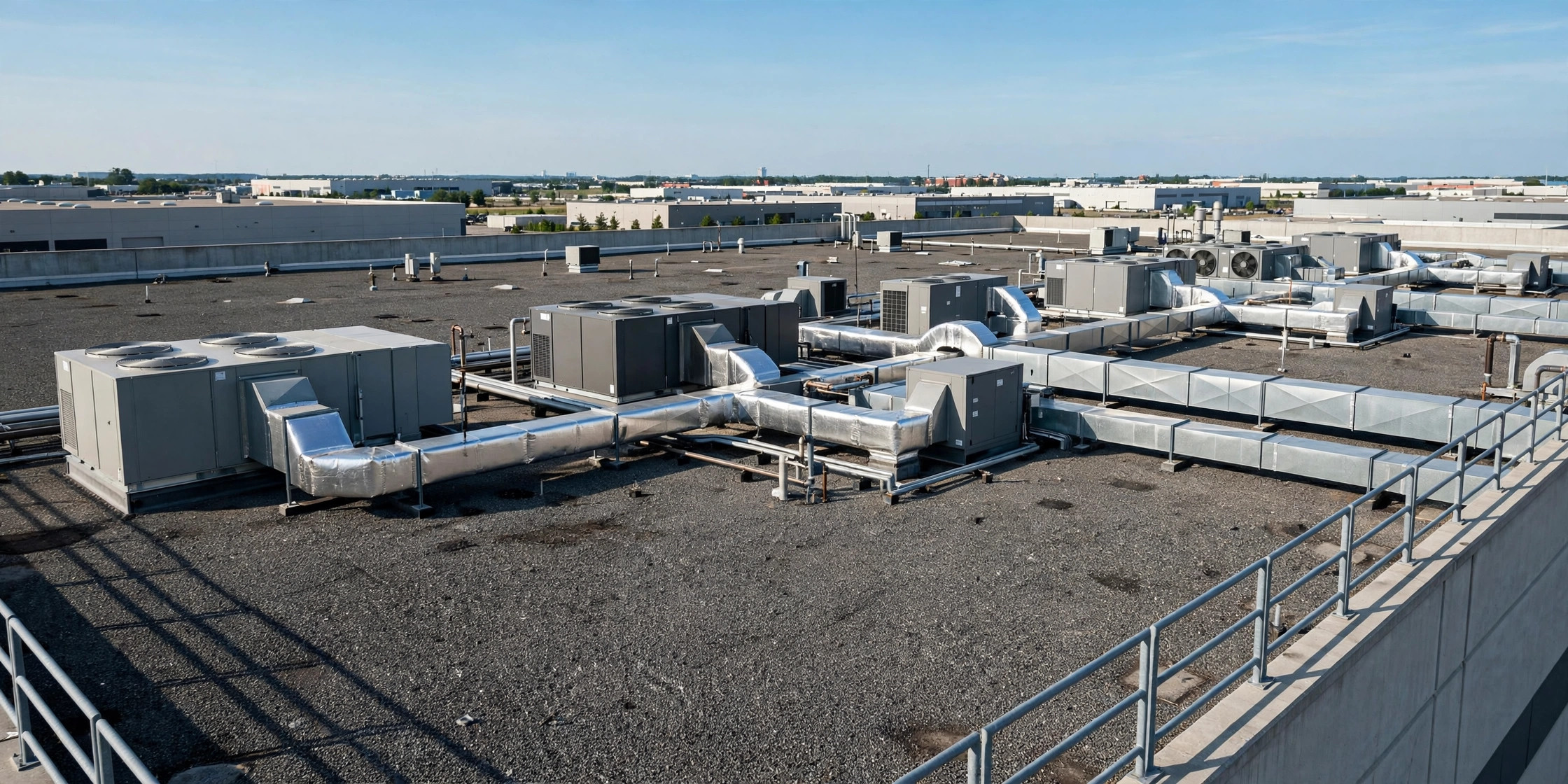
Every commercial building needs heating and cooling, but the commercial hvac systems that deliver it vary widely. From simple rooftop boxes to advanced multi zone designs, each system suits different buildings, budgets, and needs. Choosing well means decades of comfort and reasonable bills. Choosing poorly means constant complaints and wasted energy.
This guide explains five main commercial hvac systems in plain terms. You will learn how each works, what it costs, its strengths and weaknesses, and how to pick the right one for your building.
5 Main commercial hvac systems
Packaged rooftop units are the workhorse of American commercial buildings. All components sit in one box on the roof, with ducts running down into the building. They cost less upfront than most alternatives, install simply, and every commercial contractor knows them. They suit single zone and simple multi zone buildings. Efficiency tops out below premium options.
Split systems separate the condenser outside from the air handler inside, connected by refrigerant lines. They shelter sensitive parts indoors, run quieter inside, and allow flexible placement. They cost more installed than package units and need indoor space. They suit buildings where rooftop placement is difficult or noise matters.
VRF systems connect one or more outdoor units to many indoor units through refrigerant piping. Each indoor unit serves its own zone with precise control. Heat recovery models move heat between zones for top efficiency. They cost the most upfront among common commercial hvac systems but deliver the best zoning and strong energy savings. They suit multi zone offices, medical buildings, and hotels.
Chilled water systems use a central chiller to cool water, which circulates to air handlers throughout the building. Heating often comes from a separate boiler plant. These commercial hvac systems serve large buildings and campuses efficiently at scale but need cooling towers, pumps, and skilled operators. They suit towers, hospitals, and campuses.
Heat pump systems, including commercial heat pumps and dual fuel setups, move heat rather than making it. They are efficient in mild climates for both heating and cooling. In deep cold they need backup heat. They suit moderate climates and owners focused on energy efficiency and electrification.
Cost Comparison of commercial hvac systems
Upfront cost runs lowest for packaged rooftop units, then split systems, then VRF, with chilled water plants highest for large installations. But first cost is only part of the story for commercial hvac systems.
Operating cost often reverses the order. VRF and high efficiency heat pumps can cut energy use substantially versus basic package units in suitable buildings. Chilled water plants are efficient at large scale. The payback depends on your utility rates, operating hours, and climate.
Installation complexity adds cost beyond equipment. Ductwork, controls, electrical upgrades, and crane work all factor in. A simple package unit swap costs far less than a full VRF retrofit with new piping and controls. Get detailed bids that separate equipment from labor so you can compare fairly.
Maintenance costs differ too. Package units need regular but simple care. VRF needs trained technicians. Chilled water plants need dedicated operators. Factor service availability in your market into the decision. A system nobody local can service well is a liability.
Choosing the Right System
Start with your building’s zones. Single open spaces do fine with package units. Buildings with many rooms wanting different temperatures need zoned commercial hvac systems like VRF or multi zone splits. Thermostat wars among tenants signal a zoning problem that the right system solves.
Consider operating hours. Buildings running long hours earn back efficiency premiums faster. A warehouse open days only may never repay a premium system. A hospital running around the clock almost certainly will. Match the investment to the hours.
Check your climate. Heat pumps shine in mild regions and struggle in deep cold without backup. Cold climates favor gas heat options. Hot humid climates demand strong dehumidification. Your engineer should model performance in local conditions, not national averages.
Think about the future. If you plan building changes, choose commercial hvac systems that adapt. VRF zones reconfigure easily. Package units swap simply. Chilled water plants expand with the campus. Match flexibility to your plans.
Get a professional load calculation before anything else. Proper sizing is the foundation of every good HVAC decision. Oversized equipment wastes money and energy. Undersized equipment never satisfies. Never let a contractor size by rule of thumb.
Working With Contractors
The best of the commercial hvac systems installed badly will disappoint. Vet contractors carefully. Ask how many installs of your chosen system they complete yearly. Ask about factory training and certifications. Request references and call them.
Get three detailed bids for identical scope. Each should name equipment brands and models, efficiency ratings, ductwork plans, controls, electrical scope, and warranty terms. Compare line by line. A bid far below the others likely omits something important.
Ask about commissioning. Quality contractors test and tune the system zone by zone at startup, verifying airflow, temperatures, and controls. This step decides real world performance. Insist on it in the contract with written results.
Discuss controls early. Modern commercial hvac systems offer central control, scheduling, remote access, and energy tracking. Good controls multiply the value of good equipment. Bad controls waste it. Make sure your staff gets training on whatever system you choose.
Maintenance Across System Types
Every one of the commercial hvac systems needs regular care. Change filters on schedule. Keep outdoor equipment clear of debris. Service twice a year: cooling check in spring, heating check in fall. These basics apply universally.
System specific needs vary. Package units need coil cleaning against rooftop dirt. Splits need both indoor and outdoor attention. VRF needs filter care at every indoor unit plus refrigerant checks. Chilled water plants need tower treatment and pump care. Tailor the plan but never skip it.
Keep service records. Document every visit, finding, and repair. Records support warranty claims and reveal patterns. A unit needing frequent repairs is telling you something. Listen before it fails completely.
Watch for warning signs between visits: unusual noises, weak airflow, uneven temperatures, short cycling, and rising bills. Early calls are cheap. Emergency failures are not. Pair your routine with a solid commercial HVAC services agreement so help is one call away.
Energy Efficiency Tips
Whichever of the commercial hvac systems you choose, operation decides real efficiency. Set reasonable temperatures and use scheduling to match occupancy. Every degree of unnecessary heating or cooling wastes money all year.
Maintain the building envelope. Seal air leaks, maintain insulation, and keep windows in good repair. The best HVAC system cannot overcome a leaky building. Envelope improvements often pay back faster than equipment upgrades.
Use controls wisely. Lock out extreme thermostat settings in tenant spaces. Schedule setbacks for unoccupied hours. Track energy use and investigate spikes. The Department of Energy offers commercial building efficiency guidance at energy.gov.
Consider upgrades in phases. If full replacement is not in the budget, start with controls, sealing, and the worst performing units. Each step cuts waste. ENERGY STAR resources for commercial buildings are at energystar.gov. ASHRAE standards guide professional design at ashrae.org.
For heating specific needs, see commercial heating and cooling. For contractor selection, our commercial HVAC contractors guide walks through vetting.
Frequently Asked Questions
Which of the commercial hvac systems is cheapest to install?
Packaged rooftop units usually offer the lowest installed cost for standard needs. But compare operating costs too. A cheap system with high bills can cost more over its life than a pricier efficient one.
Which system is most energy efficient?
It depends on the building. VRF with heat recovery often leads in multi zone buildings. High efficiency heat pumps lead in mild climates. Chilled water plants lead at large scale. Proper sizing and controls matter as much as the system type.
Can I mix system types in one building?
Yes. Many buildings use package units for open areas and splits or VRF for offices. Mixed approaches match each space to its needs. Just ensure controls coordinate and maintenance covers all types.
How long do commercial hvac systems last?
Packaged units typically last 15 to 20 years. Splits and VRF often reach 15 to 20 with good care. Chilled water plants can run 20 to 30 years with proper maintenance. Maintenance quality is the biggest variable.
Should I replace all units at once or in phases?
Both work. Full replacement gives matched equipment and one disruption. Phasing spreads capital cost and lets you learn from each stage. Make sure phased plans form a coherent final system.
Next Steps
You now understand the five main commercial hvac systems, their costs, and how to choose. Start with a professional load calculation so every option is sized to your building’s real needs. Get three detailed bids for identical scope from qualified contractors. Compare equipment, installation quality, controls, and warranty together. With the right system, proper installation, and steady maintenance, your building will stay comfortable and efficient for years. Keep this guide with your building records for easy reference during future planning.



