
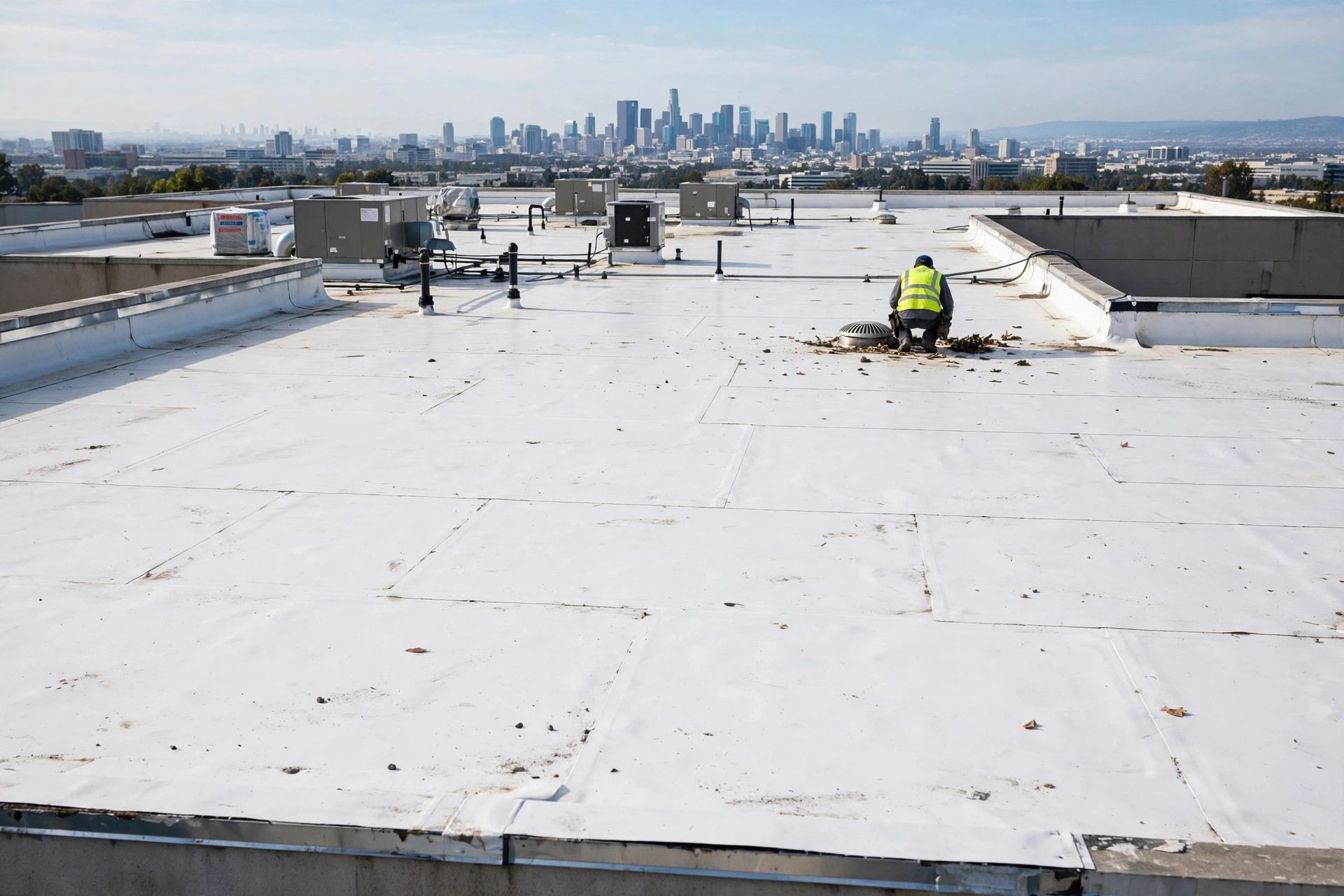
Commercial roof maintenance is the planned care of the roof on your building. It means regular inspections, clearing drains, sealing small cracks, and fixing minor damage before it grows. For owners of offices, warehouses, and retail buildings across the United States, it is the cheapest way to protect one of the most expensive parts of the property.
A commercial roof is a big investment. Replacing one can cost tens of thousands of dollars, and leaks can shut down operations or ruin inventory. Yet many owners ignore the roof until water drips through the ceiling. By then, a small fix has become a large repair. A steady commercial roof maintenance program flips this around. Small problems get found and fixed early, and the roof lasts its full expected life.
What commercial roof maintenance Includes
A complete commercial roof maintenance program covers inspection, cleaning, and minor repair. Inspections happen at least twice a year, usually in spring and fall. The inspector walks the whole roof and checks the membrane, seams, flashings, drains, and edge metal. They look for punctures, blisters, open seams, ponding water, and signs of past leaks.
Cleaning is simple but vital. Leaves, dirt, and debris get swept off the roof. Drains, gutters, and scuppers get cleared so water can flow off. Debris holds moisture against the roof and can clog drains, which leads to ponding. Ponding water adds weight and speeds up membrane breakdown.
Minor repairs get done on the spot or scheduled soon after. Small punctures get patched. Loose flashing gets resealed. Open seams get welded or glued. Pitch pans get new sealant. These small jobs cost little. Left alone, each one can let water into the building.
Good records are part of the job. The contractor should give you a written report with photos after each visit. This record helps with warranty claims and shows a buyer or insurer that the roof was cared for.
Why commercial roof maintenance Pays Off
The National Roofing Contractors Association notes that regular inspection and maintenance are key to getting the full service life from a roof system. A roof that should last twenty years can fail at twelve without care. Stretching that life to twenty or more is a direct saving.
Leaks are the other cost. Water ruins ceiling tiles, drywall, flooring, and equipment. It can grow mold that forces a shutdown. A single bad leak can cost more than years of maintenance. Catching the small membrane cut that starts a leak costs almost nothing by comparison.
Insurance and warranty angles matter too. Many roof warranties require regular maintenance. If a defect claim is filed but no maintenance records exist, the maker may deny it. Insurers also look at roof condition when they price coverage or pay storm claims. A documented maintenance program helps on both fronts.
Property value is a quieter benefit. A buyer who sees a maintained roof with records feels confident. A buyer who sees stains on the ceiling tiles and ponding on the roof starts cutting the price.
The commercial roof maintenance Schedule
Twice a year is the minimum for most buildings. Spring inspections find winter damage: cracked sealant, lifted flashing, and punctures from ice or debris. Fall inspections get the roof ready for winter: drains cleared, sealant renewed, and weak spots fixed before snow and ice arrive.
Add an inspection after any big storm. Hail, high winds, and heavy rain can damage a roof in one event. A quick check after the storm catches problems while they are fresh. Some owners also schedule a mid-summer check in hot regions, where heat and sun stress the membrane.
Coordinate with other roof work. HVAC technicians, plumbers, and solar installers walk on the roof too. Foot traffic causes punctures and scuffs. Schedule a roof check after any contractor works up there. Better yet, require walk pads along service paths to spread the load.
Commercial roof maintenance Inspection Checklist
Use this checklist at each inspection:
- Membrane surface: look for cuts, punctures, blisters, and ridges
- Seams: check for open or lifted seams on welded or glued systems
- Flashings: inspect around pipes, curbs, vents, and walls for gaps
- Drains, gutters, and scuppers: confirm they are clear and flow freely
- Ponding: note any water standing after two days
- Edge metal and coping: check for loose or damaged sections
- Sealant and caulk: look for cracking, shrinking, or loss of bond
- Penetrations: check pitch pans, pipe boots, and pitch pockets
- Rooftop equipment: look for loose panels, rust, and blocked airflow
- Previous repairs: confirm old patches still hold
- Interior: check top-floor ceilings for stains or drips
The inspector should photograph each issue and mark its location on a roof plan. This makes the next visit faster and tracks whether problems grow.
Common Problems Found in commercial roof maintenance
Ponding water tops the list. Low spots hold water for days after rain. The added weight stresses the structure, and constant moisture breaks down the membrane. Fixes range from clearing a clogged drain to adding tapered insulation in a reroof.
Punctures come next. Dropped tools, HVAC service traffic, and storm debris all cut the membrane. Small punctures are easy to patch when found early. Large ones may need a section replacement.
Open seams are common on older single-ply roofs. Heat-welded TPO seams and glued EPDM seams can open as the membrane ages. A lifted seam lets water under the sheet, which can spread far from the opening.
Flashing failures cause many leaks. Flashing seals the roof to walls, curbs, and pipes. When sealant cracks or metal pulls loose, water finds the gap. Resealing and refastening fix most flashing issues.
Shrinkage affects EPDM on older roofs. The membrane pulls back from edges and curbs, which stresses flashings. A maintenance tech watches for this and plans repairs before leaks start.
Cost Factors for commercial roof maintenance
Annual program costs depend on roof size, roof type, access, and visit count. A small building with easy access pays less than a large warehouse with many penetrations. Most contractors price by square foot per visit or as a flat annual fee.
What raises the cost: large roof area, many drains and penetrations, older roofs that need more repair time, and plans that include minor repairs in the base price. What lowers it: clean open roofs with few penetrations, newer membranes, and labor-only plans where repairs are billed separately.
Compare programs by task list, not just price. A cheap plan that only includes a visual walk-through misses the point. A real program includes cleaning, drain clearing, minor repairs, and written reports with photos. Ask for a sample report before you sign.
Repairs found during visits are often billed extra. This is normal. The value is in finding them early, when the fix is small. Budget a modest repair allowance each year so flagged items get fixed fast.
For more detail on building a program, see commercial roofing maintenance and our commercial roof maintenance checklist. For repair cost guidance, read commercial roof repair cost per square foot.
Choosing a commercial roof maintenance Contractor
Pick a contractor that specializes in commercial roofs. Home roofers know shingles, but commercial work means single-ply membranes, coatings, and metal panels. Ask how many commercial maintenance programs they run and what membrane types they service.
Check licensing, insurance, and safety training. Roof work has fall risks, and OSHA rules apply. The contractor should have a safety plan and trained crews. Ask for proof of insurance before anyone steps on your roof.
Read the contract. It should state visit dates, the task list, how repairs are priced, report format, and response time for leaks. Avoid long lock-in terms. A one-year program with clear renewal terms is fair.
Ask about leak response. When a leak is called in, how fast does the crew arrive? Same-day response matters during rain. Some programs include a set number of emergency calls at a lower rate.
Mistakes That Ruin a commercial roof maintenance Program
Skipping visits is the top mistake. The contract says two visits, but the owner never schedules them. The roof goes a full year or more with no care. Put visit dates on the building calendar and treat them like any other appointment.
Ignoring the report is next. The inspector flags three small punctures and a clogged drain. The report sits in a drawer. Months later, one puncture becomes a leak. Read each report the week it arrives and approve the repairs.
Letting other contractors damage the roof is common. An HVAC tech drags a unit across the membrane and tears it. A satellite installer screws mounts straight through. Require all trades to report roof work, and inspect after they finish.
Pressure washing is another trap. High-pressure water can cut membranes and force water under seams. Roofs should be swept and rinsed gently, not blasted. Tell your cleaning crew to keep the pressure washer off the roof.
Finally, do not coat over problems. A roof coating can extend life, but only on a sound roof. Coating over wet insulation or open seams hides the damage and wastes money. Fix first, then coat.
Owners who take commercial roof maintenance seriously often pair it with energy upgrades. The Department of Energy covers reflective roofing and insulation at https://www.energy.gov/, while the National Roofing Contractors Association publishes care manuals at https://www.nrca.net/. A good commercial roof maintenance file, with photos and reports from every visit, also speeds up insurance claims after storms and supports warranty claims when defects appear. Skipping commercial roof maintenance to save money is false economy, since one prevented leak pays for years of visits.
How often does a commercial roof need maintenance?
At least twice a year, in spring and fall, plus after major storms. Buildings with heavy foot traffic or older roofs may need quarterly visits. Your contractor can set the right schedule for your roof type and age.
What does commercial roof maintenance cost per year?
Costs vary by roof size, type, and location. Small buildings often pay a few hundred to a few thousand dollars per year for a program. Large warehouses pay more. Repairs found during visits are usually billed separately, so budget a repair allowance too.
Does maintenance keep my roof warranty valid?
Most membrane warranties require regular inspections and prompt repairs. Keep the written reports and photos from each visit. If you file a warranty claim, the maker will ask for these records.
Can maintenance fix ponding water?
Maintenance can fix ponding caused by clogged drains or debris. Ponding from low spots in the roof deck needs a bigger fix, like added drains or tapered insulation. Your inspector can tell you which case you have.
Should I repair or replace an aging roof?
If the roof is under fifteen years old and the membrane is mostly sound, maintenance and targeted repairs usually win. If leaks are widespread, insulation is wet, or repairs cost more each year, replacement may be cheaper over time. A core sample test shows the real condition.
Next Steps
Walk your roof this week, or hire a commercial roofer for a baseline inspection. Get a written report with photos. Then set up a twice-yearly program with a contractor who knows commercial membranes. Keep every report on file. Small steady care beats one big emergency every time.



