
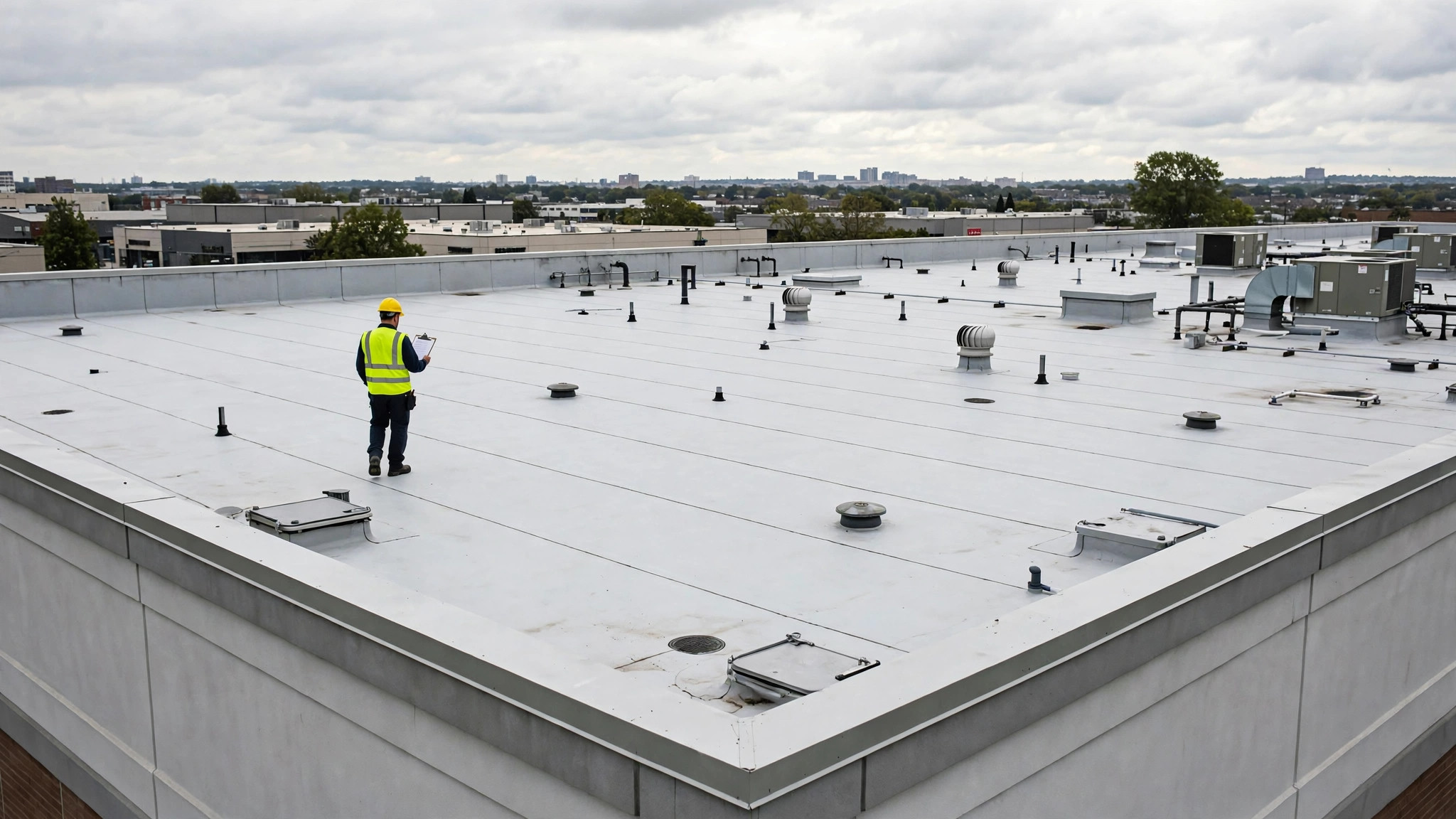
A roof is the most expensive part of your building to replace. Yet most owners spend almost nothing on commercial roofing maintenance. They wait for a leak, then pay for emergency repair. This is backwards. A small yearly effort catches small faults before they grow. This guide gives you a plain 10-point plan for commercial roofing maintenance, real cost numbers, and the seasonal tasks that matter most.
Why commercial roofing maintenance Pays
Numbers tell the story. A commercial roof replacement costs 5 to 15 dollars per square foot. Maintenance costs pennies by comparison, usually 10 to 30 cents per square foot per year. Studies by roofing groups consistently show that maintained roofs last far longer than neglected ones. The [National Roofing Contractors Association](https://www.nrca.net/) advises owners to inspect and maintain roofs on a regular schedule to protect their investment.
Leaks rarely start big. They start as a cracked sealant bead, a clogged drain, a loose flashing. Caught early, each costs a few dollars to fix. Ignored for a year, the same fault soaks insulation, rots decking, and ruins interior finishes. One neglected drain can cause a six-figure ceiling collapse.
Maintenance also protects your warranty. Most manufacturer warranties require regular upkeep. Skip it and the maker can deny your claim when the big failure comes. A simple log of visits and repairs keeps the warranty valid. It also helps at resale. Buyers pay more for buildings with documented roof care.
The 10-Point commercial roofing maintenance Plan
Walk this plan twice a year, in spring and fall. Bring a camera, a notebook, and a safe way onto the roof.
- Clear all drains, scuppers, and gutters. Standing water is the top killer of flat roofs. Remove leaves, trash, and sediment. Water should flow freely within minutes of rain.
- Check every seam and lap. Look for gaps, fishmouths, and lifting edges. Mark each fault with chalk and photograph it.
- Inspect flashing at walls, curbs, and penetrations. Flashing takes the most movement and fails first. Look for cracks, pulling, and rust.
- Examine sealant and caulking. Dried, cracked sealant lets water in. Note every joint that needs fresh sealant.
- Look for ponding water. Mark spots where water stands two days after rain. Ponding voids many warranties and rots insulation.
- Check the membrane surface. Look for punctures, blisters, and worn areas. Pay extra attention to paths where service techs walk.
- Inspect rooftop equipment. HVAC curbs, vents, and pipes penetrate the roof. Check their seals and supports. Loose units shift and tear membranes.
- Look at the roof edge and coping. Wind starts its damage at the edge. Loose coping lets gusts peel the membrane back.
- Check interior ceilings below. Stains, peeling paint, and musty smells point to active leaks. Match each stain to a roof location above.
- Log everything. Date the visit. Note each fault with a photo. Record every repair. This log is your warranty proof and your planning tool.
Finish the visit by scheduling repairs for every fault you found. A checklist without follow-through is just a walk.
What commercial roofing maintenance Costs
Budget honestly. For most buildings, plan 10 to 30 cents per square foot per year for a maintenance program. A 20,000 square foot roof runs 2,000 to 6,000 dollars a year. That covers two inspections and the small fixes found along the way.
Several factors move the price. Roof age matters most. Older roofs need more patching. Roof complexity matters too. A roof crowded with equipment takes longer to inspect than a clean field. Access matters. Buildings that need lift rental for access pay more per visit.
Many owners buy a service agreement from a roofing firm. These usually bundle inspections, priority response, and discounted repairs. Compare the agreement cost against paying per visit. For buildings over 10,000 square feet, agreements usually win. For small buildings, per-visit service may cost less.
Do not confuse maintenance with repair budgets. Keep a separate reserve for the larger fixes your inspections uncover. A good rule is to hold one to two percent of replacement cost per year in reserve. On a 200,000 dollar roof, that is 2,000 to 4,000 dollars set aside.
Seasonal Tasks in commercial roofing maintenance
Each season brings its own threats. Spring is for damage assessment. Winter storms crack sealant and shift flashing. Walk the roof after the last freeze. Clear winter debris from drains. Check for new punctures from fallen branches.
Summer is for heat defense. Reflective coatings work hardest now. Check that white membranes are clean, since dirt cuts reflectivity. Trim back any vegetation creeping onto the roof. Watch rooftop units, which run constantly and vibrate their curbs loose.
Fall is for preparation. Clear every drain before the rainy season. Falling leaves clog systems fast. Reseal joints that dried out over summer. Secure any loose equipment before storm winds arrive.
Winter is for watching. Keep drains clear of ice where safe to do so. Never chop ice with sharp tools on a membrane. After each storm, check from the ground for visible damage. Schedule the spring inspection as soon as weather allows. The [U.S. Department of Energy](https://www.energy.gov/) notes that cool roof maintenance, including regular cleaning, preserves energy savings over time.
Related Reading
When faults turn into repairs, see [commercial roof repair](/commercial-roof-repair/). For flat systems specifically, read [commercial flat roof repair](/commercial-flat-roof-repair/). For step-by-step repair prep, see [repair commercial roof](/repair-commercial-roof/).
Hiring Help for commercial roofing maintenance
You can do basic checks yourself, but a pro should handle the real work. Look for a firm with a written maintenance program, not just a vague promise to “check the roof.” Ask what each visit includes. Photos, a written report, and prioritized repair recommendations are the minimum.
Get the pricing structure in writing. Per-visit pricing suits small buildings. Annual agreements suit larger ones. Ask about emergency response. Agreement holders should get priority scheduling when leaks strike.
Check that the firm knows your roof type. A crew that only does shingles has no business on your TPO membrane. Ask for references from buildings with similar roofs. Call them and ask one question: did the firm catch problems before they became leaks? That answer tells you everything.
Keep your own log even when you hire out. Note each visit date and what was done. File every report. This record protects your warranty and proves care at sale time. ENERGY STAR resources at [energystar.gov](https://www.energystar.gov/) offer building owners tools for tracking roof and energy performance together.
Tracking Roof Performance Over Time
A single inspection tells you the present. A multi-year record tells you the future. Start a simple roof file for each building. Keep the original install documents, every inspection report, every repair invoice, and every warranty paper in one place. Digital copies work fine. Paper in a binder works fine too. What matters is that the record exists and stays complete.
Watch for patterns across visits. The same flashing repaired three times is not a repair problem. It is a design problem that needs a permanent fix. A new stain in the same ceiling area each spring points to a seasonal fault, perhaps ice damming or wind-driven rain from one direction. Patterns turn guesswork into diagnosis.
Photograph the same spots on every visit. Stand in the same places and shoot the same details: drains, the worst flashing, the main equipment curbs. Comparing photos across seasons shows slow changes that memory misses. A seam that lifts a quarter inch per visit will fail within two years. The photos prove it before the leak does.
Review the file once a year with your roofer. Ask which faults are growing, which are stable, and what the next five years look like. This review turns maintenance from a chore into a capital plan. You will know when to budget for coating, when to plan a section replacement, and when the roof is simply healthy. Owners who do this never face a surprise replacement bill.
FAQ
How often does commercial roofing maintenance need to happen?
Twice a year at minimum, in spring and fall. Add a visit after any major storm. Buildings with heavy foot traffic or many penetrations may need quarterly checks.
Can my own staff do commercial roofing maintenance?
Staff can clear drains and note visible damage. Leave membrane repairs, sealant work, and anything near edges to trained roofers. Roof falls kill people every year. Safety training is not optional.
Does commercial roofing maintenance really extend roof life?
Yes. Maintained commercial roofs routinely outlast neglected ones by many years. The cost of maintenance is a small fraction of early replacement. It is the best return in building care.
What voids a roof warranty during maintenance?
Common killers include unapproved coatings, incompatible sealants, and unauthorized penetrations by other trades. Always check the warranty terms before any work. Use approved materials only.
Should I budget maintenance per visit or annually?
Per visit suits small simple roofs. Annual agreements suit larger or complex roofs and usually include priority emergency response. Compare both options with real quotes before deciding.
Next Steps
Schedule your next inspection this month. Walk the 10-point plan or hire a firm to do it. Fix every fault you find, starting with drains and flashing. Start your roof log today with dated photos. A written commercial roofing maintenance schedule keeps everyone accountable. Review your commercial roofing maintenance log each quarter and update priorities. A steady commercial roofing maintenance habit costs little and saves fortunes. Your roof protects everything under it. Return the favor.



