
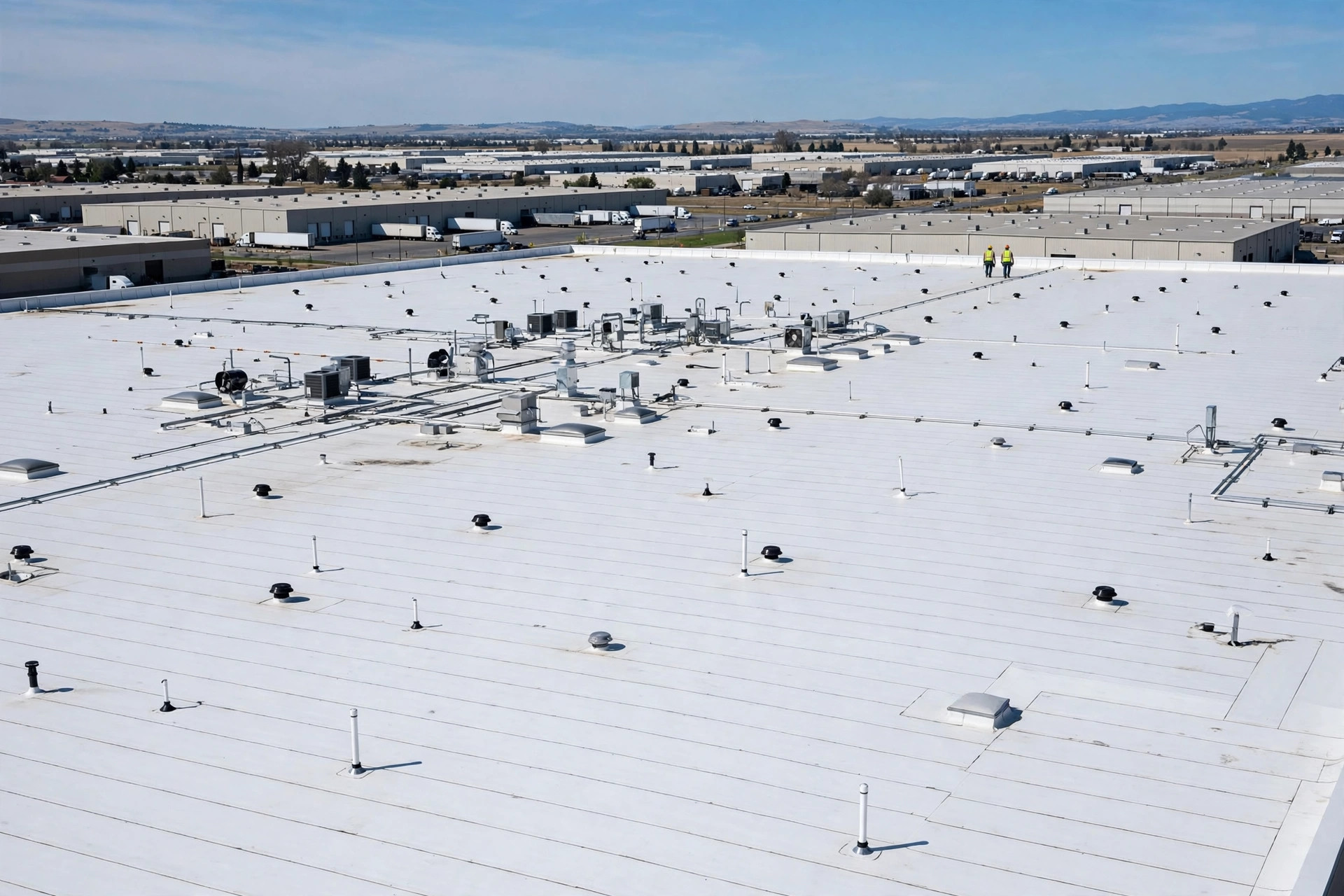
Commercial roofing services cover everything a non-residential roof needs over its life: design, installation, inspection, maintenance, repair, restoration, and replacement. Offices, warehouses, stores, schools, and factories all depend on these services to keep water out and the building running. A roof is easy to ignore until it fails, but the owners who plan ahead spend far less over time.
Not every roofing company offers the full range. Some focus on new installs. Others specialize in service and repair. Knowing what commercial roofing services should include helps owners pick the right partner and get fair value. This guide explains ten key services, the cost factors, how to choose a provider, and answers to common questions.
1. New Roof Installation Among Commercial Roofing Services
New installation is the flagship of commercial roofing services. It covers full roof builds on new construction and complete tear-off replacements on existing buildings. The work includes deck prep, insulation, membrane or panel install, flashing, and drainage.
A quality install follows the maker’s specs exactly and passes a final inspection. Ask for the warranty paperwork and keep it filed. The install sets the roof’s future, so this is the service where contractor skill matters most. For a deeper look at vetting firms, see how to choose a commercial roofing contractor.
2. Roof Inspections in Commercial Roofing Services
Professional inspections are the early warning system. A technician walks the roof, checks seams, flashing, drains, and penetrations, and tests for trapped moisture. The report lists defects with photos and ranks them by urgency.
Most experts advise inspections twice a year plus after major storms. Regular inspections are also required to keep many manufacturer warranties valid. This is one of the cheapest commercial roofing services and one of the most valuable.
3. Preventive Maintenance Plans
Maintenance plans bundle inspections with small fixes: resealing minor seam gaps, clearing drains, tightening loose flashing, and removing debris. Crews handle these tasks on a set schedule so small issues never grow.
Buildings on maintenance plans see fewer leaks and lower lifetime roof costs. The plans also create a service history that strengthens insurance claims and warranty claims. Ask what each visit includes and get it in writing.
4. Leak Detection as Part of Commercial Roofing Services
Finding the true source of a leak takes skill, since water travels far from the entry point. Leak detection uses moisture meters, infrared scans, flood tests, and core samples to trace water paths with precision.
Good commercial roofing services include proper detection before quoting repairs. Guessing at the source leads to failed patches and repeat visits. For more on the methods, see commercial roof leak detection.
5. Roof Repairs in Commercial Roofing Services
Repairs fix seams, flashing, punctures, and damaged sections with materials matched to the roof system. Quality repair work rebuilds details correctly instead of just smearing sealant over the problem.
Ask for before and after photos of every repair. A clear diagnosis and a written quote should come before the work. Fast, correct repairs are the backbone of commercial roofing services for aging roofs.
6. Roof Restoration Services
Restoration renews a sound but aging roof with coatings and repairs instead of a full replacement. It costs far less than a tear-off, adds years of life, and cuts cooling bills with reflective coatings.
Not every roof qualifies. The deck must be sound and wet insulation limited. A good provider tests first and gives an honest verdict. Restoration is one of the smartest commercial roofing services for the right building.
7. Roof Replacement Services
When repair and restoration no longer make sense, replacement starts fresh. The old system comes off, the deck gets checked and fixed, and a new roof goes on with full warranties.
Replacement is the biggest ticket in commercial roofing services, so the planning matters. Get detailed bids, check references, and schedule the work in fair weather. For financing angles, see commercial roof replacement financing.
8. Gutter, Drain, and Scupper Work
Drainage parts are small but critical. Commercial roofing services include cleaning, repair, and replacement of gutters, drains, scuppers, and downspouts. Blocked drainage causes ponding, and ponding causes leaks.
This work is often bundled into maintenance visits. If your quotes never mention drainage, ask why. A roofer who ignores water flow is missing half the job.
9. Flashing and Penetration Work
Every vent, pipe, curb, and skylight needs sound flashing. These details are the most common leak points on commercial roofs. Services include installing new flashing, rebuilding old details, and resealing penetrations.
Quality flashing work takes time and skill. It is also where cheap contractors cut corners. Ask how the crew handles penetrations and look at photos of past detail work.
10. Emergency Response in Commercial Roofing Services
True emergency response means a crew that comes out fast after storms or sudden failures to tarp breaches and stop water entry. Not every company offers it, so confirm before you need it.
Buildings with service agreements usually get priority dispatch. Save the emergency number where staff can find it. Fast response limits damage and keeps insurance claims clean. The National Roofing Contractors Association offers storm-response guidance for owners at NRCA.
Commercial Roofing Services Cost Factors
Use this checklist to understand pricing across commercial roofing services.
- Service type. Inspections cost little. Replacements cost a lot. Everything else falls between.
- Roof size and complexity. Bigger and more complex roofs take more labor.
- Roof system. Different materials need different skills and parts.
- Roof condition. Neglected roofs need more repair work per visit.
- Timing. Emergency and storm-season work carries premium rates.
- Agreement versus one-off. Annual plans usually cost less per visit than single calls.
Choosing the Right Provider of Commercial Roofing Services
Look for a licensed, insured company with strong commercial experience and real references. Check manufacturer certifications, which unlock better warranties. Review the safety plan, since federal rules from OSHA require fall protection on commercial roofs.
Get detailed written quotes and compare them line by line. Test communication before signing. The best commercial roofing services come from firms that inspect thoroughly, explain clearly, and document everything.
Building a Long-Term Roof Plan with Commercial Roofing Services
Smart owners treat the roof as a managed asset with a written plan. Start with a baseline: a full professional inspection with moisture testing and a written report. This shows the roof’s true condition, remaining life estimate, and the defects ranked by urgency.
Next, map the next five years. Year one fixes the urgent defects. Later years schedule the important but not urgent work, plus a possible restoration or replacement when the numbers favor it. Put budget figures beside each item so the plan doubles as a funding request. Review the plan each year with the service provider and update it based on the latest inspection.
A written plan turns commercial roofing services from reactive spending into controlled investment. It prevents surprise failures, smooths the budget, and gives every stakeholder a clear picture. Owners with plans spend less over the roof’s life than owners who only call when water drips.
Commercial Roofing Services FAQs
How often should a commercial roof be inspected?
Twice a year is the standard advice, plus after any major storm. Spring and fall visits catch winter damage and prepare for the next season. Many warranties require documented inspections.
What is the difference between repair and restoration?
Repair fixes specific defects like seams and flashing. Restoration renews the whole roof surface with coatings and repairs to add years of life. Repair suits localized damage. Restoration suits aging but sound roofs.
Do commercial roofing services include gutters?
Most full-service firms handle gutters, drains, and scuppers as part of maintenance and repair. Confirm it is in the agreement rather than assuming. Drainage work is too important to leave out.
How do I know if I need replacement instead of repair?
When damage is widespread, the membrane is worn out, wet insulation is extensive, or repairs keep failing, replacement usually costs less over time. An honest inspection with moisture testing gives the real answer.
Should I sign a maintenance agreement?
For most commercial buildings, yes. Agreements lock in pricing, guarantee scheduling, and include priority emergency service. The cost is small compared with one avoided emergency repair.
Next Steps for Building Owners
Commercial roofing services work best as a long-term partnership, not a series of panic calls. Find a qualified provider, set up inspections and maintenance, and keep the records. Fix small problems fast and plan big projects calmly. The roof will return the favor with years of quiet, dry service. A building with a cared-for roof is a building with one less thing to worry about. Start with the inspection, choose the partner with care, and keep the plan current year after year. The payoff is a dry building, a calm budget, and a roof that simply does its job season after season without drama. That is the quiet reward of choosing well.



