
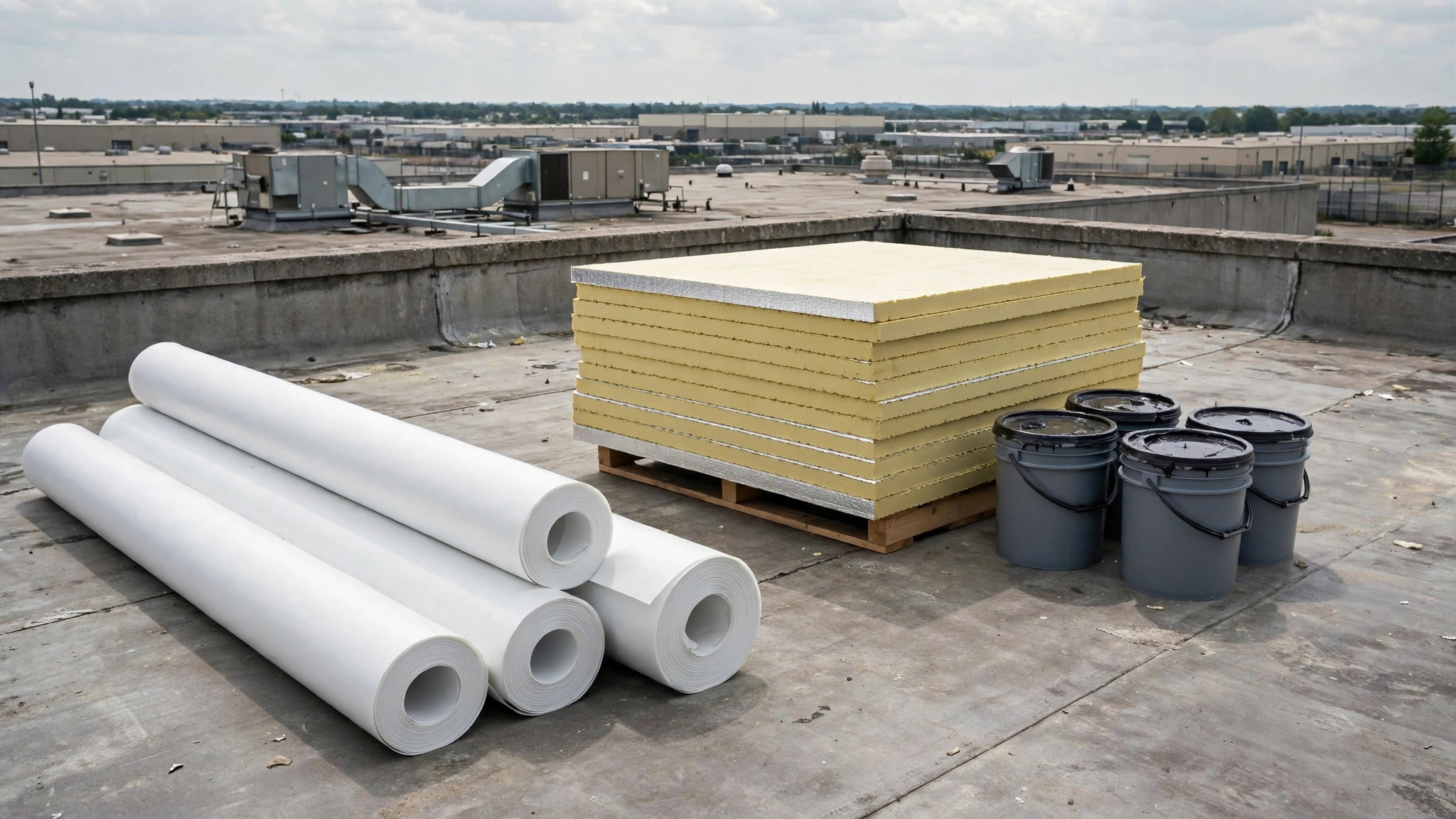
Buying commercial roofing products is not like buying shingles for a house. The products form engineered systems, and the wrong choice costs far more than the right one saves. Membranes, insulation, adhesives, coatings, and accessories all have to work together on your specific building.
This guide gives you eight buyer tips for commercial roofing products. You will learn what to look for in each product category, how to read warranties, and the mistakes that trap first time buyers.
Tip 1: Buy Systems, Not Just commercial roofing products
The first rule of buying commercial roofing products is to think in systems. A membrane from one maker, insulation from another, and adhesive from a third may work fine, or they may fight each other. Manufacturers test and warrant their products as assemblies.
When a contractor proposes products, ask whether they form a manufacturer approved system. Approved systems carry stronger warranties because the maker has tested the combination. Mixing brands can void warranty coverage. A contractor who proposes a tested system is thinking about your long term protection, not just the sale.
This applies to every layer: deck, vapor retarder, insulation, cover board, membrane, flashing, and edge metal. Each layer affects the others. Buy the system, and the individual commercial roofing products take care of themselves.
Tip 2: Know the Membrane Options
Membranes are the star of commercial roofing products. TPO offers a white reflective surface with heat welded seams at a mid range price. EPDM brings the longest track record and cold weather toughness at a lower price. PVC resists grease and chemicals best and costs the most of the single plies.
Modified bitumen and built up roofing are asphalt based options with long histories. They suit owners who prefer traditional systems and contractors who specialize in them. Metal panels serve sloped commercial roofs with 40 plus year lifespans.
Match the membrane to your climate, building use, and budget. Do not let a contractor sell you the only product they install without explaining why it fits your building. The National Roofing Contractors Association compares membrane types at nrca.net.
Tip 3: Do Not Skimp on Insulation
Insulation is among the most undervalued commercial roofing products. It adds R value that cuts heating and cooling bills for decades. It also provides a smooth stable base that protects the membrane from punctures and movement.
Polyiso is the most common commercial roof insulation, offering high R value per inch. EPS and XPS serve in specific situations. Cover boards add toughness over the insulation, resisting hail and foot traffic damage. The small extra cost of a cover board often pays back in fewer repairs.
When comparing bids, check the insulation R value, not just its presence. Two bids can both include insulation with very different energy performance. More R value costs more upfront and saves more over time. The Department of Energy explains roof insulation benefits at energy.gov.
Tip 4: Match Adhesives and Accessories
Adhesives, primers, seam tapes, and sealants are the supporting cast of commercial roofing products, and they matter. The wrong adhesive on the wrong membrane causes failures that look like membrane problems but are really chemistry problems.
Insist on manufacturer approved accessories for your chosen system. Ask the contractor to name the adhesive, primer, and tape brands in the bid. Generic substitutions to save money often cause the exact failures warranties exclude. This is a common corner cutting spot in low bids.
Fasteners deserve the same attention. The right fastener type, length, and pattern for your deck and wind zone are engineering decisions. In high wind areas, fastener patterns get denser and costs rise. Do not let anyone thin out the pattern to win your business on price.
Tip 5: Read the Warranty Before You Buy
Warranties rank among the most misunderstood commercial roofing products, because a warranty is itself a product you are buying. Material only warranties cover defects. System warranties cover the assembly. No dollar limit warranties pay full repair costs without caps.
Longer terms cost more and demand stricter installation and maintenance. Read the exclusions carefully: ponding water, unauthorized repairs, and neglected maintenance void most warranties. Know the claim process before you need it. A warranty you cannot use is not protection.
Ask whether the warranty transfers if you sell the building. Transferable warranties add sale value. Some transfer free, some charge fees, and some do not transfer at all. Get this answer in writing.
Tip 6: Verify Coating Compatibility
Coatings are popular commercial roofing products for extending roof life. But coatings must match the existing roof. EPDM needs EPDM compatible primer and coating. Metal needs products made for metal. Using the wrong coating causes peeling and voids warranties.
Ask for the product data sheet and check the approved substrates list. If your roof is not listed, the product is wrong for the job. Confirm compatibility in writing from the manufacturer, not just the contractor’s word. This one check prevents the most common coating failures.
Also verify the thickness requirement for any warranted coating. Warranties demand specific dry film thickness in mils. Thin applications fail early. Make sure the bid states the target thickness and how it will be verified.
Tip 7: Check Manufacturer Strength
When you buy commercial roofing products, you buy a promise about the future. That promise is only as strong as the company behind it. Choose manufacturers with long histories, solid finances, and real technical support.
Ask how long the manufacturer has made the specific product, not just how long the company has existed. Ask about their track record with warranty claims. A maker that fights every claim is worse than a shorter warranty from a maker that pays fairly.
Local availability matters too. Products stocked by local distributors get to your job faster and make future repairs easier. Exotic products with long lead times cause delays now and headaches later. ENERGY STAR lists rated roofing products at energystar.gov.
Tip 8: Buy Through Qualified Contractors
The best commercial roofing products installed badly will fail. Many premium warranties require installation by manufacturer certified contractors. The certification is part of what you are buying.
Vet contractors as hard as products. Ask how many installs of your chosen system they do each year. Request addresses of past jobs. Call references. Confirm insurance and licensing. A reputable commercial roofing company will welcome the scrutiny.
Get three detailed bids for identical scope. Compare the products named, not just prices. A low bid using thinner membrane, less insulation, or generic accessories is not the same project as a full spec bid. Our guide to commercial roofing contractors walks through vetting step by step.
Checklist: Avoiding Common Buyer Mistakes With commercial roofing products
The classic mistake with commercial roofing products is buying on price alone. The cheapest membrane with the thinnest insulation and generic accessories costs less today and far more over time. Compare total systems, not bottom lines.
Another mistake is ignoring the building’s specifics. Products perfect for a warehouse may fail on a restaurant with grease exhaust. Tell every bidder about rooftop contaminants, traffic patterns, and future plans like solar. The right products depend on these details.
Do not skip the maintenance plan. Even the best commercial roofing products need twice yearly inspections and prompt repairs. Pair your new roof with a commercial roofing maintenance routine from day one. Most warranties require it, and it is the cheapest life extension available.
Finally, keep every document. Product data sheets, warranty papers, inspection reports, and repair receipts belong in one roof file. That file proves warranty compliance and adds value when you sell.
Frequently Asked Questions
Should I buy the thickest membrane available?
Not always. Match thickness to roof traffic and exposure. Thicker is better for busy roofs but wastes money where traffic is light. Your contractor should recommend based on actual conditions.
Are name brand commercial roofing products worth the premium?
Usually yes. Established brands offer tested systems, stronger warranties, and better technical support. Off brand savings rarely survive the first major problem.
Can I mix products from different manufacturers?
You can, but it risks warranty coverage. Manufacturer approved systems carry the strongest warranties. If mixing, get written confirmation that the combination is approved.
How do I know if a coating suits my roof?
Check the product data sheet’s approved substrate list and confirm compatibility in writing. The existing roof type, condition, and a moisture survey decide candidacy.
What is the most important accessory to get right?
Adhesives and seam systems cause the most failures when wrong. Insist on manufacturer approved bonding products for your specific membrane.
Next Steps
You now know the eight key tips for buying commercial roofing products, from thinking in systems to vetting contractors. Start by documenting your building’s needs: climate, use, traffic, contaminants, and plans. Then get three detailed bids naming exact products and systems. Compare warranties, manufacturer strength, and contractor qualifications alongside price. Buy the right system once, maintain it well, and your commercial roofing products will protect your building for decades.



