
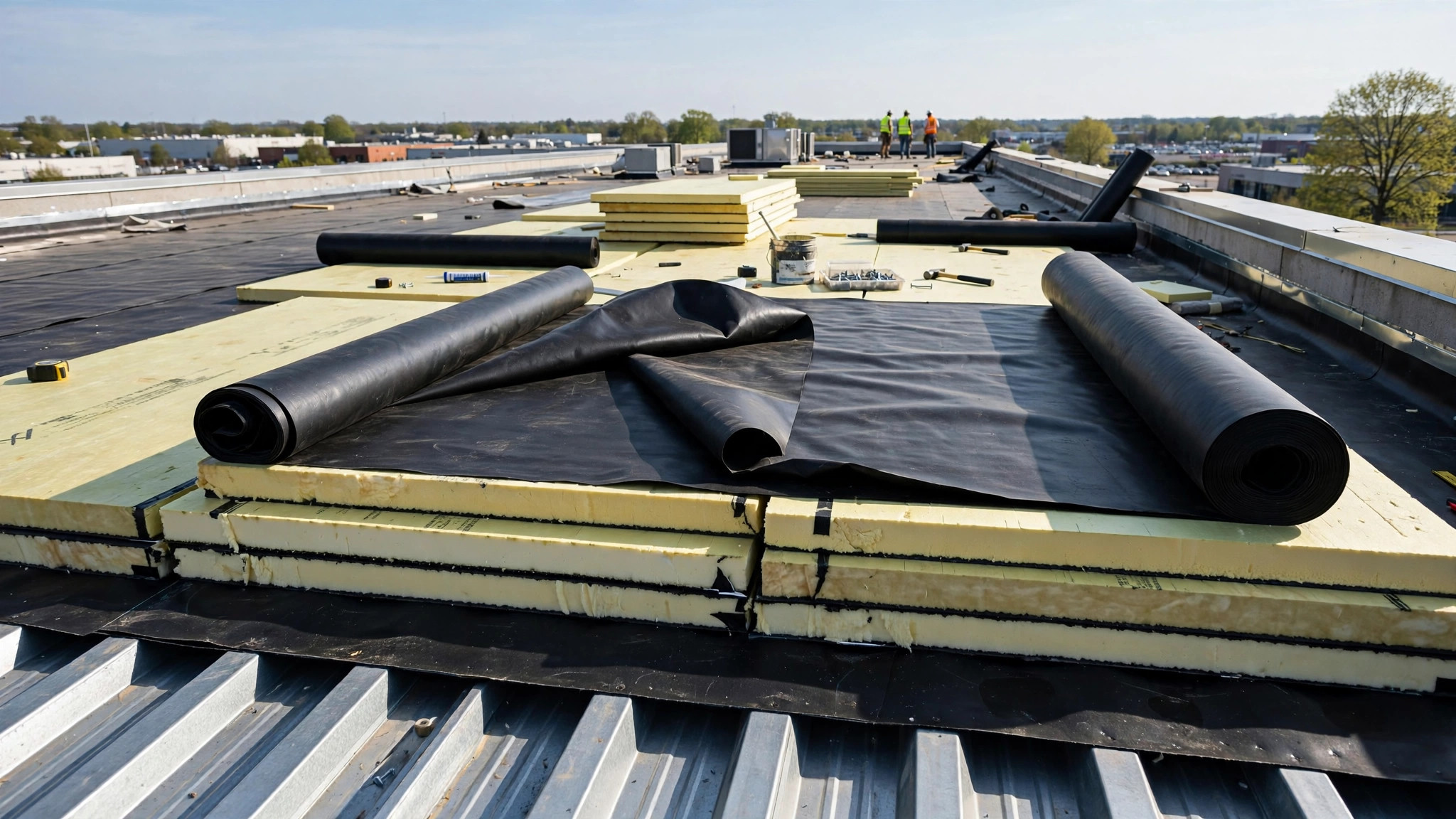
A rubber roof is more than a black sheet. Under that sheet sits a stack of parts that work together: deck, insulation, membrane, flashing, edges, and drainage. Together they form the epdm roof system, and every part matters to the life of the whole.
This guide breaks an epdm roof system into its six parts, explains how each one works, and shows what to check when you buy, inspect, or maintain one. Understand the system and every roofing conversation gets easier.
Part 1: the structural deck
Everything starts with the deck. The deck is the structural surface the roof sits on: steel, concrete, or wood, depending on the building. It carries the weight of the whole epdm roof system plus snow, equipment, and workers.
The deck must be sound before roofing begins. Rusted steel, cracked concrete, or rotted wood all need repair first. A new membrane over a bad deck is money on a shaky foundation. On tear-off jobs the contractor inspects the deck once the old roof is off. On overlays the deck hides, which is why moisture surveys matter.
Deck type shapes the attachment. Steel decks take screws easily. Concrete needs special fasteners or adhesive. Wood takes screws but needs dry rot checks. Your contractor should name your deck type in the bid and match the fastening to it.
Part 2: insulation and cover board
Insulation sits on the deck and does three jobs. It keeps heat in during winter and out during summer. It gives the membrane a smooth surface to lie on. And on flat roofs it creates the slope that moves water to the drains.
Code sets the minimum R-value, and the number keeps rising. Thicker insulation costs more and saves more energy. The U.S. Department of Energy publishes guidance on commercial roof insulation levels that helps owners pick the right thickness.
Tapered insulation is the drainage plan. Instead of one flat thickness, tapered boards step down toward the drains like a very shallow funnel. A proper epdm roof system includes this taper design. Flat insulation on a flat deck leaves ponds, and ponds find seams.
A cover board often tops the insulation. This thin, tough layer protects the soft insulation from foot traffic and hail. It adds cost and adds years. On roofs with heavy service traffic, the cover board pays for itself.
Part 3: the EPDM membrane
The membrane is the waterproof skin of the epdm roof system. The black rubber sheet sheds water across the whole field of the roof. It comes in wide rolls that keep seams few and far between.
Thickness choices are 45, 60, or 90 mil. Sixty mil is the commercial standard, the balance of price and puncture resistance most buildings need. Ninety mil suits roofs with heavy traffic or hail exposure. Forty-five mil fits light-duty budgets.
Attachment methods vary. Mechanically attached systems use screws and plates at the seams. Fully adhered systems glue the whole sheet down. Ballasted systems hold the sheet with stone weight, though few owners choose this today. Each method changes the labor cost and the wind rating of the finished epdm roof system.
Part 4: flashing at every penetration
Flashing seals the membrane to everything that pokes through it: pipes, vents, curbs, walls, and skylights. The field sheet may last 30 years, but flashing works harder and ages faster. Most leaks in an epdm roof system start at flashing, not in the open field.
Good flashing is custom work. Pre-made pipe boots fit standard pipes. Curbs for HVAC units get wrapped in membrane with sealed corners. Wall flashing runs up the wall and gets capped with metal. Each detail takes a skilled hand and real time.
Inspect flashing first on every visit. Look for gaps, cracks, and pulling at the top edge. Reflashing a curb costs little. Repairing the soaked insulation beneath a failed flashing costs a lot. Our EPDM roof repair guide shows the common flashing fixes.
Part 5: edge metal and perimeter
The roof edge takes the worst wind. Edge metal caps the perimeter and locks the membrane down against uplift. A weak edge is how wind gets under the sheet and peels it back.
Standards exist for edge strength. Ask your contractor whether the edge metal meets ANSI/SPRI standards for wind. The National Roofing Contractors Association references these standards in their guidance. On a big flat roof in a windy zone, the edge detail is not the place to save money.
Gutters and scuppers belong to this part too. They carry water off the roof edge. Keep them clear and sized to the rainfall. An undersized scupper turns a heavy storm into a ponding test for the whole epdm roof system.
Part 6: drainage
Water must leave the roof. Interior drains, scuppers, and gutters each do this job on different buildings. The drainage design works with the tapered insulation to move every drop off the field.
Drains clog. Leaves, trash, and tennis balls all find roof drains. A clogged drain turns a rainstorm into a swimming pool, and standing water tests every seam. Drain maintenance is the cheapest part of owning an epdm roof system and the most skipped.
Overflow protection matters. Secondary drains or scuppers set slightly higher than the primary drains give water an escape route when the primary clogs. Code requires overflow drainage on many buildings. Check that yours exists and works, because one clogged drain during a big storm is all it takes to test the whole roof.
How the parts of an epdm roof system work together
No part works alone. The deck carries the load. The insulation smooths and slopes. The membrane sheds water. The flashing seals the holes. The edge locks it down. The drainage removes the water. A failure in any part stresses the rest.
This is why system thinking beats part thinking. A cheap membrane over great insulation still leaks at bad flashing. Great flashing on ponding insulation still fails early. When you buy an epdm roof system, you buy the assembly, and the bid should price the assembly. Compare bids part by part using our commercial roof inspection checklist as your review guide.
Warranties follow the system too. Maker warranties cover the membrane and sometimes the whole assembly when installed to spec. Contractor warranties cover the workmanship. Both need the maintenance the fine print requires. Skip the inspections and both warranties weaken.
Cost factors for a full epdm roof system
Tear-off versus overlay leads. Tear-off costs more and exposes the deck for inspection and repair. Overlay saves money where the old roof is sound, dry, and code allows one more layer. Never stack more layers than code permits.
Insulation thickness follows. Each step up in R-value adds material cost and energy savings. Run the payback on the thicker package. In most climates the math favors more insulation than the code minimum.
Detail count moves labor. A plain warehouse roof with four drains installs fast. A hospital roof with fifty penetrations, curbs, and skylights takes far longer. Count the penetrations when you compare bids. Detail-heavy roofs punish the low bidder who priced a simple job.
Access and schedule matter. Crane time for material, street permits, and tenant coordination all cost money. A roof that must stay open during the work needs phasing, and phasing costs more than a straight run.
Frequently asked questions
How long does an epdm roof system last?
Twenty-five to 30 years is normal for a well-built system with regular maintenance. The membrane often outlasts the flashing, so plan on flashing upkeep midway through. Buildings that maintain all six parts get the long end of the range.
Can I mix parts from different makers?
The membrane, flashing, and adhesives should come from one maker as a system. Mixing brands can void the warranty and cause compatibility problems. Insulation and edge metal are less sensitive. When in doubt, ask the maker in writing.
What maintenance does the system need?
Inspect twice a season. Clear drains and gutters. Patch punctures fast. Check flashing at every visit. Keep traffic on walkway pads. Our commercial roof maintenance checklist covers the seasonal routine in full.
Does an epdm roof system work in hot climates?
Yes, with the right surface. Standard black EPDM absorbs heat. White-surfaced EPDM or a reflective coating fixes that. In hot states, price the white option and check utility rebates for cool roofs.
Who should install an epdm roof system?
A contractor with real EPDM experience, not just a general roofer. Ask how many EPDM squares they installed last year and whether you can visit an older job. Seam and flashing work is hand work, and the crew matters more than the brand on the roll.
When should the whole system be replaced?
When several parts fail together: widespread seam trouble, brittle flashing everywhere, wet insulation across large areas. A moisture survey maps the damage. Spot failures get spot repairs. System-wide failure gets a new system.
Next steps for your roof
Walk your roof with the six parts in mind and note the condition of each. Then get three bids that price the full epdm roof system, part by part, not just the membrane. The owner who buys the system, maintains the system, and warranties the system gets the decades a rubber roof promises.



