
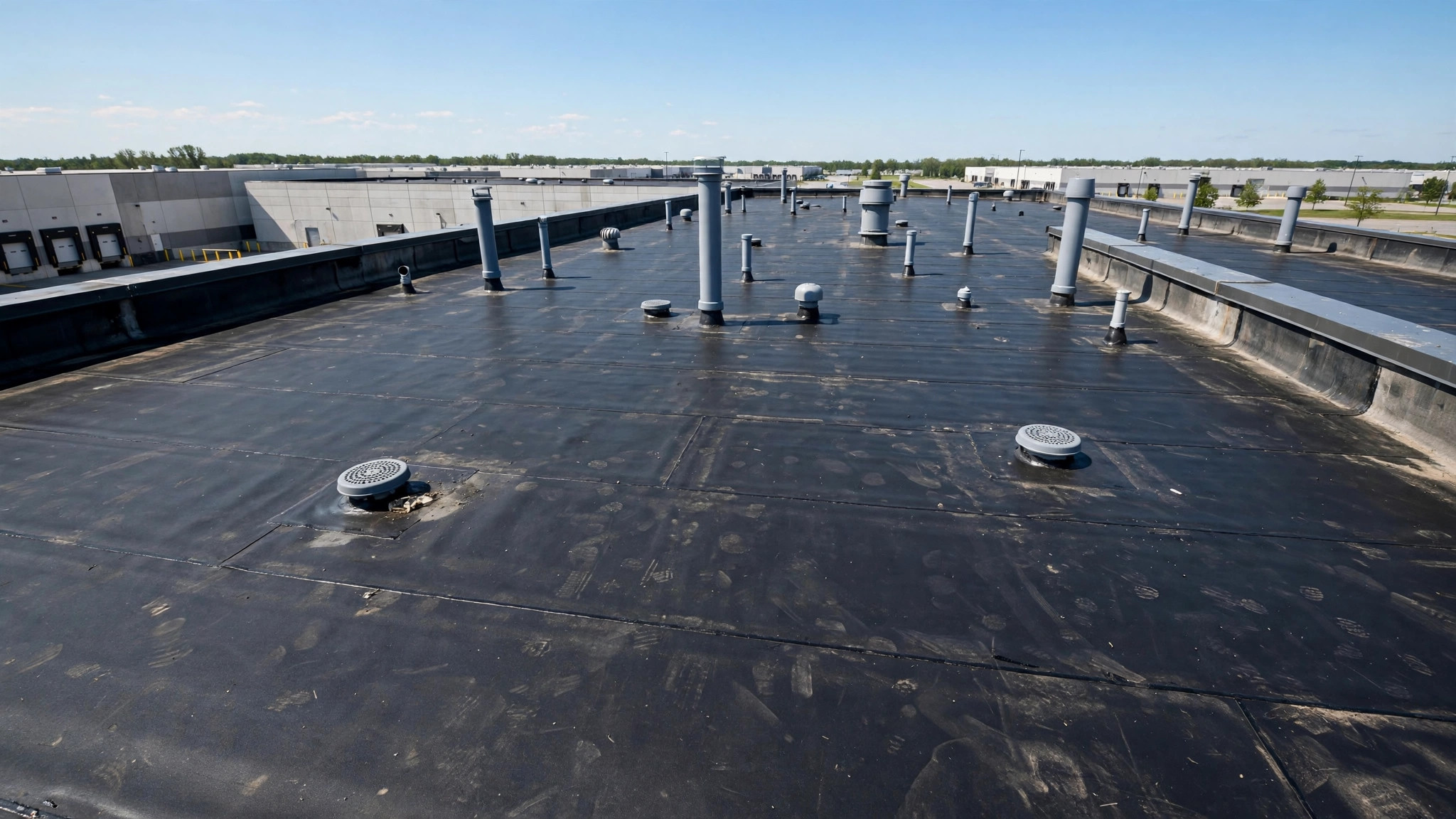
Rubber has covered commercial roofs for over half a century. Through every trend in roofing, the black EPDM sheet keeps winning jobs. There are reasons for that staying power. An epdm roof is affordable, tough, and proven in a way few materials can match.
This guide covers nine benefits of an epdm roof for commercial buildings, plus the honest costs, the expected lifespan, and the simple maintenance that keeps it working. If you own a flat or low-slope building, this is the baseline every other option gets measured against.
Benefit 1: an epdm roof costs less up front
Price opens the conversation. EPDM material costs less per square foot than TPO, PVC, and metal. Installed, a mechanically attached epdm roof often lands between $4 and $8 per square foot depending on the market and the insulation package. On a 20,000 square foot roof, that gap against premium systems buys a lot of insulation or a lot of maintenance.
Labor helps too. EPDM installs fast. Big sheets go down quickly, and mechanically attached systems need no cure time for adhesives across the field. Faster install means fewer labor hours and less disruption to the tenants below.
Benefit 2: proven lifespan measured in decades
An epdm roof installed well lasts 25 to 30 years, and plenty go longer. The rubber resists UV, ozone, and temperature swings by chemistry, not by coating. There is no surface layer to wear off and expose the weakness beneath.
This track record matters when you compare warranties. Makers offer long terms on EPDM because the field history backs them up. A 30-year-old EPDM roof still in service is a common sight. The National Roofing Contractors Association documents EPDM’s long service history in its technical resources.
Benefit 3: flexibility that survives cold and movement
Rubber stays rubber in the cold. An epdm roof does not stiffen and crack when the temperature drops the way some plastics do. Buildings in northern states get real value from this. Freeze-thaw cycles punish stiff membranes and spare flexible ones.
Building movement is the quieter benefit. Structures shift with wind, loads, and settling. The EPDM sheet stretches and recovers instead of tearing. That forgiveness adds years in the real world, where no building sits perfectly still.
Benefit 4: fewer seams, fewer leaks
EPDM comes in wide sheets, up to 50 feet across. Wide sheets mean fewer seams, and seams are where flat roofs leak. A roof with half the seams has roughly half the seam risk. The math is simple and it favors an epdm roof on big open buildings like warehouses.
Seam work itself is straightforward. Primer and seam tape bond the laps, and a careful crew produces seams that last as long as the sheet. Ask any EPDM contractor about seam method. The good ones will talk your ear off, and that is a good sign.
Benefit 5: repairs are simple and cheap
A puncture in an epdm roof is a ten-minute fix. Clean the area, apply primer, press on a patch, and roll it tight. The patch bonds into the sheet and lasts. No torches, no hot-air welders, no special skills beyond care.
This matters over 30 years. Every roof takes damage: dropped tools, storm debris, service techs in a hurry. An epdm roof shrugs off small wounds with cheap patches. Keep a repair kit on site and most damage never becomes a leak. Our EPDM roof repair guide walks through the common fixes.
Benefit 6: an epdm roof handles ponding water better
No roof wants standing water, but EPDM tolerates it better than most. The rubber does not break down under a puddle the way some membranes do. Buildings with imperfect drainage get more forgiveness from an epdm roof.
Forgiveness is not permission. Ponding still breeds leaks at seams and flashing, and it voids some warranties. Tapered insulation that slopes to the drains remains the right design. But when the drain clogs on a holiday weekend, EPDM gives you time that stiffer membranes do not.
Benefit 7: light on structure, easy on retrofits
EPDM is light. A mechanically attached system adds little load to the structure, which matters on older buildings and on overlays where code limits total roof weight. Ballasted systems are the exception, since stone is heavy, but few owners choose ballast today.
The light weight also suits overlays. Where code allows one additional layer, EPDM goes over many existing roofs without structural review. That saves the tear-off cost and keeps the building dry during the work. Our commercial flat roof repair guide covers overlay decisions in more detail.
Benefit 8: quiet and hail resistant
Rubber absorbs impact. Hail that cracks stiff membranes bounces off an epdm roof with a scuff. Buildings in hail country get real insurance value from this toughness. Ask your insurer whether the roof type affects your premium. Sometimes it does.
Rain noise drops too. Anyone who has worked under a metal roof in a downpour knows the drumming. EPDM over insulation is quiet by comparison. For offices, schools, and clinics under the roof, the acoustic benefit is no small thing.
Benefit 9: maintenance is minimal and clear
The maintenance program for an epdm roof fits on an index card. Inspect twice a season. Keep drains clear. Patch punctures promptly. Keep traffic on walkway pads. Watch the flashing at walls and curbs.
That is the whole job, and it works. Owners who follow this simple program get the full lifespan from the roof. The U.S. Department of Energy includes roof care in its commercial building maintenance resources, since the roof protects every system below it. Our commercial roofing maintenance guide lays out the full seasonal routine.
Problems to watch on an aging epdm roof
Seams age first. After many years the tape or adhesive at the laps can start to lift, especially on roofs that pond water. An inspection catches lifting seams early, when a simple re-prime and re-tape fixes them. Ignored seams become leak paths.
Flashing shrinks and pulls. The flashing at walls and curbs works harder than the field sheet and ages faster. Look for gaps, cracks, and pulling at the top edge. Reflashing a curb costs far less than repairing the wet insulation beneath it.
Shrinkage shows on old roofs. EPDM can shrink slightly over decades, pulling at the edges and penetrations. A roof with good perimeter attachment handles it. A roof with weak edge metal shows stress cracks. Your inspector should check the perimeter on every visit of an older epdm roof.
Punctures accumulate. Years of service traffic leave small cuts that add up. None is fatal alone, but twenty unpatched cuts will find a rainstorm eventually. The fix is the same as ever: patch promptly, walk on pads.
What an epdm roof costs: the full picture
The membrane is the cheap part. Insulation, edge metal, flashing, and labor make up most of the bid. Code-required insulation R-values keep rising, and tapered insulation for drainage adds real money. Price the assembly, not the sheet.
Tear-off versus overlay swings the total. Tear-off costs more and lets the contractor see the deck. Overlay saves money where the old roof is sound and code allows it. A moisture survey before the decision keeps surprises out of the job.
Thickness steps the price in tiers. Forty-five mil is the light-duty pick. Sixty mil is the commercial standard and the best value for most buildings. Ninety mil is the heavy-duty option for roofs with brutal traffic. Match the thickness to the abuse the roof will take.
Bid the same spec three times. Give every contractor the same thickness, install method, and insulation plan, then compare the totals. A bid this way reveals the honest market price in your area and exposes the low bidder who left scope out.
Frequently asked questions
Is black EPDM bad for cooling bills?
In hot climates it adds load. White-surfaced EPDM and reflective coatings fix most of the penalty. The ENERGY STAR program lists reflective roofing options that cut cooling loads for buildings in hot climates. In mixed and northern climates the winter heating benefit offsets much of it.
How do I know when my epdm roof needs replacement?
Widespread seam failure, brittle flashing that cracks when bent, and leaks in many places at once all signal the end. A roof with a few patchable problems has years left. A roof failing everywhere at once does not. An inspection with a moisture survey gives the honest answer.
Can solar panels go on an epdm roof?
Yes, with the right mounts. Ballasted solar racks sit on the membrane without penetrations on many buildings. Attached systems need proper flashing at every mount. Coordinate the solar and roofing contractors so the warranty survives the install.
Does an epdm roof need coating?
Not as a rule. EPDM is UV stable by chemistry. Owners sometimes coat aging EPDM to squeeze out more years, and it can work. But a sound membrane needs no coating to reach its full life.
What voids an EPDM warranty?
Ponding water beyond the maker’s limit, unapproved coatings or repairs, and skipped maintenance top the list. So do rooftop additions like new units or solar installed without the maker’s detail. Read the exclusions before you sign anything.
Next steps for your building
If your building has a flat or low-slope roof, get EPDM bid against the alternatives on your specific building. Compare thickness, install method, and warranty terms line by line. An epdm roof from a careful crew, inspected twice a season, remains one of the smartest dollars in commercial roofing.



