
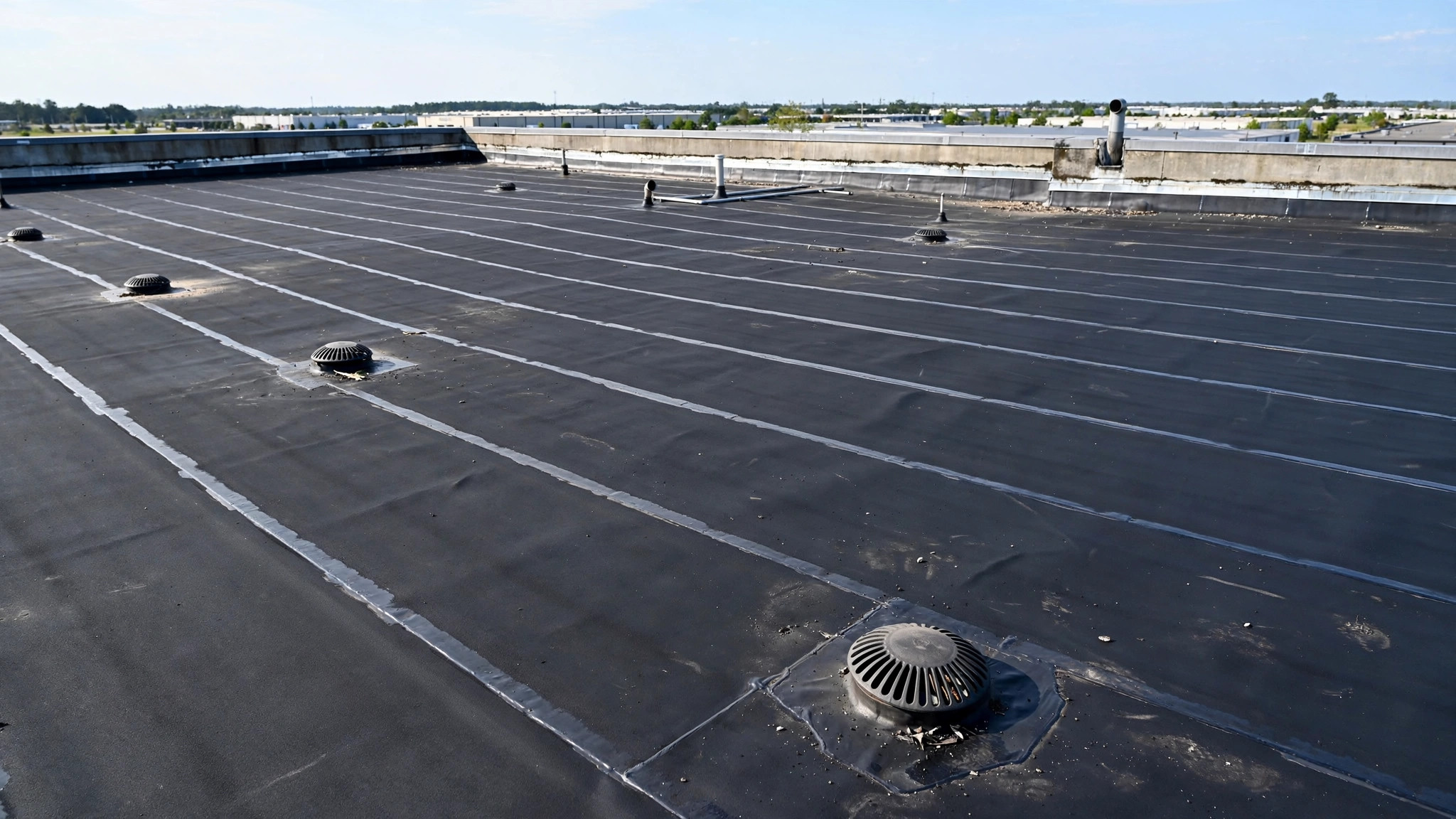
An epdm rubber roof is one of the most common commercial roofing systems in the country. EPDM stands for a synthetic rubber membrane that comes in large sheets, usually black, and gets laid across flat and low-slope roofs. It has been protecting warehouses, offices, and retail buildings for decades.
This guide covers what an epdm rubber roof is, how it is installed, what it costs, and how to keep it in good shape. You will also learn its weak points and when repair beats replacement. Read on for the full picture.
What Is an epdm rubber roof?
An epdm rubber roof is a single-ply membrane made from ethylene propylene diene monomer, a durable synthetic rubber. Sheets come in widths up to 50 feet, which means fewer seams than most other systems. Fewer seams mean fewer places for water to get in.
The membrane is usually black, though white versions exist for reflectivity. Thicknesses commonly run 45, 60, or 90 mils. Thicker membranes resist punctures better and last longer. Most commercial jobs use 60 mil as the standard.
An epdm rubber roof can be installed three ways. Fully adhered systems glue the membrane to the insulation below. Mechanically attached systems fasten it with plates and screws. Ballasted systems hold it down with stone or pavers. Each method suits different buildings and budgets.
The material handles temperature swings well. EPDM stays flexible in cold weather, which is why it does well in northern climates. It resists UV damage, ozone, and most weathering. With proper care, an epdm rubber roof often serves twenty years or more.
8 Facts About an epdm rubber roof
One, an epdm rubber roof is among the most affordable commercial systems. Material and labor both run lower than many alternatives. For owners watching the budget, it is often the value pick.
Two, installation is straightforward. Large sheets go down fast, and the methods are well understood by most commercial roofers. Simple installation keeps labor costs down.
Three, repairs are simple and cheap. Patches use primer and peel-and-stick or adhered EPDM pieces. A trained technician can fix most damage in a single visit. Keep some matching membrane on hand for quick fixes.
Four, the black color absorbs heat. A black epdm rubber roof runs hotter in summer than a white membrane. White EPDM or a reflective coating can fix this if cooling bills are a concern.
Five, seams are the weak point. Factory seams are strong, but field seams depend on the installer. Proper cleaning and priming before seaming is critical. Poor seam work is the top cause of early EPDM leaks.
Six, an epdm rubber roof resists hail better than many systems. The rubber flexes on impact instead of cracking. In hail country, thicker 90 mil membrane adds real protection.
Seven, petroleum products damage it. Grease from kitchen exhausts and spilled oils soften EPDM. Buildings with rooftop grease discharge need protective mats or a different membrane near the source.
Eight, ponding water is tolerated but not loved. EPDM handles standing water better than some systems, but chronic ponds still stress seams and flashing. Fix drainage where water stands for days.
Epdm rubber roof Costs
An epdm rubber roof typically costs less per square foot than TPO, PVC, or metal. Fully adhered and mechanically attached systems price similarly, while ballasted systems can run cheaper where the structure supports the extra weight.
Thickness moves the price. A 90 mil membrane costs more than 45 mil but buys puncture resistance and life. Insulation upgrades, tapered systems for drainage, and detail work at penetrations add to the total like any roofing job.
Repairs are among the cheapest in commercial roofing. That low lifetime maintenance cost is a big part of the value story. When you compare systems, add up installation plus expected maintenance over the roof’s life.
Maintenance Checklist for an epdm rubber roof
Use this checklist twice a year and after major storms.
- Seams. Look for open, lifting, or fish-mouthed seams.
- Flashings. Check pipes, curbs, and edges for gaps or shrinkage.
- Punctures. Walk the field for cuts from tools, debris, or foot traffic.
- Drains. Clear debris so water leaves the roof quickly.
- Grease and oil. Check for stains near exhausts and clean them promptly.
- Ballast. On ballasted systems, look for displaced stone exposing membrane.
- Shrinkage. EPDM can shrink with age, pulling at edges and flashings. Watch perimeter details.
- Debris. Remove branches, trash, and anything sharp.
EPDM Versus Other Single-Ply Membranes
Owners comparing single-ply options usually weigh EPDM against TPO and PVC. Each membrane has a personality. The right pick depends on climate, budget, and building use.
TPO is the reflectivity champion. Its white surface bounces sunlight and cuts cooling costs in hot climates. Seams are heat-welded, which many roofers prefer over adhesives. TPO typically costs more than EPDM but less than PVC. In warm southern markets, it is often the default recommendation.
PVC brings chemical resistance. It handles grease, oils, and many chemicals that damage other membranes. Restaurants and industrial buildings with rooftop exhaust issues often choose PVC for that reason. It welds like TPO and reflects heat well. The price runs highest of the three.
EPDM wins on installed cost and cold-weather flexibility. The black membrane absorbs heat, which is a drawback in summer but a small bonus in winter. It has the longest track record of the three, with decades of performance data. For owners in northern climates watching the budget, it is hard to beat.
Seam technology differs. EPDM relies on adhesive or tape seams applied in the field. TPO and PVC use heat-welded seams. Welded seams are generally considered stronger and less installer-dependent. That said, a skilled EPDM crew produces seams that last decades. Installer quality matters more than seam type.
Puncture resistance is comparable across modern membranes at equal thickness. Thicker is better regardless of chemistry. A 90-mil sheet of any type outlasts a 45-mil sheet. When comparing bids, match thickness before you compare price.
Fire ratings deserve attention. All three membranes can meet Class A fire ratings as part of a tested assembly. The rating belongs to the whole system, not the sheet alone. Confirm the assembly rating in the submittal, especially on buildings with strict code requirements.
Recycling is improving for all single-ply types. Old membranes can be ground into new products or used as filler. Ask the manufacturer about take-back programs if sustainability matters to your organization.
The practical advice is simple. In hot climates with cooling bills to cut, lean toward white membranes. In cold climates on a budget, EPDM is the value pick. Near kitchens or chemical exhaust, consider PVC. And whatever you choose, spend as much care selecting the installer as selecting the membrane. The crew’s skill decides the outcome more than the brand on the roll.
When to Recoat Instead of Replace
A sound membrane with surface wear is a recoat candidate. If the sheets are intact, seams are solid, and insulation is dry, a reflective coating can add many years at a fraction of replacement cost. The coating must be compatible with the membrane, which means proper cleaning and usually a primer. Recoating is not a fix for saturated insulation or failing seams. Think of it as a second life for a roof that is tired but fundamentally healthy. A professional assessment with adhesion testing tells you whether your roof qualifies.
Related Guides
For repair help, see our EPDM roof repair guide. To compare single-ply options, read about TPO roof repair. And for general flat roof care, see commercial flat roof repair.
For independent background, the National Roofing Contractors Association covers single-ply systems and standards, and the U.S. Department of Energy explains cool roof options for dark membranes.
FAQ
How long does an epdm rubber roof last?
With proper installation and maintenance, an epdm rubber roof often lasts twenty years or more. Thicker membranes and good drainage stretch service life.
Is an epdm rubber roof good for a warehouse?
Yes. Warehouses are the classic EPDM application. The large sheets cover big open roofs fast, and the cost per square foot is hard to beat.
Can you coat an epdm rubber roof?
Yes, with the right primer and a compatible coating, usually acrylic or silicone. Coating adds reflectivity and extra years. The membrane must be clean and sound first.
Does an epdm rubber roof need special maintenance?
No special tools are needed, but seams and flashings deserve regular checks. Keep grease and oils off the membrane and repair punctures promptly.
Black or white EPDM: which is better?
Black costs less and performs well in cold climates. White reflects heat and cuts cooling bills in hot climates. Match the color to your climate and energy goals.
Next Steps
Now you know what an epdm rubber roof offers and where it falls short. If your building needs a new roof or a recover, get bids that specify membrane thickness, attachment method, and insulation plan. Compare EPDM against at least one other system on total life-cycle cost. And whatever you choose, set up twice-yearly inspections. A rubber roof that gets basic care will protect your building for decades.



