
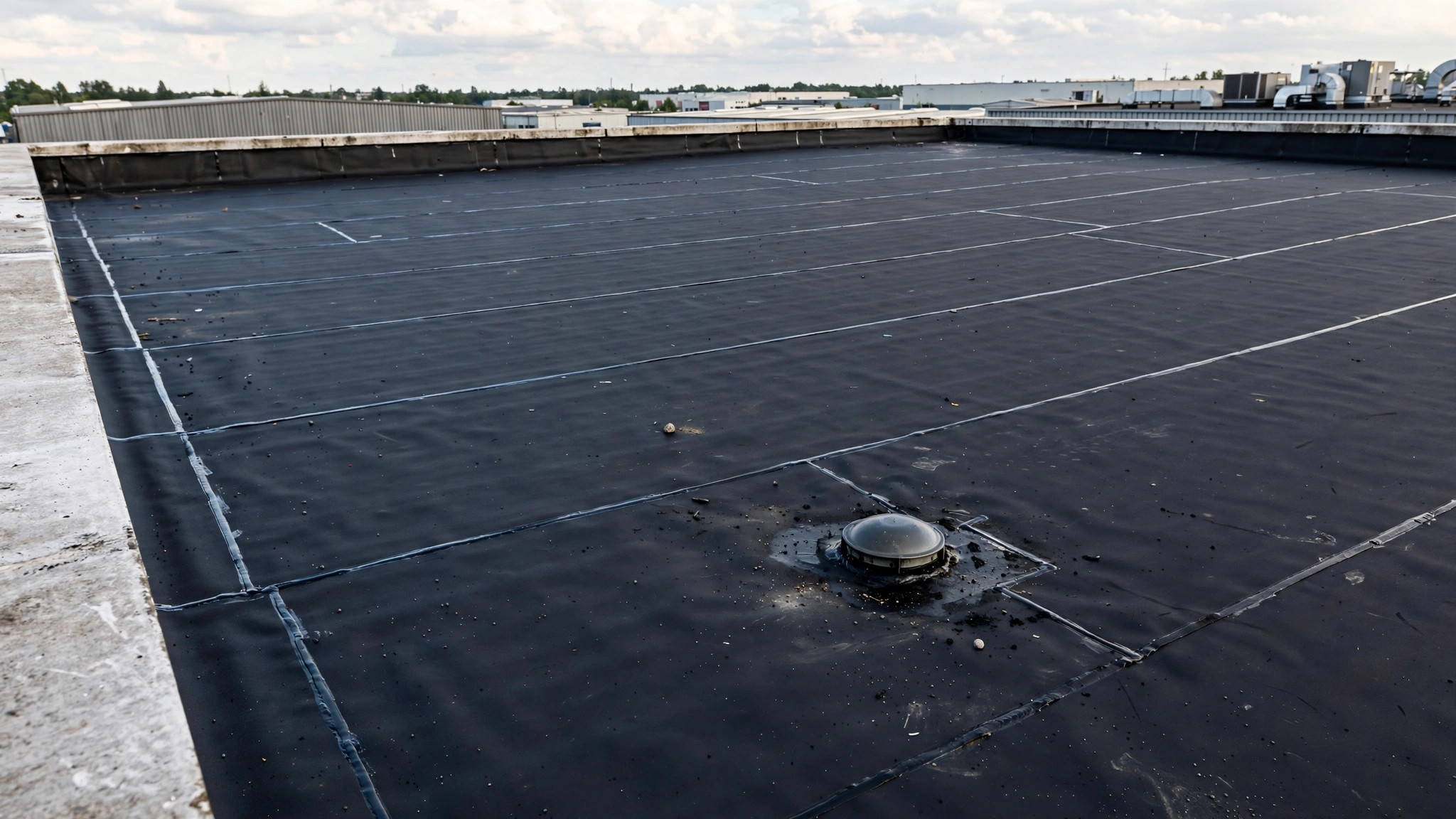
The epdm rubber membrane has protected commercial roofs for decades. EPDM stands for ethylene propylene diene monomer, a synthetic rubber that comes in large black sheets. Walk past any industrial park and you will see these dark flat roofs everywhere. Owners keep choosing it for proven durability and fair cost.
This guide covers the key facts about epdm rubber membrane roofing. You will learn how it works, what it costs, how long it lasts, its strengths and weaknesses, and how to care for it so it reaches full lifespan.
What an epdm rubber membrane Is
An epdm rubber membrane is a single ply sheet of synthetic rubber, usually black, though white coated versions exist. Sheets come in large sizes, up to 50 feet wide in some cases, which means fewer seams across the roof. Fewer seams mean fewer places for leaks to start.
The rubber stays flexible through wide temperature swings. It handles cold weather especially well, staying pliable when other materials stiffen. That flexibility also lets it absorb building movement without cracking. For owners in northern climates, this cold weather toughness is a major reason the epdm rubber membrane remains popular.
Seams are joined with adhesive, seam tape, or primer based systems rather than heat welding. Modern tape systems create strong lasting bonds when installed correctly. The membrane attaches to the roof by full adhesion, mechanical fasteners, or ballast such as stone. Each method suits different decks and budgets.
7 Facts About epdm rubber membrane Roofing
First, the track record is long. The epdm rubber membrane has been used on commercial roofs for decades, longer than TPO or PVC. That history means installers know it well, repair methods are proven, and performance data is solid.
Second, it handles cold well. EPDM stays flexible far below freezing, resisting the cracking that cold can cause in stiffer materials. Buildings in northern states benefit most from this trait.
Third, installation is straightforward. The material is forgiving to work with, and experienced crews install it efficiently. Repairs are simple too. Patches bond with adhesive, and a skilled roofer can fix most damage quickly.
Fourth, cost is competitive. An epdm rubber membrane roof often costs less than TPO or PVC installed. For owners focused on value, especially in cooler climates, it is a strong choice.
Fifth, the black color absorbs heat. In warm climates this raises cooling costs compared to white reflective membranes. White EPDM options exist but cost more and are less common. Match the color choice to your climate and energy bills.
Sixth, it resists weathering well. EPDM stands up to ultraviolet light, ozone, and general exposure. With proper installation, the material itself rarely fails. Most problems come from seams, flashing, or punctures, not the sheet.
Seventh, petroleum products damage it. Grease, oils, and some chemicals break down EPDM. Restaurants with grease exhausts or industrial buildings with chemical exposure should consider other membranes. Your contractor should ask about rooftop contaminants before recommending an epdm rubber membrane.
Epdm rubber membrane Costs
Installed cost for an epdm rubber membrane roof sits at the lower end of single ply options in most markets. It typically runs less than TPO and well under PVC. The final price depends on membrane thickness, insulation, attachment method, roof complexity, and tear off needs.
Thickness options are usually 45, 60, or 90 mil. Thicker costs more but resists punctures better and often carries longer warranties. Ballasted systems can cost less in labor but need a structure that can carry the stone weight. Fully adhered systems cost more in labor but perform best in wind.
Use this cost checklist when comparing bids:
- Membrane thickness and brand. Thicker name brand material costs more and lasts longer.
- Insulation type and R value. More insulation raises upfront cost and cuts energy bills.
- Attachment method. Ballast, mechanical, or fully adhered each price differently.
- Roof complexity. Units, vents, drains, and parapets add flashing labor.
- Tear off or overlay. Removal adds labor and disposal cost.
- Warranty level. Longer warranties require specific materials and details.
Get three detailed bids from contractors with real EPDM experience. For leak repairs on existing rubber roofs, see our EPDM roof repair guide.
Installation Methods
Three attachment methods serve epdm rubber membrane roofs. Ballasted systems lay the membrane loose and hold it with stone or pavers. This is fast and cheap in labor but heavy, so the structure must be checked. It also makes leak finding harder since the membrane is covered.
Mechanically fastened systems screw the membrane to the deck through seam overlaps or with battens. This method is common, cost effective, and works on many decks. Fastener patterns tighten in high wind zones.
Fully adhered systems glue the membrane to the insulation or deck. This gives the smoothest finish, best wind resistance, and easiest leak detection. Labor costs run highest, but performance is top tier.
Seam quality decides success in every method. Whether taped or glued, seams need clean surfaces, proper primer, and firm pressure. Good crews check their seams as they go. Ask your contractor how they verify seam integrity.
Maintenance for a Long Lived epdm rubber membrane
An epdm rubber membrane needs the same steady care as any commercial roof. Inspect twice a year. Clear debris, check drains, and look for punctures, open seams, or flashing problems. Pay special attention after storms and after other trades work on the roof.
Keep petroleum products away. Grease from kitchen exhausts is the classic EPDM enemy. If your building has grease sources, add protection or consider a different membrane at replacement time. Clean any spills promptly.
Protect against punctures. Use walkway pads on traffic paths to rooftop units. Tell service workers to watch their tools. EPDM patches easily, but preventing damage beats repairing it.
Watch shrinkage over time. Older EPDM can shrink slightly, pulling at edges and penetrations. Regular inspections catch this early when fixes are simple. A steady commercial roof maintenance checklist routine keeps small issues small.
Safety first on every visit. Falls are a leading cause of serious injury in roofing work. OSHA fall protection rules for low slope roofs are explained at osha.gov. Make sure everyone who goes up follows them.
EPDM vs TPO vs PVC
Owners often compare the epdm rubber membrane against TPO and PVC. EPDM wins on track record and cold weather flexibility, and usually on price. Its black color is a drawback where cooling dominates energy costs.
TPO offers a white reflective surface and heat welded seams at a mid range price. Its history is shorter but modern products perform well. PVC resists grease and chemicals best and also heat welds, but costs the most of the three.
There is no universal winner. Cold climate warehouse? EPDM is a natural fit. Hot climate office with high cooling bills? White TPO may pay back faster. Restaurant with grease exhaust? PVC earns its premium. The National Roofing Contractors Association covers all three systems at nrca.net.
Getting the Most from Your EPDM Roof
A few extra steps at installation pay off for decades. Ask for 60 or 90 mil membrane if your roof sees regular foot traffic. Thicker material resists punctures far better and usually qualifies for longer warranties. Make sure the contractor installs walkway pads on day one along paths to every rooftop unit. Pads are cheap during installation and costly to add later.
Keep a roof log. Note each inspection date, what was found, and what was fixed. Photograph the roof once a year from the same spots so you can compare over time. When you eventually sell the building, that log proves the roof was cared for and supports your asking price.
Frequently Asked Questions
How long does an epdm rubber membrane last?
With quality materials and maintenance, 25 to 30 years is common, and some roofs last longer. Thicker membranes, good drainage, and regular inspections push toward the long end.
Can EPDM be coated white for reflectivity?
Yes. Reflective coatings made for EPDM can cut heat absorption. They need proper prep and periodic recoating. Some owners choose factory white EPDM instead, though it costs more than standard black.
Is an epdm rubber membrane good for cold climates?
It is one of the best choices for cold climates. The rubber stays flexible in freezing temperatures where stiffer membranes can crack. Snow, ice, and freeze thaw cycles are handled well.
What damages EPDM most?
Petroleum based products like grease and oils, sharp punctures, and neglected seams cause most problems. Keep contaminants away, protect traffic areas, and inspect seams regularly.
Can I install EPDM over my old roof?
Sometimes, if the old roof is dry, sound, and code allows another layer. A moisture survey checks for trapped water. Your contractor should verify before recommending an overlay.
Next Steps
You now know the key facts about epdm rubber membrane roofing, from its cold weather strength to its weakness around grease. If your building is in a cooler climate and your roof is aging, EPDM deserves a serious look. Start with a professional inspection, then get three detailed bids from experienced EPDM contractors. Compare thickness, attachment method, and warranty terms, not just price. With quality installation and twice yearly care, an epdm rubber membrane will protect your building for decades.



