
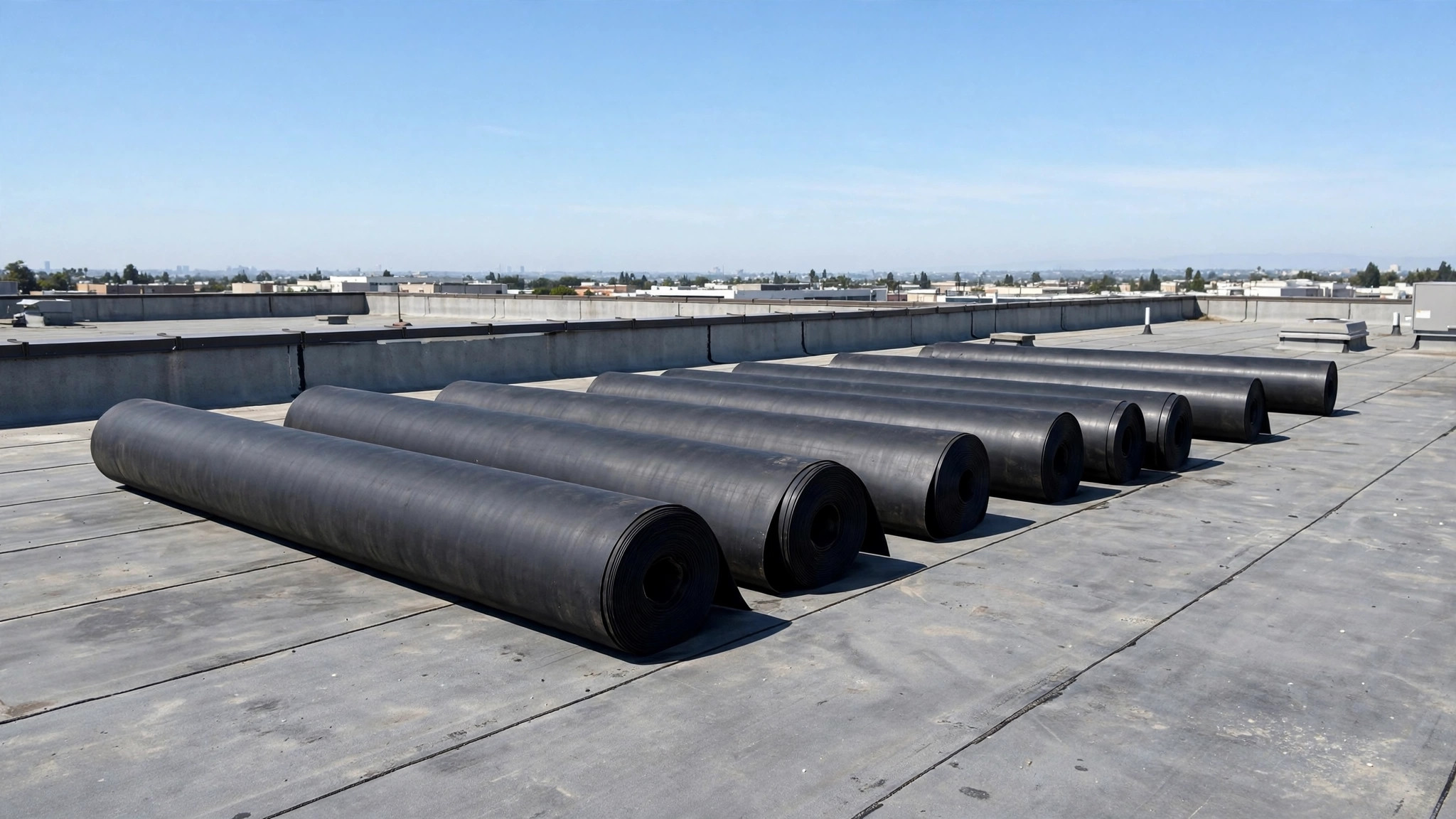
When roofers say “rubber roof,” they mean one product: the black EPDM sheet sold in wide rolls. The epdm rubber roofing membrane is the physical product at the center of every EPDM roof: the sheet itself, its thickness, its seams, and its grades. This guide is about the product, not the system around it.
These seven facts cover what the epdm rubber roofing membrane is made of, how to read the specs, which grade to buy, and how the product choice affects price and lifespan.
Fact 1: what the epdm rubber roofing membrane is made of
EPDM is a synthetic rubber compounded for roofing. The base polymer gets mixed with carbon black for UV resistance, oils for flexibility, and curing agents that set the rubber’s final properties. The mix is calendered into sheets and vulcanized, which cross-links the rubber into its tough final form.
Carbon black is the quiet hero. It blocks the UV that destroys lesser materials. That is why the sheet is black and why black EPDM lasts decades in full sun without a protective coating. The chemistry does the work that coatings do on other membranes.
Quality varies by maker. Reputable makers control the compound tightly and test every batch. The National Roofing Contractors Association publishes material standards for EPDM sheets. Bargain sheets cut corners on polymer content and show it in a few years.
Fact 2: thickness grades and what they mean
The epdm rubber roofing membrane comes in 45, 60, and 90 mil thicknesses. A mil is a thousandth of an inch. Forty-five mil is the light-duty grade. Sixty mil is the commercial standard. Ninety mil is the heavy-duty grade for brutal service.
Thickness buys puncture resistance and longevity. Thicker sheets shrug off dropped tools and hail better. They also cost more per square foot. For most commercial buildings, 60 mil hits the sweet spot: tough enough for service traffic, priced for real budgets. Our commercial flat roof repair guide shows how thickness choices play out over years of service.
Reinforced versions exist. Some sheets carry an internal scrim, a fabric layer that adds tear strength. Reinforced epdm rubber roofing membrane suits mechanically attached systems in high-wind zones, where the fastener rows stress the sheet.
Fact 3: sheet widths reduce seams
EPDM ships in rolls up to 50 feet wide and 200 feet long. Wide sheets mean fewer seams across the roof field. Fewer seams mean fewer leak paths. On a big warehouse, the crew can cover huge areas with a handful of sheets.
Width has handling limits. A 50-foot sheet is heavy and needs a big crew or equipment to place. Smaller buildings use narrower rolls for practicality. The contractor picks the width that balances seam count against safe handling.
Seam placement matters as much as seam count. Good crews run seams away from drains and high-traffic paths. The layout plan should show seam lines before the first roll unrolls.
Fact 4: seam systems make or break the product
The epdm rubber roofing membrane joins to itself two ways. Tape seams use a double-sided seam tape pressed between primed laps. Liquid adhesive seams glue the laps with contact cement. Both work when done right.
Tape dominates today. It is faster, more consistent, and less sensitive to weather during install. Adhesive still has its place for details and repairs. Either way, the seam prep decides the outcome: clean, prime, mate, and roll with pressure. Rushed prep makes weak seams.
Seam testing is simple. A rounded probe pulled along the seam edge finds fishmouths and voids. Good crews probe every seam before leaving the roof. Ask whether yours does. The answer tells you about their quality culture.
Fact 5: white and specialty versions
Standard epdm rubber roofing membrane is black. White-surfaced versions laminate a white layer on top for reflectivity. They cost more and suit hot climates where cooling bills dominate.
The white surface needs care. Dirt cuts reflectivity, so white EPDM needs periodic washing to keep its cool-roof performance. The ENERGY STAR program lists reflective roofing options for owners comparing the energy case. The U.S. Department of Energy also publishes data on cool roof savings for commercial buildings.
Fire-rated versions carry enhanced ratings for code-heavy projects. Most standard EPDM already achieves good fire ratings over proper insulation. Check the assembly rating, not just the sheet, since fire performance is a system property.
Fact 6: what the product costs
Material price for epdm rubber roofing membrane typically runs $0.80 to $1.50 per square foot for 60 mil, depending on the maker and the market. Ninety mil runs higher. White-surfaced versions run higher still.
Material is the small part of the installed price. Labor, insulation, flashing, and edge metal dominate. A $1 per square foot sheet becomes a $6 per square foot roof by the time the crew leaves. Price the assembly, but know the sheet price so you can spot inflated material markups.
Buy from established makers with real warranties. The sheet should carry the maker’s name and product code printed on it. Unmarked or mystery-brand rubber is a gamble no commercial building should take.
Fact 7: storage and handling affect quality
EPDM arrives on rolls that must stay dry and shaded before install. Sun-baked rolls on the job site age before they go down. Wet rolls trap moisture under the membrane. A good contractor stores the epdm rubber roofing membrane properly and schedules delivery to match the install pace.
Cold weather changes handling. EPDM stiffens in the cold, and adhesives need minimum temperatures to bond. Winter installs need heated storage and careful adhesive work. The product data sheet lists the temperature limits. A contractor who ignores them builds in failures.
Shelf life matters for adhesives and primers, not the sheet. Check dates on every can. Expired adhesive makes weak seams that fail years early. Our commercial roof maintenance checklist covers the care routine that protects the sheet after install.
How the epdm rubber roofing membrane compares to TPO and PVC sheet
Against TPO sheet, EPDM wins on price and cold flexibility. TPO wins on reflectivity and heat-welded seams. The epdm rubber roofing membrane has the deeper track record, with decades of roofs still in service. TPO is catching up but is not there yet.
Against PVC sheet, EPDM wins on price by a clear margin. PVC wins on chemical resistance, which matters for restaurants and plants with harsh exhaust. For normal buildings without chemical exposure, EPDM gives most of the performance for less money.
The practical takeaway: buy EPDM for value and proven life, TPO for reflectivity, PVC for chemical duty. Most commercial buildings land on EPDM or TPO. Get both bid on your building and let the numbers decide.
Spec checklist: buying epdm rubber roofing membrane right
When the bid names the epdm rubber roofing membrane, check these eight items:
- Maker and exact product name.
- Thickness: 45, 60, or 90 mil.
- Reinforced or non-reinforced.
- Sheet width planned for the job.
- Seam system: tape or adhesive.
- Color: black or white-surfaced.
- Maker warranty length on the sheet.
- Storage and handling plan on site.
A bid that names all eight is a bid from a contractor who knows the product. Vague material descriptions hide substitutions. Our EPDM roof repair guide shows what good material looks like years later.
Frequently asked questions
Which thickness should I buy?
Sixty mil for most commercial buildings. Forty-five mil for light-duty budgets with little traffic. Ninety mil for heavy traffic, hail zones, or owners who want maximum life. Match the grade to the abuse.
Does brand matter?
Yes. The compound quality, the thickness consistency, and the warranty support all vary by maker. Established makers with decades in EPDM are the safe pick. The price gap between good and bargain rubber is small against the total job.
How can I tell quality on site?
Look for the maker’s print on the sheet, consistent thickness, and clean edges. Check adhesive dates. Watch the seam prep: cleaning, priming, and rolling with real pressure. Quality shows in the work habits.
Is thicker always better?
Not always. Thicker epdm rubber roofing membrane resists punctures better and lasts longer under abuse. But on a simple roof with no traffic, 90 mil buys toughness the building never uses. Spend the difference on better flashing or thicker insulation instead. Match the grade to the job.
Can the membrane be recycled?
EPDM recycles into molded products like walkway pads and playground surfaces. Ask the contractor about recycling the tear-off. It keeps tons of rubber out of landfills and sometimes earns green building points.
What voids the product warranty?
Unapproved adhesives, coatings, or repairs top the list. So does ponding water beyond the maker’s limit and physical abuse. Read the exclusions. The warranty covers the sheet against defects, not against everything.
Next steps for your project
Ask each bidder to spec the epdm rubber roofing membrane by maker, thickness, and seam system, all in writing. Compare those specs before the totals. The right product from a careful crew is the foundation every long-lived EPDM roof stands on, and the spec sheet is where you lock it in.



