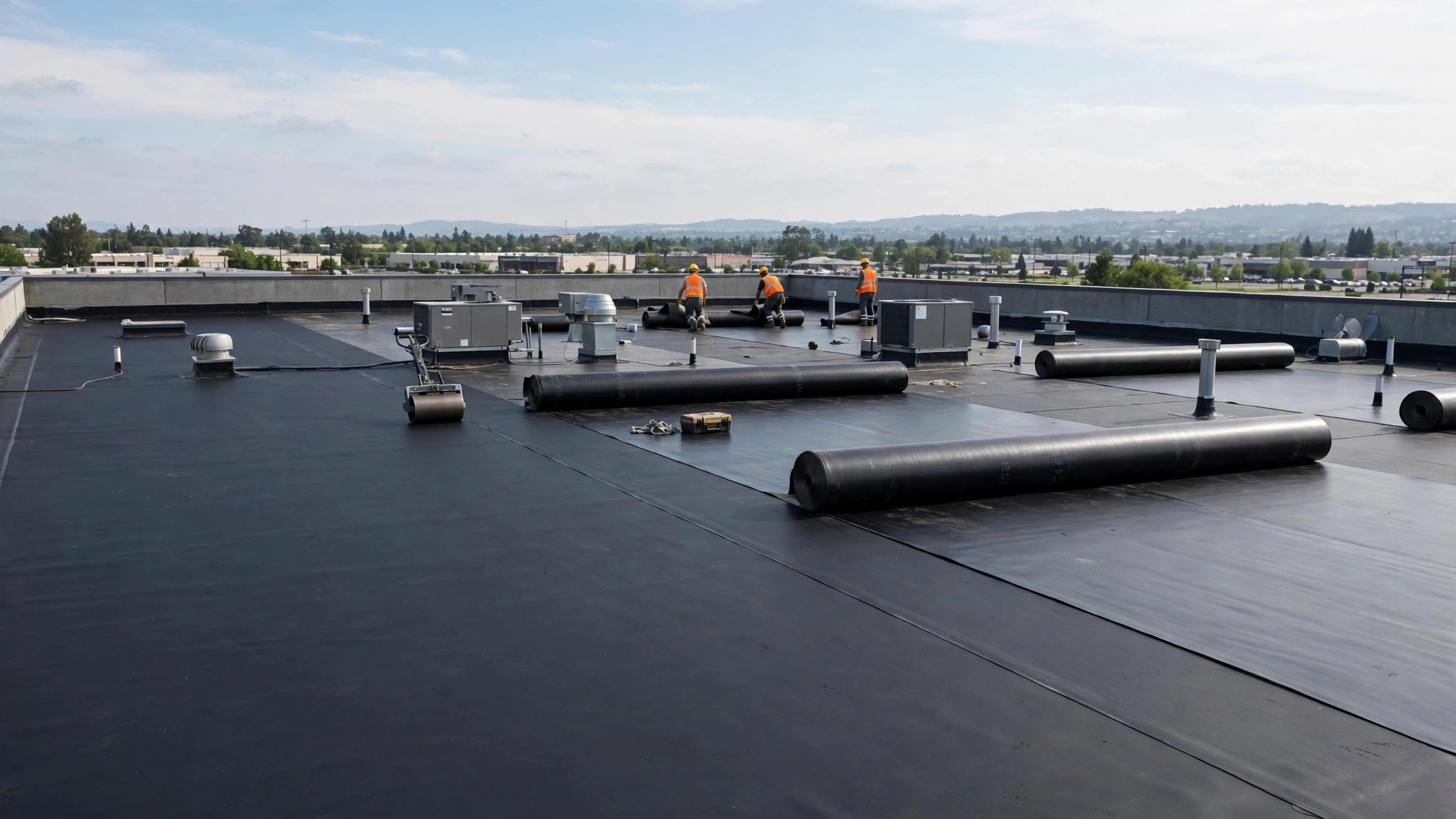
Epdm rubber roofing is a black synthetic rubber membrane used on commercial flat roofs across the United States. EPDM stands for ethylene propylene diene monomer. It has covered low-slope roofs for over half a century, longer than any other single-ply membrane.
Building owners trust epdm rubber roofing for its proven lifespan, low cost, and simple repairs. This guide covers what it is, how it installs, what it costs, and how it compares to newer options.
What EPDM Rubber Roofing Is
Epdm rubber roofing is a flexible black sheet made from synthetic rubber. It comes in rolls up to fifty feet wide, which means fewer seams on big roofs. Thickness runs forty-five, sixty, or ninety mil, with sixty mil as the common commercial pick.
The black color absorbs heat. In cold climates, that heat gain helps a little in winter. In hot climates, it raises cooling costs compared to white membranes. White-coated EPDM exists but costs more and sees less use. The U.S. Department of Energy documents cool roof savings at https://www.energy.gov/energysaver/cool-roofs.
The rubber stays flexible for decades. It handles freeze-thaw cycles, hail, and building movement without cracking. UV sunlight slowly wears the surface, but the sheet is thick enough to take it for a very long time.
EPDM resists most chemicals, acids, and ponding water. It does not like petroleum products, though. Grease from restaurant vents and oil drips can soften the rubber. Kitchens and auto shops need protection in those spots.
How EPDM Rubber Roofing Is Installed
Epdm rubber roofing goes down in three ways. The method depends on budget, building, and local code.
Fully adhered is the premium method. The crew glues the membrane to the insulation with bonding adhesive. The roof lies flat and resists wind well. It costs the most in labor but looks the best and performs the best.
Mechanically attached uses screws and plates through the membrane into the deck. It installs fast and costs less. The fasteners sit under seam tape, so they stay hidden and dry.
Ballasted lays the sheet loose and covers it with river rock. The stone holds the roof down and shields it from sun. This method is cheap and simple but adds heavy weight. Many structures cannot carry it, and finding leaks under rock is hard.
Seams are glued, not welded. The crew cleans the overlap, applies seam tape or adhesive, and rolls it tight. Glued seams work well but demand clean surfaces and dry weather during installation. Sloppy seam prep causes most EPDM failures.
Flashing uses the same rubber, cut and glued around vents, curbs, and walls. Preformed corners and pipe boots speed the work. Every detail gets sealed with lap sealant as a final step. Verify the details with a commercial roof inspection checklist.
EPDM Rubber Roofing Cost Factors
Epdm rubber roofing is one of the most affordable commercial roofing systems. Material costs run lower than TPO or PVC. Here are the factors that move the quote.
Roof size sets the base. Contractors price per square, one hundred square feet. Large open roofs get the best per-square rates because crews move fast with wide sheets.
Attachment method changes labor cost. Ballasted is cheapest to install. Mechanically attached sits in the middle. Fully adhered costs the most but gives the best wind resistance and appearance.
Membrane thickness adds cost. Stepping from forty-five to sixty mil raises material price modestly. Ninety mil suits roofs with heavy traffic or harsh exposure. Match thickness to the roof’s real life.
Insulation and tear-off swing the total. New insulation to meet energy code adds real money. Tearing off a wet old roof adds dump fees and deck repair. An overlay on a sound, dry roof saves both.
Details and warranty finish the quote. Complex flashing, many penetrations, and long manufacturer warranties raise the price. Get the thickness, method, and warranty in writing before work starts.
EPDM Rubber Roofing Pros and Cons
The biggest pro is the track record. It has protected commercial buildings for over fifty years. No other single-ply membrane can show that history. Owners know what they are getting.
Cost is the next pro. EPDM usually costs less installed than TPO or PVC. Repairs are cheap and simple. A patch and some adhesive fix most damage without special equipment.
Durability impresses too. The rubber resists hail, ponding water, and temperature swings. It stays flexible in cold that would crack other materials. Thirty-year roofs are common with basic care.
The cons start with color. Black absorbs heat and raises cooling bills in hot states. White reflective coatings can fix this but add cost and need recoating over time.
Glued seams are the other weakness. They last well when done right but fail when rushed. Heat-welded seams on TPO forgive more installer error. Hire a crew with real EPDM experience.
Petroleum exposure is the last concern. Grease, oil, and solvents soften the rubber. Buildings with kitchen exhaust or equipment leaks need protective mats or a different membrane in those zones.
EPDM Rubber Roofing vs. TPO
Owners often weigh epdm rubber roofing against TPO. Both are single-ply membranes for flat roofs. The choice comes down to history, color, and seams.
EPDM wins on proven lifespan. Fifty years of roofs prove it lasts. TPO is newer, with a shorter track record, though quality TPO now rates for twenty-five to thirty years.
TPO wins on energy in hot climates. Its white surface reflects heat that black EPDM absorbs. In southern states, the cooling savings are real. In northern states, the gap shrinks.
Seams differ. EPDM seams are glued. TPO seams are heat-welded. Welded seams generally resist peeling longer, but glued EPDM seams hold fine with proper prep.
Price favors EPDM slightly on most jobs. The National Roofing Contractors Association at https://www.nrca.net/ publishes data on single-ply systems. Repairs favor EPDM too, since patches need only adhesive. For repair cost context, compare epdm roof repair with TPO repair pricing.
EPDM Rubber Roofing Maintenance Schedule
An epdm rubber roofing system rewards simple, regular care. Twice a year is the rhythm. Spring checks catch winter damage. Fall checks prepare for the cold ahead.
Start each visit by clearing debris. Leaves and branches hold moisture against the rubber. Pay special attention to drains, scuppers, and gutters. Water must leave the roof fast.
Walk the seams next. Look for lifted edges, open laps, and cracked sealant. Press on suspect spots and watch for movement. Small seam problems get a patch and adhesive the same day. Waiting turns a ten-minute fix into a leak call.
Check every penetration. Pipes, vents, and curbs move differently than the field membrane. Look for gaps in the flashing and dried-out sealant. Touch up with lap sealant where the old bead has cracked.
Watch for petroleum damage. Grease from kitchen vents and oil from equipment softens EPDM. Install protective mats under problem spots. Clean spills fast before they soak in.
Keep a simple log. Note the date, what you found, and what you fixed. Photos help track changes over time. When you sell the building or file a warranty claim, that log proves the roof was cared for. Hand the log to your roofing contractor at each professional visit so nothing falls through the cracks.
FAQ About EPDM Rubber Roofing
How long does epdm rubber roofing last?
Twenty-five to thirty years is common, and many roofs go longer. Thickness, installation quality, and maintenance decide. Roofs with ponding water and neglected seams fail sooner.
Can epdm rubber roofing be coated white?
Yes. Acrylic coatings made for EPDM add reflectivity and extra years. The surface needs cleaning and priming first. Coating is a smart move in hot climates where cooling bills hurt.
Does epdm rubber roofing shrink?
Old EPDM could shrink and pull at flashing. Modern sheets are far more stable. Proper installation with the right attachment also controls movement. Shrinkage is mostly a problem on very old roofs.
How do you repair epdm rubber roofing?
Clean the area, apply primer, and stick on an EPDM patch with seam adhesive. Round the patch corners so edges do not lift. Small punctures are easy DIY-level fixes, but leave large or structural damage to pros.
Is epdm rubber roofing good for ponding water?
Yes. EPDM handles standing water better than most membranes. That said, drainage still matters. Constant ponding breeds algae and stresses seams. Fix drainage when you can. See flat roof ponding water fix for options.
Next Steps for Building Owners
If your flat roof is aging, epdm rubber roofing deserves a quote alongside TPO. Get a moisture survey first to know whether an overlay works. Ask contractors for the thickness, attachment method, and warranty in writing. Check their EPDM experience specifically, since glued seams reward skilled hands. Follow a commercial roof maintenance checklist after installation, and your rubber roof will protect the building for decades. Few purchases protect a building longer for less money. Ask your contractor about an overlay versus a tear-off, and pick the path the moisture survey supports. Either way, get the thickness and the warranty terms in writing before anyone climbs a ladder. Paperwork first, always.