
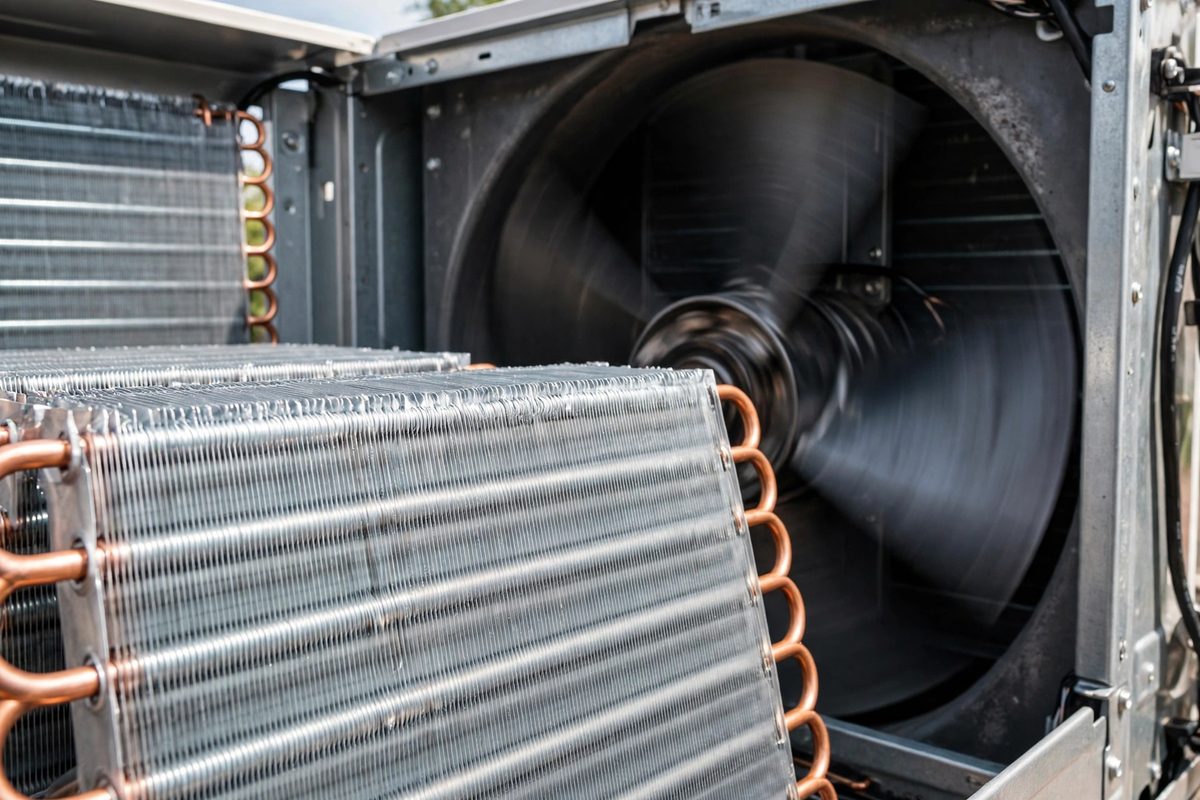
The tech packs up the gauges, hands you the invoice, and drives away. The air feels cool. Everyone is happy. But is your a/c fixed for real, or did you just buy a few weeks of quiet? Building managers who ask that question save real money. The ones who do not pay for the same repair twice.
A repair is not done when the truck leaves. It is done when the system proves itself. This guide gives you eight checks to run before you sign off, what each one tells you, and what to do when a check fails.
Check 1: the temperature split
This is the oldest test in the book, and still the best. Measure the air going into the return and the air coming out of the nearest supply vent. A healthy commercial cooling system drops the temperature by roughly fifteen to twenty degrees. Less than twelve is a warning. Less than ten means your a/c fixed status is in doubt.
Use a simple probe thermometer. Ten dollars at any supply house. Hold it in the airstream for a full minute. Write down both numbers. If the split is weak, call the company back now, not next week. Weak splits mean low refrigerant, dirty coils, or airflow trouble, and none of those fix themselves.
Check 2: every zone, not just the easy one
Techs test the zone nearest the thermostat. You should test them all. Walk the building with your thermometer. Check two vents in every zone, including the far corners and the top floor.
A system can cool the main zone fine while starving the rest. Damper problems, crushed duct runs, and balancing errors hide behind one comfortable room. If your a/c fixed invoice covers the whole building, test the whole building. Note any zone more than three degrees off the setpoint.
Check 3: the sounds
Stand next to the unit and listen. You know what it sounded like when it was broken. Now learn what it sounds like when it is right. Smooth hum from the compressor. Steady rush from the fan. No grinding, no screeching, no banging, no rattling panels.
New noises after a repair mean something was left loose or a new part is unhappy. Belt-driven units will chirp for a day as a new belt seats, and that is normal. Metal-on-metal is never normal. If it sounds wrong, it is wrong.
Check 4: the drain is actually draining
Find the condensate drain termination and look at it while the system runs. You should see a steady drip or trickle on a humid day. No water at all on a muggy afternoon means the line is still clogged or disconnected, and the pan is filling quietly above your ceiling.
This check takes thirty seconds and prevents the most common callback flood in the trade. Many “a/c fixed” jobs come back as water damage jobs because nobody watched the drain.
Check 5: the electrical readings on the invoice
Ask the tech to write down the amp draw on each motor and the capacitor readings before leaving. Then look at them. You do not need an engineering degree. You need the numbers next to the nameplate ratings, which are printed on the unit.
Amps far above the rating mean the motor is straining. A capacitor reading far below its marked value means it is already dying. These numbers are the difference between a repair and a guess. A shop that does commercial hvac repair properly will offer them without being asked. If the invoice has no numbers, only words, treat the job as unverified.
For context on what good service looks like, the U.S. Department of Energy publishes plain-language maintenance checklists for commercial systems.
Check 6: the thermostat actually controls the system
Set the thermostat five degrees below the room temperature and wait. The system should start, run, and satisfy the call without short-cycling. Then set it back and confirm it shuts down cleanly.
Short-cycling, where the unit starts and stops every few minutes, destroys compressors. If your a/c fixed repair was supposed to cure short-cycling, this test is the whole ballgame. Watch three full cycles. Each should run at least ten minutes in normal cooling weather.
Test every thermostat the tech touched. Controls work is where callbacks breed. A wire landed on the wrong terminal can take a week to show up as a complaint from the night shift.
Check 7: the paperwork matches the work
Read the invoice before you sign it. It should list the parts replaced by name and part number, the labor performed, the readings taken, and the warranty terms on parts and labor separately. “Repaired AC” with a dollar figure is not an invoice. It is a wish.
Match the parts on the paper to what you saw. If the invoice says the contactor was replaced, the old contactor should be in the tech’s hand or in your trash can. Ask for failed parts back as a matter of policy. Honest shops expect it.
File the invoice with the readings from check five. When the next company looks at this unit, that file is worth more than any sales pitch. It also settles warranty arguments in one phone call.
Check 8: the 48-hour watch
The final check is time. For two days after the repair, have your staff note three things each shift: the warmest zone temperature, any new noises, and any water where it should not be. A small log on a clipboard by the mechanical room door does the job.
Most bad repairs show themselves within forty-eight hours. Refrigerant leaks reveal themselves as fading cooling. Electrical gremlins come back as tripped breakers. Drain problems announce themselves as stains. If the log is clean after two days, your a/c fixed status is earned. Tape the log to the invoice and file them together. Next season, that file answers every question a new tech asks.
If anything looks off, call the same company first. Reputable shops warranty their labor, usually thirty to ninety days, and a callback on their own work should cost you nothing. Going to a different company for the callback just starts the diagnostic meter over.
When a/c fixed does not stay fixed
Sometimes the checks fail on day three. The cooling fades. The noise comes back. Here is what that means and what to do.
First, do not assume the tech was dishonest. Commercial systems are complicated, and some failures hide behind others. A weak capacitor can mask a struggling compressor. The honest question is not whether the first repair was real. It is whether the shop stands behind it.
Call the same company and report exactly what the 48-hour log shows. Say “your a/c fixed visit on Tuesday, and now the split is nine degrees.” A reputable shop treats this as a warranty callback, not a new ticket. If they try to charge a fresh diagnostic fee for their own repair, that tells you everything about the shop.
If the second visit finds a different failure, ask for the connection in plain words. Sometimes one failure causes another. Sometimes it is bad luck. What you want is an explanation that fits the readings, not a shrug. Two unrelated major failures in one month on the same unit is also the market telling you to price a replacement.
Keep every invoice. A paper trail of an a/c fixed job that never held is your leverage for a warranty claim, a chargeback, or simply the decision to never hire that shop again.
The cost-factors that decide repair quality
Why do some repairs hold and others fail in a month? Four factors decide it.
Parts quality. There are three grades of most electrical parts, and the cheapest grade fails fastest. Ask what grade went in. The price difference is small. The lifespan difference is not.
Refrigerant charge accuracy. An overcharged or undercharged system cools poorly and dies young. Proper charging takes time, scales, and patience. A tech who “topped it off by feel” did half the job.
Airflow first. Good techs check airflow before touching refrigerant. Coils, filters, belts, and ducts come before gauges. If your repair skipped straight to refrigerant, the real problem may still be sitting there.
The full repair versus the patch. Sometimes a patch is the right call on an old unit. But you should know which one you bought. Ask directly: “Is this a full repair or a patch to buy time?” An honest answer lets you plan. A vague answer costs you later.
When “a/c fixed” turns into “replace the unit”
Sometimes the checks fail because the unit is done. Here is how to know.
The repair costs more than half the price of a new unit, and the unit is past ten years old. That is the industry’s rough line, and it holds up well.
The same major part has failed twice. Compressors and boards that die repeatedly are usually being killed by something else, like bad airflow or voltage trouble, or the unit is simply worn out.
The refrigerant is obsolete and leaking. Old refrigerants get expensive and hard to find. Pouring costly gas into a leaking old system is a subscription, not a repair. The U.S. Environmental Protection Agency regulates refrigerant handling strictly, which adds cost to every top-off.
Your energy bills keep climbing while comfort falls. That is the signature of a system running harder to do less. A new unit’s efficiency often pays for itself on a commercial schedule. Run the numbers before you authorize the third big commercial ac repair in two years.
Frequently asked questions
How do I know my a/c fixed repair actually worked?
Run the eight checks in this guide: temperature split, every zone, sounds, drain flow, electrical readings, thermostat control, matching paperwork, and a 48-hour watch. If all eight pass, the job is done and your a/c fixed verdict is final.
Should I pay the invoice before testing?
No. Test first, then sign. Any reputable company accepts this. The few minutes of checks protect both sides, because a verified repair never becomes a disputed invoice.
What if the tech already left?
Do the checks anyway. Most companies warranty labor for thirty to ninety days. Call back with specific findings: “the split is nine degrees and zone three is six degrees warm.” Specifics get faster callbacks than “it still does not work right.”
Can I do these checks without tools?
Mostly yes. A ten-dollar probe thermometer covers the temperature checks. Your ears cover the sound check. Your eyes cover the drain and the paperwork. Only the electrical readings need the tech’s meter, which is why you ask for them in writing.
How long should a commercial AC repair last?
Electrical parts should run for years. A compressor replacement should buy many more. If the same repair fails within one cooling season, something was missed. Bring the invoice and the log, and have the conversation with the shop that did the work.
Next steps
Print the eight checks and tape them inside the mechanical room door. Use them after every repair, from every company, without exception. The ten minutes they take will save you from paying twice for the same fix, and they will teach your team what right looks like. That is how a building stops having AC emergencies and starts having AC maintenance. For bigger issues that these checks uncover, our guide to commercial hvac repair walks through the full process, and emergency ac service near me covers the nights it cannot wait.