
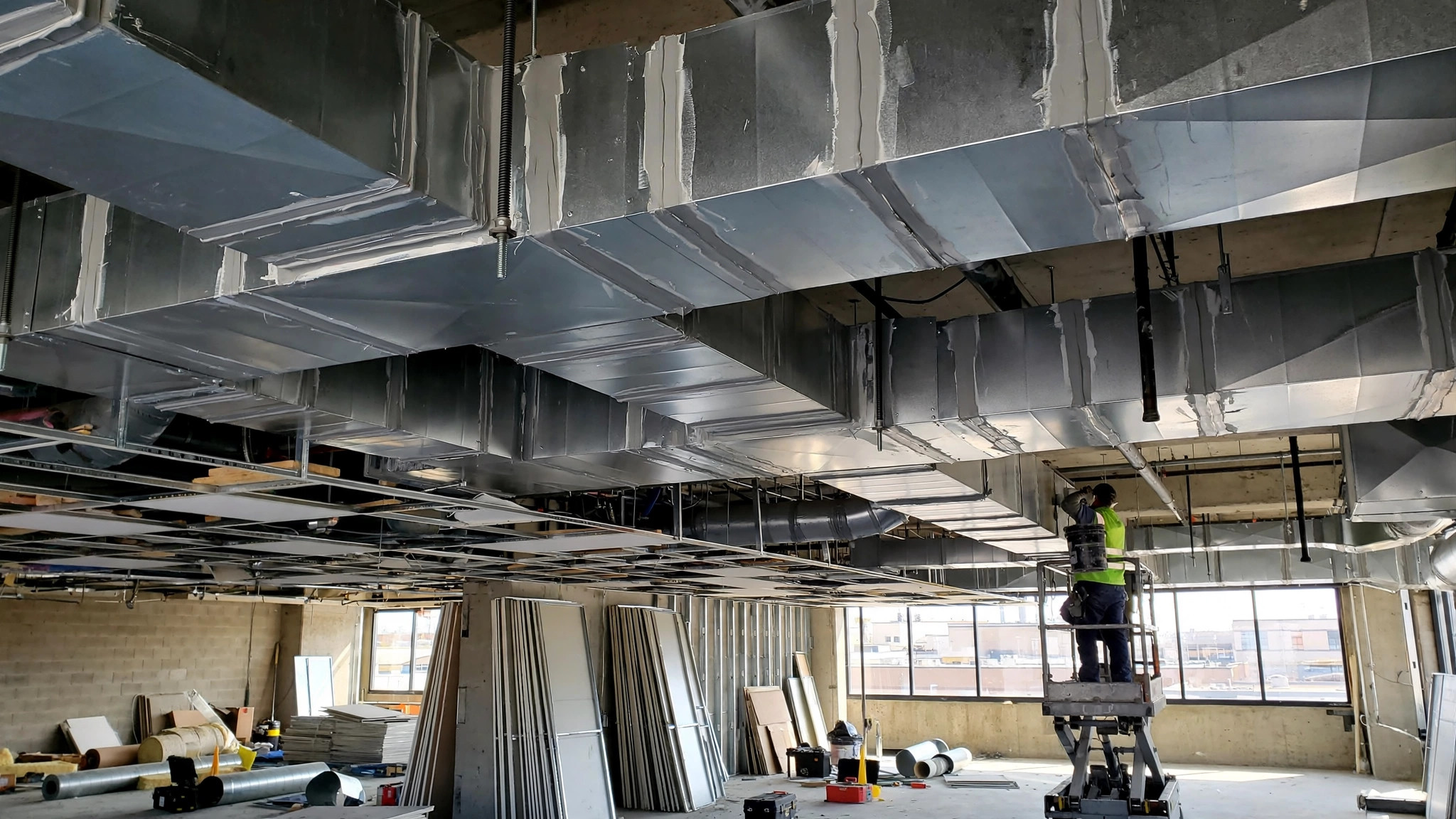
Leaky ducts are silent money pits. In many commercial buildings, twenty to thirty percent of the conditioned air escapes through gaps and cracks in the ductwork before it ever reaches a room. That is air you paid to heat or cool, dumped into ceilings and wall cavities. An ac duct sealant is the fix: a product made to close those gaps and put the air back where it belongs.
This guide covers the types of ac duct sealant, what each costs, when to use which, and how to get the job done right. Five practical tips run through the article to keep your project on track.
Why Duct Leaks Cost You Money
Duct leaks hit you three ways. First, energy waste: the system runs longer to make up for lost air, and utility bills climb. Second, comfort problems: rooms far from the unit get weak airflow while rooms near it get blasted. Third, air quality: leaky return ducts suck dust, insulation fibers, and even fumes into the airstream.
The Department of Energy notes that duct sealing is among the most cost effective efficiency upgrades for buildings with forced air systems. Their guidance at https://www.energy.gov/ backs what contractors see in the field: sealing ducts often pays back in one to three years through lower energy bills.
Tip one: test before you seal. A duct leakage test, done with a duct blaster, tells you how much air you are losing and where the worst leaks are. Sealing blind wastes product on tight sections while the big gaps stay open.
Types of Ac Duct Sealant
Not all sealants suit every job. Here are the main types of ac duct sealant used in commercial work.
Mastic is the workhorse. It is a thick paste, troweled or brushed onto joints and seams. Mastic stays flexible, sticks to metal and duct board, and lasts for years. A gallon covers a lot of joints and costs fifteen to thirty dollars. Pros use mastic for accessible ducts in ceilings, attics, and mechanical rooms. It is messy but reliable.
Foil tape, often called UL 181 tape, seals smaller gaps and works well on clean metal surfaces. It is not the same as common duct tape, which dries out and fails. Real foil tape costs more but holds. Use it for quick repairs and for sealing takeoffs and collars.
Aerosol sealant is the high tech option. A machine mists sealant particles into the duct system, and the particles collect at leaks and seal them from the inside. This type of ac duct sealant reaches leaks hidden inside walls and chases where hands cannot go. It costs more, typically one thousand to two thousand five hundred dollars for a commercial zone, but it seals the whole system in one pass.
Brushable sealants and caulks fill small cracks around penetrations and registers. They are cheap and easy but only suit minor gaps. Each type of ac duct sealant has a job it does best, so match the product to the gap.
Tip two: match the ac duct sealant to the gap size. Mastic and foil tape handle visible joints. Aerosol handles the hidden network. No single product does everything.
Ac Duct Sealant Costs: What to Expect
For accessible ductwork, a contractor charges by the job or by the linear foot. Expect five hundred to two thousand dollars to seal the ducts of a small commercial space with mastic and tape. Larger buildings run two thousand to six thousand dollars.
Aerosol sealing costs more upfront: one thousand to two thousand five hundred dollars per zone or system, depending on size. The selling point is completeness. Aerosol finds leaks you cannot see and seals them without opening ceilings.
Doing it yourself with mastic costs under one hundred dollars in materials for a small area. But commercial ductwork often runs above ceilings and inside chases, and working around them safely takes experience. Weigh your time and access before you DIY.
Tip three: get the leakage test done after sealing too. A before and after test proves the work paid off and gives you numbers for your records. Good contractors include the retest in the quote.
Where Leaks Hide in Commercial Ducts
Knowing where to look saves time. The worst leaks in commercial systems usually sit at the connections: where the duct meets the rooftop unit, where branch takeoffs leave the main trunk, and where ducts pass through the roof or wall. These joints shift with vibration and temperature change, opening gaps over the years.
Elbows and turns leak at their seams, especially on older ductwork with worn gaskets. Flexible duct kinks and tears where it bends too sharply or rubs against structure. Return air plenums leak badly in many buildings, pulling unconditioned air straight into the system.
An ac duct sealant applied at these points gives the best return. Start at the unit connections and work outward. Seal the supply side first for comfort gains, then the return side for efficiency and air quality.
ENERGY STAR offers guidance on duct sealing for commercial buildings at https://www.energystar.gov/. If weak airflow is your main complaint, also read https://commercialguides.com/commercial-ac-not-cooling/ to rule out equipment problems before you blame the ducts.
Checklist: A Good Duct Sealing Job
Tip four: hold the contractor to this checklist so the ac duct sealant actually does its job.
- Leakage test first. Get a written before number so you can measure improvement.
- Clean the surfaces. Mastic and tape bond poorly to dusty or oily metal. Wipe joints clean first.
- Seal all accessible joints. Every connection between duct sections, every takeoff, every collar gets mastic or foil tape.
- Support sagging ducts. Flex duct with sharp sags tears at the bends. Strap it properly before sealing.
- Seal the unit connections. The curb and plenum connections at the rooftop unit are prime leak spots.
- Insulate after sealing. Seal first, then insulate. Insulation over leaky ducts just hides the problem.
- Retest and document. Get the after number in writing with photos of the sealed joints.
Tip five: seal ducts when you replace equipment. A new high efficiency unit connected to leaky ducts wastes its potential. Bundle duct sealing with the changeout and the whole system performs as designed. For a seasonal plan that keeps ducts and equipment healthy, see https://commercialguides.com/commercial-hvac-maintenance-checklist/.
Signs Your Ducts Need Sealing
How do you know the ducts are the problem? Watch for these signs. Some rooms never get comfortable while others are fine. Dust builds up fast around supply registers, which points to return side leaks pulling in dirty air. Your energy bills climb even though rates stayed flat. The system runs longer cycles than it used to. You hear whistling from the ceiling, which is air escaping through narrow gaps.
A visual check helps too. If you can see into the ceiling space, look for disconnected joints, crushed flex duct, and old tape that has dried and peeled. Any gap you can see is a gap worth sealing. An ac duct sealant applied to these visible problems often fixes half the leakage before any test equipment comes out.
Do not confuse duct problems with equipment problems. If every room is warm, the unit itself may be failing. If some rooms are fine and others are not, ducts are the prime suspect. A leakage test settles the question either way.
Frequently Asked Questions
What is the best ac duct sealant?
Mastic is the best all around choice for accessible ducts: cheap, durable, and proven. Aerosol sealant is best for hidden leaks inside walls and chases. Foil tape suits small quick repairs.
How much does professional duct sealing cost?
Five hundred to two thousand dollars for a small commercial space with manual sealing. One thousand to two thousand five hundred dollars per zone for aerosol sealing. Larger buildings cost more. These prices make ac duct sealant one of the cheapest efficiency upgrades per dollar saved.
How long does ac duct sealant last?
Mastic and aerosol seals last ten to twenty years when applied correctly. Foil tape lasts five to ten years. Vibration and building movement eventually open new gaps, so recheck every few years.
Can duct sealing really cut my energy bill?
Yes. Buildings with leaky ducts often see ten to twenty percent savings on heating and cooling costs after sealing. The payback is usually one to three years.
Should I seal ducts myself or hire a contractor?
Small accessible sections are fine to DIY with mastic. Whole system sealing, aerosol work, and anything above ceilings or on the roof belongs to a pro with the right test gear. If comfort problems persist after sealing, check https://commercialguides.com/signs-your-commercial-hvac-needs-repair/ for equipment side causes.
Next Steps
Schedule a duct leakage test for your building. The numbers tell you whether sealing is worth it and where to start. Then pick the right ac duct sealant for the job: mastic for what you can reach, aerosol for what you cannot. Budget the retest into the ac duct sealant project so the results are documented. Seal, retest, and enjoy lower bills and better comfort. Put a retest on the calendar every few years, because buildings shift and new gaps open over time. The test takes under an hour and keeps the savings honest.



