
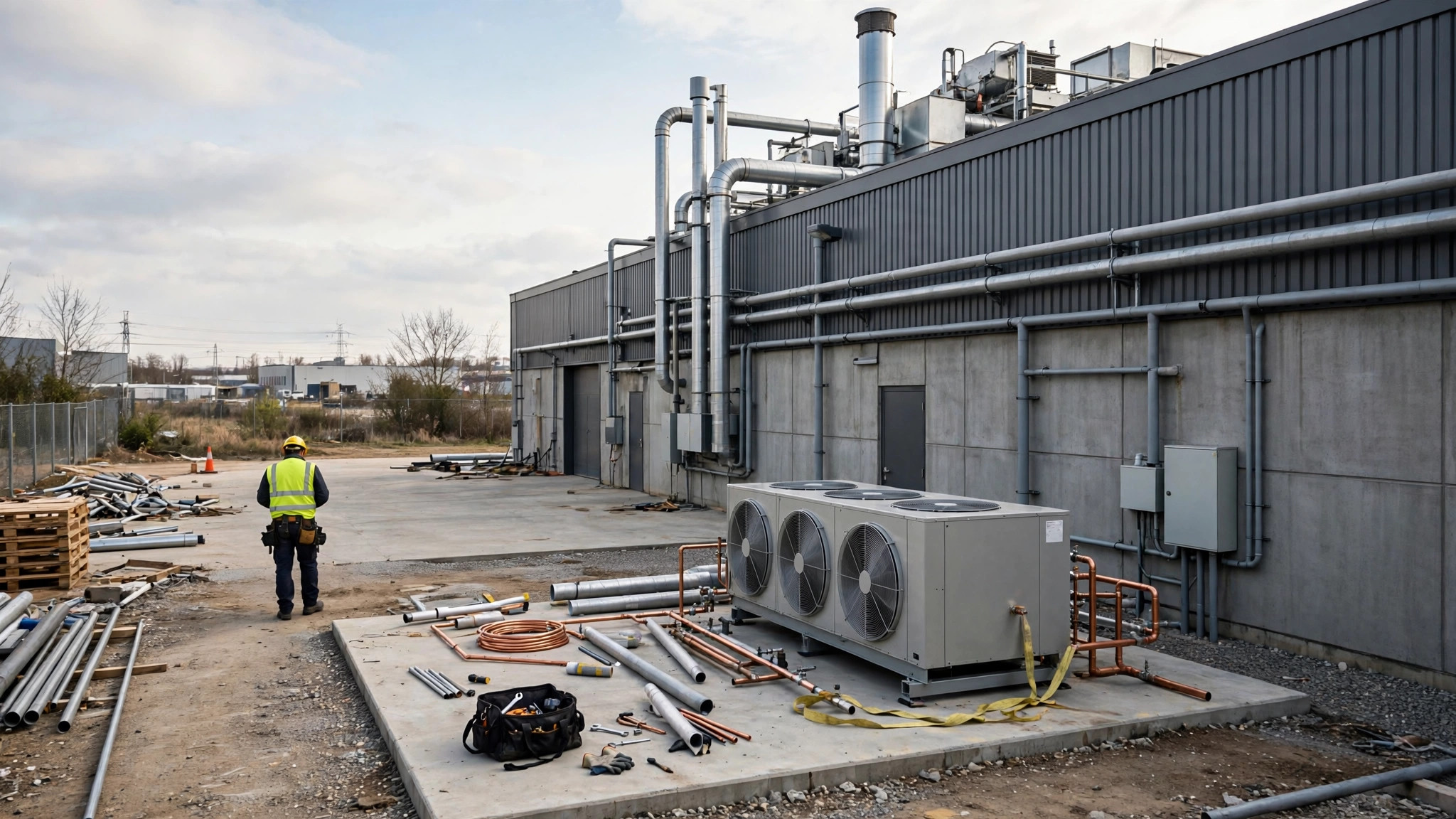
Air to air heat pump installation cost is what a building owner pays to put in a heat pump system that moves heat between indoor and outdoor air. These systems both heat and cool, which makes them popular for commercial buildings in mild climates.
The total air to air heat pump installation cost varies widely with system size, building layout, and local labor rates. This guide breaks down the seven factors that set the price and shows how to get quotes you can trust.
What an Air to Air Heat Pump Does
An air to air heat pump moves heat instead of making it. In summer, it pulls heat from indoor air and dumps it outside, just like an air conditioner. In winter, it reverses and pulls heat from outdoor air into the building.
This sounds like magic in cold weather, but it works. Even cold outdoor air holds heat energy. The heat pump concentrates that energy and delivers it inside. Modern cold-climate models work well below freezing.
The system has an outdoor unit and one or more indoor units. Refrigerant lines connect them. In packaged rooftop versions, everything sits in one box on the roof. In split versions, the parts separate like a standard split AC.
Because one system both heats and cools, it can replace a furnace and air conditioner pair. That single-system simplicity appeals to many commercial owners.
Factor 1: System Size
Size is the biggest driver of air to air heat pump installation cost. Bigger buildings need bigger systems, and bigger systems cost more for equipment and labor.
Commercial heat pumps size by tons, like air conditioners. A small office might need five tons. A large retail space might need twenty or more. Each ton adds equipment cost.
Proper sizing needs a load calculation. The calculation must cover both heating and cooling loads. In cold climates, the heating load often sizes the system larger than cooling alone would.
Oversizing wastes money and hurts comfort. An oversized heat pump short-cycles, which wears parts and leaves humidity high. Undersizing means the system cannot hold temperature on extreme days. Get the math right.
Factor 2: System Type
The type of heat pump changes the air to air heat pump installation cost significantly.
Packaged rooftop heat pumps cost least to install, giving the lowest air to air heat pump installation cost of the options. The whole system ships in one box and sets on an existing curb. Small commercial buildings use them widely.
Split heat pumps cost more. Separate indoor and outdoor units mean more piping, more wiring, and more labor. They suit buildings with indoor space for air handlers.
VRF heat pump systems cost the most. They serve many zones from shared outdoor units with individual control. The equipment and the specialized labor both price high. Large or complex buildings justify it.
Ductless mini-split heat pumps fill niches. They heat and cool single rooms without ducts. Server rooms, additions, and small offices use them as primary or supplemental systems.
Factor 3: Ductwork
Ducts can swing the air to air heat pump installation cost by thousands. Good ducts keep the project simple. Bad ducts turn it into a major job.
Existing ducts in good shape need only sealing and balancing. The new heat pump connects to the old network. This is the cheapest path and the most common.
Leaky ducts need sealing first. Heat pumps move large air volumes, so duct leaks waste more energy than with some other systems. Sealing pays back fast.
Missing or bad ducts need full installation. Buildings converting from boiler heat or baseboard heat may have no ducts at all. New ductwork can cost as much as the heat pump equipment itself.
Have every bidder inspect the ducts. A quote that assumes good ducts without looking is a quote that will grow. Honest duct assessment protects your budget.
Factor 4: Electrical Work
Heat pumps run on electricity, and the air to air heat pump installation cost must include the electrical side.
Most commercial heat pumps need dedicated circuits sized to the nameplate. The electrician verifies wire size, breaker size, and panel capacity. Undersized circuits trip on cold mornings when the system works hardest.
Backup heat adds load. In cold climates, electric resistance backup kicks in on the coldest days. That backup needs its own heavy circuit. The panel must handle the worst-case day, not the average one.
Old panels may need upgrades. A panel with no spare capacity cannot take a new heat pump. Panel replacement adds real money but is non-negotiable for safety.
Get the electrical scope in writing. Ask whether the HVAC quote includes electrical or if you hire the electrician separately. Surprises here are expensive.
Factor 5: Refrigerant Lines and Placement
The distance between indoor and outdoor units affects air to air heat pump installation cost. Longer refrigerant lines mean more copper, more insulation, and more labor.
Rooftop packaged units avoid this entirely. Everything sits together, so line length is zero. That simplicity is part of their cost advantage.
Split systems need careful routing. Lines run through walls, ceilings, or chases. Difficult paths through finished spaces cost more than straight runs in open ceilings.
Outdoor unit placement matters. The unit needs airflow, drainage, and service clearance. Ground placement needs a pad. Rooftop placement needs a curb and possibly a crane. Each adds its line to the quote.
Local codes may set placement rules. Setbacks from property lines, noise limits, and screening requirements vary by city. Check before the equipment arrives.
Factor 6: Controls
Controls range from simple to sophisticated, and they move the air to air heat pump installation cost.
Basic thermostats work fine for small single-zone buildings. They cost little and everyone knows how to use them.
Programmable thermostats add scheduling. Setback temperatures during unoccupied hours save energy with no comfort loss. The payback is usually fast.
Smart controls add remote access and alerts. You can monitor temperatures from your phone and get warned when the system struggles. Multi-site owners value this oversight.
Building automation integrates the heat pump into central management. It costs the most but gives the most control. Larger buildings with many zones benefit most.
Factor 7: Labor and Location
Labor rates vary by region, and they shape the final air to air heat pump installation cost as much as equipment does.
High-cost cities price higher. The same system installs for less in a low-cost market. Get local quotes for air to air heat pump installation cost rather than trusting national averages.
Contractor skill commands a premium. Heat pumps need proper refrigerant charging and airflow setup. A cheap install that runs poorly costs more over time than a good install done right.
Permits and inspections add fees. Commercial HVAC permits cost more than residential ones. Some cities require plan review and multiple inspections.
Timing matters. Off-season scheduling often brings better pricing and faster crews. Emergency installs in extreme weather cost the most.
Getting Air to Air Heat Pump Installation Cost Quotes You Can Trust
Start with the load calculation. Any bidder who sizes without one is guessing. Ask to see the calculation before you discuss equipment.
Get three detailed quotes for your air to air heat pump installation cost. Each should list equipment model numbers, efficiency ratings, ductwork scope, electrical scope, controls, permits, and timeline. Compare line by line.
Check efficiency ratings. Heating efficiency shows as HSPF2. Cooling shows as SEER2. Higher ratings cost more but cut bills. The U.S. Department of Energy explains ratings at https://www.energy.gov/energysaver/heat-pump-systems.
Verify the contractor. License, insurance, and heat pump experience matter. Ask for addresses of past commercial jobs and go see them. For vetting help, read how to find a commercial hvac contractor.
Ask about rebates. Utilities and government programs often rebate efficient heat pumps. The Database of State Incentives lists programs by state. ENERGY STAR at https://www.energystar.gov/ also tracks qualifying equipment.
FAQ: Air to Air Heat Pump Installation Cost
Does air to air heat pump installation cost more than a furnace and AC?
The equipment often costs more, but installation can cost less since one system replaces two. Total project cost runs close in many cases. Operating costs usually favor the heat pump in mild climates.
How long does installation take?
A simple rooftop swap takes a day or two. A split system with new ducts can take one to two weeks. The air to air heat pump installation cost includes all of this labor. Complex VRF jobs run longer. Ask each bidder for a written schedule.
Will a heat pump heat my building in very cold weather?
Cold-climate models heat well below freezing. Below their rated point, backup heat takes over. Size the system for your climate zone and confirm the backup plan in writing.
What maintenance does a heat pump need?
The same as any forced-air system. Filter changes, coil cleaning, refrigerant checks, and electrical tests twice a year. Follow a commercial hvac maintenance checklist to stay on track.
Can a heat pump replace my existing furnace?
Yes, in most commercial buildings with ductwork. The heat pump uses the same ducts. Buildings with boiler heat and no ducts need new ductwork, which changes the economics.
Next Steps for Building Owners
Get a professional load calculation first. Then collect three detailed quotes for the air to air heat pump installation cost that break out equipment, ducts, electrical, controls, and permits. Compare efficiency ratings and check for rebates before you sign. Read commercial hvac repair cost for pricing context and commercial heating and cooling for system background. Plan the install in the off-season, and your new heat pump will be ready before the weather turns.



