
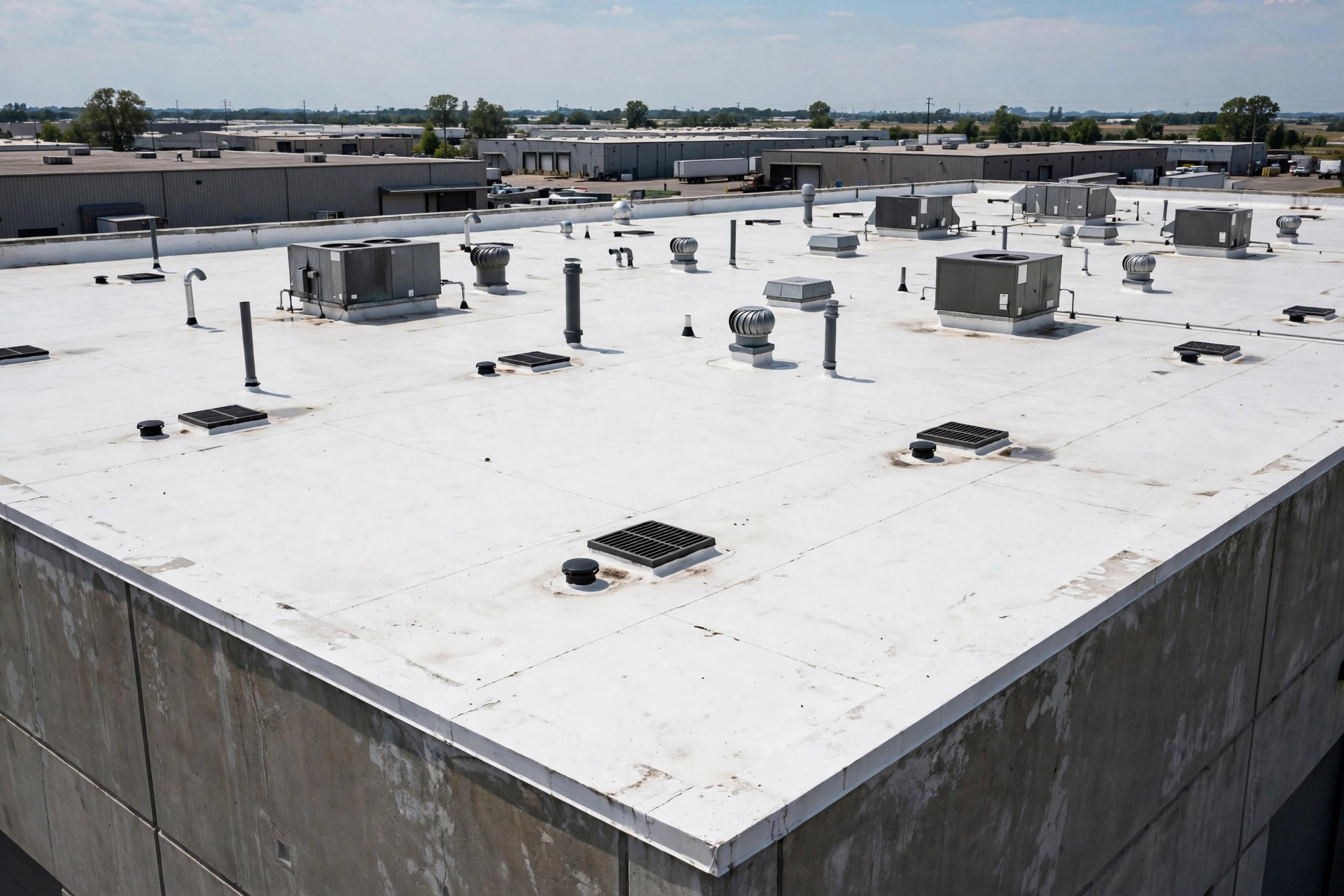
A commercial roof is one of the most expensive parts of any building. It protects inventory, equipment, and people from the weather. Yet most owners think about it only when water starts dripping inside. That is the most expensive time to think about it. A little knowledge about how a commercial roof works can prevent emergency repairs and extend the life of the system by years.
This guide covers the basics every owner should know. You will learn the common roof types, what maintenance matters, what repairs cost, and how to plan for replacement. Whether you own one building or a portfolio, these facts will help you protect the asset.
What Makes a commercial roof Different
A commercial roof differs from a home roof in shape, materials, and demands. Most commercial roofs are flat or low-slope. That changes how water drains and which materials work. A home shingle roof sheds water by gravity. A commercial roof must move water to drains and scuppers with only a slight slope.
The materials differ too. Commercial systems use membranes, built-up layers, or metal panels designed for large flat areas. They handle foot traffic from service technicians and support heavy rooftop equipment. A commercial roof carries HVAC units, vents, and sometimes solar panels. The design must account for all of it.
Scale changes everything. A commercial roof can cover tens of thousands of square feet. Small problems grow fast at that scale. A single clogged drain can pond water across a large area. That is why professional inspection and maintenance matter more for commercial buildings than for homes.
Common commercial roof Types
Built-up roofing, often called BUR, layers felt and hot asphalt into a thick waterproof system. It has protected buildings for over a century. BUR is tough and proven, but it is heavy and installation is messy. Many owners still choose it for its track record.
Modified bitumen is an evolution of BUR. It uses polymer-modified asphalt sheets, usually torched or adhered in layers. A modified bitumen commercial roof handles building movement well and resists tears. It is a common choice for offices and retail.
Single-ply membranes include TPO, EPDM, and PVC. These are large sheets heat-welded or glued at the seams. A TPO the roof is popular for its white reflective surface and lower cost. EPDM is a black rubber membrane known for long life. PVC resists chemicals and grease, which suits restaurants.
Metal roofing works on low-slope commercial buildings with the right design. Standing seam metal lasts decades and sheds water well. It costs more up front but needs little maintenance. Spray foam and coatings restore aging roofs without tear-off.
10 Facts Every Owner Should Know
One, a the roof is a system, not just a surface. Decking, insulation, membrane, flashing, and drainage all work together. A failure in any part affects the whole.
Two, most the roof problems start small. A loose flashing or clogged drain becomes a leak, then wet insulation, then deck damage. Catching issues early keeps repair bills small.
Three, the average the roof lasts 20 to 30 years with good care. Neglected roofs often fail in half that time. Maintenance is the difference.
Four, ponding water is the top enemy. A the roof should drain within two days of rain. Standing water adds weight and breaks down most materials.
Five, foot traffic damages roofs. Every service visit risks punctures. Walk pads and traffic paths protect the membrane where technicians walk.
Six, warranties have fine print. Most require regular inspections and prompt repairs by approved contractors. Read the terms before you assume coverage.
Seven, energy costs tie to the roof. Dark roofs absorb heat and raise cooling bills. Reflective surfaces and good insulation cut costs. The Department of Energy explains cool roof benefits at https://www.energy.gov/.
Eight, insurance may not cover wear and tear. Policies cover sudden damage like storms, not leaks from age and neglect. Document maintenance to support claims.
Nine, replacement is a capital project. A the roof replacement needs budgeting, bidding, and scheduling like any major project. Start planning years before the roof fails.
Ten, the cheapest bid is rarely the cheapest roof. Poor installation causes early failure. The National Roofing Contractors Association offers contractor guidance at https://www.nrca.net/.
Commercial roof Maintenance Essentials
Inspect your the roof twice a year, in spring and fall, plus after major storms. Look for ponding water, clogged drains, loose flashing, punctures, and open seams. Clear debris from drains and gutters every visit.
Keep a simple log. Note the date, what you found, and what was fixed. Photos help track changes over time. A maintenance log also supports warranty claims and insurance claims.
Control roof access. Give keys only to people who need them. Require service technicians to report damage they see. Install walk pads on paths to equipment. A the roof that everyone treats as a shortcut will not last.
Schedule professional inspections too. A roofer spots problems owners miss, like failing seams or wet insulation. Many contractors offer maintenance plans that include inspections and minor repairs. For a full task list, see our the roof maintenance checklist.
Commercial roof Costs and Budgeting
Repair costs vary by problem and roof size. Minor repairs like sealing a flashing run a few hundred dollars. Major repairs involving wet insulation run into the thousands. Our breakdown of the roof repair cost per square foot gives detailed ranges.
Replacement costs depend on size, material, tear-off needs, and local labor. Budget per square foot and multiply by roof area for a rough estimate. Get professional quotes for real numbers. Plan for extras like deck repair and code upgrades.
Set aside a roof reserve. A common approach is to divide the expected replacement cost by remaining years of life and save that amount yearly. A dedicated reserve avoids surprise special assessments or emergency borrowing.
When to Repair and When to Replace
Repair makes sense when the the roof is young and problems are isolated. A few open seams or a damaged flashing are routine fixes. Coatings can extend a sound roof by a decade or more.
Replacement makes sense when problems are widespread. Wet insulation across large areas, multiple leak locations, and a roof past its rated life all point to replacement. Patching a failing system wastes money.
Get a professional survey with moisture scanning before you decide. The scan shows how much insulation is wet, which is the key fact. Less than a quarter wet often means repair. More than that usually means replacement is cheaper in the long run. Our guide to common commercial roof problems helps you read the signs.
Working Safely on a commercial roof
Roof work has real hazards. Falls are the leading danger. Anyone working on a commercial roof needs proper fall protection and training. The Occupational Safety and Health Administration publishes roofing safety rules at https://www.osha.gov/.
Heat is another hazard. Dark roofs get extremely hot in summer. Schedule work for cooler hours and provide water and shade. Electrical hazards exist near rooftop units and conduit. Only qualified people should work around them.
As an owner, your job is to hire contractors who take safety seriously. Ask about their safety program and training. A contractor who cuts corners on safety cuts corners on quality too.
Commercial roof Insurance Claims
Storm damage to a commercial roof can mean a large insurance claim. Document the roof condition before storm season with dated photos. After a storm, photograph damage before any temporary repairs. Call your insurer promptly and keep every receipt.
Know what your policy covers. Most policies cover sudden damage from wind and hail. They do not cover leaks from age, wear, or poor maintenance. An insurer may deny a claim if the commercial roof was already failing. Your maintenance log becomes key evidence that the roof was sound.
Consider a professional inspection after major storms even if you see no leaks. Hail damage to membranes is not always visible from the ground. Hidden damage found late can complicate claims.
Frequently Asked Questions
How long does a commercial roof last?
Most systems last 20 to 30 years with proper maintenance. Single-ply membranes often reach 25 years. Metal can last 40 or more. Neglect, ponding water, and poor installation shorten life sharply.
How often should a commercial roof be inspected?
Twice a year at minimum, plus after severe storms. Professional inspections catch hidden problems like wet insulation. Keep written records of every inspection.
What is the most common commercial roof problem?
Ponding water and the leaks it causes. Clogged drains, failed flashing, and open seams follow close behind. Most of these are preventable with regular maintenance.
Can a commercial roof be repaired in winter?
Yes, with limits. Some materials need warm temperatures to bond properly. Emergency repairs are possible in any season. Plan major work for mild weather when possible.
Does a commercial roof affect energy bills?
Yes. Roof color, reflectivity, and insulation all affect heating and cooling costs. A dark poorly insulated roof wastes energy. Upgrades during replacement can cut bills for decades.
Next Steps
Walk your roof this month or hire someone who will. List every issue you find and fix the small ones now. Start a maintenance log and a replacement reserve if you do not have them. A commercial roof rewards attention and punishes neglect. The owners who inspect, maintain, and plan ahead spend far less over the life of the building.



