
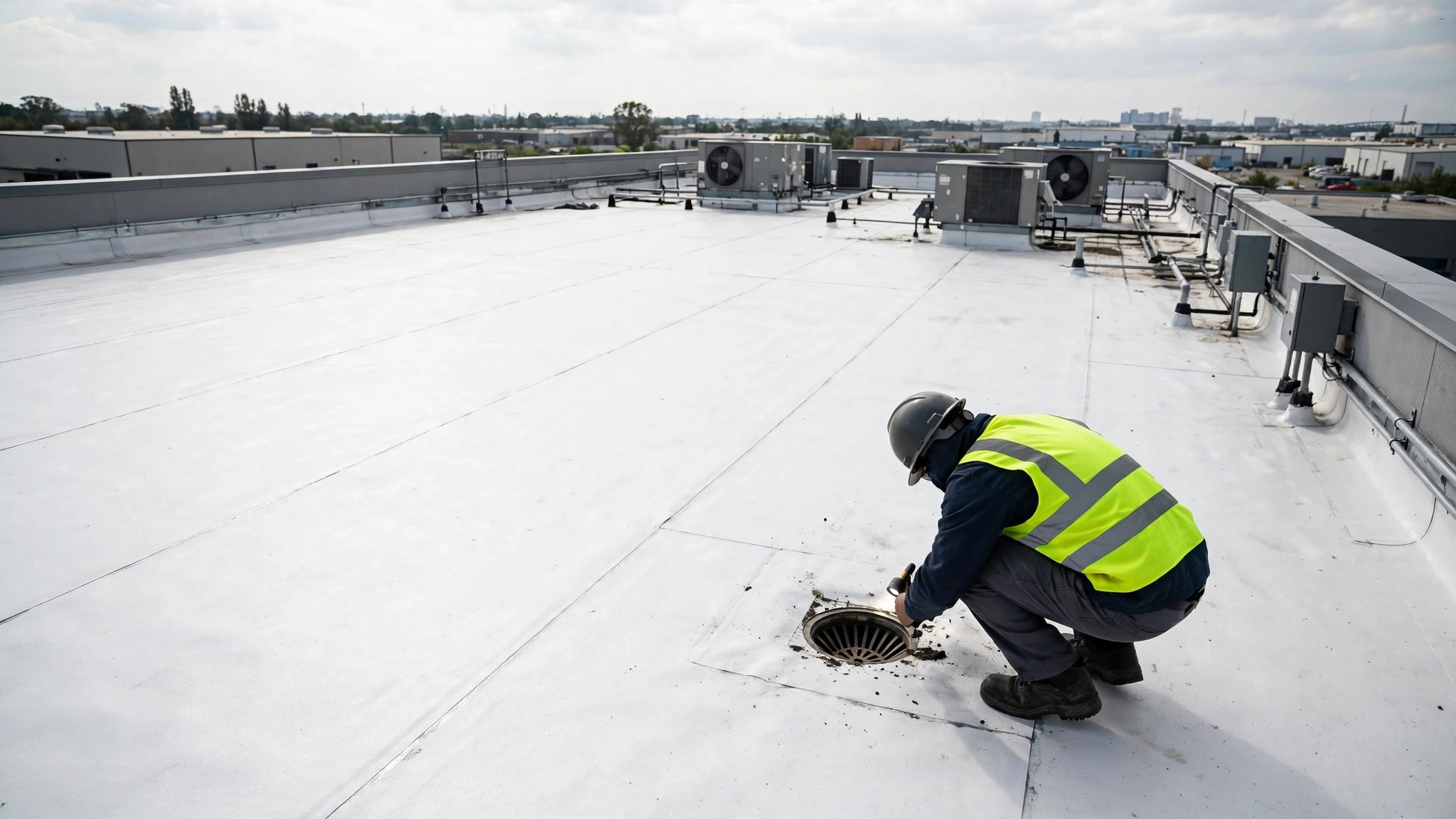
Your roof takes a beating every day. Sun, rain, wind, and foot traffic wear it down year after year. A commercial roofing inspection is the simplest way to catch small problems before they turn into big bills. A trained inspector walks the whole roof, checks the seams and flashing, looks at the drains, and tests for hidden moisture. The visit takes an hour or two for most buildings. The written report tells you what needs fixing now and what can wait. Owners who schedule a commercial roofing inspection on a regular plan spend less on repairs and get more years out of the roof. This guide explains what the inspection covers, what the inspector checks, what it costs, and how often to book one.
What a Commercial Roofing Inspection Covers
A commercial roofing inspection is a full checkup for your roof. The inspector looks at the membrane, the seams, the flashing, the drains, and the parts where the roof meets walls and equipment. He or she also checks the underside of the roof deck from inside the building when that is possible. The goal is simple: find damage early while it is still cheap to fix.
Most inspections follow the same steps. The inspector starts with a walk of the whole roof surface. Every seam, patch, and penetration gets a look. Then the inspector checks the drainage. Flat roofs fail fast when water sits on them. Standing water adds weight and soaks into weak seams. Next comes the flashing around vents, pipes, skylights, and the edge of the roof. Flashing is where most leaks start. The inspector also notes anything sitting on the roof that should not be there, like trash, tools, or equipment that was set down and never moved.
Many inspectors use an infrared camera or a moisture meter. These tools find water trapped under the membrane. Wet insulation cannot be seen with the naked eye. It rots the deck and spreads. Catching it early can save thousands. A good commercial roofing inspection ends with a written report. The report lists each problem, shows photos, and ranks repairs by urgency. It should also give a rough idea of what each fix will cost. Keep these reports. They build a history of your roof and help you plan budgets. They also help if you ever file a warranty claim or sell the building.
If you want to see what an inspector looks for in detail, review a commercial roof inspection checklist before the visit. Knowing the steps helps you ask better questions on the roof.
The 7-Point Commercial Roofing Inspection Checklist
Every solid commercial roofing inspection covers these seven points. Walk through them with your inspector and you will know your roof is covered.
1. Membrane condition. The inspector checks the whole surface for cuts, punctures, blisters, and worn spots. UV rays break down roofing over time. Foot traffic from service techs grinds down walkways and pads. Small cuts can be patched fast and cheap. Left alone, they let water in and rot the layers below.
2. Seams and laps. On single-ply roofs, seams are glued or heat-welded. The inspector tugs and probes them to find loose or open spots. On built-up roofs, the laps between layers get the same treatment. Open seams are one of the top causes of leaks. A probe test takes minutes and finds trouble long before water shows up inside.
3. Flashing. Flashing seals the spots where the roof meets something else. Pipes, vents, curbs, parapet walls, and skylights all need tight flashing. The inspector looks for gaps, cracks, and metal that has pulled away. Bad flashing lets water run straight into the building. Most leak calls trace back to flashing.
4. Drains and gutters. A commercial roofing inspection always covers drainage. The inspector clears debris from drains and scuppers and checks that water flows off the roof. He or she looks for ponding water that stays more than two days after rain. Ponding means the roof is sagging or the slope is wrong. Fixing drainage is one of the cheapest ways to extend roof life.
5. Penetrations and equipment. Every pipe, vent, and HVAC curb is a hole in the roof. The inspector checks the seals around each one. Rooftop units get a look too. Loose bolts, rusted curbs, and cracked pitch pans all get noted. Service techs sometimes damage seals when they work on equipment. The inspector catches what they leave behind.
6. Edge metal and parapets. The edge of the roof takes the full force of wind. The inspector checks that edge metal is tight and sealed. Loose edge metal can peel back in a storm and take a large section of roof with it. Parapet walls get checked for cracks in the coping and the counter-flashing above the roof line.
7. Interior signs. A good inspector does not only look at the top of the roof. He or she checks the ceiling and walls inside for stains, peeling paint, and mold. These signs point back to leaks on the roof above. Matching an inside stain to an outside problem saves time and repair cost.
This same seven-point list works as a quick guide between professional visits. For the most common trouble spots, see the rundown of common commercial roof problems so you know what to watch for.
How Often to Schedule a Commercial Roofing Inspection
Book a commercial roofing inspection at least twice per year. Spring and fall are the best times. The spring visit finds damage from winter storms and freeze cycles. The fall visit gets the roof ready for the cold months ahead. Roofs in areas with heavy storms may need an extra visit after a bad season.
Also schedule a commercial roofing inspection after any big storm. Hail, high wind, and falling branches can damage a roof in one night. Most warranties require prompt checks after storms. If you wait, the manufacturer may deny a claim. A quick post-storm look costs far less than a denied warranty.
New owners should book a commercial roofing inspection before buying a building. The roof is one of the most expensive parts of the property. An inspection report tells you what you are really buying. It gives you room to negotiate the price or ask the seller to fix problems first.
Buildings with a lot of rooftop equipment need more frequent checks. Every service call puts feet on the roof. Techs drop tools and step on seams. If your roof hosts many HVAC units, plan an extra commercial roofing inspection each year. The NRCA recommends regular professional maintenance as the best way to reach full roof life.
What a Commercial Roofing Inspection Costs
A commercial roofing inspection for a small building often runs a few hundred dollars. Larger roofs cost more. The price depends on roof size, the number of penetrations, and whether you want infrared scanning. An infrared scan adds cost but finds hidden moisture that a visual check misses. Many owners find the scan pays for itself the first time it catches wet insulation early.
Some roofing contractors offer a free commercial roofing inspection with the hope of winning repair work. Free visits can be useful, but read the report with care. A contractor who only sells replacements may push a new roof when repairs would do. For an honest baseline, hire an independent inspector or a firm that does inspections as its main business. You can also ask for a fixed price in writing before the visit.
Think of the cost as insurance. One missed leak can ruin inventory, shut down operations, and cost many times the price of the inspection. Most owners agree the visit is one of the cheapest line items in the building budget.
What Happens After the Report
The report lands on your desk with photos and a list of problems. Do not file it away. Read it the same week. Most reports split repairs into three groups: fix now, fix soon, and watch. Fix-now items are active leaks or safety issues. Handle them within days. Fix-soon items are worn seams, weak flashing, or slow drainage. Plan them for the next quarter. Watch items are small wear spots to recheck next time.
Get bids from two or three contractors for the bigger repairs. Show each bidder the report so they quote the same work. Ask for photos of the finished repairs. File those photos with the report. This paper trail proves you maintained the roof. It protects your warranty and helps at resale time.
If the report shows major damage, compare repair cost against replacement. A roof near the end of its life may not be worth patching again. Your inspector can give a straight opinion on which path makes sense. The U.S. Department of Energy offers resources on commercial building maintenance and energy-smart roofing decisions. For a deeper look at ongoing care, the commercial roof inspections guide covers maintenance plans in more detail.
FAQ
How long does a commercial roofing inspection take?
Most visits take one to three hours. A small, simple roof may take less. A large roof with many units, drains, and penetrations takes longer. Infrared scans add time. Ask the inspector for a time estimate when you book.
Do I need to be on the roof with the inspector?
You do not have to be, but it helps. Walking along lets you ask questions and see problems firsthand. If you cannot attend, ask for a report with clear photos and plain-language notes. A good report stands on its own.
Will the inspection damage my roof?
No. A proper commercial roofing inspection is non-destructive. The inspector walks the roof, probes seams gently, and uses meters and cameras. Nothing gets cut or torn. The only marks are small chalk circles used to flag spots for repair.
Can an inspection find leaks that have not shown up inside yet?
Yes. Moisture meters and infrared cameras find water trapped under the membrane before it drips through the ceiling. Catching it early keeps the repair small. This is one of the best reasons to schedule on a regular plan instead of waiting for a stain.
Does a commercial roofing inspection satisfy my warranty?
Most manufacturer warranties require documented inspections and maintenance. A written report from a qualified inspector counts as proof. Check your warranty terms for the exact schedule required. Missing a required inspection can void coverage.
Next Steps
Call a qualified inspector and book your next commercial roofing inspection this month. Ask for a written report with photos and repair priorities. Fix the urgent items right away and budget the rest. Then put the next two visits on the calendar for spring and fall. A roof that gets checked on schedule lasts longer and costs less. That is money back in your pocket every year.



