
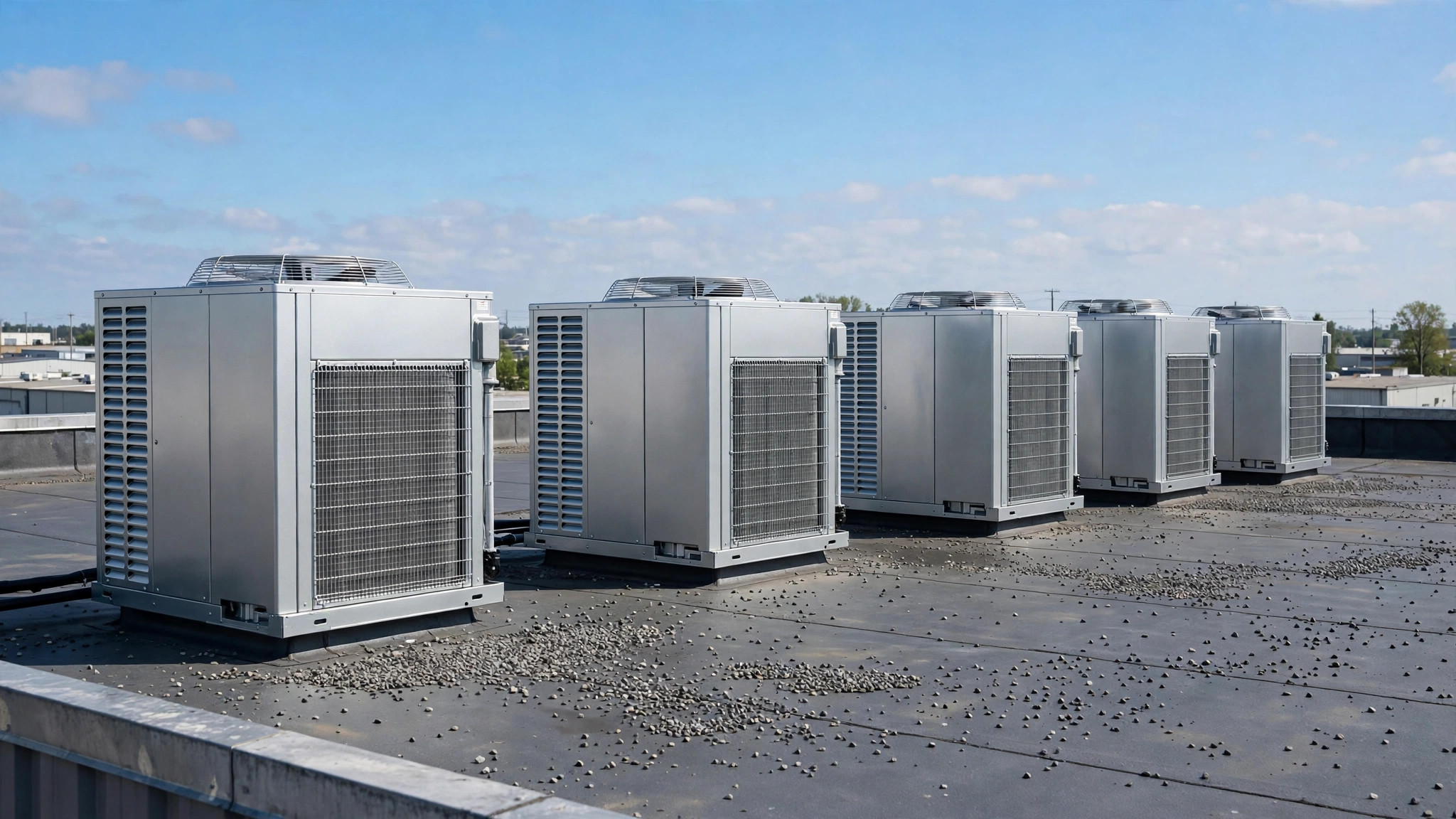
Rooftop HVAC units cool and heat most small and mid-size commercial buildings. When one fails, owners need a replacement fast. Knowing commercial rooftop hvac units prices ahead of time turns an emergency into a planned purchase. This guide explains what these units cost, what drives the price, and how to buy smart.
You will learn typical price ranges, the seven main cost factors, and how efficiency affects lifetime cost. Read this before you request quotes.
What commercial rooftop hvac units prices Cover
The phrase commercial rooftop hvac units prices covers more than the box on the roof. A real project price includes the equipment, the curb adapter, crane service, installation labor, electrical connections, controls, startup, and old unit disposal. Quotes that list only equipment cost mislead.
Packaged rooftop units combine cooling, heating, and ventilation in one cabinet. Sizes range from small 3-ton units for shops to large 25-ton units for bigger buildings. Price scales with size, but not in a straight line. Larger units cost more per ton at the extremes.
Efficiency level moves commercial rooftop hvac units prices significantly. Standard-efficiency units cost less up front. High-efficiency units cost more but use less electricity every year. The right choice depends on your climate, utility rates, and how long you will own the building.
Typical Price Ranges
Small rooftop units for shops and small offices sit at the lower end of commercial rooftop hvac units prices. Mid-size units for restaurants and mid-size offices cost more. Large units for bigger buildings reach well into five figures installed.
These ranges shift by market. Labor rates, crane costs, and permit fees vary by city. Equipment prices move with material costs and manufacturer promotions. Treat any published number as a starting point, not a quote.
Always compare installed prices. A cheap unit with expensive installation can cost more overall. Ask each bidder for a turnkey price that covers everything from delivery to startup.
7 Factors Behind commercial rooftop hvac units prices
Use this checklist to read any quote intelligently.
- Unit capacity. Tonnage is the biggest driver. Bigger buildings need bigger units that cost more.
- Efficiency rating. Higher EER and IEER ratings raise equipment cost and lower running cost.
- Heating type. Gas heat, electric heat, and heat pump options price differently.
- Installation complexity. Crane lifts, curb adapters, and ductwork changes add labor.
- Controls. Basic thermostats cost little. Building automation integration adds cost and capability.
- Electrical upgrades. Heavier or more efficient units may need panel or wiring work.
- Old unit removal. Disposal, refrigerant recovery, and recycling add to the project.
Get each factor priced separately in the quote. That breakdown shows where the money goes and where you might save.
Efficiency and Lifetime Cost
The sticker price is only part of commercial rooftop hvac units prices. A unit runs for 15 to 20 years. Electricity over that time often exceeds the purchase price. Efficient equipment pays back.
Compare models using EER for full-load efficiency and IEER for part-load efficiency. In most commercial buildings, units run at part load most of the time, so IEER matters more. ENERGY STAR lists efficient packaged units at https://www.energystar.gov/.
Do simple payback math. Divide the extra cost of the efficient model by yearly energy savings. If payback is under five years, the upgrade usually makes sense. The Department of Energy offers commercial cooling guidance at https://www.energy.gov/.
Sizing the Unit Right
An oversized unit short-cycles, wastes energy, and fails to control humidity. An undersized unit runs constantly and still leaves people hot. Both mistakes raise lifetime cost beyond the equipment price.
Proper sizing needs a load calculation. The contractor should measure the building and account for insulation, windows, occupants, and internal heat. ASHRAE publishes load calculation methods at https://www.ashrae.org/.
Do not assume the old size was right. Buildings change over time. New windows, better insulation, or different tenants shift the load. Size every replacement to current conditions.
What to Expect During Installation
A rooftop unit replacement starts with the crane. The old unit lifts off and the new one sets onto the curb. Curb adapters bridge differences between old and new footprints. The crew connects ductwork, piping, gas, and electrical.
Startup and commissioning come next. The technician checks refrigerant charge, airflow, electrical draw, and controls. Proper commissioning catches problems before they become callbacks. Ask for a commissioning report.
Plan for downtime. The building will be without heating or cooling during the swap. Schedule work for mild weather when possible. Warn tenants in advance.
Choosing a Contractor
Commercial rooftop work needs commercial experience. Ask how many rooftop units the contractor installs yearly. Ask which brands they carry and service. A contractor who installs many units gets better pricing and knows the quirks.
Check licensing, insurance, and references. Call past customers with similar buildings. Ask about schedule reliability and startup quality. A good installer also offers maintenance after the sale.
Compare at least three turnkey quotes. Make sure each covers the same scope: equipment model, efficiency, curb work, crane, electrical, controls, startup, and disposal. For budgeting context, see commercial HVAC repair cost. For installation topics, see commercial HVAC installation. For equipment care after install, read about commercial rooftop AC unit repair.
Financing Options for Unit Replacement
Few owners pay cash for major HVAC work without planning. Several financing paths exist for commercial rooftop hvac units prices. Equipment loans from banks spread the cost over years. The unit itself often serves as collateral, which can mean better terms.
Leasing is another option. Operating leases keep the equipment off your balance sheet and bundle maintenance. Capital leases work more like loans. Compare total cost, not just monthly payments. Some leases cost far more over time.
Utility rebates cut commercial rooftop hvac units prices directly. Many utilities rebate high-efficiency commercial equipment. Check your utility’s commercial rebate program before you buy. The rebate may require pre-approval, so apply early.
Energy service agreements are a third path. A contractor installs efficient equipment and gets paid from the energy savings. This works best in buildings with high cooling loads and old inefficient units. Read the savings guarantees carefully.
Timing Your Purchase
When you buy affects commercial rooftop hvac units prices. Contractors are busiest in summer when units fail. Emergency summer replacements cost the most. You pay premium labor rates and get whatever equipment is in stock.
Plan replacements for spring or fall. Contractors have open schedules and offer better pricing. Equipment lead times are shorter. You can wait for the right model instead of taking what is available.
Watch for manufacturer promotions. Makers run seasonal incentives on efficient models. Your contractor should know current programs. Ask directly; promotions change often.
Budget cycles matter too. Many owners plan capital spending by fiscal year. Get quotes early in the cycle so the project fits the budget. Last-minute requests face delays and higher costs.
Reading an Equipment Quote
A clear quote makes commercial rooftop hvac units prices easy to compare. It should name the exact equipment model, tonnage, efficiency ratings, and heating type. It should list the curb adapter, crane service, electrical work, controls, startup, permits, and old unit disposal as separate lines.
Watch for missing items. A quote without startup and commissioning is incomplete. A quote that lumps everything into one number hides the details. Ask for the breakdown. Compare model numbers across bids to make sure everyone quoted the same efficiency level.
Check the fine print on lead times and price holds. Equipment prices change, and quotes usually expire in 30 days. A quote that holds pricing for 60 or 90 days gives you room to decide. Confirm who handles warranty registration; unregistered equipment often carries a shorter warranty.
Frequently Asked Questions
What affects commercial rooftop hvac units prices most?
Unit size and efficiency level drive equipment cost. Installation complexity drives labor cost. Together these four factors explain most of the price difference between quotes.
How long do rooftop HVAC units last?
Typically 15 to 20 years with proper maintenance. Neglected units fail sooner. Harsh environments and constant full-load operation shorten life.
Should I replace all rooftop units at once?
Not necessarily. Replace failed units promptly. Plan others by age and condition. Replacing in phases spreads cost, but bundling can win volume discounts.
Do high-efficiency units pay off?
Often yes in buildings with high cooling loads and expensive electricity. Run the payback math with your utility rates. In mild climates with cheap power, standard efficiency may win.
What warranties come with new rooftop units?
Most manufacturers offer parts warranties of 5 to 10 years on major components. Labor warranties come from the installer and are usually shorter. Extended warranties are available at extra cost.
Next Steps
List every rooftop unit in your building with its age and condition. Get load calculations before approving any replacement size. Collect three turnkey quotes on identical scope. Compare lifetime cost, not just purchase price. Understanding commercial rooftop hvac units prices before you buy keeps the project on budget.



