
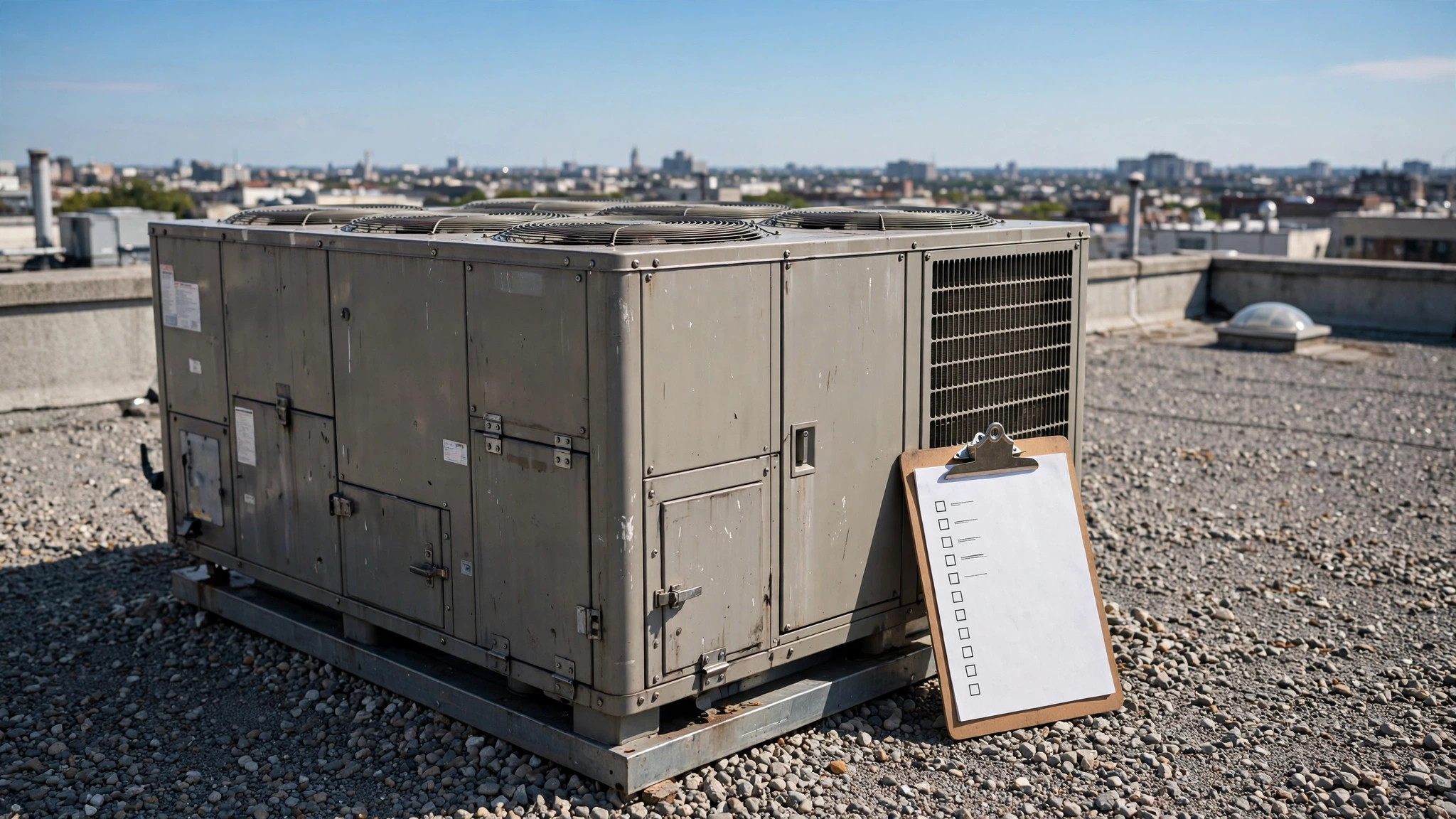
An air conditioning tune up is the cheapest insurance your cooling system can buy. A trained tech inspects, cleans, and tests the unit before the hot season hits. Small faults get fixed early. Big breakdowns get avoided. This guide walks through all seven steps.
Skip the air conditioning tune up and you gamble. Dirty coils force the compressor to work harder. Low refrigerant freezes the coil. Loose electrical parts arc and fail. Each one is a small fix now or a big bill later. Read on and schedule with open eyes.
What an air conditioning tune up Includes
An air conditioning tune up is a preventive visit, not a repair call. The tech works through a set checklist on each unit. Filters, coils, drains, refrigerant, electrical, and controls all get attention. The visit ends with a written report.
It suits every cooling system. Rooftop package units, split systems, and larger commercial setups all benefit. The checklist shifts by equipment type. The goal stays the same. Catch wear early and keep efficiency high.
Timing matters. Book the air conditioning tune up before the cooling season starts. Techs have open schedules then. Prices are fair. Waiting until the first heat wave means waiting in line with every other building. Early booking also gives time to fix findings before the heat.
7 Steps of an air conditioning tune up
Here is what a thorough tech does at each unit. If steps are skipped, ask why.
- Filter check and replacement. &Quot;Dirty filters choke airflow. The tech checks every filter and replaces the spent ones. Ask what grade they use. Cheap filters let dust through. Good filters protect the coil and the air you breathe."
- Coil cleaning. &Quot;Outdoor and indoor coils collect grime. Grime blocks heat transfer. The unit runs longer and hotter. The tech washes coils with proper cleaner, not just a hose blast. Clean coils cut energy use fast. This step alone often pays for the visit."
- Drain and pan service. &Quot;Condensate drains clog with slime. A clogged drain floods ceilings. The tech clears the line and treats the pan. This ten-minute task prevents thousand-dollar water damage. Ask them to show you the drain flow."
- Refrigerant check. &Quot;The tech measures pressures and temperatures. Low charge points to a leak. The leak must be found and fixed, not just refilled. Note the refrigerant type in your file. Older types cost more each season. Refills without repair waste money."
- Electrical inspection. &Quot;Contactors, capacitors, and wiring get tested. Pitted contactors and weak capacitors are the top no-cool culprits. Tightening connections stops arcing. Electrical faults cause most surprise failures. This step takes minutes and saves weekends."
- Controls and thermostat test. &Quot;Setpoints, sensors, and staging get verified. A miscalibrated sensor runs the unit at the wrong time. The tech confirms each stage starts and stops as designed. Good controls save energy every hour. Bad controls waste it just as steadily."
- Performance report. &Quot;The visit ends on paper. Unit condition, work done, parts used, and recommended future work. Keep the report with your equipment file. It proves maintenance for warranty claims. No report, no record. Demand the paper."
- List every unit by location, type, and age.
- Note any rooms with poor cooling or odd noise.
- Clear access to rooftops, closets, and panels.
- Have last season's reports ready for comparison.
- Ask who is coming and how long the visit takes.
- Confirm the price and what it includes.
- Plan to walk the first unit with the tech.
What an air conditioning tune up Costs
Single-unit visits price modestly. Multi-unit buildings price per unit with volume breaks. Most owners book one air conditioning tune up per unit per year. Maintenance plans bundle the tune up with other visits and cut the per-visit cost. Ask for the plan price before booking one-offs.
After-hours and emergency tune ups cost more. Schedule in the mild season. Prices then are fairest and slots are open. A scheduled air conditioning tune up in the mild season beats a mid-summer breakdown call by a wide margin. Plan the date when you book the last visit.
Watch for upsells. A tune up should not turn into a parts auction. Ask which findings are urgent and which can wait. Get prices for each finding. Honest techs rank the list. Pushy ones pressure the whole list. You decide the order of work.
Pre-Visit Checklist for Owners
Do these before the tech arrives. Each one saves time and money.
Why Skipping Costs More
A skipped tune up rarely shows damage at once. The harm builds quietly. Coils cake over. Drains narrow. Electrical parts pit. Each season the unit works a little harder for the same cool air. Energy bills climb a little each month.
Then the break comes on the hottest day. The compressor dies from years of strain. The ceiling floods from a drain ignored for seasons. The repair bill dwarfs every tune up you skipped. This pattern repeats in buildings across the country. The owners who maintain spend less over the life of the equipment. The math is simple and old.
Signs Your Unit Missed Its air conditioning tune up
Some signs say the tune up was skipped or rushed. Dust cakes the coil fins. The drain pan holds standing water. Filters bow inward from months of neglect. The tech who finds these on a repair call knows the maintenance lapsed.
Performance signs show too. Rooms cool unevenly. The unit runs long cycles and still feels weak. Energy bills climb with no rate change. These are the fingerprints of deferred care. Each one points back to a missed air conditioning tune up.
Use the signs as a checklist. Walk your units once a season. Look, listen, and note. Then hand the notes to your provider. Catching drift early keeps the tune up cheap and the summer quiet.
Tune Up vs Repair: Know the Line
A tune up prevents. A repair fixes. The line between them matters for price and planning. Tune ups follow a checklist on working equipment. Repairs chase faults on broken equipment. Providers price them differently.
Watch for blur. Some firms sell repairs under the tune up name. The visit finds little but the invoice grows large. Insist on the checklist up front. Ask what a standard visit includes and what counts as extra. Clear lines stop invoice creep.
Use the line to plan budgets. Tune ups are fixed costs you schedule. Repairs are variable costs you minimize. More of the first means less of the second. That trade is the whole point of maintenance.
Questions to Ask Before You Book
Ask these when you call for quotes. What exactly does the visit include. How long per unit. What brand of filters they use. How findings get reported. What counts as extra work. Get the answers before the tech arrives.
Ask about the tech too. Who is coming. How long they have done this work. Whether the same tech returns each visit. Familiar techs learn your equipment. Strangers start over each time.
Ask about the report format. You want unit-by-unit notes, not one vague paragraph. Ask for a sample report. Good providers show one gladly. Evasive ones have no sample to show.
Related Reading
For cooling repairs beyond the tune up, read [commercial ac repair](/commercial-ac-repair/). For full system service, see [commercial hvac repair](/commercial-hvac-repair/). [ENERGY STAR](https://www.energystar.gov/) offers maintenance guidance for building owners.
FAQ
How often should a building get an air conditioning tune up?
Once a year before the cooling season. Buildings in hot regions or with heavy use may need two visits. Ask the tech to set the count by your equipment and load.
Is an air conditioning tune up worth it for old units?
Yes, and sometimes more so. Old units fail harder and cost more to fix. The tune up finds the weak parts before they die. It also tells you when replacement beats another repair. Data beats hope.
What voids the warranty if I skip it?
Many makers require documented maintenance. Skipped tune ups can void the parts warranty. Keep the reports filed with the warranty papers. Paper is your proof when a claim is questioned.
Can my staff do the air conditioning tune up?
Filters and vent checks, yes, with training. Coil washing, refrigerant, and electrical work, no. Those need a licensed tech and proper tools. Split the work by skill. Write down who does what.
How long does the visit take?
About an hour per unit for a thorough job. Rushed twenty-minute visits skip steps. Ask how long the tech will spend before you book. The [U.S. Department of Energy](https://www.energy.gov/) notes that proper maintenance keeps cooling costs down across the life of the system.
Next Steps
List your cooling units this week. Call two or three providers and ask for air conditioning tune up pricing. Compare what each visit includes, not just the price. Book before the hot season. Keep the reports filed. Cool air all summer starts with one scheduled visit.



