
The cheapest repair is the one that never happens. Good commercial ac maintenance keeps rooftop units and split systems running clean, catches small faults early, and cuts energy waste. This guide lays out the eight tasks that matter most, how often each needs doing, and what a fair service plan costs.
Most owners treat maintenance as optional. Then July arrives. The unit fails on the hottest week of the year. Emergency rates apply. Tenants complain. One season of neglected commercial ac maintenance costs more than years of a service plan. The math is simple. Prevention beats rescue every time.
Why commercial ac maintenance Pays for Itself
Dirty systems work harder. A clogged filter or dirty coil can raise energy use by 15 percent or more. For a building with several rooftop units, that is real money every month. Regular commercial ac maintenance restores efficiency. The savings often cover the plan cost.
Breakdowns are the bigger cost. A failed compressor on a neglected unit can run thousands. Most failures give warning signs. Worn belts squeal. Capacitors bulge. Drains clog slowly. A tech on a commercial ac maintenance visit sees these signs and fixes them cheap. Without the visit, you learn about them during a breakdown.
The 8 Essential commercial ac maintenance Tasks
Every solid plan covers these eight.
- Filter change or cleaning. Do this monthly to quarterly depending on the building. Dirty filters are the top cause of breakdowns.
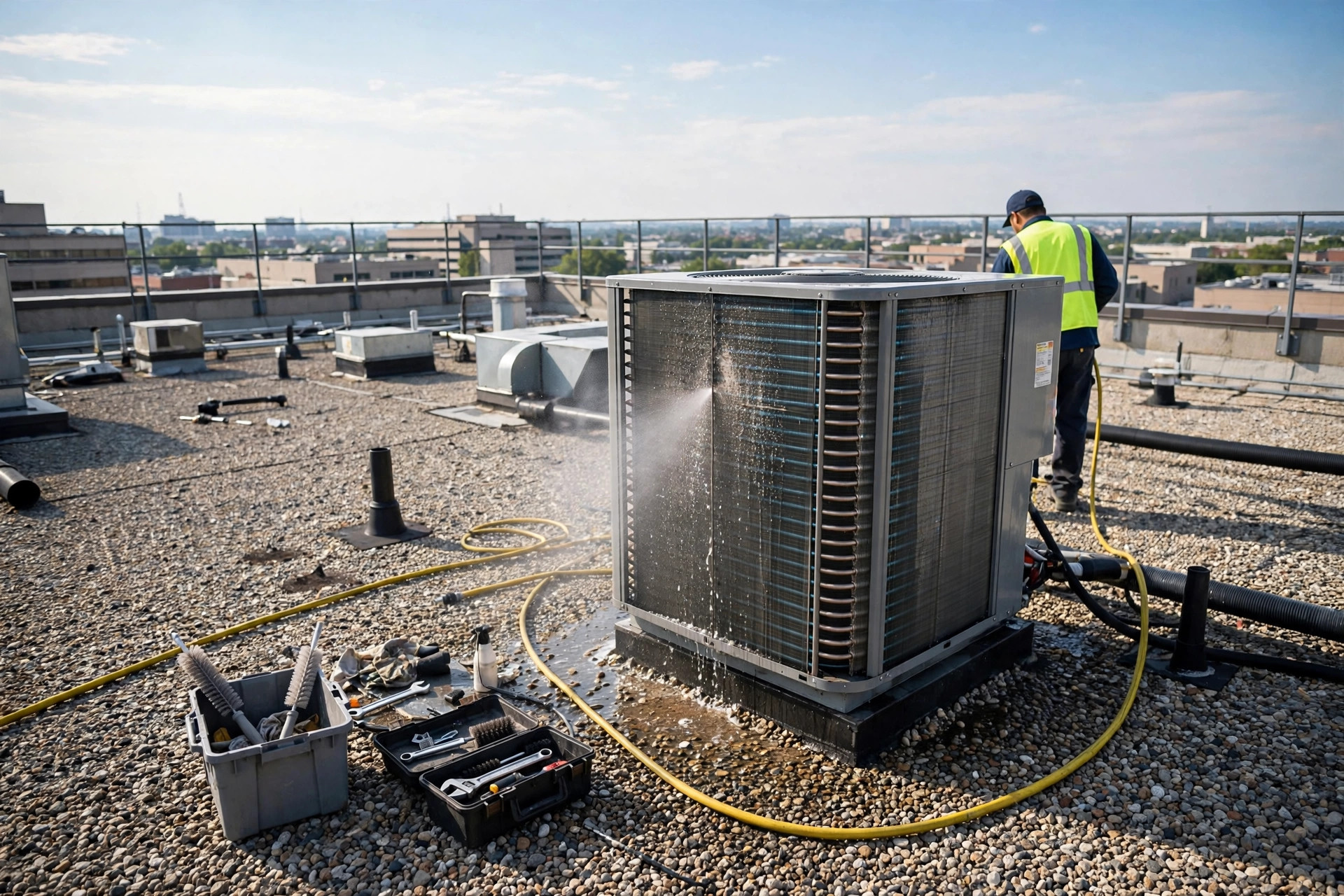
- Coil cleaning. Condenser and evaporator coils collect dirt that blocks heat transfer. Clean them each season.
- Refrigerant check. Verify charge levels and inspect for leaks. Low refrigerant cuts capacity and damages compressors.
- Electrical inspection. Tighten connections. Test capacitors and contactors. Check for worn wiring.
- Belt and bearing check. Inspect belts for cracks. Lubricate bearings. Replace parts showing wear.
- Drain and pan cleaning. Clear condensate lines and pans. Algae and sludge cause backups and ceiling damage.
- Thermostat and control calibration. Verify sensors read correctly. Test sequences of operation.
- Full system performance test. Measure temperature split and airflow. Confirm the unit meets its rated output.
- Licensed commercial HVAC contractor with local references.
- Written task list for every visit, signed off by the tech.
- Reports with photos and measurements after each visit.
- Clear list of included versus billable work.
- Priority emergency response for plan members.
- Contract terms you can exit if service slips.
Miss any of these and gaps open. A plan that skips coils but cleans filters is half a plan. Ask any firm quoting a maintenance plan to list exactly which tasks their visits include.
How Often Should Visits Happen?
Two visits per year is the minimum for most buildings. Spring prepares cooling for summer load. Fall checks the system after the hard season and prepares for heating. Buildings with heavy use, like restaurants and data rooms, need quarterly visits.
Match frequency to the equipment. Rooftop units in dusty areas need more filter attention. Older units need closer electrical checks. Your commercial ac maintenance firm should recommend a schedule based on your building, not a one-size template. Ask them to explain the reasoning.
What a Fair Service Plan Costs
Prices vary by region and unit count. A basic commercial ac maintenance plan for one rooftop unit often runs 200 to 400 dollars per visit. Multi-unit buildings get per-unit discounts. Full-service plans that include minor parts cost more but cap surprises.
Compare plans by task list, not just price. A cheap plan that skips coil cleaning costs more in energy waste. Ask what counts as included versus billable. Get the visit schedule in writing. Ask how emergency calls are handled for plan members. Many firms offer priority response and discounted rates to maintenance customers.
Choosing a Maintenance Partner
Not every HVAC firm does commercial ac maintenance well. Some sell plans and send rushed techs who change filters and leave. Use this checklist before you sign.
Ask to see a sample visit report. A good report shows measurements, photos, and findings. A bad report says “checked system, OK.” Demand the first kind. The [U.S. Department of Energy](https://www.energy.gov/) publishes maintenance guidance that tells you what thorough service looks like.
Compare proposals side by side. Line up the task lists. Note which firms include coil cleaning and which charge extra for it. Note visit counts and response promises. The cheapest bid often drops the tasks that matter most. A mid-priced bid with a full task list beats a low bid with a thin one. Choose substance over the sticker price.
Finally, set a review date. Ninety days after signing, pull the visit reports and the energy bills. Compare against the prior period. If the numbers improved, the partnership is working. If nothing changed, raise it with the firm. A plan that is never reviewed drifts. A plan that is reviewed stays sharp.
DIY Tasks Owners Can Handle
You do not need a tech for everything. Walk the roof monthly. Look for debris around units. Check that filters are being changed. Keep vegetation and stored items away from condensers. Listen for new noises. Note them and tell your tech.
Keep a simple log. Date, unit, what you saw. It takes minutes. This log helps your commercial ac maintenance tech spot patterns. It also protects warranty claims. Most equipment warranties require proof of maintenance. Your log plus the firm’s reports are that proof.
Train staff on the basics too. Show them where the filters are and how to check them. Teach them what normal sounds like so abnormal gets reported. A two-minute monthly walk of each unit by someone who knows the baseline catches problems that a quarterly tech visit might miss. The owner, the staff, and the service firm form a team. Each one covers gaps the others cannot see.
Signs Your Plan Is Working
Watch the numbers. Energy bills should hold steady or drop. Breakdown calls should fall. Comfort complaints should shrink. Equipment should last its full rated life, often 15 to 20 years for well-kept units.
If breakdowns continue despite a plan, question the plan. Ask the firm for visit reports. Compare the task list against the eight above. Gaps reveal the problem. Good commercial ac maintenance shows in the results. Hold your firm to them.
Seasonal Deep-Dive Tasks
Beyond the eight essentials, each season brings extra work. In spring, wash condenser coils thoroughly and check refrigerant lines for winter damage. Verify that economizers open and close freely. Test the full cooling sequence before the first heat wave. Spring is when careful commercial ac maintenance prevents summer emergencies.
In summer, watch run times and energy use. Units running constantly in mild weather signal trouble. Check filters more often during dusty months. Keep vegetation trimmed back from condensers. Growth can choke airflow in weeks. In fall, inspect belts and bearings for wear after the hard season. Clean the coils again. Cover or protect units per the maker’s guidance. Winter is for planning: review the year’s reports, budget replacements, and schedule spring startup early.
[ENERGY STAR](https://www.energystar.gov/) offers building benchmarking tools that show whether your cooling energy use is drifting. Rising use per square foot means the system needs attention. Pair that data with your visit reports. Together they tell the full story of your equipment’s health.
Related Reading
When repairs are needed, see [commercial ac repair](/commercial-ac-repair/). For full HVAC system help, read [commercial hvac repair](/commercial-hvac-repair/). For repair cost guidance, see [commercial air conditioner repair](/commercial-air-conditioner-repair/) when it publishes.
FAQ
How much does commercial ac maintenance cost?
Expect 200 to 400 dollars per rooftop unit per visit in most markets. Multi-unit buildings get discounts. Full-service plans with parts included cost more. Compare task lists, not just prices.
Can I do commercial ac maintenance myself?
Handle filters, visual checks, and keeping units clear. Leave refrigerant, electrical, and coil work to licensed techs. DIY on the wrong task can void warranties and break safety rules.
How long do well-maintained units last?
Fifteen to 20 years is normal for rooftop package units with steady care. Neglected units often fail in ten. Maintenance is the main difference between those numbers.
What if my building has many different unit types?
Tell the firm during the quote. They should tailor the task list and schedule per unit. One template for mixed equipment is a red flag. Ask how they handle each type.
Does maintenance really cut energy bills?
Yes. Dirty coils and filters force longer run times. Restoring them to clean condition can cut cooling energy use by 10 to 15 percent. For large buildings the savings are substantial.
Next Steps
Walk your roof this week. Count your units. Note their age and condition. Call three commercial HVAC firms and ask for written maintenance proposals with full task lists. Compare them against the eight tasks above. Sign with the thorough firm, not the cheapest. Good commercial ac maintenance is the best money a building owner spends. Start this season.



