
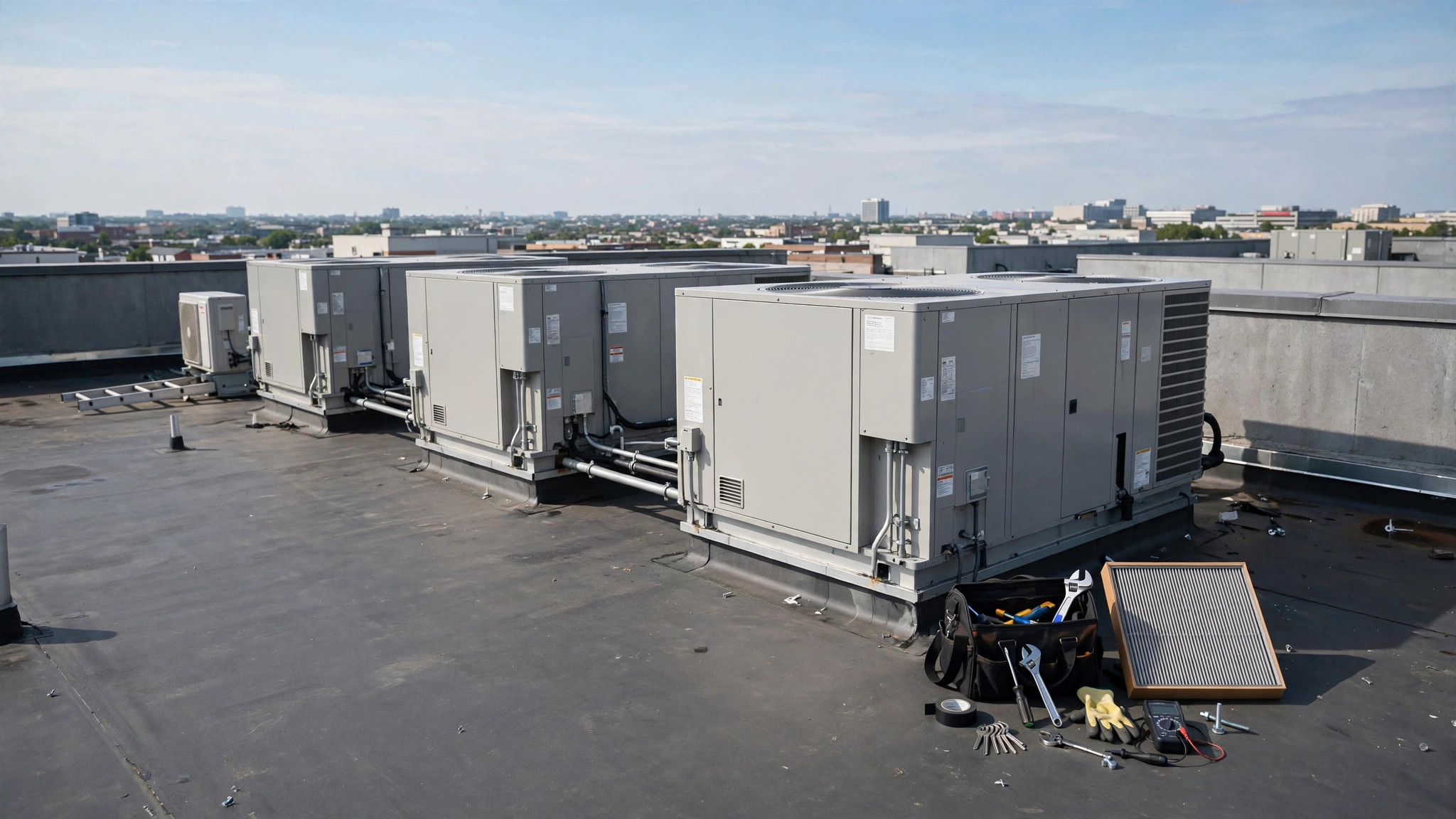
Comfort is a business asset. Tenants renew when the building feels right. Staff work better in steady temperatures. Good commercial air conditioning maintenance delivers that comfort while cutting energy waste and stretching equipment life. This guide gives you ten best practices used by sharp building managers across the country.
Too many owners run cooling until it breaks. Then they pay emergency rates in peak heat. Planned maintenance flips that script. Small, scheduled visits replace big, surprise bills. The practices below work for single rooftop units and for large multi-zone systems alike.
What commercial air conditioning maintenance Really Covers
It is more than filter changes. Full commercial air conditioning maintenance covers the whole cooling chain: air handling, refrigeration, electrical, controls, and drainage. Each link affects the others. A dirty coil raises head pressure. High pressure strains the compressor. The compressor fails early. One skipped task cascades.
A proper program runs on a calendar, not on memory. Spring startup. Mid-season checks. Fall shutdown or changeover. Each visit has a task list. Each visit produces a report. This discipline is what separates real commercial air conditioning maintenance from a tech who swaps filters and waves goodbye.
10 Best Practices for commercial air conditioning maintenance
Apply these ten and your systems will thank you.
- Schedule spring startup before the first hot week. Clean coils, test controls, verify charge. Do not discover problems in a heat wave.
- Change filters on a fixed calendar. Monthly for dusty or high-traffic buildings. Quarterly at minimum everywhere else.
- Clean condenser coils every season. Dirt is the silent efficiency killer. A clean coil can cut run time noticeably.
- Check refrigerant charge and hunt for leaks. Top-offs without leak repair waste money and break the rules.
- Inspect and tighten all electrical connections. Heat loosens terminals. Loose terminals arc and fail.
- Test capacitors, contactors, and relays. These parts are cheap. Their failures are not. Replace them at the first sign of wear.
- Clear condensate drains and treat pans. Clogged drains flood ceilings. A five-minute flush prevents it.
- Calibrate thermostats and sensors yearly. A sensor reading four degrees off runs the unit needlessly all season.
- Verify airflow and duct condition. Leaking ducts waste cooled air into ceiling spaces. Seal what you find.
- Document every visit with measurements and photos. Trends in the data predict failures before they happen.
Post this list in your maintenance office. Review it with your HVAC firm each spring. Solid commercial air conditioning maintenance is simply these ten practices done on time, every time.
Building Your Maintenance Calendar
Timing matters. Spring startup visits should land four to six weeks before peak cooling season. Mid-summer checks catch strain early. Fall visits inspect wear and prepare heating changeover. Buildings with process cooling or server rooms need quarterly visits at minimum.
Write the calendar down. Assign responsibility. Calendars that live in someone’s head get skipped. A written commercial air conditioning maintenance schedule survives staff changes. Review it yearly. Adjust for equipment age and building use.
Tie the calendar to the budget cycle. Spring startup costs land in the operating budget. Replacement reserves build over years. When the finance team sees the plan, they fund it. Surprise breakdowns blow budgets. Planned visits fit them. Present the program as cost control, not cost. The numbers support you.
One more habit seals the program. After each season, hold a short review with your service firm. What broke? What almost broke? What did the energy data show? Fifteen minutes of honest review sharpens next season’s plan. Buildings that review improve every year. Buildings that do not repeat the same surprises.
Budgeting for Maintenance
Plan the spend. A typical commercial air conditioning maintenance visit runs 200 to 400 dollars per rooftop unit. Quarterly service on four units might cost 3,000 to 6,000 dollars a year. Compare that against one compressor failure at 2,000 to 4,000 dollars, plus emergency rates, plus tenant goodwill.
Budget owners also track energy. Well-maintained systems use 10 to 15 percent less cooling energy. On a large building, that saving alone can fund the program. Ask your firm for before-and-after energy comparisons. Good upkeep pays its way in lower bills.
Picking the Right Service Firm
The firm makes or breaks the program. Look for licensed commercial HVAC contractors with buildings like yours on their client list. Ask for a written task list per visit. Ask for sample reports with photos and measurements. Ask how they handle emergency calls for maintenance customers.
Watch for red flags. One-page plans with no task detail. Techs who rush through visits. No reports after service. Prices far below market. Quality commercial air conditioning maintenance takes real time on the roof. If the price seems too low, the visit is too short.
The Role of Building Staff
Your staff are the early warning system. Train them to notice warm zones, new noises, water stains near units, and short cycling. Give them a simple reporting form. Date, unit, symptom. That is enough.
Staff can also handle basics. Filter checks. Keeping units clear of debris and stored items. Not blocking vents and returns. These small habits support the professional commercial air conditioning maintenance program. They never replace it, but they extend its value.
Set up a simple reporting channel. A shared form or even a group message thread works. The key details are the unit location, the symptom, and when it started. Encourage reports of small things. A faint new hum today is a failed bearing next month. Staff who feel heard report early. Staff who get brushed off stop reporting. Thank them for every catch. The cheapest maintenance finding is the one your staff spotted for free.
Tracking Results Over Time
Keep a file per unit. Age, model, refrigerant type. Every visit report. Every repair invoice. Energy use per season. Review the file yearly. Rising energy use signals declining efficiency. Repeat repairs on one unit signal replacement time.
This record also protects you. Equipment warranties often require documented maintenance. Insurance claims go smoother with service history. When you sell the building, the file proves care. Disciplined commercial air conditioning maintenance leaves a paper trail that pays off in many ways.
Common Mistakes Owners Make
Even well-meaning owners undermine their commercial air conditioning maintenance. The biggest mistake is skipping spring startup. The unit sits all winter, then gets slammed by the first heat wave. Coils are dirty. Belts are stiff. Charge may have leaked. Starting blind invites failure.
The second mistake is price-shopping the plan to the bottom. A rock-bottom plan means rushed visits. Rushed visits miss the early warnings. You save a few hundred on the contract and spend thousands on the breakdown. The third mistake is ignoring the reports. Firms send findings. Owners file them unread. Read every report. Act on every recommendation. That is what you paid for.
The fourth mistake is letting staff block vents and returns. Boxes pile up. Furniture shifts. Airflow dies. Zones go warm. The unit works harder for nothing. Walk the space quarterly. Keep air paths clear. Small discipline, big payoff. [ASHRAE](https://www.ashrae.org/) publishes ventilation and maintenance standards that set the bar for professional practice.
Related Reading
For repair guidance, see [commercial ac repair](/commercial-ac-repair/). For broader HVAC coverage, read [commercial hvac repair](/commercial-hvac-repair/). For a shorter checklist version, see [commercial ac maintenance](/commercial-ac-maintenance/) when it publishes.
FAQ
How often does commercial air conditioning maintenance need visits?
Twice a year minimum for most buildings. Quarterly for heavy-use facilities like restaurants, gyms, and server rooms. Match frequency to equipment age and building load.
What does a typical visit include?
Filter service, coil cleaning, refrigerant check, electrical inspection, belt and bearing check, drain cleaning, control calibration, and a performance test. Ask for the full task list in writing before you sign.
How much should commercial air conditioning maintenance cost?
Roughly 200 to 400 dollars per rooftop unit per visit in most markets. Multi-unit sites get discounts. Plans with parts included cost more but limit surprises.
Will maintenance really extend equipment life?
Yes. Well-kept commercial units commonly last 15 to 20 years. Neglected ones often fail around ten. The difference is steady attention to the ten practices above.
Should I bundle heating into the same plan?
Usually yes. Most commercial HVAC firms service both sides. A combined plan costs less than two separate ones and keeps one firm accountable for the whole system. The [U.S. Department of Energy](https://www.energy.gov/) offers seasonal checklists that cover both.
Next Steps
Pull your unit list this week. Note ages and last service dates. Call three licensed commercial HVAC firms for written proposals with full task lists. Compare them against the ten practices above. Choose the thorough firm. Schedule the spring startup now, before the calendar fills. Consistent commercial air conditioning maintenance is the quiet habit behind comfortable, efficient buildings. Make it yours this season. Post the spring and fall task lists in the mechanical room. Visible reminders keep the schedule on track all year.



