
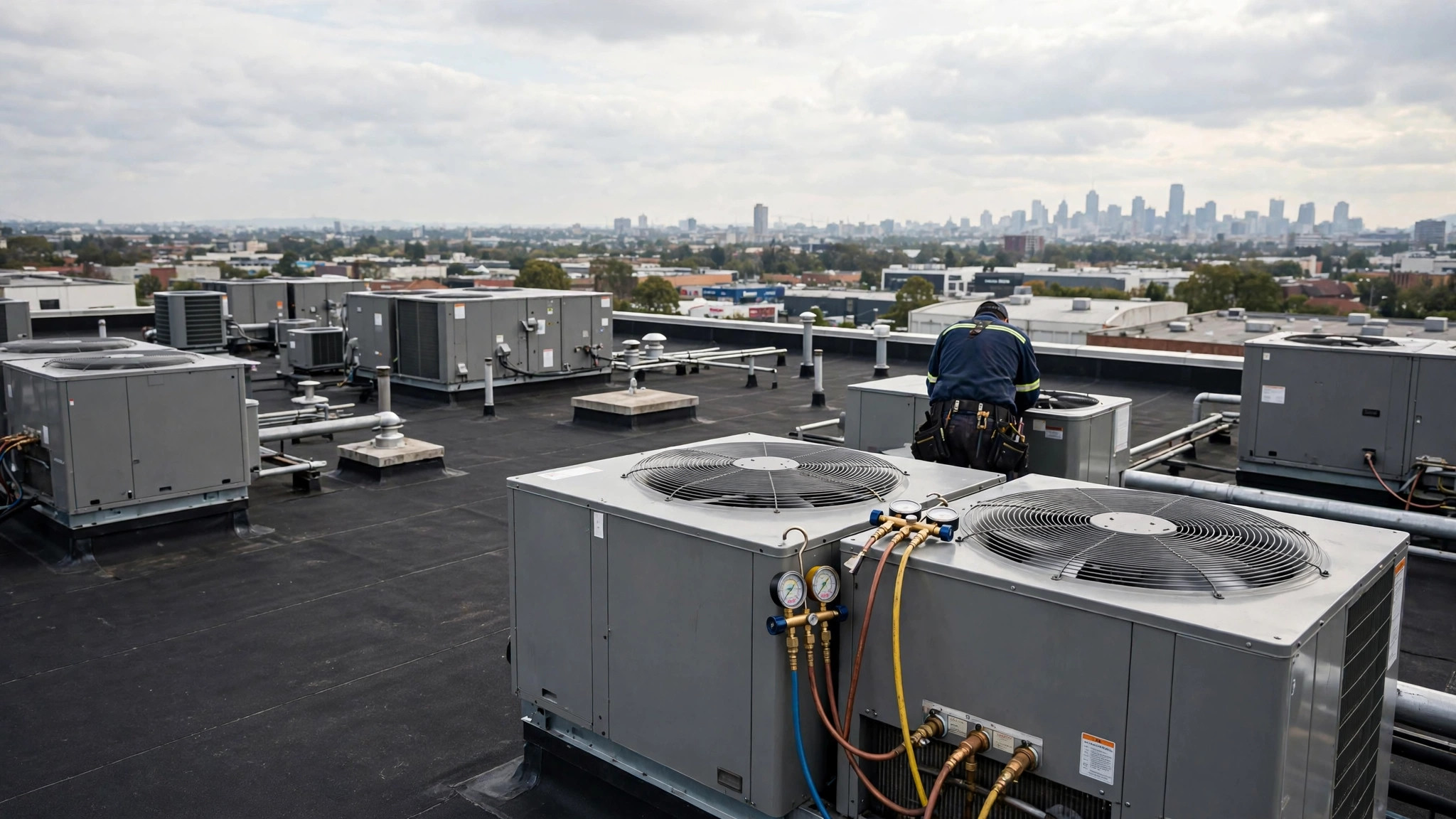
Cooling is not a luxury in a commercial building. It protects inventory, equipment, and people. When the system weakens, comfort drops first and costs rise second. Most owners call for commercial air conditioning service only after a breakdown. The smart ones call at the first warning sign.
This guide gives you ten signs that your building needs commercial air conditioning service. You will also learn what a proper service visit covers, the cost factors that set the price, and how to pick a provider you can trust. Read it before the hot season, not during it.
10 Signs You Need commercial air conditioning service
Watch for these ten. Each one is the system asking for help.
- Weak airflow from vents. Rooms feel stuffy even with the system running. Causes range from clogged filters to failing blowers to crushed ductwork.
- Warm spots that never cool. One zone stays hot while others are fine. This points to controls, dampers, refrigerant issues, or an undersized zone.
- Short cycling. The unit starts and stops every few minutes. This wastes energy and wears parts fast. Thermostat, refrigerant, or electrical faults are usual suspects.
- Strange noises. Grinding, squealing, or banging from the unit or the ducts. Bearings, belts, and loose parts all announce themselves this way.
- Bad odors from vents. Musty smells mean moisture and possible mold in the drain pan or ducts. Burning smells mean electrical trouble. Both need prompt attention.
- Rising energy bills. Cooling costs climb with no change in occupancy or weather. Falling efficiency is often the first sign of a system in decline.
- Excess humidity indoors. The system should dehumidify as it cools. Sticky air means the coil or the drainage is not doing its job.
- Water near the unit. Puddles under air handlers or rooftop units point to clogged drains or frozen coils. Water and buildings do not mix.
- Frequent breaker trips. The system draws too much current. This can signal a failing compressor or motor, and it is a fire risk if ignored.
- Age and neglect. A system that has missed regular service for a long stretch is living on borrowed time. Catch-up service now beats emergency service later.
- System size and type. A small split system costs less to service than a large rooftop unit or a chiller. More capacity means more time on site.
- Access difficulty. Rooftop units need safe roof access. Tight mechanical rooms slow the work. Difficult access adds labor hours.
- System condition. A well-kept system services fast. A neglected one needs extra cleaning, extra parts, and extra diagnosis. Neglect bills you twice.
- Parts needed. Filters and belts are cheap. Contactors and capacitors cost more. Compressors and coils are major expenses. The tech should show you the failed part.
- Refrigerant work. Leak detection and recharge add time and material cost. Topping off without finding the leak is money thrown away. Insist on leak repair.
- After-hours timing. Nights, weekends, and heat waves carry premiums. If the building can wait safely, a scheduled visit costs far less.
- Contract versus one-time. Service plans usually price each visit lower than one-time calls. They also include priority response. Do the math for your building.
Two or more signs at once means call this week. Do not wait for a full failure.
What a commercial air conditioning service Visit Covers
A real service visit follows a checklist. Know it so you can tell a real visit from a drive-by.
The tech starts with the air side. Filters get inspected and replaced. Coils get checked and cleaned. Blower wheels and belts get inspected. Supply and return temperatures get measured. Weak airflow found here gets fixed here.
Then the refrigerant side. Pressures and temperatures get measured against the nameplate. Low charge means a leak, and a good tech finds the leak instead of just topping off. Superheat and subcooling readings tell the story of system health.
Electrical comes next. Contactors, capacitors, and wiring get inspected. Amp draws get measured on motors and the compressor. Loose connections get tightened. Electrical faults cause a large share of breakdowns, so this step matters.
Controls and thermostats get verified. Setpoints, schedules, and sensors get checked against actual conditions. A system fighting its own controls wastes energy around the clock.
Drainage gets cleared. Condensate drains clog with algae and debris. A clogged drain floods ceilings. Clearing it takes minutes and prevents thousands in damage.
The visit ends with a written report. Readings, findings, parts replaced, and recommendations. No report means no proof of work. A proper commercial air conditioning service visit always leaves paper behind.
Between visits, your staff can help. Keep filters changed on schedule. Keep outdoor units clear of debris and vegetation. Report new noises and smells fast. Small habits stretch the time between service calls.
Cost Factors for commercial air conditioning service
Prices vary. These factors set yours.
A standard commercial air conditioning service visit for a typical rooftop unit runs a few hundred dollars. Add parts as needed. Major component replacement is a separate quote. Get every quote in writing with parts and labor split. If a number surprises you, ask which factor drives it.
Beware the too-cheap visit. A rock-bottom price often means a quick filter swap with no real checks. You paid for the checklist. Make sure the checklist happened. Ask to see the report before the tech leaves.
Choosing a commercial air conditioning service Provider
Cooling work needs licensed, insured pros. Verify the license with your state or city office. Confirm general liability and workers compensation insurance. Ask for proof, not promises.
Look for commercial experience specifically. Residential techs may not know rooftop units, economizers, or building controls. Ask what share of their work is commercial. Ask for references from buildings like yours and call them.
Check certifications. NATE certification marks trained technicians. Factory certification on your equipment brand means better parts access and stronger warranty support. Ask who holds the certs: the company or the tech on your roof.
Ask about their diagnostic process. A good provider measures: pressures, temperatures, amp draws, airflow. A weak one guesses and swaps parts. Ask what readings they take on a standard visit. The answer reveals the method.
Response time matters in cooling season. Ask for the guaranteed emergency response time under a service plan. Get the number in writing. “Priority service” with no number attached is marketing, not a promise.
The [ENERGY STAR program](https://www.energystar.gov/) offers building tools for tracking cooling efficiency. The [Department of Energy](https://www.energy.gov/energysaver/central-air-conditioning) explains central air basics every owner should know. [ASHRAE](https://www.ashrae.org/) publishes the standards behind commercial system design and indoor air quality.
Get three quotes for major work. Compare scope line by line. The cheapest commercial air conditioning service bid that skips real diagnostics is the most expensive one by the end of the season.
Maintenance Between Visits
The service plan handles the technical work. Your staff handles the simple stuff that keeps the system healthy.
Change filters on the schedule the tech sets. Mark it on a calendar someone actually checks. Keep outdoor condensers clear of trash, pallets, and plant growth. Two feet of clear space is the rule of thumb.
Keep the thermostat areas clear. Sensors blocked by furniture or curtains read wrong and drive the system crazy. Report hot spots, new noises, and odors the day they appear. Early reports are cheap. Late reports are breakdowns.
Log every visit and every filter change. Note the date and what was done. This log helps the next tech, supports warranty claims, and shows insurers you maintain the building. Paper protects you.
Related Reading
For heating-side help, see [commercial HVAC repair](/commercial-hvac-repair/). For whole-system contractors, read our guide that pairs with commercial air conditioning service planning. For roof-mounted equipment, [commercial roof repair](/commercial-roof-repair/) covers the roof side.
FAQ
How often should service happen?
Most commercial systems need professional attention at least twice each cooling season, plus a heating check. High-use buildings like restaurants and clinics need more. Ask your provider to justify the schedule for your building.
Can staff handle filter changes?
Yes. Filter changes, keeping units clear, and reporting symptoms are perfect staff tasks. Leave refrigerant, electrical, and controls work to the licensed tech. The line between staff tasks and pro tasks keeps everyone safe.
Why does my system freeze up?
Low airflow from dirty filters or coils is the top cause. Low refrigerant from a leak runs second. Both need a commercial air conditioning service visit. Do not just thaw it and hope. The cause is still there.
Is a service plan worth it?
For most commercial buildings, yes. Plans cut the per-visit cost, guarantee response times, and build an equipment history that helps with warranty claims. Compare the plan price against two one-time visits to see the math.
Repair or replace: how do I decide?
When a major component fails on an old, inefficient unit, get both numbers in writing: repair cost and replacement cost with efficiency savings. A good provider shows the math instead of pushing one option.
Next Steps
Walk your building this week with the ten signs in hand. Note every weak vent, odd noise, and warm spot. Then call three providers for commercial air conditioning service quotes on a maintenance plan. Compare the checklists, not just the prices. Sign the plan before the hot season hits. A scheduled commercial air conditioning service visit in spring beats an emergency call in a heat wave every time.



