
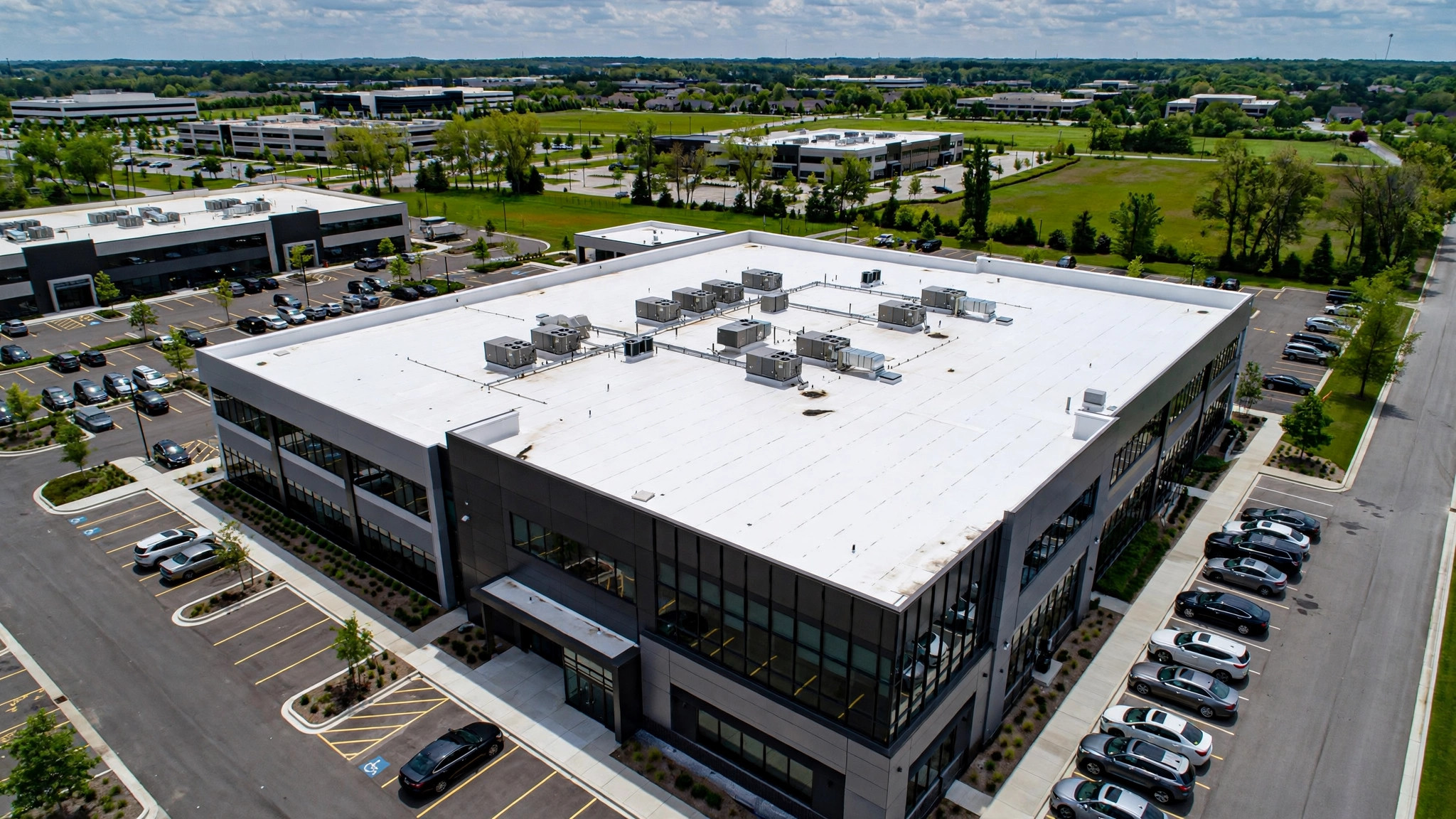
Your roof leaks. Or it is old enough that leaks are coming. Either way, you need a commercial roofing company you can trust with your building. The wrong choice costs you twice: once for the bad job, once for the fix. This guide gives you nine questions that reveal the truth about any firm.
Hiring a roofer feels risky because the work happens where you cannot watch. You are buying trust as much as labor. These nine questions cut through the sales talk. Use them on every bidder. The answers will tell you who to hire.
9 Questions to Ask Every commercial roofing company
Ask these in order. Write down the answers. Compare bidders side by side.
- Are you licensed and insured for commercial roofing? Verify the license with your state board by phone. Get the insurance certificate from their insurer, not from the salesman. Confirm workers compensation is current.
- How many commercial roofs did you install or replace last year? You want a real number. A good roofer should do commercial work weekly, not occasionally. Ask which systems they installed.
- Can I visit a recent job site? Driving past a finished roof tells you plenty. Even better, ask for a project in progress. How the crew keeps the site says everything about the firm.
- Who will supervise my project daily? Get the foreman's name and experience. The salesperson will not be on your roof. The foreman will. Interview that person.
- What exactly is included in your quote? Demand line items: tear-off, materials by product name, labor, flashing, drains, disposal, permits. A lump sum hides shortcuts.
- What warranties do you offer, in writing? You need both the manufacturer warranty on materials and the contractor's warranty on workmanship. Get the terms, length, and exclusions on paper.
- How do you handle unexpected problems? Decks rot. Structures surprise. Ask how change orders get priced and approved. Vague answers here cost you later.
- What is your safety record and plan? Roofing is dangerous work. OSHA rules apply to your site. Ask for their safety plan. OSHA's fall protection guidance at osha.gov shows what a compliant plan covers. A firm without one is a liability risk for you.
- What happens after the job? Ask about maintenance plans, inspection schedules, and who to call if a leak appears. A roofer that vanishes after payment is no partner.
Firms that answer all nine clearly are worth their price. Firms that dodge two or more are telling you something. Listen.
Checking a commercial roofing company Background
Questions are step one. Verification is step two. Call the state licensing board. Confirm the license is active and in the right class. Check for complaints or suspensions. This takes ten minutes.
Call the insurer on the certificate. Confirm the policy is current and covers commercial roofing work. Expired insurance is common among struggling firms. Do not take their word for it.
Search court records for lawsuits. A pattern of disputes with customers or suppliers is a red flag. One old case may mean nothing. Five recent ones mean everything. Also check the Better Business Bureau profile. Look at complaint patterns, not just the letter grade.
Ask for financial references. A stable firm pays suppliers on time. Supplier liens on past jobs are a warning sign. You do not want a lien on your building because your roofer stiffed the material supplier.
Fair Pricing From a commercial roofing company
Know the market before you negotiate. Small commercial repairs run 300 to 1,500 dollars. Partial re-roofing runs 4 to 8 dollars per square foot. Full replacement runs 8 to 16 dollars per square foot depending on the system and region. Coatings run 3 to 7 dollars per square foot.
Get at least three bids. If all three cluster, that is your market. If one is far below, the scope is thin or the crew is cutting corners. If one is far above, ask what extra value justifies it. Sometimes the answer is real: better materials, longer warranty, certified crew.
Never choose on price alone. The cheapest commercial roofing company often becomes the most expensive after the rework. Weight the nine answers above at least as heavily as the number. A careful mid-priced bid usually wins.
Red Flags in a commercial roofing company
Watch for these warning signs at every stage.
Storm chasers. Out-of-state plates after a storm. They take deposits and leave town. Hire local firms with local addresses and local reputations to protect.
High-pressure sales. Sign today or the price doubles. A real firm lets you compare bids. Pressure hides weakness.
Full payment upfront. Standard terms are a deposit with progress payments and final payment on completion. Full upfront payment is a exit plan, not a business practice.
No written warranty. Verbal promises evaporate. If the workmanship warranty is not on paper, it does not exist.
Cash only. Legitimate firms take checks and cards. Cash-only deals avoid paper trails. You want a paper trail.
No permit talk. Most commercial roofing needs permits. A firm that says you do not need one is either ignorant or avoiding inspection. Either way, walk away.
What the Contract Must Contain
A proper contract from your roofer includes these items.
Complete scope. Every work area named. Materials listed by manufacturer and product. Labor described. Start and finish dates stated.
Payment schedule. Deposit amount, progress milestones, and final payment tied to completion and your walk-through approval.
Warranty terms. Both manufacturer and workmanship warranties spelled out: length, coverage, exclusions, and the process for claims.
Change order rules. Written approval required before extra work. Pricing method stated in advance. Never allow open-ended changes.
Cleanup and disposal. Who removes old material. Dump fees listed. Site protection described. Your parking lot should not become a dump.
Insurance proof. Certificates attached to the contract. You named as certificate holder. Coverage dates spanning your project.
Read it all. Ask about every unclear line. A good commercial roofing company explains patiently. An evasive one is hiding terms you would not like.
Warranties Worth Having
Two warranties matter. The manufacturer warranty covers material defects. Lengths run 10 to 30 years depending on the system. It requires proper installation by certified crews. Using the wrong installer can void it.
The workmanship warranty comes from the commercial roofing company itself. It covers installation errors. One to five years is normal. Ten years from an established firm is excellent. Get it in writing with clear terms.
Know what voids each warranty. Ponding water, unauthorized repairs, and lack of maintenance are common exclusions. Follow the maintenance requirements. Keep inspection logs. File warranty papers where you can find them. Note end dates on your calendar.
Related Reading
For repair costs, see [commercial roof repair](/commercial-roof-repair/). For metal roof specifics, read [commercial metal roof repair](/commercial-metal-roof-repair/). For repair company profiles, see [commercial roof repair company](/commercial-roof-repair-company/).
After You Hire: Managing the Project
Hiring right is half the job. Manage the project well too. Walk the site with the foreman on day one. Confirm the material delivery matches the contract. Wrong materials delivered are a classic bait and switch. Check labels before they go on the roof.
Visit the site regularly. You do not need to climb up. Watch from the ground. Note crew size, work hours, and site cleanliness. A professional crew keeps an orderly site. Chaos on the ground means chaos on the roof.
Document everything. Photograph each phase. Keep every email. Note dates of delays and their causes. This record protects you if disputes arise. Most disputes favor the owner with the better paper trail.
The [National Roofing Contractors Association](https://www.nrca.net/) publishes guides for building owners on hiring and managing roofing projects. Their materials are written for owners, not roofers. Read one before your project starts.
FAQ
How do I find a reputable commercial roofing company near me?
Start with manufacturer websites. Major membrane makers list certified contractors by area. Cross-check with state licensing boards and recent local references. Drive past finished jobs.
Should I get multiple bids from a commercial roofing company?
Yes, at least three. Compare scope line by line, not just totals. The nine questions above matter more than the price. The careful middle bid usually offers the best value.
What is a fair deposit for a commercial roofing company?
Ten to thirty percent is standard for large projects, with progress payments tied to milestones. Never pay in full before work starts. Final payment comes after your walk-through approval.
How long does a commercial roofing company warranty last?
Workmanship warranties run one to five years typically, longer from established firms. Manufacturer material warranties run ten to thirty years. Get both in writing with clear terms.
Can a commercial roofing company help with insurance claims?
Yes. Good firms document storm damage, meet adjusters on the roof, and provide written estimates. But you file the claim. Never sign over your claim rights to any contractor.
Next Steps
List three local firms this week. Run each through the nine questions. Verify licenses and insurance by phone. Drive past their recent jobs. Get written line-item bids from the firms that pass. Compare scope, warranty, and price side by side. Hire the careful commercial roofing company, not the cheapest. File the contract and warranties where you can find them. A good roofer is a long-term partner for your building. Choose well once.



