
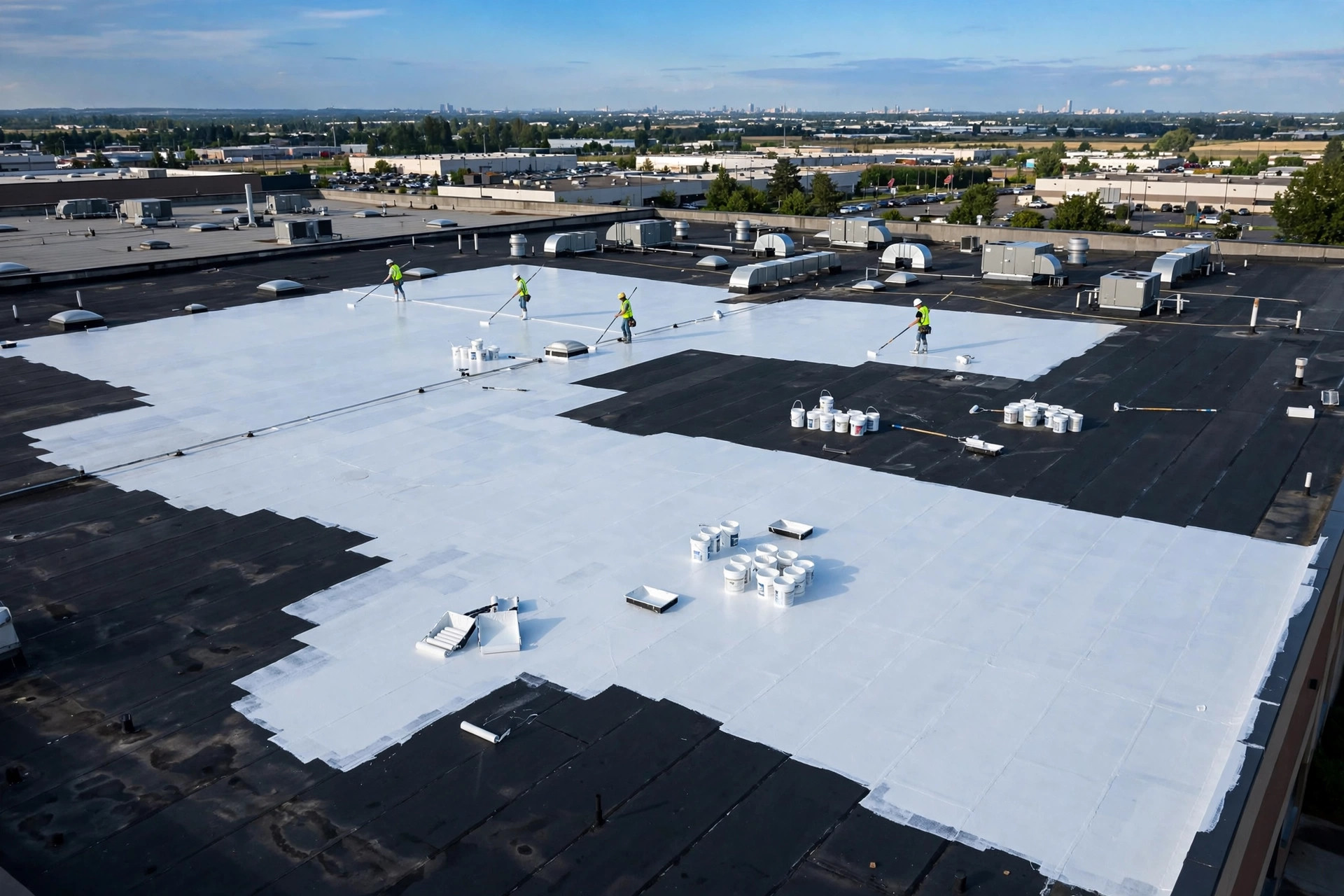
A roof coating can add ten or more years to a commercial roof at a fraction of replacement cost. But only if the right crew applies the right product. Commercial roof coating contractors vary widely in skill and honesty. A bad coating job peels in two years and wastes your money. This guide teaches you what coating contractors do, the nine questions that reveal the good ones, coating types, and real costs.
What commercial roof coating contractors Do
These specialists restore aging roofs with liquid-applied coatings. The coating forms a seamless waterproof skin over the existing roof. It seals small cracks, reflects sun, and slows aging. It is not paint. It is a thick engineered membrane applied in layers.
The job starts with preparation. The crew cleans the roof, often with pressure washing. They repair seams, flashing, and punctures first. Coating over damage is a waste. Then they apply primer where needed and spray or roll the coating to a specified thickness. Thickness is measured in dry mils and verified during the job.
Good commercial roof coating contractors also handle details that make or break the job. They mask equipment and walls. They work in the right weather window. They document the applied thickness. They register the warranty with the manufacturer. The product matters, but the prep and application matter more.
9 Questions to Ask commercial roof coating contractors
Interview every bidder with these nine questions. Write down the answers.
- What coating systems are you certified to install? Maker certification means factory training and warranty backing. Uncertified crews cannot offer real warranties.
- How do you prepare the roof before coating? The answer should include cleaning, repairs, and priming. &Quot;We just spray it on" is a disqualifier.
- What dry mil thickness will you apply? Coatings work by thickness. Get the number in writing and ask how they verify it during the job.
- Which coating type do you recommend for my roof, and why? The answer should match your roof type and climate, not just their favorite product.
- What is the warranty, and who backs it? Distinguish the maker warranty from the contractor warranty. Get both in writing.
- How do you handle seams and flashing before coating? These details fail first. The crew should repair them as part of prep, not coat over them.
- What weather conditions do you require? Coatings need dry weather and proper temperatures to cure. A crew that coats in any weather cuts corners.
- Can I see a job you coated three or more years ago? Recent work always looks good. Aged work shows the truth. Call that owner.
- What does the price include, line by line? Prep, repairs, primer, coating, thickness verification, cleanup, warranty registration. Every line should be named.
Compare answers across bidders. The careful firms give specific answers. The weak ones give slogans.
Coating Types commercial roof coating contractors Apply
Four main coating families dominate commercial work. Each suits different roofs.
Acrylic coatings are the most common. They are water-based, easy to apply, and highly reflective. They cut cooling costs well. Their weakness is ponding water, which softens acrylic over time. They suit sloped or well-drained roofs best.
Silicone coatings resist ponding water better than any other type. They stay flexible and waterproof in standing water. They cost more than acrylic and attract dirt, which dulls reflectivity. They suit flat roofs with drainage issues.
Polyurethane coatings are the toughest. They resist foot traffic and impact well. They suit roofs with heavy service traffic. They cost the most and need careful application. Two-part formulas demand skilled crews.
Asphalt-based coatings, including aluminum roof coatings, suit built-up and modified bitumen roofs. They are the budget option. They reflect less sun than white acrylic or silicone. They work well as a protective layer over aging asphalt systems.
Your contractor should recommend based on your roof type, drainage, traffic, and climate. One product for every roof is a sales pitch, not advice. The [U.S. Department of Energy](https://www.energy.gov/) explains how reflective coatings cut cooling loads on commercial buildings.
Cost Factors for commercial roof coating contractors
Coating costs run 1 to 4 dollars per square foot installed. Here is what moves the number within that range.
Roof condition drives prep cost. A clean sound roof needs little prep. A dirty roof with many repairs needs days of work before coating starts. Prep often costs as much as the coating itself.
Coating type sets material cost. Acrylic costs least. Silicone and polyurethane cost more. The price gap reflects real performance differences, so compare on value, not just price.
Thickness requirements matter. More dry mils mean more material and more labor. A 20-mil system costs notably more than a 10-mil system. Thicker usually lasts longer. Get the thickness the warranty requires.
Roof size affects the per-foot price. Large open roofs coat fast and price low per foot. Small cut-up roofs with many penetrations take longer and price higher. Access matters too. Difficult access adds labor hours.
Warranty length adds cost. Longer maker warranties require thicker systems and certified installers. A 10-year warranty system costs more than a 5-year one. The extra years are usually worth the premium.
Get every quote broken down by prep, material, and labor. This breakdown lets you compare bids honestly instead of guessing what each includes.
Related Reading
For repair work before coating, see [commercial roof repair](/commercial-roof-repair/). For flat roof specifics, read [commercial flat roof repair](/commercial-flat-roof-repair/). For general restoration planning, see [commercial roofing repair](/commercial-roofing-repair/).
Red Flags with commercial roof coating contractors
Some behaviors should end the bid on the spot. A contractor who skips the roof inspection and quotes from the ground is guessing. Coating starts with knowing the roof. No inspection means no real quote.
Watch for single-product pushers. A firm that sells only one coating will recommend it for every roof. Good contractors match the product to the roof. Ask what they install besides their top recommendation. Silence is an answer.
Beware the too-thin promise. Coatings protect by thickness. A bid far below the others often means a thin application that fails early. Ask every bidder for the dry mil thickness in writing. Compare that number, not just the price.
Check the warranty paper trail. Some firms promise a maker warranty they cannot deliver because they lack certification. Call the manufacturer to confirm the contractor is certified. This one call prevents the most common coating scam.
Finally, watch the weather plan. Coatings that cure in rain or cold will fail. A crew with no weather standards has no quality standards. The [National Roofing Contractors Association](https://www.nrca.net/) offers owner guidance on coating projects worth reading before you sign.
Maintaining Your Coated Roof
The coating is on. Now protect it. Qualified commercial roof coating contractors will tell you the same thing: a coated roof still needs regular care. Inspect it twice a year, just like any commercial roof. Clear drains and debris. Look for thin spots, peeling edges, and new punctures.
Recoat touch-ups are cheap when caught early. A small worn area gets a spot coat in minutes. Left alone, it grows into a failed section that needs full rework. Keep foot traffic on walk pads. Train service techs to stay off the coated field where possible.
Keep your warranty papers and the thickness report in your building file. Most maker warranties require periodic inspections to stay valid. Note each visit with dated photos. When the coating nears the end of its life, a fresh topcoat often renews the system for another cycle. That second coating costs less than the first, because the prep is lighter. Maintenance turns a one-time project into a long-term roofing strategy.
FAQ
How long does a roof coating last?
Five to fifteen years depending on the product, thickness, and roof condition. Silicone and polyurethane on well-prepped roofs last longest. Ask your contractor for the expected life of the specific system quoted.
Can any roof be coated?
No. Roofs with soaked insulation, structural damage, or widespread membrane failure need repair or replacement first. Coating seals a sound roof. It cannot fix a failed one. A moisture survey settles the question.
Do commercial roof coating contractors also do repairs?
Good ones do. Proper prep includes repairing seams, flashing, and punctures before coating. A contractor who will not do prep work is not a real coating contractor. Walk away.
Will a coating lower my energy bills?
White reflective coatings cut cooling costs noticeably, especially in hot climates. ENERGY STAR resources at [energystar.gov](https://www.energystar.gov/) document typical savings from cool roof coatings. Dark coatings protect without the energy benefit.
How do I verify the applied thickness?
Ask the contractor to take wet mil readings during application and report dry mil results after. Some owners hire an independent inspector for this check. It is cheap insurance on a large job.
Next Steps
Get a roof inspection first to confirm your roof is a coating candidate. Interview three certified commercial roof coating contractors with the nine questions above. Ask each of the commercial roof coating contractors for a reference roof you can visit. Seeing real commercial roof coating contractors’ work beats any brochure. Compare dry mil thickness, prep scope, and warranty terms, not just price. Check certification with the manufacturer. A well-chosen coating buys your roof a decade of extra life. Start the interviews this month.



