
Finding good commercial roofing contractors takes more than a search and a phone call. Your roof guards inventory, equipment, and people. A bad install can cost ten times the savings from a cheap bid. This guide gives you ten plain hiring rules. Follow them and you will hire with confidence.
Bad commercial roofing contractors leave behind leaks, voided warranties, and court battles. Good ones earn trust through clean work and straight talk. The difference shows in the first visit. Watch how they inspect. Listen to how they explain. Trust your eyes and your notes.
What commercial roofing contractors Actually Do
Commercial roofing contractors install, repair, and maintain roofs on office buildings, warehouses, stores, and factories. The work differs from house roofs. Commercial roofs are mostly flat or low slope. They use membranes, built-up layers, metal panels, or coatings. The tools and skills are different.
The best commercial roofing contractors also do inspections and leak tracing. They write maintenance plans. They handle warranty paperwork with makers. They help with insurance claims after storms. Think of them as your roof partner, not just a repair crew.
Scope matters. Some commercial roofing contractors handle new builds only. Others focus on repairs. Ask what share of their work is service versus replacement. A firm that lives on service knows repairs. A firm that lives on new builds may push replacement too fast.
10 Rules for Hiring commercial roofing contractors
Here are ten rules that separate solid firms from risky ones. Use them in order. Skip none.
- Verify the license. &Quot;Call your state or county office and ask if the license is current. Ask if complaints were filed in the last few years. A license is a floor, not a ceiling. It proves basics. It does not prove skill. Still, no license means no deal."
- Confirm insurance in writing. &Quot;Ask for the certificate of insurance. Call the insurer to confirm it is active. You want general liability and workers compensation. No insurance means the risk sits with you. One injury without coverage can land on your books."
- Match them to your roof type. &Quot;Ask the commercial roofing contractors how many roofs like yours they finished in the last season. Membrane, metal, and built-up all differ. A crew that shines on metal may fumble on single-ply. Match skill to roof."
- Call local references. &Quot;Ask for three building owners near you. Call all three. Ask if the crew finished on time. Ask if leaks came back. Ask if the owner would hire them again. References beat brochures every time."
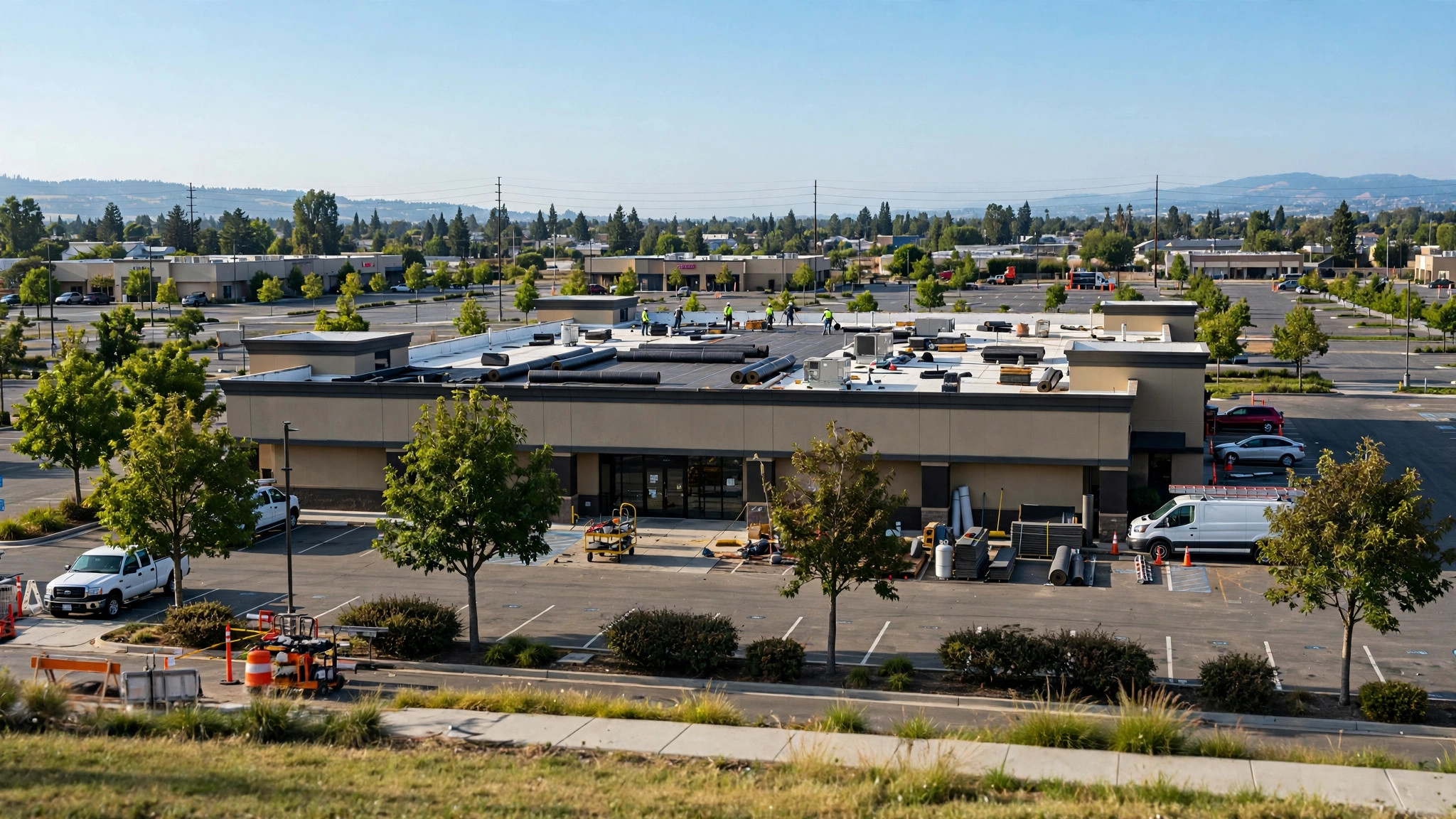
- Insist on a roof walk. &Quot;Real commercial roofing contractors climb up and walk the roof. They probe seams. They check drains and flashing. They take photos of each fault. Firms that quote from the parking lot are guessing. Do not pay for guesses."
- Demand line items. &Quot;Each repair point named. Materials by type and amount. Labor hours or flat labor. Start and end dates. Warranty terms in writing. One lump sum with no detail is a red flag. Paper protects both sides."
- Meet the foreman. &Quot;Ask who does the actual work. Some firms send day labor with no training. You want a trained crew under a real foreman. Get names. The foreman runs the job, not the salesperson."
- Compare three bids on equal scope. &Quot;Give each firm the same scope in writing. Then compare line by line. Low bids win by cutting something. Find what got cut. Often it is the warranty. Sometimes it is the material grade."
- Check maker certification. &Quot;Ask the commercial roofing contractors which membrane makers certified them. Verify on the maker website. Certified installers keep your material warranty valid. Uncertified work can void it."
- Read the warranty first. &Quot;Two warranties exist. The maker covers material defects. The contractor covers workmanship. Read both before you sign. Know what voids them. Get the workmanship term in writing. One to five years is normal for repairs."
- License number and the office that issued it, verified by your call.
- Insurance certificates confirmed active with the insurer.
- Three local references called, with notes on each call.
- Foreman name and crew experience on your roof type.
- Written scope naming every repair point.
- Materials by brand, type, and amount.
- Start date, finish date, and the rain plan.
- Workmanship warranty terms in writing.
- Payment schedule with a holdback at the end.
- Cleanup and disposal plan for tear-out waste.
The First Visit: What Good commercial roofing contractors Do
The first visit tells you most of what you need. Good commercial roofing contractors arrive on time with a ladder and a camera. They ask about leak history before they climb. They want to know where water shows inside and when it started.
On the roof they move slowly. They probe seams with a tool. They lift flashing edges. They check drains for clogs. They look at ponding areas. They photograph every fault with a note. The visit takes an hour or more on a mid-size building. A ten-minute glance is not an inspection.
Afterward they explain in plain words. They rank faults by urgency. They tell you what can wait and what cannot. They leave a written summary. If the visit felt rushed or vague, trust that feeling. Hire the firm that acted like a doctor, not a salesman.
Red Flags That End the Deal
Some signs mean walk away. No license or an expired one. No insurance certificate. A quote written on a scrap with one number. Pressure to sign today. A demand for full payment before work starts. Each one predicts trouble.
Watch the language too. Vague words like fix roof say nothing. No mention of warranty says plenty. A firm that badmouths every competitor is hiding its own gaps. Trust the one that explains calmly and writes things down.
Cash-only deals are a hard no. No written contract is a hard no. A crew that cannot name your roof type is a hard no. Safety matters as well. Roof work injures people every year. Ask about fall protection plans. The [Occupational Safety and Health Administration](https://www.osha.gov/) sets the federal safety rules every crew must follow.
Vetting Checklist for commercial roofing contractors
Print this list. Ask every question. Write down the answers.
How commercial roofing contractors Price Their Work
Pricing follows the work. Small repairs price by the visit. Big jobs price by area and material. Labor is the largest line. Material grade moves the number up or down. Access and height move it too.
Ask each firm to price the same scope. Then the numbers mean something. A low bid that skipped the drains is not a low bid. It is an incomplete bid. Equal scope first, then compare.
Never pay in full up front. A common split is a small deposit, progress draws, and final pay on completion. Hold the last ten percent until you walk the finished work. Money is your leverage. Keep it.
Warranties Worth the Paper
Two warranties matter. The maker warranty covers material defects. The contractor warranty covers install mistakes. Most repair fights are about the second one. Read it with care.
Know what voids cover. Ponding water, new rooftop equipment, and heavy foot traffic often void it. Ask about each one. Get the answers in writing. Surprises in warranty terms are never good.
File the papers with your roof file. Mark the end date on your calendar. If a leak shows under warranty, call fast. Waiting can void the claim. Good commercial roofing contractors honor their paper. Keep yours ready to prove your side.
Related Reading
When you need a firm to hire, see [commercial roof repair company](/commercial-roof-repair-company/). For repair basics and cost factors, read [commercial roof repair](/commercial-roof-repair/). For the full repair guide, see [commercial roofing repair](/commercial-roofing-repair/).
FAQ
How many commercial roofing contractors should I interview?
Three at least. More if the job is large. Each visit teaches you something. By the third visit you will know a fair price.
Do I need a license check for small repairs?
Yes. Job size does not change the risk. Unlicensed work voids warranties and invites fines. Always verify the license.
Should the firm handle the permit?
In most cities yes. Roofing permits are common for commercial work. The firm should know local rules and file the papers. Ask who handles it before you sign.
What if one bid is far below the others?
Find out why. It may skip scope, use thin materials, or carry no warranty. Sometimes the firm is just hungry for work. Make the scopes equal first, then decide.
Can I negotiate the price?
Yes, on scope and timing. Not on safety or warranty. Ask which changes move the price. Pick the changes you can live with. The [National Roofing Contractors Association](https://www.nrca.net/) publishes owner guides that help you judge fair terms.
Next Steps
Start this week. List three commercial roofing contractors near your building. Call each one. Ask for license and insurance first. Schedule walk inspections. Compare written quotes line by line. Call the references. Pick the careful crew, not the cheapest. Your roof protects everything under it. Hire like it matters.



