
The wrong contractor costs more than the right one. A bad install wastes energy for season after season of utility bills. A sloppy repair fails again in months. When your building needs heating and cooling work, hvac commercial contractors are the firms you call. Picking well is the highest-leverage decision a building owner makes.
This guide gives you eight hiring tips for hvac commercial contractors. You will learn what these firms do, the red flags that mark a bad one, what a fair quote looks like, and the exact questions to ask before you sign. Read it before you take bids.
What hvac commercial contractors Do
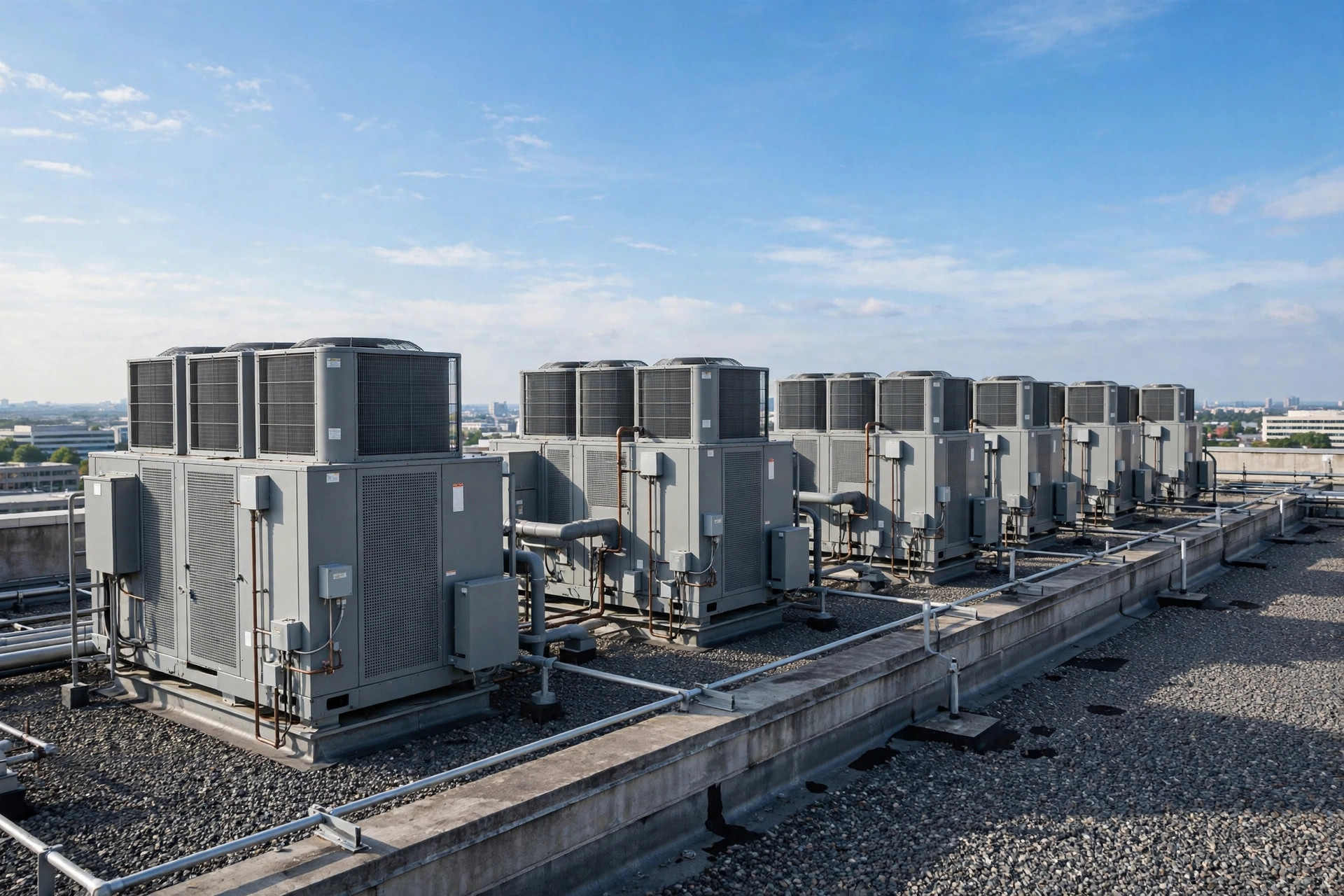
Hvac commercial contractors design, install, repair, and maintain heating, ventilation, and air conditioning systems in commercial buildings. Their work covers rooftop units, chillers, boilers, split systems, ventilation ductwork, and building controls. It is a different trade from residential HVAC. The equipment is bigger, the controls are more complex, and the stakes are higher.
A full-service firm handles all of it. They survey your building and its loads. They size equipment correctly, which matters more than most owners know. Oversized units short cycle and waste energy. Undersized units never catch up on hot days. Then they install, commission, and service the system on a maintenance plan.
Some firms only do service and repair. Others only do new installs. Know which type you are talking to before you describe your job. A service-only shop is fine for repairs. A design-build firm fits a full system replacement. Matching the firm to the job is the first hiring tip, and many owners skip it.
Good hvac commercial contractors also handle the paperwork trail. Permits. Equipment submittals. Start-up reports. Warranty registration. Rebate forms for high-efficiency equipment. This paperwork protects your investment. A firm that shrugs at paperwork will shrug at callbacks too.
8 Hiring Tips for hvac commercial contractors
Use these eight tips in order. Each one filters out a different kind of bad hire.
- Verify the license first. Ask for the license number and check it with your state or city licensing office. Check that the license covers commercial work, not just residential. No valid license, no bid.
- Confirm insurance in writing. You need proof of general liability and workers compensation. Ask the insurer directly, not just the contractor. A certificate that expired last spring is worth nothing.
- Demand commercial experience. Ask what share of their revenue comes from commercial jobs. Ask for three references from buildings like yours. Call all three. Ask each one: would you hire them again?
- Check manufacturer certifications. Factory training on your equipment brand matters. Certified firms get better parts access and can offer extended warranties that uncertified shops cannot.
- Ask about load calculations. Any firm proposing new equipment should run a proper load calculation, not a rule of thumb. The industry standard comes from ACCA Manual N for commercial loads. A bidder who sizes by square footage alone is guessing.
- Evaluate their maintenance thinking. Ask what a service plan covers and how they document visits. Firms that think in maintenance plans fix root causes. Firms that think in truck rolls sell you repeat visits.
- Compare scope, not price. Get itemized bids with equipment models, labor hours, and start dates. The low bid with thin scope is the expensive bid in disguise.
- Meet the project lead. The salesperson sells. The lead tech does the work. Ask who will be on site daily and how to reach them. A firm that hides its crew is hiding something.
- Are you licensed for commercial HVAC work in this city and state? What is the license number?
- What share of your work is commercial? How many jobs like mine have you completed recently?
- Who will be on site daily, and what is their experience level?
- Will you run a full load calculation before sizing equipment? Which method?
- What equipment brands are you certified to install and service?
- What does your workmanship warranty cover, and for how long?
- How do you document service visits? Can I see a sample report?
- What is your response time for emergency calls under a service plan?
- Can you provide three commercial references I can call today?
Work through all eight. The process takes a few hours. It saves thousands.
Red Flags When Vetting hvac commercial contractors
Some signs mean walk away. Learn them before the first meeting.
The parking-lot quote is the classic. A firm that prices your system without a thorough site survey is guessing. Real commercial work needs measurements, nameplate data, and duct inspection. Insist on a full walk-through.
Pressure tactics are next. “This price is only good today” is a sales trick, not a fact. Good hvac commercial contractors let their written bid stand for thirty days. Urgency is for emergencies, not for sales.
Vague scope is a quiet killer. Watch for bids that say “install HVAC system” with no model numbers, no tonnage, and no line items. You cannot compare what is not specified. Demand detail.
Cash-only or full payment up front is a hard no. Standard terms are a deposit with progress payments tied to milestones. Full payment comes at completion and commissioning. Anyone demanding it all first may not finish the job.
No local address is a warning. Storm-chasing firms roll into town after big weather, collect deposits, and leave. Hire firms with a shop you can visit and a reputation you can check.
Finally, trust the communication test. If they are slow and vague before you sign, they will be slow and vague after. Responsiveness now predicts responsiveness later.
What a Fair Quote From hvac commercial contractors Looks Like
A fair bid reads like a work order. It names the equipment by manufacturer and model number. It states the capacity in tons or BTUs. It lists labor as hours or a flat sum. It gives a start date and a completion date. It spells out the warranty on parts and on labor separately.
The scope section should list every task. Demolition and removal of old equipment. New equipment setting and connection. Ductwork changes. Electrical and controls work. Refrigerant handling. Start-up and commissioning with recorded readings. Cleanup and disposal. If a task is not listed, it is not included, and you will pay extra later.
Watch the allowances. An allowance is a placeholder number for work not yet defined. A few small allowances are normal. A bid full of allowances is a bid that will grow. Ask what each allowance covers and what triggers the final number.
Payment terms belong in the bid. A deposit of ten to twenty percent is normal for commercial work. Progress payments tie to milestones like equipment delivery and rough-in completion. Final payment comes after commissioning and your sign-off. Holdback terms protect you if punch-list items drag.
Compare bids on equal scope. If one bidder includes commissioning and another does not, the prices are not comparable. Ask the thin bidder to add the missing scope, then compare again. This one step exposes most pricing games.
Get everything in a written contract, not just a proposal. The contract should reference the bid, the drawings, the schedule, and the warranty terms. Verbal promises about hvac commercial contractors fade. Paper lasts.
Questions to Ask hvac commercial contractors
Bring these questions to every interview. Write down the answers.
Nine questions. Thirty minutes. The good firms answer crisply. The weak ones hedge. Hedging is data.
Ask about energy performance too. High-efficiency equipment costs more up front and less over time. A good firm shows you the math instead of just the price. The [ENERGY STAR program](https://www.energystar.gov/buildings) offers building benchmarking tools worth using. [ASHRAE](https://www.ashrae.org/) publishes the standards that govern commercial HVAC design and indoor air quality. The [Department of Energy](https://www.energy.gov/energysaver/heat-and-cool/heat-pump-systems) covers heat pump and system efficiency basics.
Service Plans: What to Expect From hvac commercial contractors
Most commercial firms offer maintenance plans. A good plan is worth the money. A thin plan is a subscription to nothing.
A solid plan includes scheduled inspections, filter changes, coil cleaning, belt and bearing checks, refrigerant level checks, controls calibration, and combustion testing on gas equipment. Each visit should produce a written report with readings and recommendations. No report, no proof of work.
Frequency depends on your equipment and use. Kitchens, clinics, and high-occupancy buildings need more visits. Ask the firm to justify the schedule for your building, not their standard template.
Response-time guarantees matter. A plan that promises four-hour emergency response is worth more than one that promises “priority scheduling” with no number attached. Get the number in writing.
Watch for exclusions. Most plans exclude major parts and refrigerant. That is normal. What matters is the discount the plan gives you on those extras and whether the exclusion list is reasonable. Read it before you sign.
A plan with hvac commercial contractors should also track your equipment. Model numbers, serial numbers, install dates, and service history in one file. When a unit fails at midnight, the on-call tech should know what they are walking into.
Related Reading
For repair-specific guidance, see [commercial HVAC repair](/commercial-hvac-repair/). For cooling work, read [commercial AC repair](/commercial-ac-repair/). When heating is the issue, our gas heater repair guide pairs well with choosing hvac commercial contractors for the maintenance plan.
FAQ
Should I get multiple bids?
Yes. Three itemized bids is the standard. Compare scope line by line first, then price. Equal scope makes the prices honest. Thin scope makes the low bid a trap.
Is the lowest bid ever the right choice?
Sometimes, when the scope is truly equal and the firm checks out. More often the low bid wins by leaving things out. Ask the low bidder to match the full scope in writing. Then decide.
Do I need a maintenance plan or just repairs as needed?
A plan wins for most commercial buildings. It catches small faults early, documents equipment history, and guarantees response times. Pay-as-you-go works only for very small, simple setups.
What should a service visit report include?
Date, technician name, equipment serviced, readings taken, parts replaced, issues found, and recommended next steps. If your current firm gives you a one-line invoice, you are not getting real maintenance.
How do I check a license?
Ask for the license number, then verify it with your state or city licensing office. Many offices have online lookup tools. Check that the license is active and covers commercial work.
Next Steps
Shortlist three hvac commercial contractors this week. Run the eight hiring tips on each one. Ask the nine questions and write down the answers. Compare itemized bids on equal scope. Pick the firm that documents, not the one that discounts. The right contractor costs less over the life of your system, every time.



