
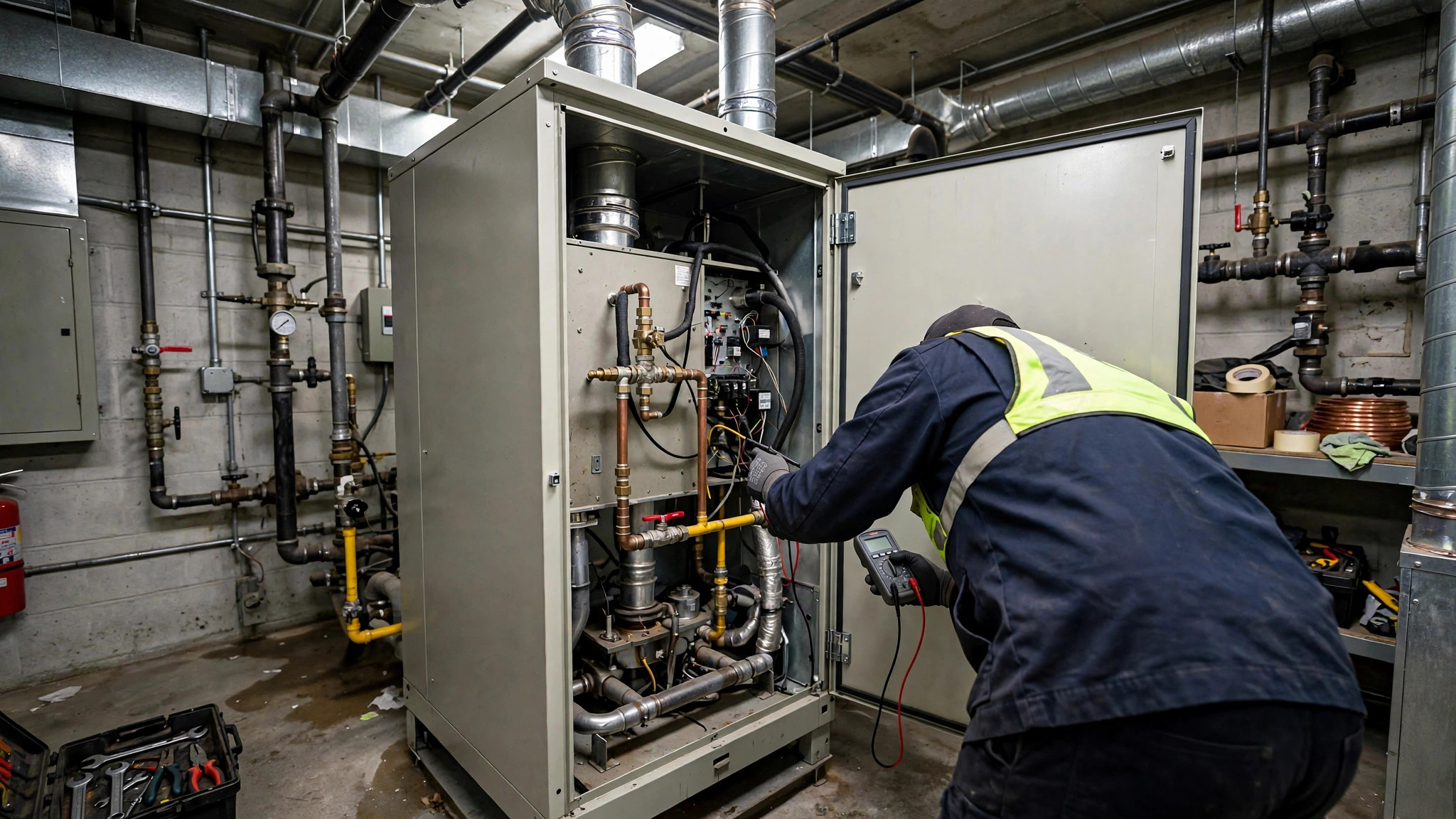
A cold building costs money. Tenants complain. Staff bring in space heaters, which carry their own fire risk. Pipes in cold corners can freeze and burst. When the heat fails in a warehouse, office, or retail space, gas heater repair is the call you make. It is not a job for guesswork. Gas demands trained hands.
This guide explains gas heater repair in plain terms. You will learn the seven safety checks that come before any real work, the common faults technicians find, the cost factors that set your price, and how to pick a qualified firm. Just clear steps a building owner can follow.
Read it once before you call, and you will ask better questions and spot thin quotes.
What gas heater repair Covers
Gas heater repair covers the diagnosis and fix of gas-fired heating equipment in commercial buildings. That includes rooftop gas packs, unit heaters, furnaces, and boilers that burn natural gas or propane. The work restores safe, steady heat to the space.
A technician inspects the burner, heat exchanger, ignition system, gas valve, venting, and controls. They test for gas leaks and carbon monoxide. Then they repair or replace the failed part and verify safe operation. Good gas heater repair ends with paperwork: readings, parts replaced, and test results you can file.
This is licensed work in most states and cities. The license exists because mistakes with gas can kill. A cracked heat exchanger can push carbon monoxide into occupied space. A leaking valve can fill a room with gas.
7 Safety Checks Before gas heater repair
No wrench turns until safety is confirmed. Any honest technician runs these checks first. Know them. Ask for them by name.
- Smell and sound sweep. The tech checks for the rotten-egg odor of added mercaptan near the unit, the gas lines, and the valves. Hissing sounds get the same attention. If gas is present, the area gets evacuated before anything else.
- Gas shutoff test. The main shutoff valve must turn freely and seal fully. A stuck or leaking valve gets flagged and fixed before the main work starts.
- Carbon monoxide reading. A meter test at the unit and in nearby occupied space sets a baseline. Elevated readings stop the job until the cause is found and fixed.
- Venting inspection. Flues and vents must be clear, connected, and sloped correctly. Blocked or disconnected venting sends exhaust back inside the building.
- Heat exchanger check. Cracks in the exchanger let exhaust mix with supply air. Techs use lights, cameras, or dye to find them. This check decides repair versus replace.
- Electrical lockout. Power to the unit gets locked off before hands go inside the cabinet. This is standard shop practice on every commercial call.
- Clearance and combustion air. The unit needs clear space around it and enough air to burn fuel cleanly. Boxes stacked against a heater and blocked louvers are common faults.
- Part cost. Igniters, sensors, and thermostats are cheap. Gas valves and control boards cost more. Heat exchangers can cost more than a new unit, which is why a cracked exchanger usually ends in replacement.
- Labor time. A sensor swap takes under an hour. A valve replacement with full safety testing takes longer. Diagnostic time counts too, though many firms fold it into the job.
- Unit access. Rooftop units need safe roof access and sometimes a lift. Tight mechanical rooms slow every step. Difficult access adds real hours.
- Unit age and brand. Old units need parts that are scarce or discontinued. Some brands cost more to service than others. The tech should say this up front, not after the work.
- Safety findings. A cracked exchanger or bad venting turns a small fix into a big one. This is not padding. It is the safety code doing its job.
- After-hours timing. Nights, weekends, and cold snaps carry a premium, often steep. If the building can wait safely, a scheduled slot saves real money.
- Permits and testing. Some cities require permits for gas work. Combustion analysis and leak verification add time. They also protect you if anything goes wrong later.
If a firm skips these checks, find another firm. Safety testing is not an upsell. It is the core of the job. A quote that lists no testing line is a quote to reject.
Common Faults That Call for gas heater repair
Heaters fail in familiar patterns. Knowing them helps you describe the problem and judge the quote you receive.
Ignition failure tops the list. Hot surface igniters crack with age. Pilot assemblies clog with dust and soot. The unit tries to start, fails, and locks out. This is a routine gas heater repair call on older equipment, and the fix is usually quick.
Flame sensor trouble runs second. A dirty or corroded sensor reads no flame and shuts the gas valve as designed. Cleaning the sensor fixes most cases. Replacement is cheap when cleaning fails. This is a small bill, not a big one.
Gas valve faults come next and deserve respect. A valve that sticks open, sticks closed, or leaks is a safety issue, not just a comfort issue. This is one repair where you want the part replaced with the exact factory part, not nursed along with adjustments.
Cracked heat exchangers are the serious find. Symptoms include odd smells at the registers, soot marks, or a rollout switch that keeps tripping. A cracked exchanger usually means replacing the unit. No honest tech patches a cracked exchanger. If someone offers to, show them the door.
Control board and thermostat faults round out the list. Boards fail from heat, age, or power surges. Thermostats drift out of calibration or lose their programming. Both are routine fixes with standard parts.
Describe symptoms clearly when you call. “Unit locks out after three tries” beats “heat is broken.” Good detail speeds the visit and cuts the bill.
Warning Signs Your Building Needs gas heater repair
Catch trouble early and the fix stays small. Watch for these signs between service visits.
Uneven heat is the first hint. One zone roasts while another stays cold. Short cycling runs second: the unit starts and stops every few minutes instead of running steady cycles. Both point to controls, sensors, or airflow trouble.
New noises matter. Banging at startup can mean delayed ignition, which is a safety concern. Rattling can mean a loose panel or a failing blower. Whistling can mean a cracked exchanger pulling air where it should not.
Smells are the red alert. A rotten-egg smell means gas, and you should leave the building and call the gas utility. A sweet or chemical smell near registers can mean trouble in the exchanger. Soot marks around the unit or at registers deserve an immediate call too.
Rising gas bills with no change in weather or occupancy hint at falling efficiency. A quick gas heater repair visit now can prevent a no-heat emergency later.
Keep a simple log of symptoms and hand it to the technician. It shortens diagnosis time, and shorter diagnosis means a smaller invoice.
Cost Factors for gas heater repair
Prices vary widely. Here is what moves the number, so no quote can confuse you.
Get every quote in writing with parts and labor split apart. If a gas heater repair quote seems high, ask which factor drives it. The answer should be specific, not a shrug.
How to Choose a gas heater repair Technician
Gas work is licensed work. Verify the license. Ask for the license number and check it with your state or city office. Then ask for proof of general liability and workers compensation insurance. A firm that cannot produce both is not touching your gas lines.
Experience with commercial equipment matters more than a pile of residential reviews. A firm that services homes may never have worked on a rooftop gas pack. Ask what share of their work is commercial. Ask for references from buildings like yours, and call them.
Look for combustion testing gear. A tech without a carbon monoxide meter and a combustion analyzer is guessing. Ask what readings they will take and what numbers they expect. A pro answers without hesitation. The U.S. Department of Energy publishes [furnace and boiler guidance](https://www.energy.gov/energysaver/furnaces-and-boilers) that is worth reading before you sign anything. The [Consumer Product Safety Commission](https://www.cpsc.gov/Safety-Education/Safety-Guides/Carbon-Monoxide) covers carbon monoxide safety for fuel-burning equipment. [OSHA rules](https://www.osha.gov/laws-regs) set the workplace safety standards that apply when crews work inside your building.
Get three quotes for any big job. Compare scope line by line, not just the bottom number. The cheapest gas heater repair quote that skips safety testing is the most expensive one in the end.
Watch for red flags. A tech who will not show a license. A quote with one lump sum and no detail. Pressure to decide on the spot. A demand for full payment before work starts. Any one of these is enough to walk away.
After the Fix: Keeping the Heater Safe
The repair is done. Now keep it safe. Put the unit on a regular service schedule with combustion testing at each visit. Change filters on schedule. Keep the area around the unit clear of boxes, pallets, and flammables. Never store paint, solvents, or fuel near a gas heater.
Install carbon monoxide detectors in occupied areas near the equipment where the code calls for them. Test them on a regular schedule. Log every service visit with the readings the tech took.
Train your staff on the basics. Everyone should know where the gas shutoff is and what the rotten-egg smell means. Post the gas utility emergency number in the mechanical room.
A maintained heater is a safe heater. It also runs cheaper. Neglect is what turns a small gas heater repair into a midwinter emergency with a premium bill. Spend a little on upkeep and skip the crisis.
Related Reading
For whole-system help beyond gas heater repair, see [commercial HVAC repair](/commercial-hvac-repair/). When cooling season arrives, read [commercial AC repair](/commercial-ac-repair/). For rooftop equipment specifically, [commercial roof repair](/commercial-roof-repair/) covers the roof side of rooftop units.
FAQ
How fast should the work happen?
If you smell gas, leave the building and call the gas utility first, then your technician. For no-heat calls in cold weather, same-day service is the norm. For minor issues with heat still working, a scheduled visit is fine and cheaper.
Can my staff do this work themselves?
No. Gas work needs a licensed technician. Staff can change filters, keep areas clear, and report warning signs. Leave burners, valves, and exchangers to the pros. Mistakes with gas can be fatal.
How much does a typical fix cost?
Small fixes like sensors and igniters run a few hundred dollars. Valves and control boards cost more. Replacement beats repair when the heat exchanger is cracked. Always get parts and labor itemized in writing.
How long does a service visit take?
Simple fixes take under an hour. Valve work with full safety testing takes two to three hours. The technician should explain the expected time before starting.
Should I repair or replace an old unit?
When repairs cost a large share of replacement, or the exchanger is cracked, replacement wins. Ask the technician for both numbers in writing. That is a fair way to decide.
Next Steps
Call three licensed firms this week. Ask each one about the seven safety checks. Compare written quotes line by line. Check licenses and call references. Choose the careful crew, not the cheapest bid. A proper gas heater repair done right keeps your building warm and safe for seasons to come. File the readings and the warranty. Your future self will thank you.



