
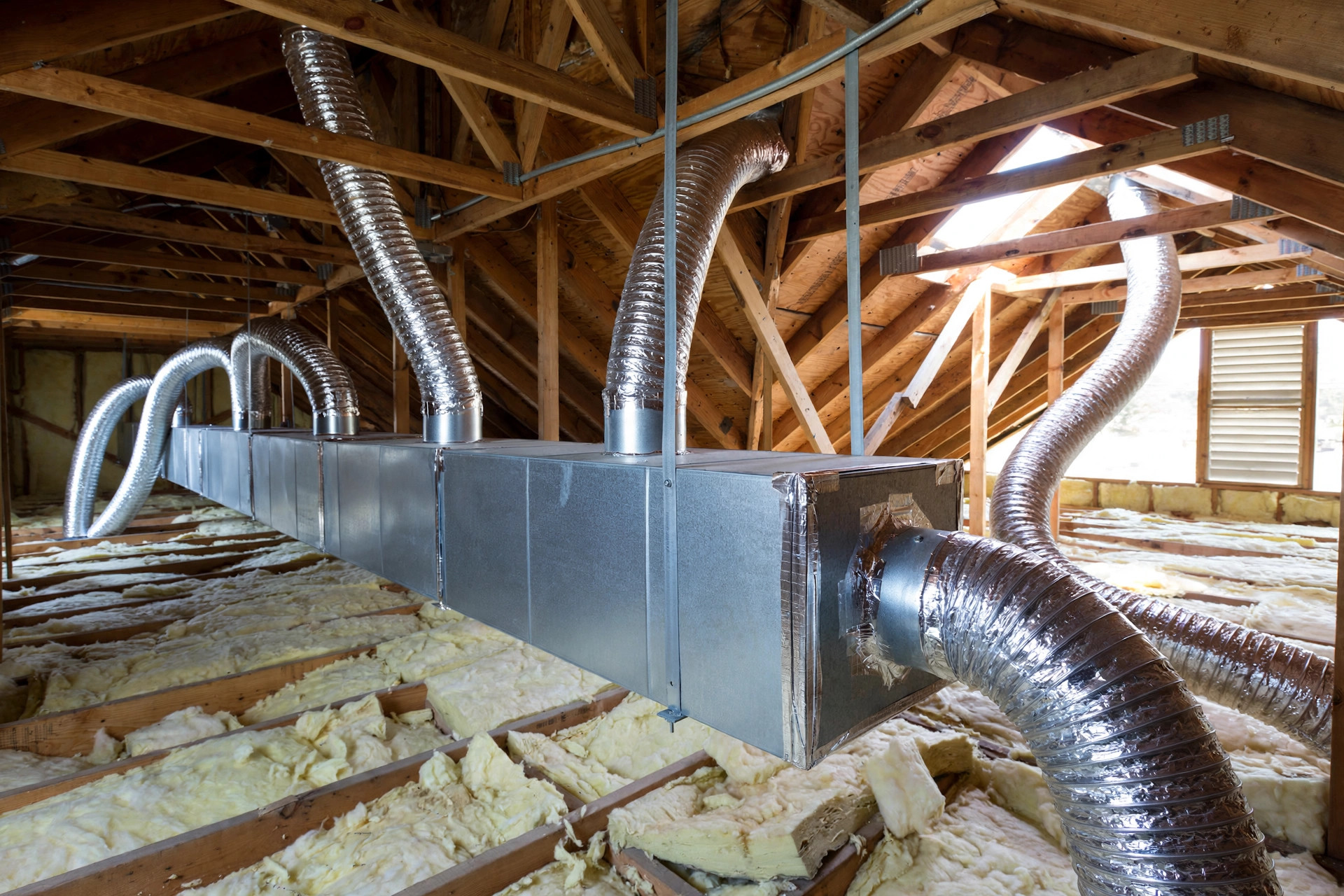
Air conditioning ducts work hard in every commercial building. Years of airflow, temperature swings, and neglect wear them down. When ducts fail, comfort and efficiency go with them. Knowing when ac duct work replacement is needed helps you act before small problems become expensive ones. This guide covers the warning signs, costs, and process.
Use it to judge your building’s ducts and plan the project with confidence.
What ac duct work replacement Covers
Ac duct work replacement means removing failed air conditioning ductwork and installing new ducts. It can target one zone or the whole building. The work includes demolition, new duct fabrication and installation, sealing, insulation, and testing.
This differs from duct cleaning or sealing. Cleaning removes dust from sound ducts. Sealing fixes leaks in otherwise good ducts. Ac duct work replacement is for ducts that are damaged, undersized, or contaminated beyond repair.
Replacement is also a chance to fix old design mistakes. Ducts installed decades ago may never have been right for the building. New ducts sized to current loads and equipment perform far better.
6 Warning Signs
1. Rooms That Never Cool
If the AC runs fine but some rooms stay warm, the ducts may be crushed, disconnected, or undersized. When balancing and repairs cannot fix it, ac duct work replacement is the answer.
2. Soaring Cooling Bills
Leaky ducts dump cooled air into ceiling spaces. Bills rise while comfort falls. If energy costs climb without a change in rates or use, suspect the ductwork.
3. Visible Deterioration
Rust, torn flex, collapsed sections, and water stains tell the story. Inspect accessible ducts yearly. What you see in one area often exists in hidden areas too.
4. Mold and Odors
Musty smells from vents mean moisture and likely mold inside ducts. Widespread contamination cannot be cleaned reliably. Ac duct work replacement protects occupant health.
5. Constant Repairs
If duct repairs keep coming, the system is failing. Money spent patching is money not spent replacing. Add up a year of repair bills and compare to replacement.
6. System Age Over 20 Years
Ducts last 20 to 25 years in good conditions. Older ducts in an aging building are living on borrowed time. Plan ac duct work replacement before emergency forces it.
Cost Factors
Every building differs, so ac duct work replacement costs vary. Use this checklist to understand bids:
- Duct length, size, and layout complexity.
- Material: sheet metal, flex, or duct board.
- Insulation type and R-value.
- Demolition and disposal of old ducts.
- Access difficulty in finished or occupied spaces.
- Number of zones, dampers, and grilles.
- Permits, leakage testing, and air balancing.
- Asbestos abatement if present in old materials.
Get itemized bids with materials and labor separated. The Department of Energy explains how duct losses affect bills at https://www.energy.gov/.
Materials Compared
Sheet metal is the best long-term choice for ac duct work replacement. It lasts 25+ years, seals tightly, and cleans easily. It costs the most upfront but delivers the lowest lifetime cost.
Flexible duct suits short connections only. It is cheap and fast but damages easily and restricts airflow when kinked. In a quality ac duct work replacement, flex is limited to short straight runs.
Duct board insulates and quiets the system. It can harbor mold when wet. Discuss your building conditions with the contractor before choosing.
The Project Process
A good ac duct work replacement starts with assessment. The contractor inspects ducts, tests for leakage, and reviews the HVAC equipment. Load calculations confirm the right sizes for new ducts.
Design follows. The new layout fixes old mistakes: better routing, right sizes, proper zoning. Good design is the difference between new ducts that work and new ducts that repeat old problems.
Installation happens in phases in occupied buildings. Old ducts come out, new ones go in section by section. Expect noise and dust. Plan work for off-hours where possible.
Testing finishes the job. Leakage testing proves the ducts are tight. Air balancing proves each room gets its designed airflow. Get both reports in writing before final payment.
ASHRAE standards guide the work at https://www.ashrae.org/. Job site safety follows OSHA rules at https://www.osha.gov/.
Repair or Replace
Repair isolated damage in otherwise sound ducts. A single crushed run or disconnected joint is a repair job. Mastic sealing of accessible leaks is cheap and effective.
Choose ac duct work replacement for widespread problems. Undersized systems, extensive corrosion, contamination, and designs that never worked all call for replacement. Pair it with HVAC equipment replacement when both are aging.
Run the numbers honestly. Total recent repairs plus expected future repairs, minus energy savings from new ducts. Replacement often wins when the old system keeps failing.
For cost context, see commercial HVAC repair cost. For comfort troubleshooting, read commercial AC not cooling. For ongoing care, see commercial HVAC service.
Timing Your ac duct work replacement Right
Project timing affects cost and disruption. The best time for ac duct work replacement is during mild weather. Spring and fall bring comfortable temperatures that reduce the pain of system shutdowns. Contractors also have more open schedules outside peak summer.
Coordinate with other projects. If ceilings will open for lighting, plumbing, or renovation work, do the ducts at the same time. Shared access cuts labor costs for everyone. If the AC equipment is aging, replace it together with the ducts.
Avoid emergency timing. Ducts that fail completely in summer force rushed work at premium prices. Plan ac duct work replacement while the system still functions. A planned project gets better bids, better scheduling, and better workmanship.
Budget timing matters too. Get quotes early in your fiscal planning cycle. Large duct projects need capital approval. Starting the conversation early avoids year-end rushes and lets you compare bids carefully.
What Good New Ducts Look Like
You should know what quality looks like in an ac duct work replacement. Good ducts run straight and level. Hangers support them at proper intervals without crushing. You should see mastic sealant on every joint, not bare metal seams.
Insulation should be continuous with no gaps or compression. Vapor barriers on cold ducts should be intact. Dampers should have handles accessible through marked access panels. Grilles and diffusers should sit straight and tight to the ceiling.
Ask for a walkthrough before ceilings close. Bring this checklist. Look at the work with the foreman and ask questions. Problems found now cost little to fix. Problems found after ceilings close cost ten times more.
Test results confirm what eyes cannot see. The leakage test proves tightness. The balance report proves airflow. Both should meet the contract criteria. Do not make final payment until you have both reports in hand.
Photograph the finished installation. These photos become the as-built record for future work. They show routing, damper locations, and access points. Store them with the test reports in the building file. Future technicians and contractors will work faster with good records.
Financing ac duct work replacement
Large duct projects strain operating budgets. Treat ac duct work replacement as a capital project. Equipment loans and building improvement loans spread the cost over years. Energy savings help offset payments.
Check utility rebates. Some utilities incentivize duct sealing and replacement in commercial buildings. Rebates rarely cover full replacement but can offset testing and sealing costs. Ask your utility about commercial programs before work starts.
Phase the project if capital is tight. Replace the worst zones first, then continue zone by zone. Design the complete system upfront so phases integrate cleanly. Phasing spreads cost across budget years without sacrificing design quality.
Protect the new system from day one. Put filter changes on a strict schedule and assign responsibility. Train staff to report duct damage, strange noises, and comfort complaints promptly. Small issues in new ducts stay small only when someone acts fast. Your ac duct work replacement investment deserves that basic care.
Frequently Asked Questions
How much does ac duct work replacement cost?
It varies widely by building size and complexity. Small projects run a few thousand dollars. Large commercial systems reach five figures. Itemized bids give real numbers.
How long does the project take?
Days for small jobs, weeks for large buildings. Occupied buildings take longer due to phasing. Your contractor should provide a written schedule.
Will new ducts lower my energy bills?
Usually yes. Old leaky ducts waste 20 to 30 percent of cooled air. New sealed ducts eliminate most of that waste. Savings depend on old duct condition.
Can the building stay open during ac duct work replacement?
Usually yes, with phased work during off-hours. Expect some noise and dust. Coordinate the schedule with building operations.
Should I replace ducts when replacing the AC unit?
Often yes. New equipment on old undersized ducts performs poorly. Doing both together ensures matched design and avoids duplicate ceiling work.
Next Steps
Inspect your ducts or hire someone to do it. Get leakage testing to quantify problems. Collect three itemized bids for ac duct work replacement on identical scope. Compare materials, design quality, and testing plans. Good ducts quietly deliver comfort for decades; failing ones tax you every month.



