
Cooling a commercial building is a different job than cooling a house. The spaces are bigger. The heat loads are higher. The hours are longer. Picking the right ac for commercial use means matching the system to the building, the budget, and the way the space is used. Get it wrong and you pay in high bills and constant repairs. Get it right and the system runs quiet and cheap for years. This guide compares the five main types of ac for commercial buildings so you can buy with confidence.
Why ac for Commercial Buildings Is a Special Purchase
A home system cools a few rooms with steady loads. A commercial building has zones with different needs. The sunny side needs more cooling than the shady side. The kitchen needs more than the office. People come and go all day. Doors open. Equipment throws off heat. The ac for commercial spaces must handle all of this at once.
Scale changes the math too. Commercial systems run longer hours and move far more air. Efficiency matters more because the bills are bigger. A small gain in efficiency saves real money over a year. Reliability matters more too. When the cooling fails in a store, a restaurant, or an office, business suffers within hours. Downtime can cost more in one day than the price difference between a cheap unit and a good one. Buying ac for commercial use is buying business continuity, not just comfort.
5 Types of ac for Commercial Buildings
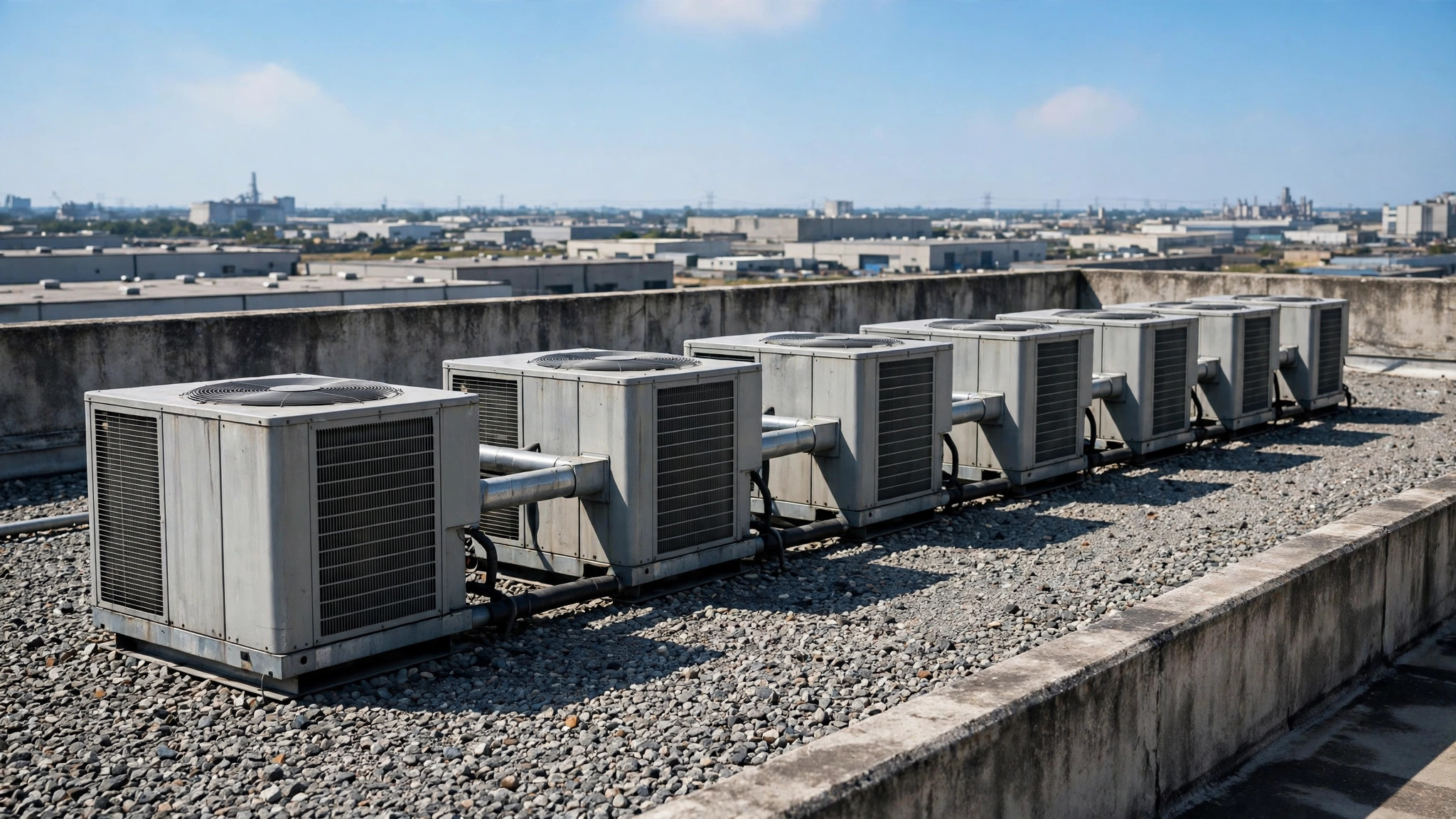
1. Rooftop packaged units. These are the workhorses of commercial cooling. The whole system sits in one box on the roof. They are common on retail stores, restaurants, and small offices. Installation is simple. Service is easy since techs work on the roof, not inside. Sizes range from small to large. For many buildings, a rooftop unit is the default ac for commercial needs and the right choice.
2. Split systems. Like a home system but bigger. The condenser sits outside and the air handler sits inside. Split systems suit buildings where roof space is limited or where indoor placement works better. They run quiet and service is straightforward. Larger buildings may need several split systems zoned by area.
3. Variable refrigerant flow (VRF). VRF systems connect many indoor units to one outdoor unit. Each zone gets its own control. One office can cool while another heats. VRF is efficient and flexible, which makes it popular in offices, hotels, and schools. The upfront cost is higher, but energy savings and zone control often justify it. If tenant comfort varies by space, VRF deserves a close look.
4. Chilled water systems. Large buildings use chillers to make cold water, then pump it to air handlers through the building. This is the standard ac for commercial towers, hospitals, and campuses. Chillers are efficient at scale and last a long time. They need more maintenance and skilled operators. For big footprints, nothing beats a chilled water plant.
5. Packaged terminal units (PTAC). These are the through-wall units common in hotels and motels. Each room gets its own unit with its own control. They are cheap to install and simple to replace. Efficiency is lower than central systems. For buildings where each space needs independent control and the budget is tight, PTAC units fill the gap.
For help with ongoing care after you buy, see commercial ac maintenance and commercial ac service.
Sizing ac for Commercial Spaces
Sizing is the step owners get wrong most. Too big and the system short-cycles, which wastes energy and wears parts. Too small and it never catches up on hot days. The right size comes from a load calculation, not from square footage rules. A proper calculation accounts for windows, insulation, lighting, people, equipment, and ventilation.
Zoning matters as much as total size. A building with one big zone will always have hot and cold spots. Splitting the building into zones with separate control fixes this. Talk to your contractor about how the space is actually used. A conference room that fills twice a week needs different handling than a call center that runs all day.
Ask the contractor to show you the load calculation. It should follow ASHRAE methods. If a bidder sizes your ac for commercial building by guess or by matching the old unit ton for ton, get another bid. The old unit may have been wrong too.
Ac for Commercial: Cost Factors
Equipment cost is only part of the price. Installation labor, ductwork changes, electrical upgrades, and controls add up. A simple rooftop swap costs far less than a new VRF system with full controls. Get bids that break out equipment, labor, and extras separately.
Efficiency ratings drive long-term cost. Higher efficiency costs more upfront and less every month. In hot climates with long cooling seasons, the payback is fast. Ask each bidder for estimated annual operating cost, not just the install price. The U.S. Department of Energy offers guidance on comparing commercial cooling efficiency.
Maintenance costs differ by type. Chillers need skilled service. VRF needs trained techs. Rooftop units are the simplest to maintain. Factor service into your decision. The cheapest system to buy is not always the cheapest to own. A maintenance agreement from day one protects the investment and keeps the warranty valid.
Questions to Ask Before You Buy
Ask the contractor how many systems like yours they have installed. Commercial experience matters. Ask for the load calculation and the design drawings. Ask what happens on the hottest day of the season: will the system hold temperature with room to spare? Ask about noise. Rooftop units near outdoor seating or neighboring homes may need sound planning.
Ask about controls. Modern controls schedule cooling by zone and time. They cut waste and catch problems early. Make sure your staff gets training. A great system run on factory defaults wastes money. Ask about the warranty on equipment and labor, and what maintenance keeps the warranty valid. Put the startup and commissioning report in the contract. The system should prove it meets the design before you sign off.
Maintaining Your New ac for Commercial Use
The purchase is only the start. A new ac for commercial buildings needs care from day one to reach its full life. Change or clean filters on the schedule in the manual. Dirty filters are the top cause of poor performance and breakdowns. Keep outdoor coils clean and the area around units clear. Do not let trash, pallets, or plants block airflow.
Put the system on a maintenance agreement with a commercial service company. Two visits per year is the standard: one before cooling season, one after. The tech checks refrigerant, cleans coils, tests controls, and catches worn parts early. Agreement customers usually get priority scheduling and lower emergency rates too.
Train your staff on the basics. Show them how the thermostats work and who to call when something seems off. Small problems reported early stay small. A well-maintained ac for commercial use runs cheaper, breaks down less, and lasts years longer than a neglected one.
FAQ
What is the most common ac for commercial buildings?
Rooftop packaged units are the most common for small to mid-size commercial buildings. They are affordable, simple to install, and easy to service. Larger buildings often move to VRF or chilled water systems for efficiency and zone control.
How long does commercial ac equipment last?
Rooftop units often last 15 to 20 years with good maintenance. Chillers can run 20 to 30 years. PTAC units last less, often 10 to 15 years. Regular service is the biggest factor in reaching full life.
Can I replace my commercial ac in phases?
Yes. Many owners replace units zone by zone to spread cost and avoid shutdowns. Plan the phases so the controls work together at the end. Tell your contractor the full plan upfront so each phase fits the next.
Does a bigger unit cool better?
No. Oversized units short-cycle, which leaves humidity high and wears parts fast. The right size, from a real load calculation, cools better and costs less to run than a bigger unit.
Should I buy the highest efficiency available?
It depends on your climate and hours. In hot climates with long seasons, high efficiency pays back fast. In mild climates with short seasons, mid-range efficiency may be the smarter buy. Ask for operating cost estimates to compare.
Next Steps
Start with a load calculation from a contractor who knows commercial work. Compare at least two system types for your building, not just two brands of the same type. Look at total cost over ten years, not just the install price. Check lead times on equipment so the schedule holds. Then buy the ac for commercial use that fits your building, your budget, and your staff’s ability to maintain it. Size it right, install it right, and maintain it from day one. Your building, your staff, and your budget will all run better for it.



