
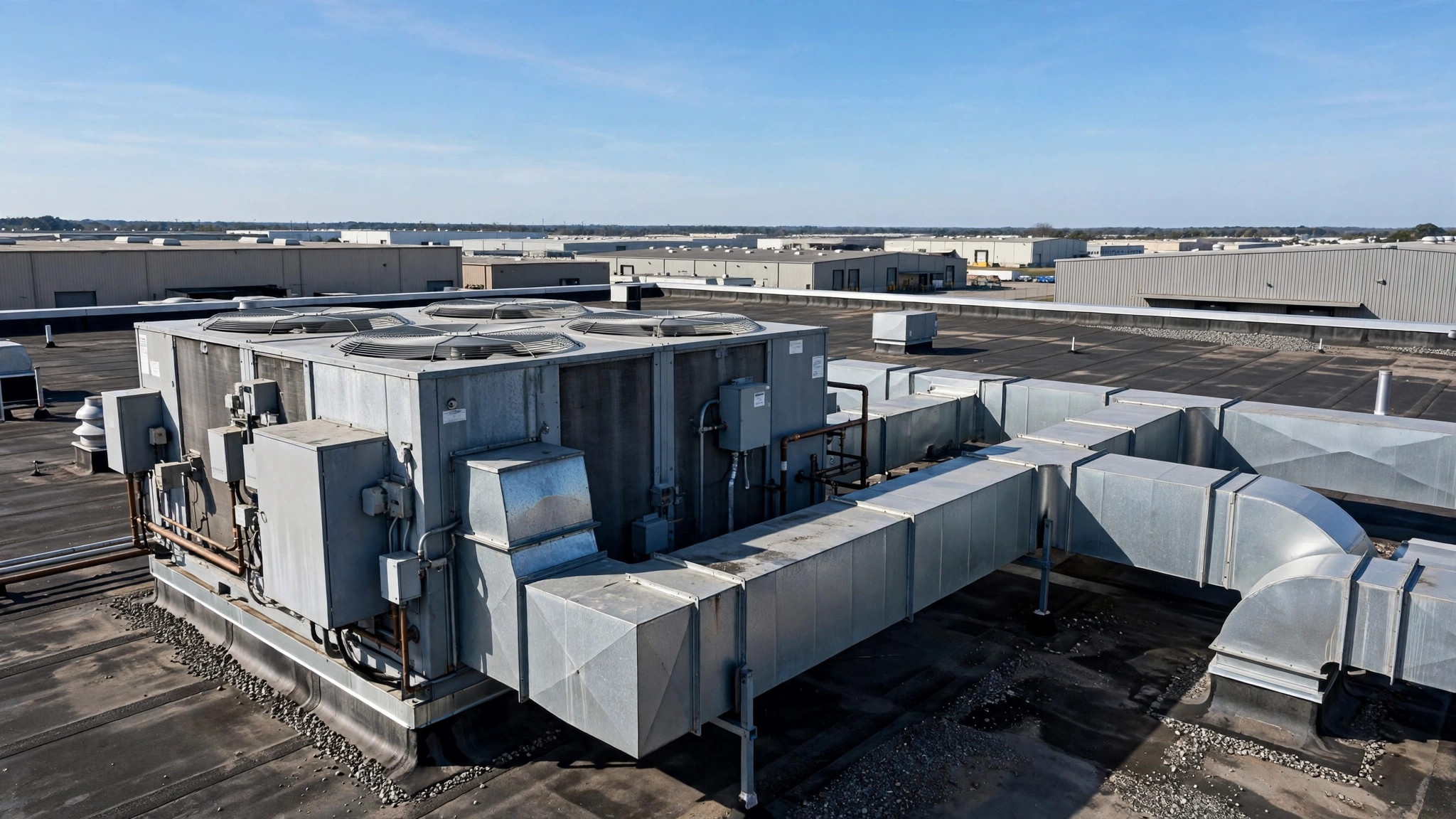
A commercial ac unit keeps your building cool, your staff comfortable, and your customers happy. When it fails in the middle of summer, the cost is more than the repair bill. Lost sales, unhappy tenants, and spoiled inventory add up fast. Picking the right unit matters.
This guide walks you through the types, sizes, and costs of a commercial ac unit. You will learn how to size one, what to ask contractors, and how to keep it running well for years. No jargon. Just plain facts for owners who want to spend wisely.
What is a commercial ac unit?
A commercial ac unit is cooling equipment built for business buildings. It differs from home units in size, strength, and design. Home units serve one family. A commercial ac unit serves offices, stores, restaurants, and warehouses with much larger spaces and longer run times.
Most commercial units sit on the roof. These are called packaged rooftop units. All the parts live in one metal box outside. Ducts run from the box into the building. Some buildings use split systems instead. The condenser sits outside while the air handler sits inside. Both types do the same job. The building layout decides which fits best.
Commercial units also handle fresh air. Codes require a set amount of outside air for people inside. Rooftop units bring in that air through dampers and mix it with return air. Home units do not face this rule in the same way.
Types of commercial ac unit systems
Three main types cover most buildings. Each suits different needs.
Packaged rooftop units are the most common. The whole system sits in one box on the roof. They are easy to service and replace. A crane lifts the old box off and sets the new one down. Sizes range from small three ton units up to very large ones for big box stores.
Split systems separate the parts. The noisy condenser goes outside at ground level or on the roof. The air handler goes in a mechanical room inside. Split systems work well when roof access is hard or the owner wants the equipment out of sight.
Variable refrigerant flow systems use many small indoor heads tied to one outdoor unit. Each zone gets its own control. They cost more up front but give fine control over different areas. Offices with varied room loads like them.
Ask a contractor which type fits your building. The answer depends on duct layout, roof strength, and budget.
How to size a commercial ac unit
Sizing is the most important step. Too small and the unit runs all day without cooling the space. Too big and it short cycles, which wastes energy and wears parts out fast.
Proper sizing starts with a load calculation. A technician measures the space, counts windows, checks insulation, and notes heat from lights and equipment. Software turns these inputs into a cooling load in tons. One ton of cooling equals twelve thousand BTUs per hour.
Never size by square footage alone. Two identical stores can need different sizes. A restaurant with hot kitchen equipment needs more cooling than a quiet office of the same size. A rule of thumb is only a starting guess, never a final answer.
Oversizing is a common and costly mistake. An oversized commercial ac unit cools the air too fast and shuts off before pulling moisture out. The space feels cold and clammy. Insist on a written load calculation before you approve any purchase.
Commercial ac unit cost factors
Prices vary widely. A small rooftop unit for a shop might cost a few thousand dollars installed. A large unit for a warehouse can cost tens of thousands. The final price of a commercial ac unit depends on these factors:
- Cooling capacity in tons
- Efficiency rating (higher SEER2 or EER2 costs more up front)
- System type (packaged, split, or variable flow)
- Ductwork changes needed
- Electrical upgrades
- Crane rental for rooftop placement
- Old unit removal and disposal
- Permit fees
Efficiency pays back over time. A high efficiency unit costs more now but uses less power each month. ENERGY STAR lists certified commercial equipment and explains the savings. See https://www.energystar.gov/.
Get at least three written bids. Each bid should state the unit brand, model, tonnage, and efficiency rating. Bids that skip these details cannot be compared fairly.
Checklist: buying a commercial ac unit
Use this checklist before you sign a purchase order:
- Did the contractor perform a written load calculation?
- Is the unit size matched to the load, not to a guess?
- What is the efficiency rating, and what does it mean for power bills?
- Does the bid include ductwork changes and electrical work?
- Is a crane included for rooftop placement?
- Who removes and disposes of the old unit?
- What is the parts warranty in years?
- What is the labor warranty on the install?
- Does the contractor offer a maintenance plan?
- Are permits and inspections included in the price?
A contractor who answers these clearly is worth more than a low bid from one who dodges them. For help vetting firms, read how to find a commercial HVAC contractor.
Installation day: what to expect
A typical swap takes one day for a single rooftop unit, though larger jobs can run two days. The crane arrives first. Crews disconnect the old unit, lift it down, and set the new commercial ac unit on the curb. Then they connect ducts, wiring, and controls.
Test runs come next. The crew starts the unit and checks airflow, refrigerant charge, and thermostat control. They should walk the building with you and confirm each zone cools properly.
Expect some noise and blocked parking areas during the work. Tell tenants the schedule in advance. A good crew cleans up and hauls away the old equipment the same day.
Keeping a commercial ac unit running well
A new unit still needs care. Change filters on schedule. Dirty filters choke airflow and strain the blower. In dusty areas, check filters monthly.
Keep the outdoor coil clean. Leaves, trash, and cottonwood fluff block airflow through the coil. A blocked coil makes the compressor work harder and fail sooner. Hose the coil gently from the inside out when it looks dirty.
Schedule professional tune-ups twice a year. A technician checks refrigerant, tightens electrical connections, and tests controls. Regular service is the cheapest insurance you can buy. See our commercial AC maintenance guide for the full task list.
Watch for early warning signs. Weak airflow, odd noises, and rising power bills all signal trouble. Our guide on commercial AC not cooling helps you spot problems before they turn into breakdowns.
Energy tips for a commercial ac unit
Small changes cut cooling costs without hurting comfort.
Set thermostats wisely. Each degree higher on the cooling setpoint saves energy. Programmable or smart thermostats adjust settings when the building is empty. They pay for themselves quickly.
Seal duct leaks. Leaky ducts waste cooled air into attics and ceilings. Sealing and insulating ducts is one of the cheapest upgrades an owner can make. The Department of Energy offers duct sealing guidance at https://www.energy.gov/.
Use window shades on sunny sides. Direct sun through glass adds a huge heat load. Shades or reflective film cut that load and let the unit run less.
Frequently asked questions about a commercial ac unit
How long does a commercial ac unit last?
Most last fifteen to twenty years with good maintenance. Poor maintenance can cut that in half. Harsh coastal air and heavy use also shorten life.
Can I replace a commercial ac unit with a bigger one?
Only if the load calculation supports it. A bigger unit on the same ducts can cause airflow problems. The electrical service may need an upgrade too.
What does a commercial ac unit cost to run each month?
It depends on size, efficiency, hours of use, and local power rates. A mid-size rooftop unit in a hot state can add hundreds of dollars a month to the power bill in summer.
Do I need a permit to install a commercial ac unit?
In most cities, yes. Permits cover electrical and mechanical work. Your contractor should pull them. Skipping permits can void warranties and cause trouble at resale.
Should I repair or replace my old commercial ac unit?
If the unit is past fifteen years and needs a major repair, replacement usually wins. Compare the repair cost against a new unit’s energy savings. Our AC repair vs replace commercial guide walks through the math.
This is a big purchase, but it does not have to be a gamble. Get a real load calculation. Compare three detailed bids. Check the warranties carefully. Then buy the unit that fits your building and your budget. Set up maintenance from day one, and the unit will pay you back with years of steady, reliable cooling.



