
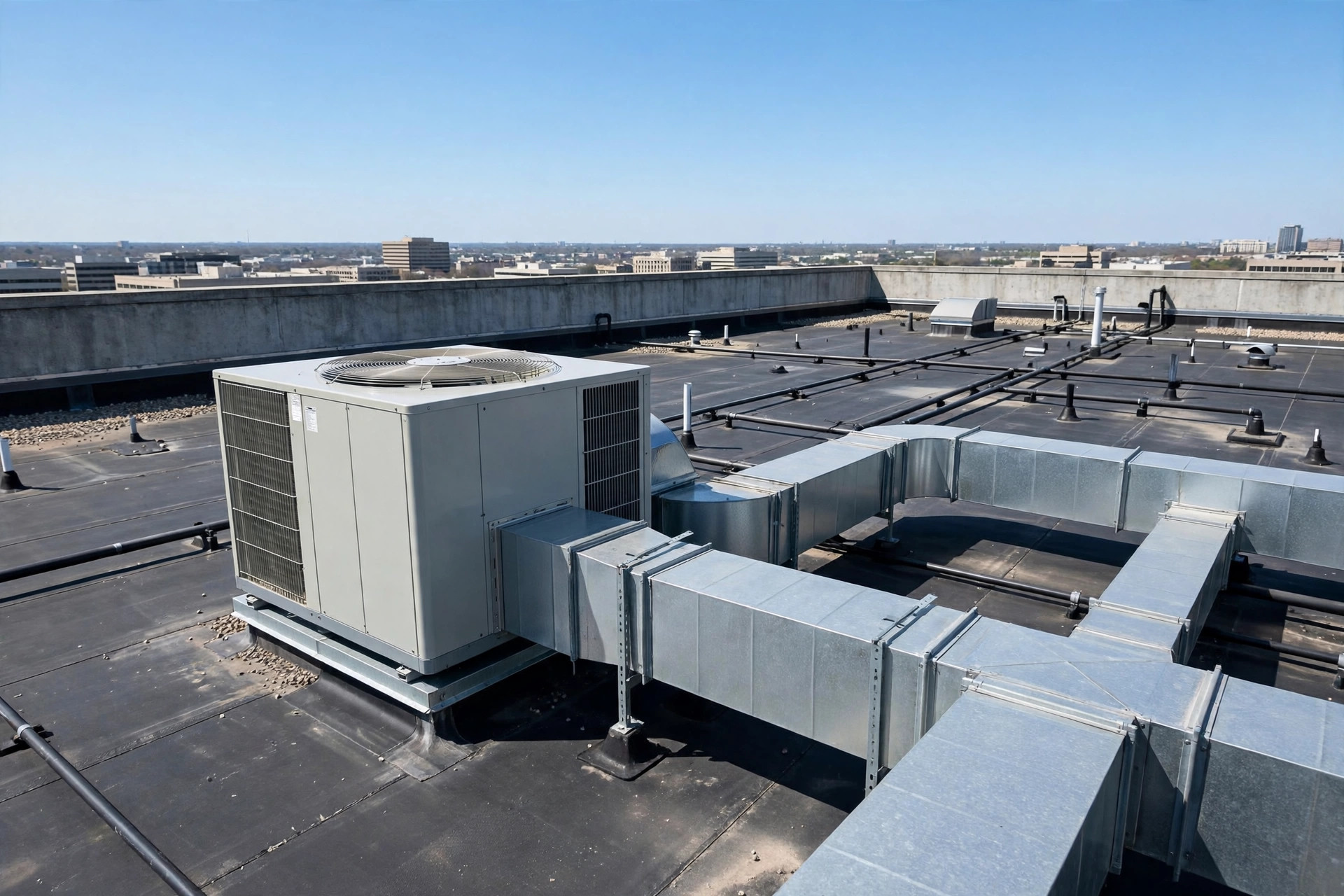
A commercial ac system is one of the biggest investments in any building. It cools the space, protects equipment and inventory, and keeps people comfortable. Buying wrong means years of high bills and complaints. Maintaining wrong means early breakdowns. This guide gives six practical tips for buying and caring for a commercial ac system. It is written in plain language for US building owners and facility managers.
Tip 1: Size the commercial ac with a load calculation
Sizing decides everything. A commercial ac that is too small runs constantly and never cools the space on hot days. One that is too big short-cycles, wastes energy, and leaves the air damp and clammy. Both mistakes last for the life of the equipment.
A proper load calculation measures the building: walls, windows, roof, insulation, orientation, occupants, lighting, and heat from equipment. Kitchens, server rooms, and glass storefronts add large loads. The result is the cooling need in tons. Never accept sizing by square footage alone. Ask the contractor to show the written calculation. The Department of Energy explains why proper sizing matters at https://www.energy.gov/energysaver/central-air-conditioning.
Tip 2: Pick the right commercial ac type
Commercial ac comes in several forms. Packaged rooftop units are the most common. Everything sits in one box on the roof. Each unit serves one zone. Split systems put the air handler indoors and the condenser outside. They suit buildings with mechanical rooms. VRF systems serve many small zones from shared outdoor units. Chilled water systems cool large buildings through a central plant.
Match the type to the building. A strip mall does well with packaged rooftops. A hotel with many rooms suits VRF. A hospital needs chilled water. Ask bidders why their recommended type fits your zones, hours, and budget. For more detail, see our guides on commercial air conditioning and commercial heating and cooling.
Tip 3: Compare efficiency over the full life
The sticker price is only part of a commercial ac cost. Energy bills run for fifteen to twenty years. Higher efficiency equipment costs more upfront and less every month. In hot climates, the payback on efficient equipment is often just a few years.
Ask each bidder for the estimated annual operating cost, not just the install price. Compare part-load efficiency too, since commercial ac rarely runs at full capacity. Good controls add savings on any equipment type. Setback schedules, zone control, and economizers cut waste. Energy Star lists efficient commercial equipment at https://www.energystar.gov/.
Tip 4: Insist on quality installation
Even the best commercial ac fails early with bad installation. Refrigerant charge must be exact. Ductwork must be sealed and sized right. Electrical connections must be tight. Condensate drains need proper slope. Thermostats belong on interior walls away from heat sources.
Watch the installation while it happens. Ask the crew lead to walk you through the work at the end of each day. Check that refrigerant lines are insulated, that outdoor units sit level on solid curbs or pads, and that every roof penetration is flashed and sealed. Sloppy details at install become expensive leaks and failures later. A careful crew welcomes your questions. A rushed crew avoids them.
Insist on commissioning. After installation, the contractor should test airflow, refrigerant pressures, temperatures, and controls at every unit. Get the results in writing. This baseline proves the system works as designed and helps future troubleshooting. Many owners skip commissioning to save money. That is a mistake. Catching problems on day one costs little. Finding them a year later costs far more.
Tip 5: Maintain the commercial ac on schedule
Steady maintenance is the cheapest way to protect a commercial ac investment. Schedule professional service twice a year: spring before cooling season, fall after it. Each visit should cover filters, coils, refrigerant charge, electrical parts, drains, belts, and controls. Ask the technician for a written report with readings, not just a verbal okay. Compare each report to the last one. Trends in the numbers reveal decline long before a breakdown.
Between visits, assign simple tasks to staff. Check filters monthly in summer. Keep outdoor units clear of debris. Log hot-spot complaints by zone. Watch energy bills for unexplained increases. Walk the mechanical areas monthly and look for water stains, odd smells, or new noises. Small observations logged by staff often point the technician straight to the problem. A maintenance agreement with a reliable contractor usually costs a few hundred dollars per unit per year. One avoided emergency call pays for it. Our commercial ac maintenance guide details service plans.
Tip 6: Plan replacement before failure
Cooling equipment lasts fifteen to twenty years with good care. Start planning replacement around year twelve. Track repair costs per unit. When repairs climb and efficiency falls, replacement beats another fix. Emergency replacements cost more and force rushed decisions.
Get replacement quotes during the off-season when contractors have time and prices soften. Include a fresh load calculation, since building use may have changed. Consider higher efficiency for the new unit. Time the project to avoid peak summer. A planned commercial ac replacement is smooth and lets you choose the best equipment. A failed-unit scramble in a heat wave is not. Plan the funding early too, so a mid-summer failure never forces a rushed bargain decision.
Cost factors for commercial ac
System size leads the cost. More cooling tons cost more. System type matters. Packaged rooftops cost less than VRF or chilled water. Ductwork swings the price in retrofits. New ducts through finished spaces cost far more than reusing good existing ducts. Electrical upgrades add cost when panels cannot handle the load.
Do not forget the hidden costs. Permits and inspections add fees in most cities. Crane rental for rooftop units can surprise owners who never budgeted for it. If the building must stay open during the work, after-hours labor premiums apply. Temporary cooling for sensitive areas like server rooms adds cost too. Ask each bidder to list every cost element so nothing hides.
Labor varies by region and access. Rooftop units need crane lifts. Tight mechanical rooms slow work. After-hours installation costs more. Permits and inspections add fees. Get three detailed bids with identical scope. Compare equipment models, efficiency, duct scope, electrical work, controls, and commissioning. For cost background, see commercial hvac repair cost and ac repair cost dallas for a market example.
Warning signs your cooling system needs attention
Watch for these between service visits. Some zones too warm while others are fine. Units short-cycling on and off. Ice on refrigerant lines or coils. Water stains under indoor units. New noises: grinding, hissing, or banging. Energy bills rising with no change in hours. Burning smells from vents.
Act fast on these signs. A weak capacitor in spring becomes a dead unit in summer. A small refrigerant leak becomes a burned-out compressor. Call your contractor at the first sign, not after the failure. Keep a log of every issue with dates. Patterns in the log guide repair-versus-replace choices. Our article on commercial ac not cooling covers troubleshooting steps.
FAQ about commercial ac
How long should a commercial ac last?
Fifteen to twenty years with regular maintenance. Neglected units often fail years earlier. Rooftop units in harsh weather run shorter lives than sheltered indoor equipment. Heavy use shortens life. Steady service extends it.
Repair or replace an aging commercial ac?
When a repair costs more than half of replacement, or the unit is past fifteen years with rising breakdowns, replacement usually wins. Compare the repair quote against a new unit quote with better efficiency. Factor in energy savings over the new unit’s life.
What maintenance does a commercial ac need?
Filter changes, coil cleaning, refrigerant checks, electrical inspection, drain clearing, belt and bearing service, thermostat calibration, and duct inspection. Twice-yearly professional visits cover these. Monthly filter checks by staff fill the gaps.
Can I add zones to an existing system?
Sometimes. If the current system has spare capacity and the duct design allows it, a contractor can add zone dampers and thermostats. If the system is already maxed out, new equipment is needed. A load calculation for the new layout decides.
How can I cut cooling energy costs?
Clean coils and filters, seal duct leaks, fix control schedules, use nighttime setbacks, and add economizers where climate allows. These steps often cut cooling costs noticeably before any equipment change. Track energy per square foot to measure results.
Next steps
Inventory your cooling equipment this week: type, age, and condition of each unit. Schedule spring service with a licensed contractor and get a written report with photos. Fix flagged issues before summer heat arrives. If any unit is past fifteen years, get replacement quotes with a proper load calculation in the off-season when prices soften. Set up a maintenance agreement and train staff on filter checks before the first cooling season arrives. Buying right, installing right, and maintaining steadily keeps your commercial ac reliable for its full life and your tenants comfortable every summer.



