
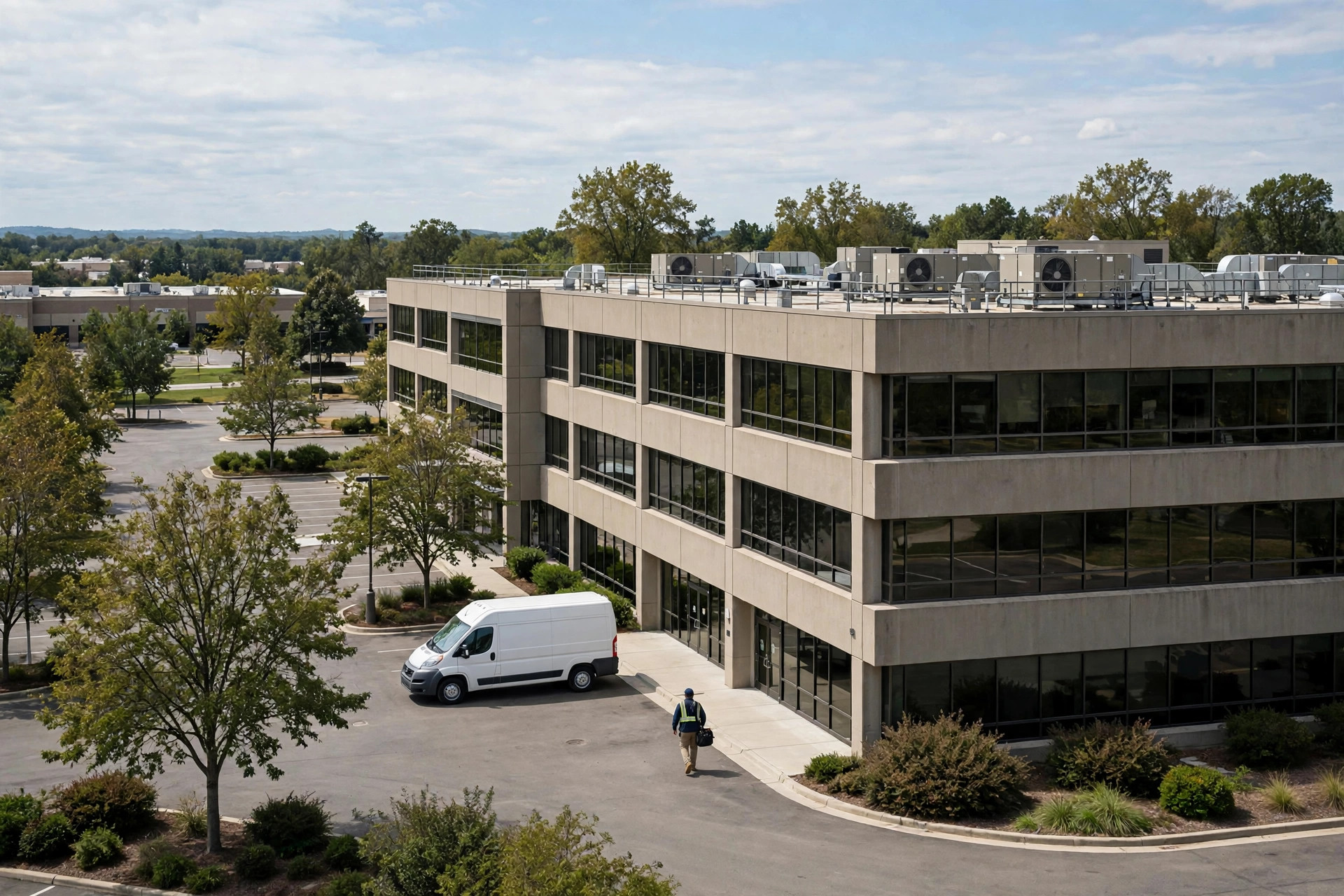
Commercial HVAC companies install, repair, and maintain heating, cooling, and ventilation systems in offices, stores, warehouses, schools, and other non-residential buildings. The company you pick affects far more than comfort. It affects energy bills, equipment life, indoor air quality, and how fast help arrives when something breaks. Choosing well is one of the highest-value decisions a building owner makes.
Not all commercial HVAC companies are equal. Some focus on small light-commercial jobs. Others run large crews for industrial plants and high-rises. Some sell maintenance agreements; others only do break-fix work. This guide gives nine practical ways to compare commercial HVAC companies, the cost factors to expect, red flags to avoid, and answers to the questions owners ask most.
1. Match the Company’s Size to Your Building
Start by finding commercial HVAC companies that work on buildings like yours. A firm that mostly services small retail shops may not have the crew or parts network for a 200,000 square foot warehouse. A large industrial contractor may charge minimums that make small jobs uneconomical.
Ask how many technicians they employ and what size buildings they typically serve. Ask whether they handle your equipment type, whether rooftop packaged units, chillers, boilers, or split systems. The right fit means faster service and fairer pricing.
2. Check Licenses, Insurance, and Certifications
Every state licenses HVAC contractors, and many cities add their own requirements. Confirm the license is current and covers commercial work. Check general liability and workers’ compensation insurance, with limits sized for commercial jobs.
Look for technician certifications as well. NATE certification shows tested skill. Manufacturer certifications show training on specific brands. EPA Section 608 certification is legally required for anyone handling refrigerants. A company that invests in credentials usually invests in quality.
3. Ask Commercial HVAC Companies About Response Times
When the AC dies on a hot day or heat fails in cold weather, response time is everything. Ask commercial HVAC companies for their average emergency response time and whether they offer true round-the-clock service.
Also ask how they handle peak seasons. Some firms get swamped and leave contract customers waiting. A maintenance agreement should include priority dispatch. Get the response promise in writing, not just as a sales pitch. For related planning, see commercial HVAC service.
4. Compare Maintenance Agreements from Commercial HVAC Companies
The agreement is where long-term value lives. Good commercial HVAC companies offer plans that spell out exactly what each visit includes: filters, coil cleaning, belt checks, refrigerant testing, control calibration, and a written report.
Compare plans side by side. Count the visits per year. Check what is excluded and what counts as an extra charge. Look for repair discounts and priority service terms. A cheap plan that covers little is no bargain. For a model checklist of what visits should cover, see commercial HVAC maintenance checklist.
5. Get References from Similar Buildings
Ask for three references from buildings like yours. Call them. Ask about response times, billing accuracy, and whether repairs held up. Ask whether the company suggested needed work or pushed unnecessary upsells.
Also ask how the company handles complaints. Every firm has a bad day. What matters is whether they fix mistakes quickly and fairly. References reveal this better than any brochure.
6. Evaluate Their Diagnostic Approach
Good commercial HVAC companies diagnose before they sell. The technician should test, measure, and explain the fault in plain words. Be wary of firms that quote a big replacement without real testing, or that push new equipment when a repair would do.
Ask how they decide between repair and replacement. A trustworthy answer includes the equipment age, repair history, efficiency numbers, and the math for both options. This honest approach saves owners from premature replacements.
7. Review Pricing Structure of Commercial HVAC Companies
Understand how the company charges. Do they bill flat rate or by the hour? What are the after-hours rates? How do they price parts? Clear, written pricing prevents surprise bills.
Get quotes for common work in writing. Compare the maintenance agreement cost per visit, not just the annual total. Ask about trip charges and minimum fees. Transparent commercial HVAC companies put all of this on paper without being asked twice.
8. Check Their Controls and Energy Expertise
Modern savings come from controls as much as from equipment. Ask whether the company can service building automation systems, program thermostats, and tune economizers. Poor controls waste energy all year, and many contractors lack this skill.
A company that understands energy can also advise on rebates and efficiency upgrades. The US Department of Energy offers commercial building guidance at energy.gov, and a sharp contractor will know how to apply it to your building. ASHRAE also publishes HVAC standards and guidance at ashrae.org.
9. Test Their Communication Before You Commit
Call with a question and see how they respond. Do they answer promptly? Do they explain clearly? Do they follow up in writing? The sales experience predicts the service experience.
Good commercial HVAC companies assign an account contact, send visit reports, and remind owners of upcoming service. Poor communication during the courtship only gets worse later. Pick the firm that treats you like a partner from day one.
Cost Factors When Hiring Commercial HVAC Companies
Use this checklist to understand pricing.
- Building and system size. Larger systems need more labor and parts per visit.
- Equipment type. Chillers and boilers cost more to service than simple packaged units.
- Agreement level. More visits and broader coverage raise the annual price.
- Emergency coverage. True round-the-clock service costs more than business-hours plans.
- Equipment age. Older systems take longer to service and need more parts.
- Local market rates. Labor costs vary by region and by season.
Red Flags Among Commercial HVAC Companies
- No license number or proof of insurance.
- Quotes without inspecting the equipment.
- Pressure for an immediate full-system replacement.
- Vague agreements with no list of included tasks.
- No written reports after service visits.
- Consistently late or missed appointments.
Any of these is reason to keep shopping. Quality commercial HVAC companies are transparent, punctual, and thorough. For help finding local options, see how to find a commercial HVAC contractor.
Questions to Ask Before Signing with Commercial HVAC Companies
Bring these questions to every sales meeting. The answers separate strong commercial HVAC companies from weak ones.
- How many technicians do you employ, and are they certified?
- What is your average emergency response time for contract customers?
- Exactly what does each maintenance visit include? Show me the checklist.
- How do you decide between repairing and replacing equipment?
- What brands do you service, and do you stock common parts for mine?
- How do you bill: flat rate or hourly? What are after-hours rates?
- Can you service our building automation system and controls?
- What does the agreement exclude, and what triggers extra charges?
- How do I reach you after hours, and who answers?
- Can I see a sample service report from a building like mine?
A good company answers all ten without hesitation. Vague or defensive answers tell you to keep looking. Take notes during each meeting so you can compare firms fairly after all the visits are done.
Commercial HVAC Companies FAQs
How much do commercial HVAC companies charge for maintenance?
Annual agreements vary by unit count, size, and visit frequency. Expect a range from a few hundred to a few thousand dollars per unit per year. Compare the per-visit cost and the included tasks, not just the headline price.
Should I choose a large or small HVAC company?
Match the company to the building. Large firms offer deep benches and fast dispatch. Smaller firms may offer closer relationships and lower overhead. Either can be excellent if they have the right experience with your system type.
What should a maintenance visit include?
Filters, coil cleaning, refrigerant checks, electrical testing, belt and bearing inspection, drain clearing, control calibration, and a written report. If visits skip these basics, the agreement is not doing its job.
How do I switch commercial HVAC companies?
Review the current agreement for notice terms. Collect all service records and equipment data. Brief the new company on the system history and any recurring issues. Overlap the transition so no scheduled visit is missed.
Do commercial HVAC companies offer energy audits?
Many do. An audit finds waste in equipment, controls, and ductwork, then ranks fixes by payback. Ask whether the audit is free with an agreement or billed separately, and whether the report includes real numbers.
Next Steps for Building Owners
Choosing among commercial HVAC companies takes a little homework, but the payoff is large. Match the firm to your building, verify credentials, compare written agreements, and test communication before signing. The right partner keeps the air right, the bills down, and the equipment running for years. Choose with care now and the building will thank you every season. A strong service partner is one of the best investments a commercial property can make.



